
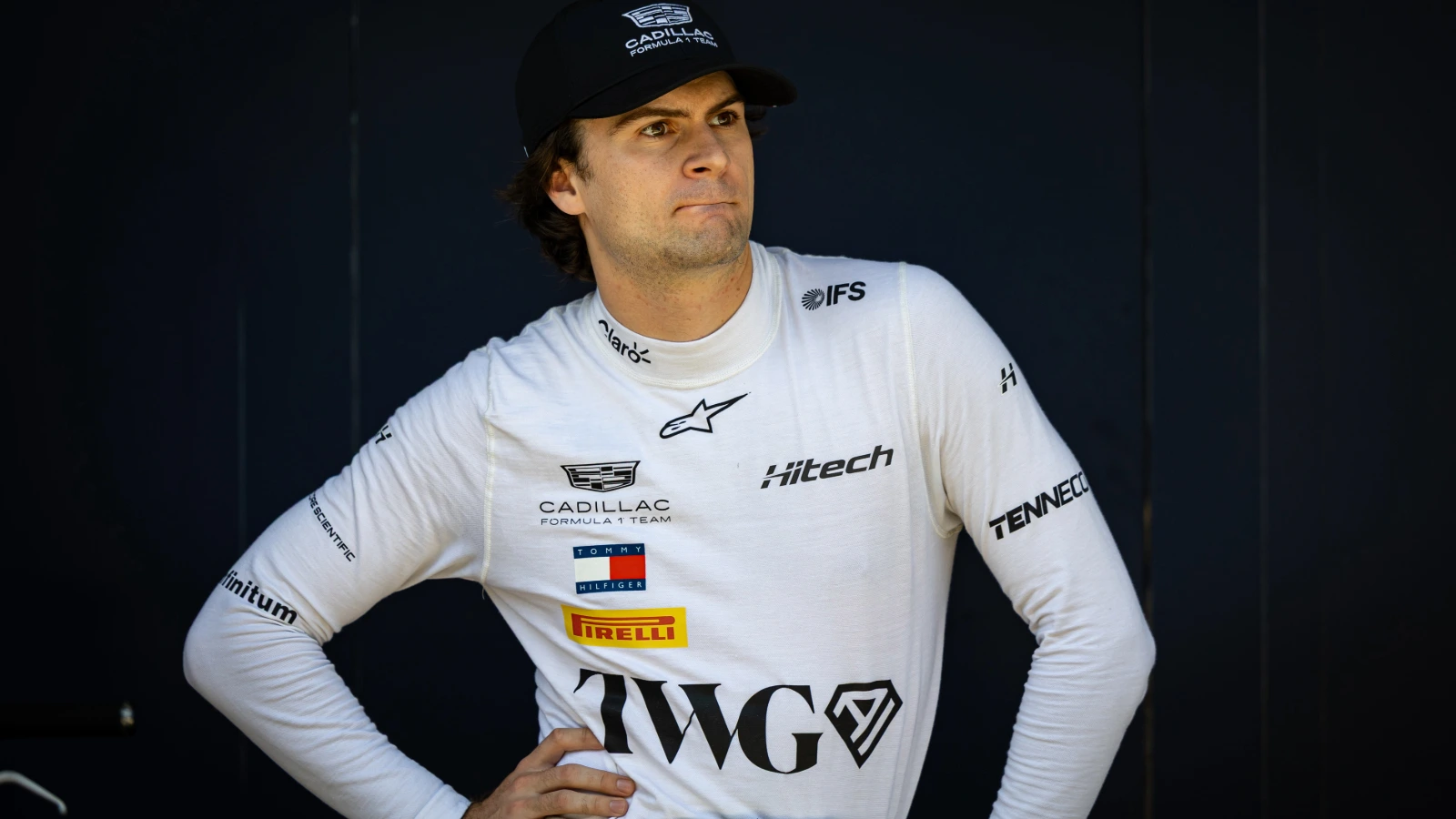
F2 CEO Bruno Michel discussed Colton Herta‘s transition from IndyCar to Formula 2, admitting the challenge was ‘underestimated’.
Colton Herta joined the IndyCar grid in 2018, became a staple of the series, and remained a frontrunner year after year. Despite his success in the American series, Herta kept his eyes on a potential future in F1.
Earlier in his career, he was linked to a potential Alpha Tauri/Red Bull opportunity. However, the chance dissipated after super licence issues came into play.
The opportunity resurfaced when Cadillac joined the F1 grid. The American outfit seemed keen to bring homegrown talent into the team, signing Herta as their test-and-development driver.

The same Super Licence issue played a role, with IndyCar not offering enough points to qualify for F1 unless he’d won the championship back-to-back.
As a result, Herta moved to Formula 2. First, to hopefully collect the superlicence points needed to put him in contention for an F1 seat and stay close to the F1 operation. He’s taken part in multiple FP1 sessions with the team this season, with three so far and one more planned.
A ‘difficult’ transition
However, the American’s rookie season in F2 has fallen short of expectations. He needed a top-ten finish to qualify for a super license; instead, he sits 19th, without a podium or win, in his campaign.
The season has been a rollercoaster of incidents and crashes for Herta, who’s struggled consistently to adjust to the F2 machinery.
Even Michel was surprised at the ‘difficult’ transition.
He told PlanetF1.com, “It has been more difficult than what I thought it was going to be because Colton is a very strong driver. There’s no doubt about that.
“He and we maybe underestimated the difference of working environment that we have, compared to IndyCar teams.”
Drivers who move from the European feeder series to Indy NXT and IndyCar often praise the change in paddock atmosphere. With the change the other way far less common among drivers.
“But I don’t think it has to be settled as an example, and I really hope that he’s going to finish the season on a high. We’re still hoping for that.” Michel said.
“He had some good races as well. He had more difficulties in quali, and maybe that’s one of the limits we were having, because you need to, in 30 minutes, come up with the right time immediately.
“You have one lap, maybe two flying laps on a set of tyres, in which you have very limited track time.
“That’s also the way we prepare drivers for Formula 1 because in Formula 1, you have limited track time as well. So probably he struggled with that, and he suffered from that a bit more than he expected.
“Now, I really hope sincerely that he’s going to finish the season on a high. He deserves it.”
Drivers from outside routes
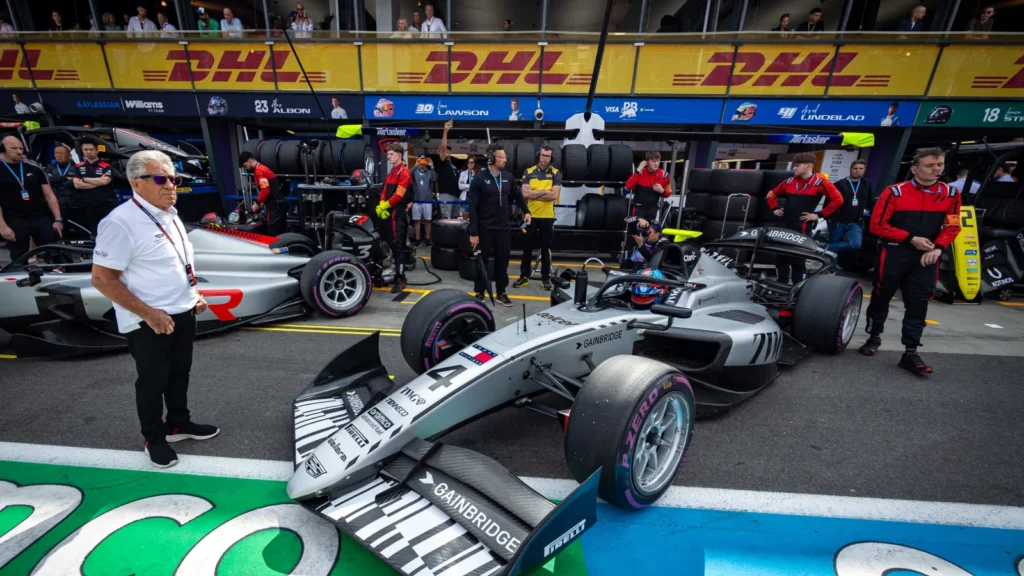
Herta isn’t the only driver who has strayed from the traditional feeder series path in search of the F1 dream. At Hitech, Ritomo Miyata came from a GT endurance career to compete in F2. Nicolas Varrone had a race career predominantly in sportscar and endurance before moving to F2 in 2026.
Michel said it’s good to have drivers stray from the established path and come from different backgrounds.
“I think it’s important to have drivers from different routes,” He said.
“The logical path is now what is called the FIA pyramid, which is Formula 4, Formula Regional, Formula 3, Formula 2. You can skip one part of it. For instance, Kimi [Antonelli] didn’t do Formula 3 and went from Formula Regional directly to Formula 2. It happens sometimes.
“But generally speaking, it’s a very positive thing, I would say, to have people coming from outside.
“I took Colton’s approach as a very interesting one because Colton is a very successful driver in Indy; he won races. He was very close in the championship.
“For him, coming into Formula 2 was a big step, a big, different step. I think it was very positive for him to do that.”
While Michel recognised it as a tumultuous transition, he also saw it as a vital step for drivers aiming for F1, as the series involves much of the same stress, schedule, and pressure as F1. Just on a smaller scale.
“It’s difficult because he’s coming from a very different environment, and it doesn’t help. But on the other hand, I think it’s very important if they want to come to Formula 1 in the end.”
READ MORE: Ferrari Academy prospect handed major F1 opportunity





Discussion about this post