
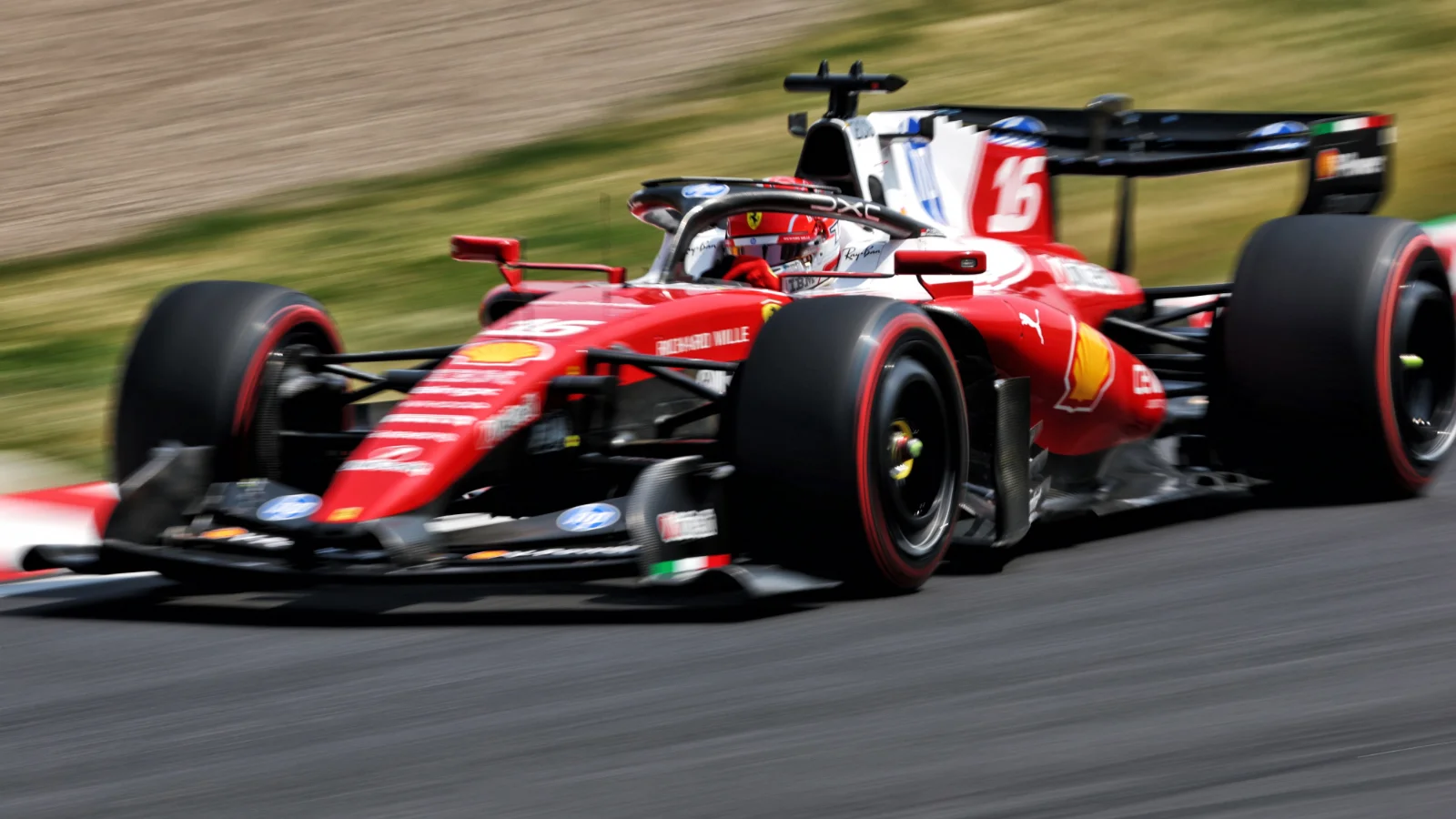
Ferrari Technical Director Loic Serra has quashed the theory that Formula 1 teams have changed their approach to car development during the sport’s enforced five-week break.
The cancellation of the Bahrain and Saudi Arabian Grands Prix has seen teams revert to rejigged plans, as the hiatus has seen teams left to work on their challengers from behind closed doors.
F1’s polarising new ruleset has guaranteed a year of exploration and discovery in terms of deciphering the ins and outs, and the advantages and disadvantages, of the new 50-50 hybrid power units.
Ferrari has already revealed that some of its plans were altered by the break, but Serra, speaking to Motorsport.com, insisted that there is no real change in terms of substance.
“Your development plan is not happening in one week or one month, it’s something you have for quite a long time,” the Frenchman said.
“We planned a long time ago, so basically you stick to your development plan. So, you’re not really affected by the fact that we are missing a race or two.”
With teams needing to find ways to be on the front foot in terms of developing amid the new regulations, Serra denied that there is scope to be more aggressive in the development process.
“Not really. Effectively you have a development plan, so you stick to your development plan. So, there is no real notion of more aggressive, more experimental, it’s not that,” he explained.
“It’s more like you plan for development, but then there is the planning and there is what you find. But in no way this modifies what you are finding, because effectively not racing doesn’t really modify what you are finding or not at the factory. So, it doesn’t really change your approach.”
The Scuderia is thought to have tested already-existing upgrades to its SF-26, such as the ‘Macarena’ wing as well as its controversial winglets, based at the foot of the Halo.
But Serra is nonplussed about the idea that some teams are bringing upgrades to next weekend’s Miami Grand Prix ahead of their original schedule.
“If you think about development being non-linear… I am not sure I understand that logic, because effectively the consequences on the cost side are quite important,” he said.
“So, if you bring parts in Miami and bring another step in Canada, depends on how big the developments are. If they are small development, incremental development I understand, but maybe people do.
“Not necessarily the notion of packages, but the notion of more incremental development, and that would make a complete sense.”
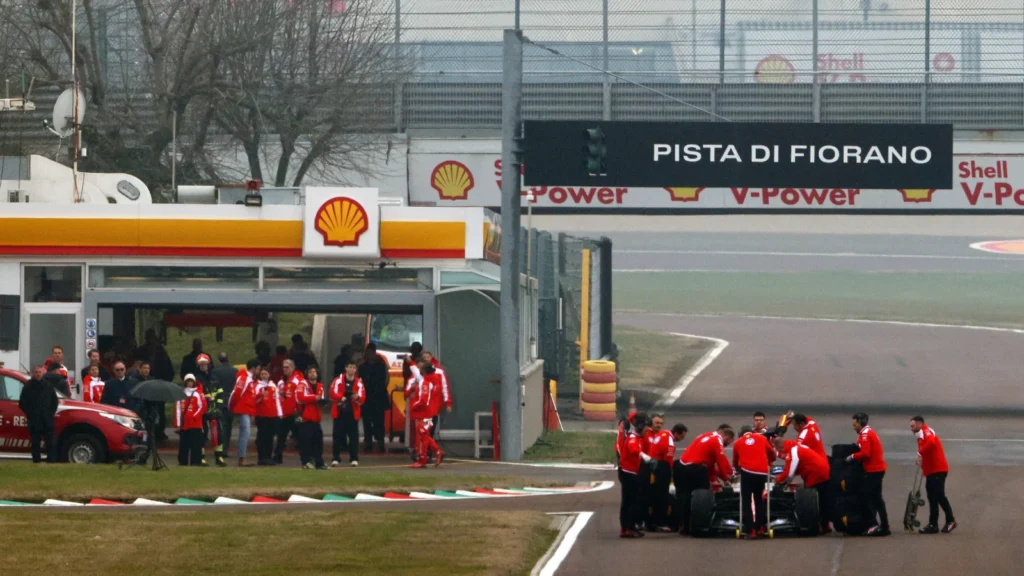
Ferrari to exercise caution with ‘the more you run, the more you learn’ approach to F1 car
Serra appeared to conclude that the development of the SF-26 will be minimal for now.
“When you think about the SF-26, we started the development of the car [at the] beginning of 2025, and then you spend a year and more to develop it without testing anything with it, testing the car,” he added.
“Then what you learned is the results of winter time, virtual development, so you bring a car that you haven’t run [to winter testing]. So, if you think about this and put in context the fact that you’re missing two races, it’s small B I would say.
“So, effectively, the more you run, the more you learn, and that’s true for everybody. But then telling that this is compromising, or this would compromise the way you approach your development, or you put the development more or less at risk, I don’t think so.”
Ferrari will surely encourage its fans by being pragmatic in its approach, especially as the car is no doubt an improvement on the SF-25.
Whether its cautious advances will pay dividends, only time will tell.
READ MORE – F1’s ‘refinements’ explained: The changes made to radical 2026 regulations?




Discussion about this post