
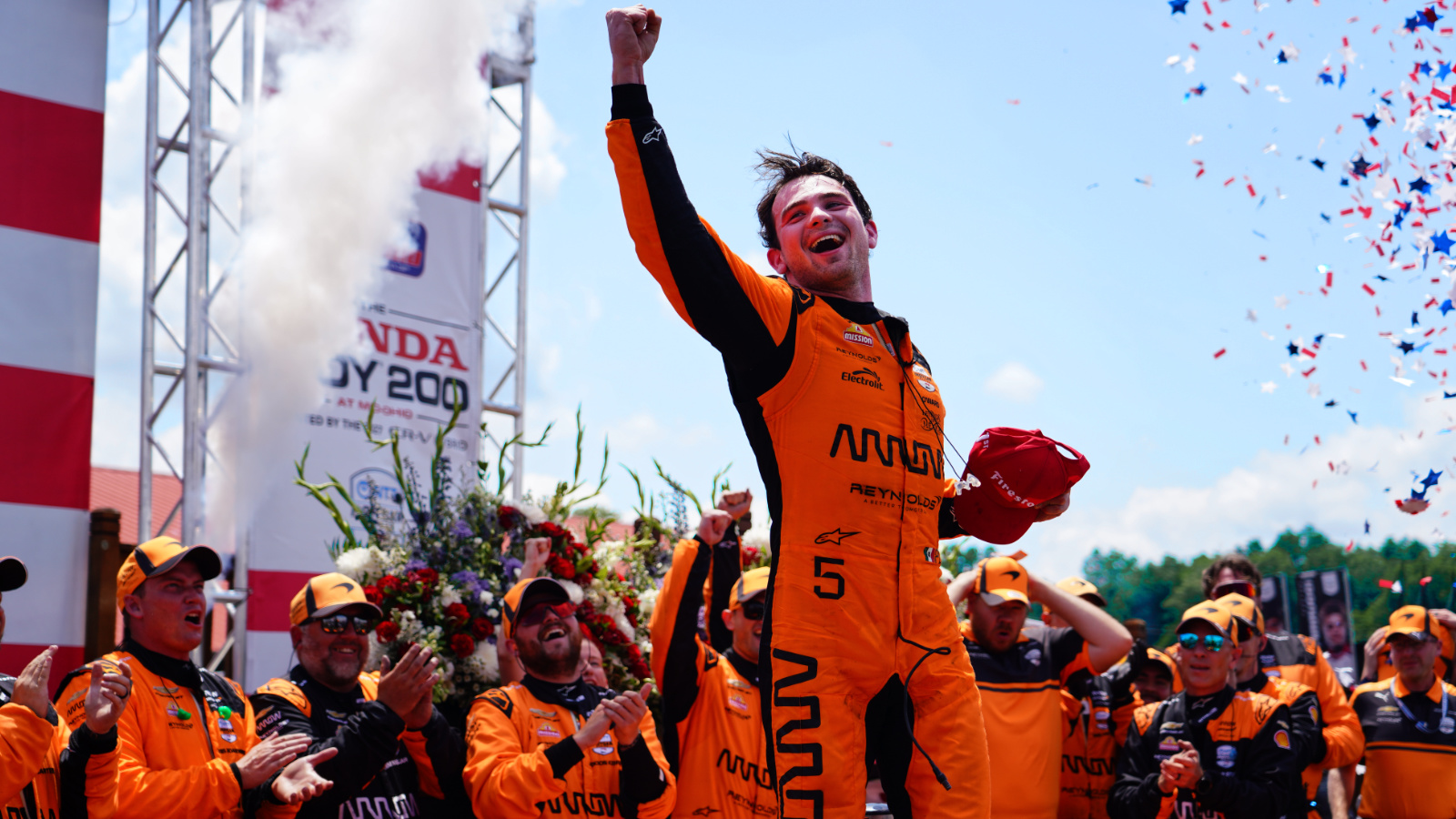
The NTT IndyCar Series completed another natural terrain road course event on Sunday, with 90 laps around the Mid-Ohio Sports Car Course.
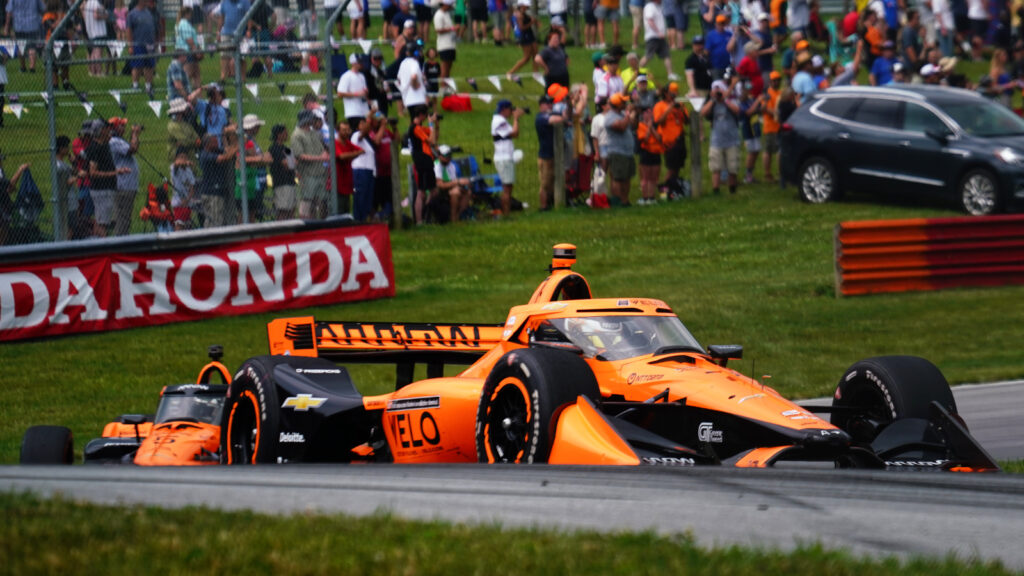
Campers and canopies lined the hillsides as fans filled in to watch America’s top open wheel series put on a show on Independence Day weekend.
Heat and humidity were a large factor in the event, and a caution-free event pushed stamina even further up and down the order.
READ MORE: IndyCar Mid-Ohio – Full Race Results
Christian Lundgaard started from pole, and held the lead through the first stint. His Arrow McLaren team-mate Pato O’Ward remained close behind, however, as if he was stalking prey.
The two remained at the head of the field through varied pit strategies, and then just past the halfway point O’Ward pounced.
The popular Mexican driver made a lunge down into Turn 4, then the two banged wheels a bit as they navigated the corner side by side.
Lundgaard finally conceded the position by time they got to Turn 6, but not before putting up a good fight for the fans lining the fencing.
That pass for the lead proved critical, and O’Ward was able to hold the lead through to the end.
The margin of victory was less than one second, however, as Lundgaard kept his team-mate honest during the entire event.
Arrow McLaren earned its first ever 1-2 finish with the result, showing how strong the team can be.
Crossing the line in third was Kyle Kirkwood, who was one of a few drivers that was able to move forward during the caution-free event.
He put his good performance down to a good test and proper car setup, as opposed to figuring out any driving techniques this year.
Filling out the top 10
Just off the podium was Rinus VeeKay, who crossed the line in fourth to match his best finish of the season.
The Dutch driver looked like he would be able to stand on the podium, but narrowly missed out on his opportunity with pit stops late in the event.
With no cautions to break up the event and following another driver as difficult as ever, VeeKay was forced to settle in behind Kirkwood and take fourth.
Alex Palou was never really in the fight for the win, which is remarkable in its own right, but still moved forward.
He started in eighth, and his prediction that he would be able to make up ground on race day held true. Palou finished in fifth, and maintained a healthy points lead.
Will Power was sixth across the line, followed by Christian Rasmussen in seventh.
David Malukas finished eighth, with a slow pit stop helping contribute to him slipping down from fourth at the beginning.
Once again, the young driver was the best performing Team Penske driver, showing up his elder team-mates.
Josef Newgarden was not far behind, however, and finished ninth despite still nursing a lengthy recovery on his foot.
Rounding out the top 10 was Nolan Siegel, his second time breaking into that echelon this season.
His accomplishment gives Arrow McLaren full team representation in the top 10, a good day for any organization.
Planning and strategy
Up and down pit lane, strategy calls were the make or break factor.
Initially, it was thought rain would build across the circuit at roughly the halfway point, but the showers stayed a few miles away from the track and the sun came out instead.
Teams that prepared for a dry race were at an advantage, as were those that prepared for a hot track.
The soft Firestone tires degraded quickly in the heat, and they only lasted about 10 laps before drivers needed to come in and take on a new set.
Each car was required to race both compounds at some point during the event, but when each team decided to suffer through a tough stint was key.
Even one lap before or after the competition could lead to a couple seconds lost if the decision was incorrect.
Further to that point, execution was key as well. The extreme heat affected the crew members as well as the drivers, and performance was tough.
A couple small errors during pit stops, and a couple small indecisions from the pit box contributed to the results in a race that was filled with small margins.
Qualifying was key
On account of rain staying away, there were not any external factors to shake up the order.
As a fast and flowing track, downforce is key and drivers had a tough time following closely and passing those in front.
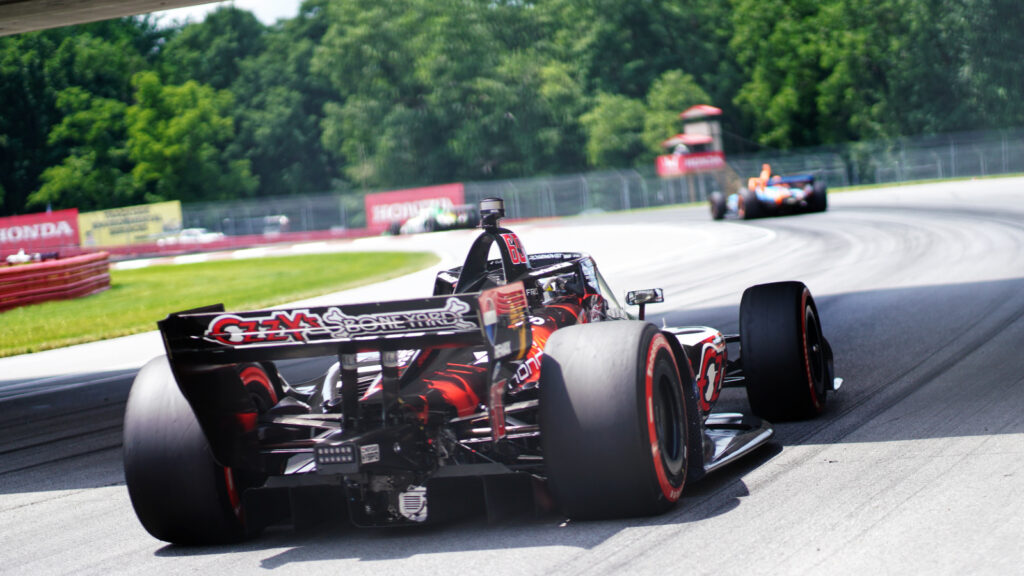
That meant that where drivers qualified was more important than usual, and those that started at the back generally had trouble gaining a good result.
Kyle Kirkwood was one exception to the rule, moving forward to gain a podium. Marcus Armstrong also found a way to carve through the field from 24th up to 14th.
But other gains were much smaller, with even the veteran Scott Dixon only able to move forward five positions.
The six-time champion won this race last year and started down in 22nd due to a blocking penalty in qualifying, and ended the day in 17th.
Scott McLaughlin also moved forward a bit, but still finished in a disappointing 16th.
Other top performers, such as Alexander Rossi in 20th, failed to make any headway whatsoever in the tough conditions.
Drivers will look to rest and recover, then will face off again in two weeks’ time at Nashville Superspeedway.




Discussion about this post