In the high-stakes environment of elite motorsport, performance is no longer measured solely by mechanical horsepower or raw driver instincts.
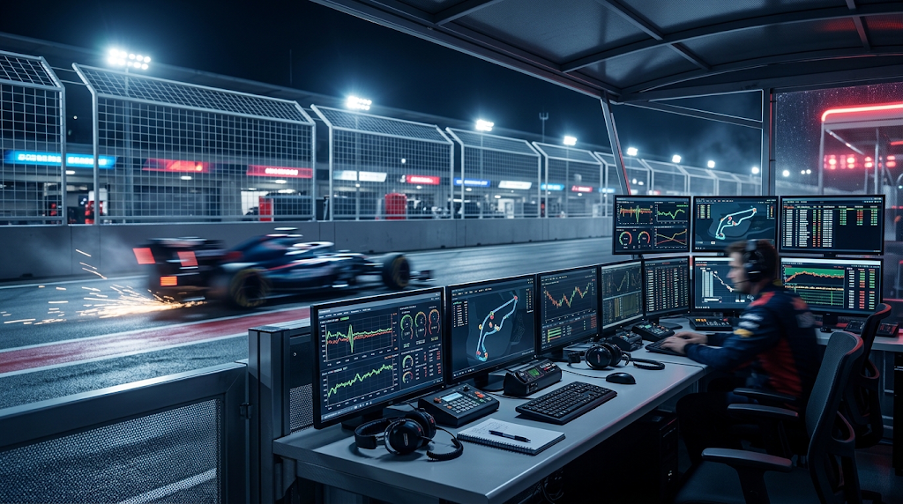
Modern racing disciplines — most notably Formula 1 and endurance racing — have evolved into high-speed data ecosystems where victory is determined by split-second decisions made on the pit wall. With hundreds of sensors monitoring everything from tyre degradation curves to thermal distribution, real-time telemetry has transformed motorsport into one of the most technologically sophisticated sports on the planet.
For engineering teams, drivers and motorsport analysts, interpreting these continuous streams of predictive data is the ultimate competitive differentiator.
The mechanics of real-time telemetry on the track
During a typical Grand Prix weekend, a single modern race car generates several gigabytes of telemetry data per session. High-frequency sensors embedded across the chassis, power unit and aerodynamic surfaces record critical variables thousands of times per second.

Key telemetry metrics driving trackside operations include:
Tyre thermal management: Tracking inner carcass temperatures alongside surface wear to predict the exact degradation cliff before lap times drop off.
Aero-balance and downforce mapping: Measuring ride heights and suspension compression under heavy braking to optimise corner entry speeds and aerodynamic stability.
Power unit energy deployment: Calculating harvested energy via the car’s energy recovery systems to deploy maximum electrical boost during critical overtaking manoeuvres.
Pit-wall strategy and the shift towards predictive modelling
Raw data alone does not win races — actionable predictive modelling does. Race strategists rely on sophisticated simulation algorithms that run thousands of race scenarios in real time. These models process live safety car probabilities, weather radar shifts, dynamic track evolution and traffic windows to determine optimal pit-stop timing.
This demand for instant data clarity extends beyond the engineering garages to modern sports platforms and live analytics ecosystems. Fans and sports analysts seeking real-time updates and interactive statistics increasingly engage with data-rich digital environments.
Platforms such as Parimatch mirror this analytical approach by integrating live statistical feeds, real-time odds adjustments and comprehensive match metrics. By delivering high-velocity sports data in an intuitive layout, such portals allow enthusiasts to analyse race momentum and tactical shifts as they unfold on track.
The human factor: Driver feedback meets algorithmic precision
While algorithms provide the mathematical foundation for race strategy, the driver remains the final execution point. Engineers use telemetry to overlay lap comparisons between team-mates, pinpointing exact throttle application points, braking markers and steering angle adjustments.
Micro-adjustments under pressure: Drivers modify brake bias and differential settings on the wheel based on telemetry feedback relayed from the pit wall.
Cognitive load management: Strategic communications are filtered to convey only essential delta times, preserving driver focus during high-speed wheel-to-wheel battles.
Post-session debriefing: Telemetry overlays serve as an objective baseline during engineering debriefs, eliminating subjective guesswork and accelerating setup optimisation.
The future of motorsport intelligence
As machine-learning models become more sophisticated, the integration of artificial intelligence in race strategy will deepen. Edge computing will process data even faster, allowing teams to react instantly to sudden track incidents or changing weather fronts. In an era where milliseconds define championship titles, data-driven precision will remain the core engine of motorsport innovation.