
Audi boss Mattia Binotto has revealed the plans Formula 1 has in place to return back to the cult-classic V8 power units.
The last time the F1 paddock heard a roaring V8 engine in anger was the 2013 season.
Since then, the sport has embraced the V6 turbo-hybrid concept, revamped drastically in 2026 to introduce a 50-50 split between the ICE and battery pack.
But no sooner did the all-new PUs debut, attracting interest from the likes of Audi and Cadillac to enter the sport, the conversation has shifted back to re-introducing the V8s.


Binotto revealed that the teams, engine manufacturers and the FIA are in constant deliberations overs the finer details of the planned shift in the engine formula.
The former Ferrari Team Principal divulged plans to emulate an IndyCar-esque ‘push-to-pass’ button, but explained that its form is yet to be decided upon.
“Yes, it [a push-to-pass system for the next engine regulations cycle] is on the menu,” he admitted to media including Motorsport Week.
“Push to pass is important for the racing situation, for overtaking, and making sure that we are not creating trains and no one can overtake.
“So a push-to-pass will be there. What type of push-to-pass is still to be discussed. So there is not a clear way of doing it; there are multiple ways of doing it.
“It can be boost pressure, it can be DRS, it can be KERS, so electrical, so the way we will do it will be part of the discussions with the FIA.”
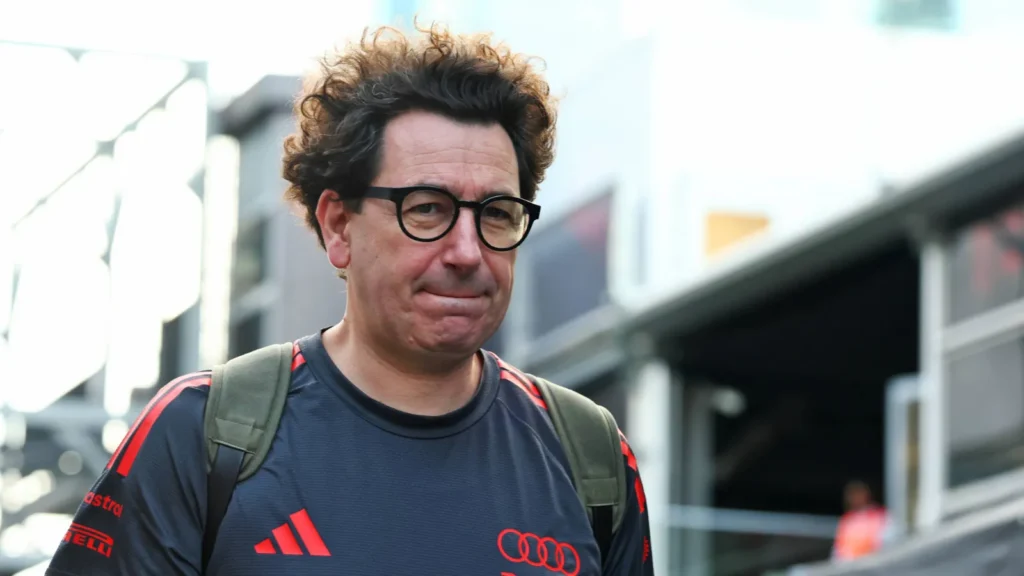
Mattia Binotto reveals Audi agenda for a return to V8 engines
The Italian engineer clarified that the German marque is not opposed to a potential return to the V8 configuration.
That said, Binotto stressed on how it was important for the sport to reach a consensus on the formula soon to render its possibility feasible.
“There is no clarity yet, so we know that the FIA is still elaborating on what maybe the concepts they would like to propose,” he added.
“We know it’s a V8 for 2030 at the earliest, but the timing is uncertain. Development has to start before the end of the year.
“I think the regulation needs to be agreed and voted on before the end of the year to have certainty and clarity on by 2027 to start the design and concept phase.”
Audi’s F1 entry was based on the turbo-hybrid concept of 2026, coupled with a push for sustainability that it hoped would track to its road-going technology.
Therefore, the German marque, while not miffed by the idea of scrapping the current formula, is concerned of the cost implications given its substantial investment in a project that has been swatted away as soon as it was introduced.
“What’s the main objective we are looking at? I think we are we all agree. First, there will be significant cost savings required,” Binotto explained.
“The current power unit is still very expensive, and we believe that having a clear target on cost would be important when considering the format of the V8 itself.
“We believe that we still need to retain some advanced technologies. I think that F1 has always been the edge of a platform for innovation ahead of technology, and we believe whatever will be the overall format, it has to remain a platform for innovation for all the manufacturers.
“So yes, we welcome the V8, welcome a better sound, we welcome cost saving, but when it comes to the details of hybrid, I would say yes, turbo, possibly yes, but all the details, I think exactly need to be discussed with the FIA.
“That’s why I think that discussion will start very soon. As Audi, we are very open, very collaborative, and I’m pretty sure that together with the FIA, we will find the right compromise.”
To justify a move away from the current V6 formula, F1 would have to retain at least a semblance of the hybrid-electrical concepts.
The integration of electrical propulsion, in an otherwise conventional engine formula, as far as F1 was concerned, will be an interesting footnote in the conversations still to be had on a regulatory and governance level.
READ MORE – Audi leads F1 Baku upgrade push as five teams opt to stay the same








Discussion about this post