
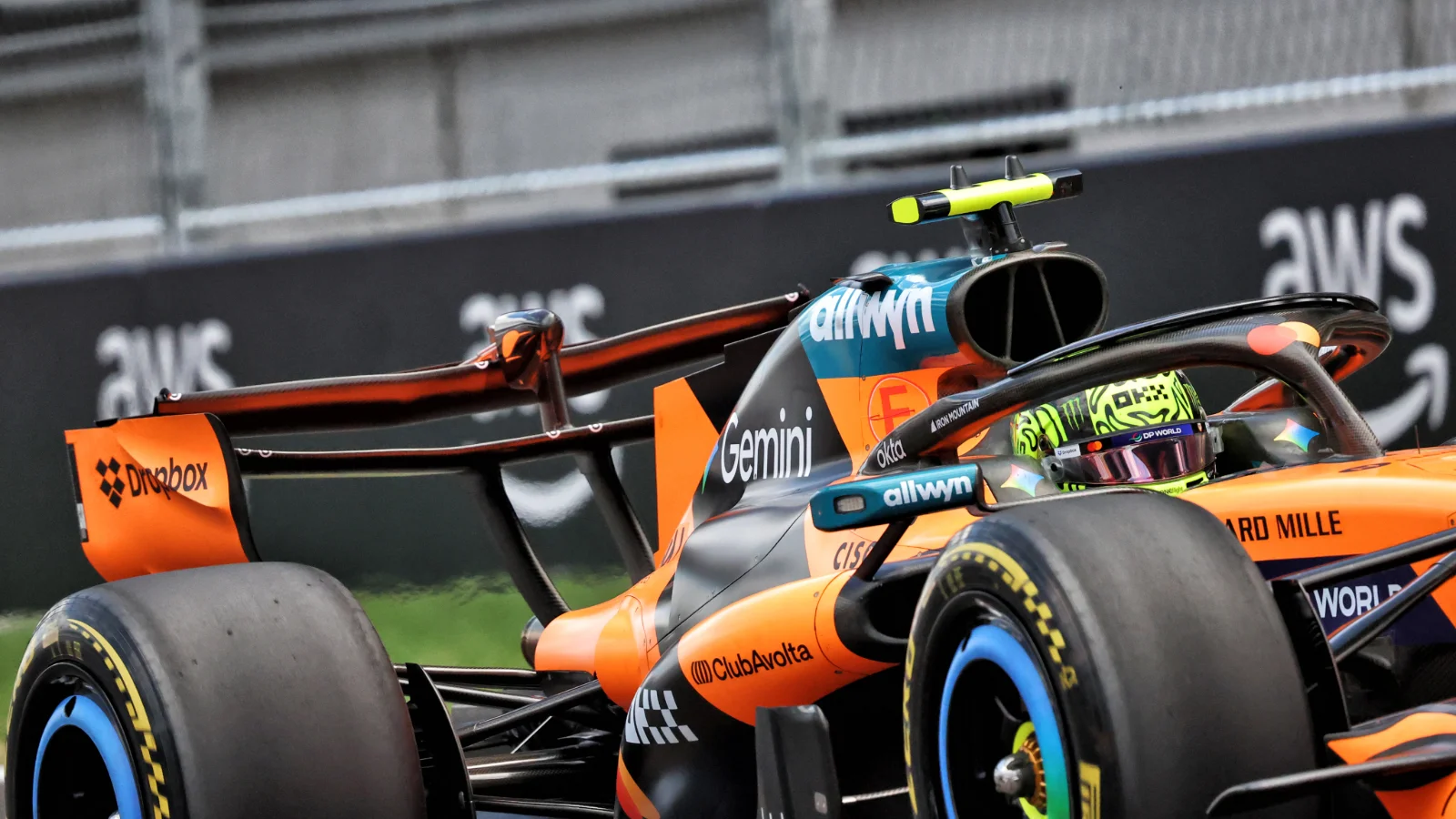
Andrea Stella gave the green light to the McLaren experimental rear wing introduced in Hungary, confirming it will be a feature at upcoming rounds.
On Friday at the Hungaroring, McLaren were seen sporting a familiar rotating rear wing design on their car. Though new to the Papaya team, the wing has been featured across the top teams.
First introduced by Ferrari early in the season, the full 180-degree rotating wing was dubbed the ‘macarena’ wing. Since then, Red Bull have introduced their own version, with McLaren now looking to reap the benefits.
The wing is unique in the way it fully opens and rotates when the straight-line mode is activated. The inversion not only limits the amount of downforce but also brings with it a small lift.


Ferrari quickly realised in pre-season that the wing could increase aerodynamic efficiency and take some of the strain off the power unit.
A ‘complicated’ design
The Maranello team introduced the experimental wing in the free practice session at the Chinese Grand Prix. However, its first race run was in Barcelona.
While Red Bull did bring in their own version, they set it aside following two significant incidents involving Max Verstappen, who crashed in Austria and at Silverstone.
Now it’s McLaren’s turn to try their hand at the wing, testing out their first variation in Hungary.
“It’s been a complicated project, which was no surprise,” Stella told PlanetF1.com when questioned about the design.
Stella admitted that the data the team gathered in Budapest was incredibly promising. It’s led to the team signing off on the wing’s appearance in upcoming races.
“It’s been a positive sign-off of this concept, and we look forward now to introducing this concept at some future events,” he confirmed.
One of the key differences between the McLaren and Ferrari variations is the direction the wing turns. Ferrari’s wing flips backwards while McLaren, similar to Red Bull, rolls forward.
The impact of wind tunnels
Some have argued that this technical difference is due to the wind tunnels. One of the key aspects of the wing is how the aerodynamic flow is managed as the wing moves back into the default position. This has to be handled with care, as the FIA has regulations governing actuation times.
However, Stella dismissed this idea.
“I don’t think the wind tunnel is a major factor in terms of determining the aerodynamic behaviour in reattachment,” Stella argued.
“You can use some other tools for that, and then the most important tool, especially when you have these sort of complicated projects, even from an aerodynamic point of view, remains what you observe at the track.
“It was important for us to acquire data via trackside because you would have never relied on a wind tunnel only for such a delicate project.”
It’s likely the team will debut the wing at Monza or Baku, with the straights offering the prime opportunity to test it under race conditions. However, it won’t be until the race that McLaren will see if the wing is a step in the right direction.
READ MORE: Aston Martin breaks cover with new Honda engine in special F1 test









Discussion about this post