
Formula E has announced the inclusion of three classic Formula 1 circuits and a brand-new sporting format for Season 13 – the first of the Gen4 era.
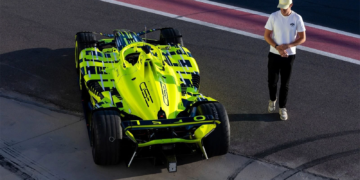
The new car has been a cornerstone in terms of generating excitement for the forthcoming campaign for some time, and the bigger and faster machine means a plethora of major changes to the all-electric championship’s identity.
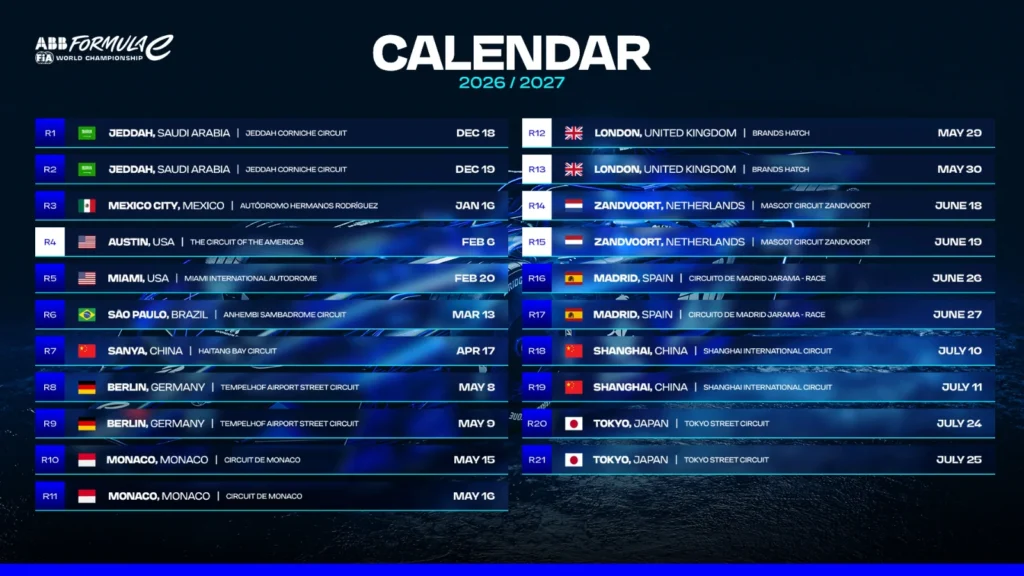
As expected, the series has aimed big with a whopping calendar, by far the biggest in its history, and with that, comes a host of purpose-built circuits, which deviates slightly from its city centre DNA.
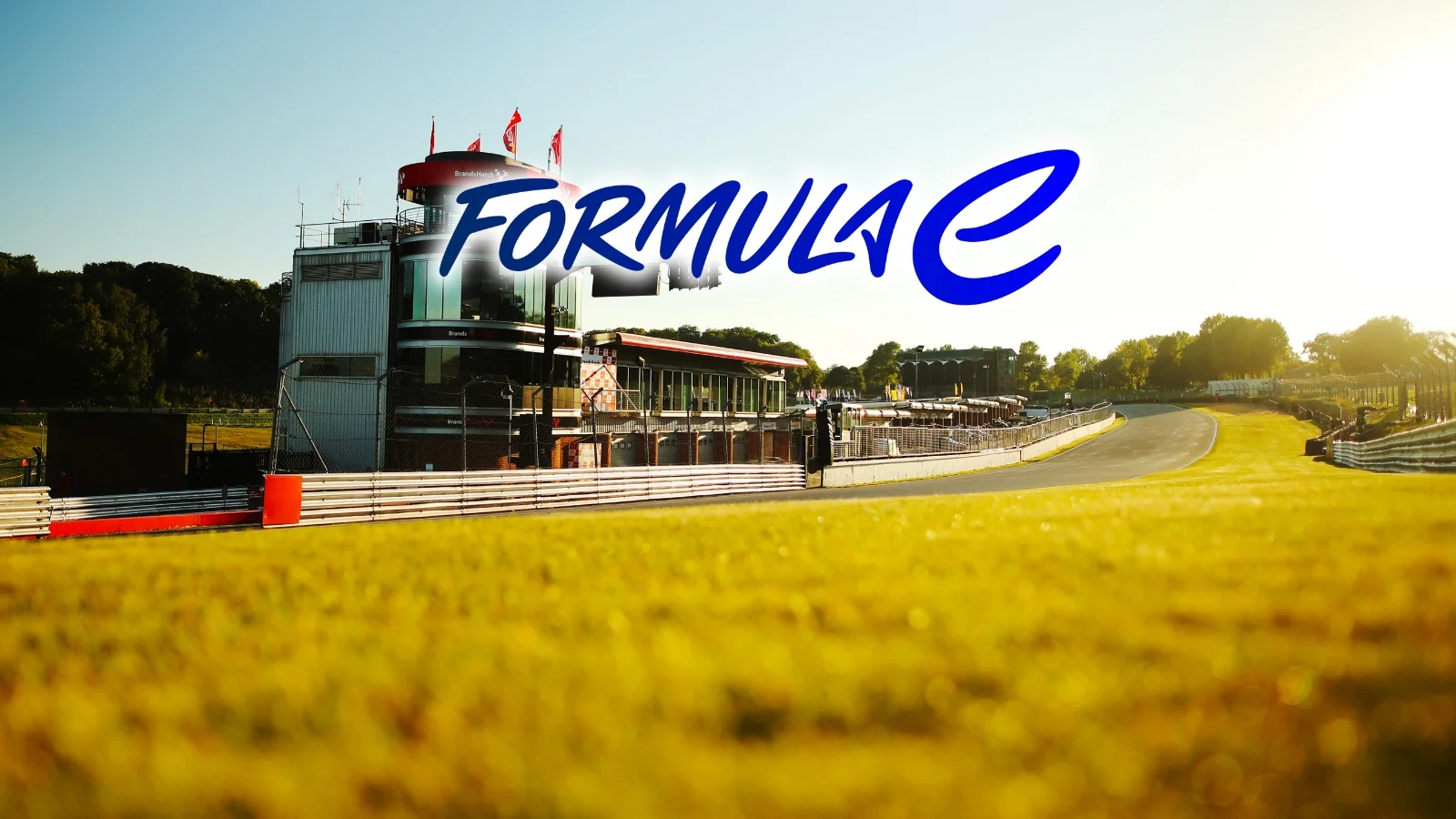
Rumoured for over a year, iconic British circuit Brands Hatch takes the hosting duties for the ‘London’ rounds of the calendar, replacing the Excel, which bows out at the end of this season.
With F1 vacating the Netherlands at the end of 2026, the Zandvoort circuit finds a new family in the shape of Formula E, the short but thrilling layout promising, like Brands, to be an ideal match for the new challenger.
And, in a brave pivot, FE has, at long last, found its second American home. Joining the Miami International Autodrome at the Hard Rock Stadium, the Circuit of the Americas, home of the United States Grand Prix since 2012, will make its championship debut.
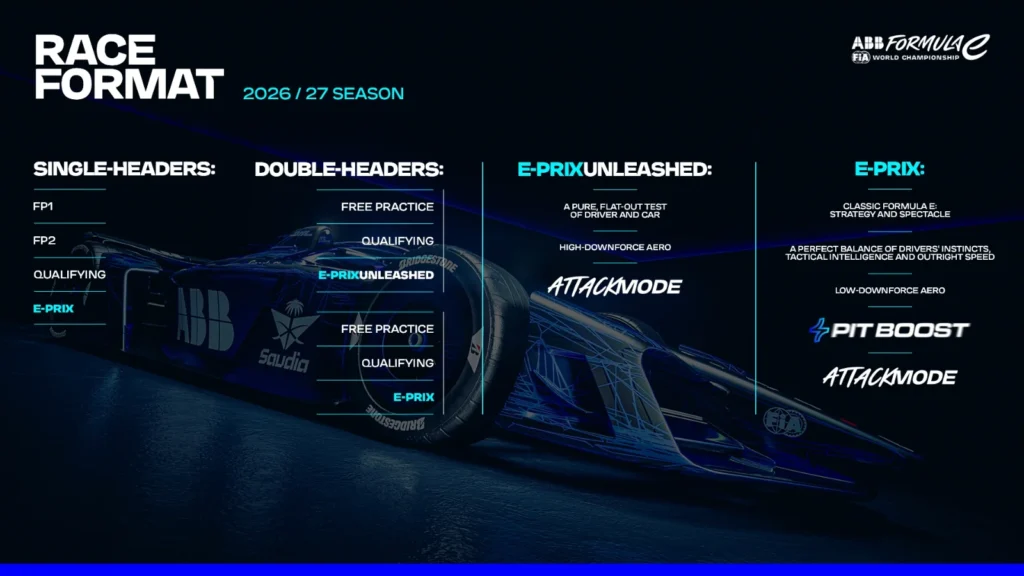
There is, additionally, a new racing format called ‘E-PrixUnleashed’ – which will enable the Gen4 car’s rapid speed to be showcased to its maximum.
Maximising exposure through a record-breaking calendar
Formula E’s decision to retain eight double-header weekends on its record 21-race, 13-round Gen4 calendar is designed to maximise exposure for the championship’s new sporting format and technology.
Asked why Formula E has opted for so many double-headers, despite the longer calendar, co-founder and Chief Championship Officer Alberto Longo pointed to the introduction of two distinct race formats under the Gen4 regulations.
“The reality is that I think with the new sporting format that we have, showcasing two complete different type of races, we wanted to do that in as many cities as possible, and this is the main reason,” he told select media, including Motorsport Week.
“So, we want to, again, attract as many people to our sport as possible, and the best way to do that is showcasing, these two different type of races, and one of them way more strategic, way more talking about the management of the energy.
“The other one is full throttle and less pure kind of flat out race, you know, and this is exactly what we wanted to showcase, what we wanted to bring to our fans.”
Longo also explained that Formula E is approaching the maximum number of races it can hold during the Gen4 era, meaning future calendar expansion will likely come through adding venues rather than increasing race count.
“And I don’t know if you are aware, but we have a maximum number of races that we can do for GEN4 on a yearly basis, obviously, and we are very close to that kind of goal, which means that if we add an extra race, and we will eventually in season 14, 15 and 16, those races will be in detriment of actual double headers.
“So the maximum number of races that we can do in one single season, unless there is some other changes, but let’s not go into detail, it will be 22, you know, so we are already in 21, that will mean that next year we could add one extra race without touching anything, the following year, if we add an extra race, then we will be deducting a double header.
“So again, the most important thing for us was to showcase the new technology, the new car, to as many cities as possible, that’s the reason why we have so many double headers.”
Showcasing E-Prix ‘unleashed’
Meanwhile, Formula E Head of Championship Pablo Martino outlined how the Gen4 car’s two aerodynamic configurations will be used across a race weekend.
Teams will have freedom to choose between high- and low-downforce specifications during practice sessions, with no mandatory requirement on when changes must be made.
“So, together with Formula E, we have defined a pack on how we want to use and which cadence we want to use this aerodynamic configuration. Considering that free practice, we will remain that use open for the teams to decide what is the best aerodynamic configuration they want to use.
“As long as they have two different free practice, say they’re single headers or double headers, it will be up to them on how to use this on the best convenience if they want to change.
“So, during the session, it will be possible as well for them. No obligation, no mandatory imposition from our side.”
Martino confirmed the current plan is for qualifying sessions to use the high-downforce package to demonstrate the full performance potential of the Gen4 machinery.
“On a normal basis, qualifying, we are planning, and this has been defined at the beginning to have four qualifying sessions in high downforce in order to showcase the best potential of the Gen 4 car, of course.”
Race configurations will vary depending on the format. Standard E-Prix races are expected to use low downforce, while the shorter ‘E-Prix Unleashed’ races scheduled on double-header weekends will run in high-downforce trim.
“And then on the E-Prix, on the normal E-Prix, if we are talking of a single header, as long as the races will be pretty much similar to the distance that we have today, a little bit longer in many occasions, but around the 40-45 minutes length, these races will happen in low downforce.
“And then when it’s coming to double headers, what has been under discussion is to have the E-Prix released on a high downforce configuration always. There will be shorter races with less energy management requirements for the length of the race.
“Normally, it will be around 10% of lift-off, and these races will be around 25 minutes length. So, this will happen on [a] high downforce configuration.”
However, Martino revealed discussions are ongoing over whether some qualifying sessions could also be held in low-downforce specification to reduce the need for setup changes across a race day.
“The key question […] is that some teams for rational reasons have requested to analyse if it will be possible to have a Qualifying session in low downforce, especially for the second day on the double headers or for the day that we have the normal E-Prix, in order to not perform any change of header configuration over the day.
“This is under discussion today, or as is asked today. […] The regulations allow us some sort of flexibility on deciding what to do on that particular session, and this decision will be taken in the next couple of weeks.
“There are some pros and cons, as you can imagine, and especially in the qualifying session, the intention is to showcase the performance of the cars.
“Therefore, potentially the high downforce configuration would be the best to showcase that performance. Still, that question mark on our side is something that will be solved in the next couple of weeks.”
Formula E’s boldness in its choices will certainly leaves the championship with baited breath across the season, as it hopes it will continue its trajectory of new fans and firmly jump into the motorsport mainstream.




Discussion about this post