
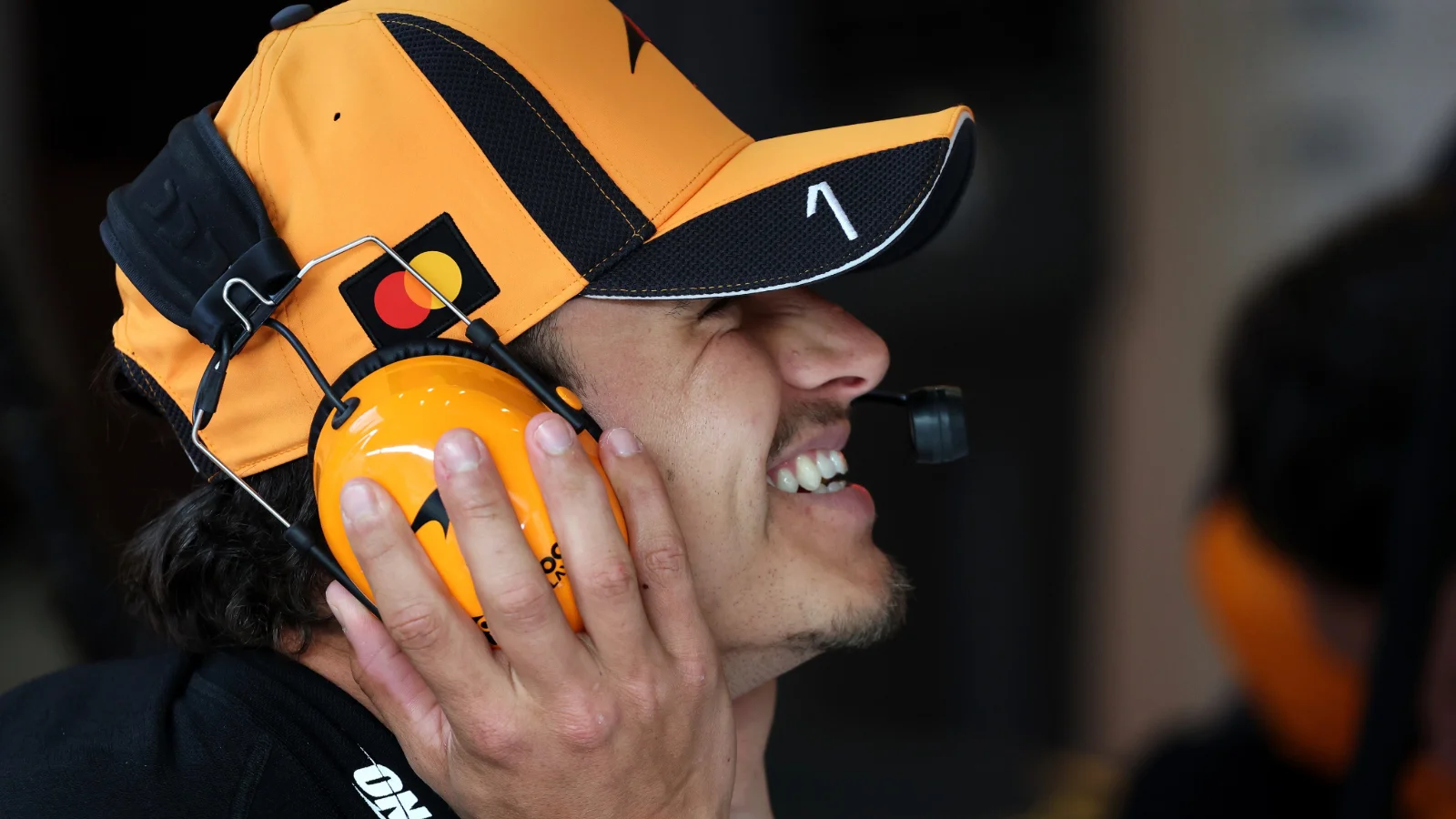
Lando Norris has issued confidence in the possibility of a successful damage limitation job in this weekend’s Formula 1 Belgian Grand Prix, after having taken a 10-place grid penalty for the race.
The reigning World Champion is braced for the significant grid drop after McLaren opted to change the power electronic unit in order to reap benefits from Mercedes’ updates to them.
It will leave Norris in an extremely vulnerable position, needing to get into Q3 and perform well to mitigate the pain of the penalty.
But, speaking to media, including Motorsport Week, ahead of this weekend’s race, Norris was hopeful of nullifying the problems the grid drop will cause, conveying quiet confidence he will make up positions.


“We will have to wait and see how the overtaking is,” he said. “Most people would deploy basically the whole battery to Turn 5, and you would go from pretty much 100 percent battery to zero, so there is not much use for the battery, so we have to wait and see.
“We probably have a small straight-line speed advantage compared to the people a little further back, so we should have a good chance.
“But just to overtake in general, I think it could be pretty difficult here.
“But the slipstream is pretty big, and there are still a few straights where there is no straight mode, and therefore the slipstream is pretty large, and you can gain a good amount for that.
“So I don’t have all the answers yet, but we know it is better than Zandvoort and better than Hungary to take penalties, so I hope it is not the end of my weekend before it starts, but I am confident we can have a good weekend.
“We will wait and see.”
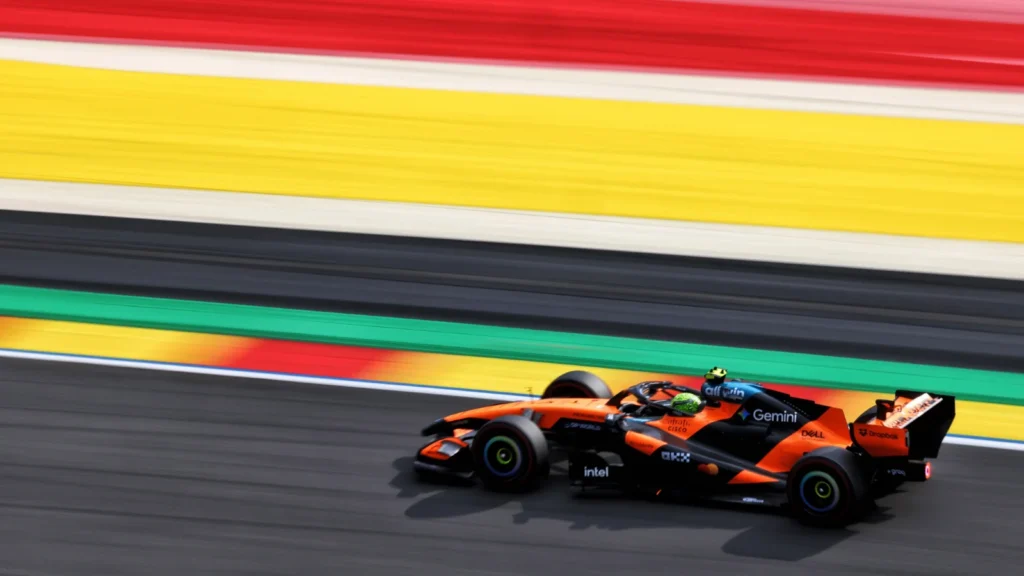
What can Lando Norris expect in midfield battle at Spa?
Spa-Francorchamps presents a unique puzzle for energy management, and it is one of the reasons Norris’ optimism is not entirely misplaced.
The uphill blast through Eau Rouge and Raidillon into the Kemmel Straight is the single biggest harvesting-and-deployment zone on the calendar, with cars spending an unusually long period at full throttle before drivers are forced to lift for the Les Combes chicane.
That long full-power phase burns through battery reserves quickly, but the compensating downhill and braking zones, particularly into Pouhon and the final sector, give the MGU-K plenty of opportunity to recover energy for the next lap.
The difficulty, as Norris alluded to, is that so many cars arrive at Turn 5 simultaneously low on charge, which flattens out what would otherwise be a clear straight-line advantage for cars with stronger deployment.
That bunching effect can work in favour of a recovering driver, since the field’s energy resources are levelled just as the long straights offer the best passing opportunities.
With Spa’s notoriously changeable weather adding a further variable to tyre and energy strategy, teams will need near-perfect harvesting execution through the middle sector to have anything left when it matters heading onto the straights.
READ MORE – McLaren clarifies sighting of Max Verstappen agent at F1 team hospitality








Discussion about this post