Juan Manuel Fangio is the greatest Formula 1 driver of all time according to our formula-based analysis.
His five world titles, 24 wins from just 51 starts, 29 pole positions, and 23 fastest laps — those numbers set a standard of efficiency and dominance that no driver in the sport’s history has surpassed.
The debate over the greatest F1 drivers of all time never truly ends. Different eras, shorter and longer calendars, changing points systems, and dramatic improvements in safety all make direct comparisons difficult.
That is exactly why we use a fixed formula weighted across wins, podiums, pole positions, fastest laps, world titles, and career efficiency rather than relying on raw totals alone.
How the ranking formula works
To compare the greatest F1 drivers across all eras, we focus on the results that define greatness in Formula 1: race wins, second places, third places, pole positions, fastest laps, world championship titles, and total starts.
Each factor is weighted, totalled, and then divided by the number of race starts. This gives us an efficiency score rather than a simple cumulative total — a measure of how much a driver achieved relative to their opportunities.
The weighting system is as follows: race wins count for 0.5, second places for 0.4, third places for 0.3, pole positions for 0.2, fastest laps for 0.1, and world titles for 1.0. World championships carry the most weight but not enough to be determined by a single statistic.
This matters because the early decades of Formula 1 were far more dangerous, calendar years were shorter, and career lengths varied enormously between eras. Shared drives in the early years are excluded where they would distort direct career comparisons.
In a broader sense, this kind of structured scoring approach resembles how modern digital ecosystems are evaluated as well — where performance isn’t just about raw totals, but efficiency, conversion, and value per opportunity, whether in sport analytics or promotional systems like Stay Casino no deposit bonus, where outcomes are assessed relative to conditions rather than simple accumulation.
Top 10 greatest F1 drivers of all time
Based on the formula above, here is the current ranking of the ten greatest Formula 1 drivers of all time:
| # | Driver | Starts | 1st | 2nd | 3rd | Poles | FL | Titles | Score |
| 1 | Juan Manuel Fangio | 51 | 24 | 10 | 1 | 29 | 23 | 5 | 57.6 |
| 2 | Alberto Ascari | 32 | 13 | 4 | 0 | 14 | 12 | 2 | 44.1 |
| 3 | Jim Clark | 72 | 25 | 1 | 6 | 33 | 28 | 2 | 36.3 |
| 4 | Ayrton Senna | 161 | 41 | 23 | 16 | 65 | 19 | 3 | 32.5 |
| 5 | Lewis Hamilton | 356 | 105 | 57 | 40 | 105 | 67 | 7 | 32.1 |
| 6 | Michael Schumacher | 307 | 91 | 43 | 21 | 68 | 77 | 7 | 31.7 |
| 7 | Max Verstappen | 209 | 63 | 32 | 17 | 40 | 33 | 4 | 31.6 |
| 8 | Nino Farina | 33 | 5 | 8 | 5 | 5 | 4 | 1 | 31.5 |
| 9 | Alain Prost | 199 | 51 | 35 | 20 | 33 | 41 | 4 | 30.3 |
| 10 | Jackie Stewart | 100 | 27 | 11 | 5 | 17 | 15 | 3 | 27.3 |
10. Jackie Stewart (1965–1973)
Sir Jackie Stewart closes the top ten but his place among the all-time greats is entirely deserved. The Scottish legend started 100 Grands Prix, won 27 of them, and stood on the podium 43 times — a remarkable record by any measure.
Stewart was not just fast; he was disciplined, technically precise, and strategically intelligent. He won three world titles and became one of the most influential voices in Formula 1’s safety movement, a factor that matters considerably when comparing drivers from the sport’s most dangerous era.
His final season ended in tragedy when his team-mate François Cevert was killed during the 1973 United States Grand Prix weekend.
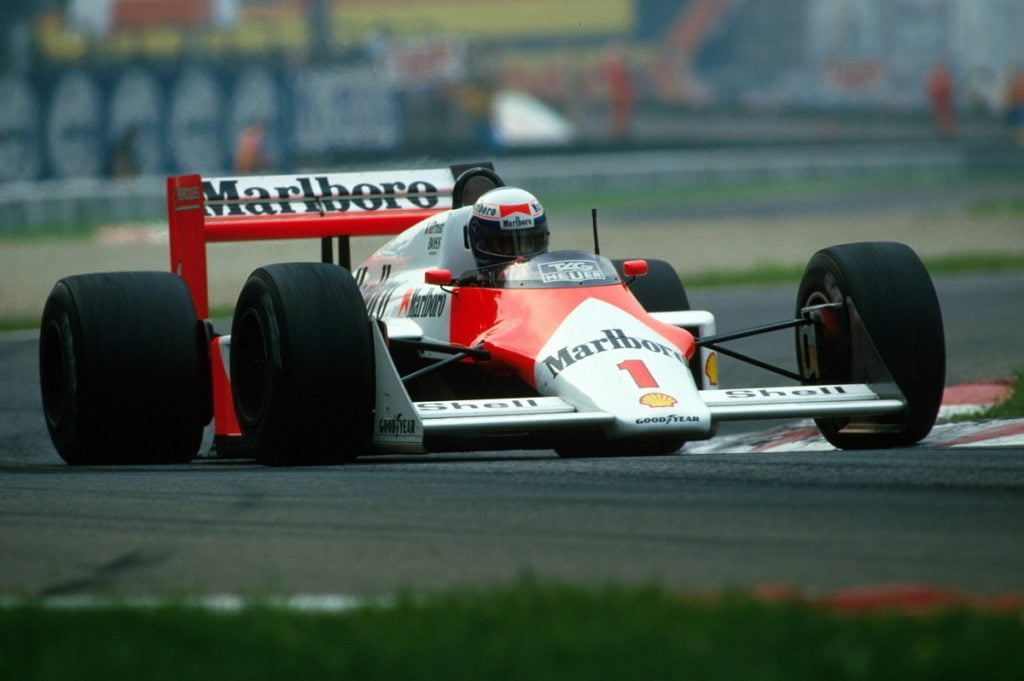
9. Alain Prost (1980–1993)
Alain Prost is often one of the more underappreciated names in any all-time F1 debate. The Frenchman won four world championships and 51 Grands Prix, earning a reputation as one of the most intelligent and calculating drivers the sport has ever seen — hence the nickname The Professor.
What set Prost apart was not raw aggression but his ability to manage a race, preserve his tyres, and maintain relentless consistency. His rivalry with Ayrton Senna remains one of the most defining chapters in Formula 1 history.
Prost won titles with McLaren and Williams, was close with Ferrari, and combined elite speed with one of the highest racing intellects the championship has ever produced.
8. Nino Farina (1950–1955)
Giuseppe Nino Farina holds a unique place in Formula 1 history: he won the very first FIA World Championship in 1950 and the first official championship Grand Prix at Silverstone that same year.
By modern standards his career was brief, but the efficiency of his results places him firmly in this ranking. Farina started 33 races and reached the podium 20 times. In the early years of the championship he was fast, combative, and remarkably effective.
He was also one of only two Italian drivers to win the Formula 1 World Championship — the other being Alberto Ascari — which alone makes him more deserving of recognition in modern all-time debates than he typically receives.
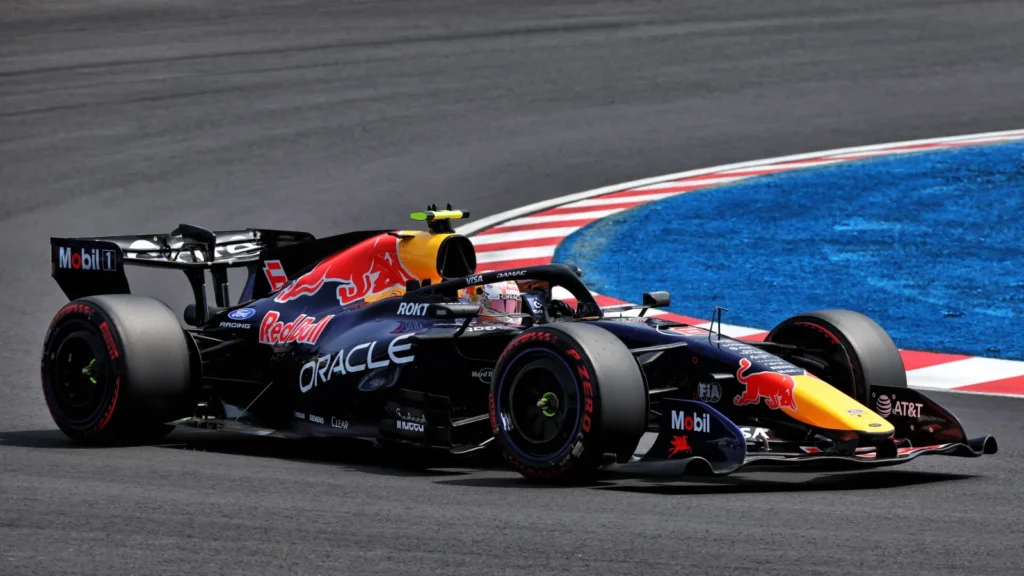
7. Max Verstappen (2015–present)
Max Verstappen is already part of any serious conversation about the greatest F1 drivers of all time. He debuted at a record young age, became the youngest driver to win a Grand Prix, and has since built one of the most dominant peaks in the sport’s history.
What distinguishes Verstappen is not just his win total and titles but his driving style: aggressive without being reckless, exceptional in wet conditions, relentless in wheel-to-wheel combat, and extremely fast across race distance.
His performance at the 2016 Brazilian Grand Prix remains one of the earliest and clearest demonstrations of his talent. As one of the few active drivers with a realistic chance of rising further in this ranking, Verstappen’s position will only become more interesting as his career develops.
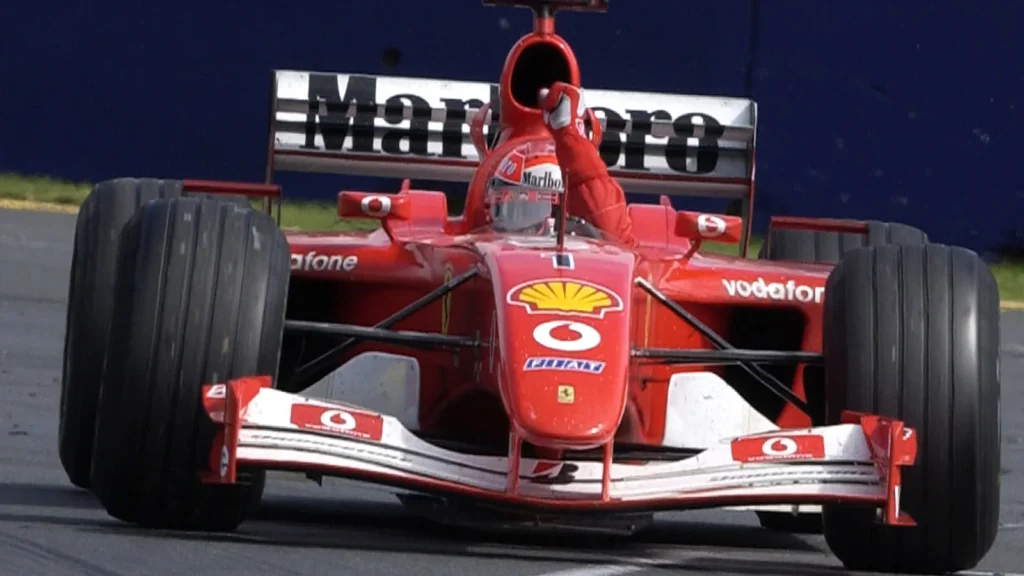
6. Michael Schumacher (1991–2012)
Michael Schumacher remains one of the strongest candidates in any all-time F1 debate. He won seven world championships and 91 races, transforming Ferrari into the dominant force during one of the most celebrated dynasties in Formula 1 history.
His greatness lay not in wins alone but in the combination of elite qualifying pace, crushing race speed, technical leadership, and an extraordinary work ethic. In wet conditions he was frequently unbeatable — the 1996 Spanish Grand Prix remains a classic example. I
n this formula, his late-career return adds many starts but few additional wins, which affects his efficiency score. Even so, sixth place overall reflects what his peak years genuinely represented. In the broader GOAT debate he remains one of the central names alongside Fangio, Senna, and Hamilton.
5. Ayrton Senna (1984–1994)
Ayrton Senna is one of the most iconic names in Formula 1 history and, for many fans, the greatest driver of all time. On the measure of pure qualifying pace alone, he has one of the strongest arguments of anyone on this page: 65 pole positions from just 161 starts is a staggering ratio that underlines his raw speed.
He was also among the greatest wet-weather drivers the sport has seen, capable of transcending what most machinery could do. His opening lap at Donington in 1993 and his charge through the field at Monaco in 1984 are still discussed decades later.
Senna ranks slightly lower in this formula due to his shorter career compared with some of his rivals, not for any lack of brilliance. In any emotionally or talent-driven debate about the greatest F1 driver, Senna will always be at the front.
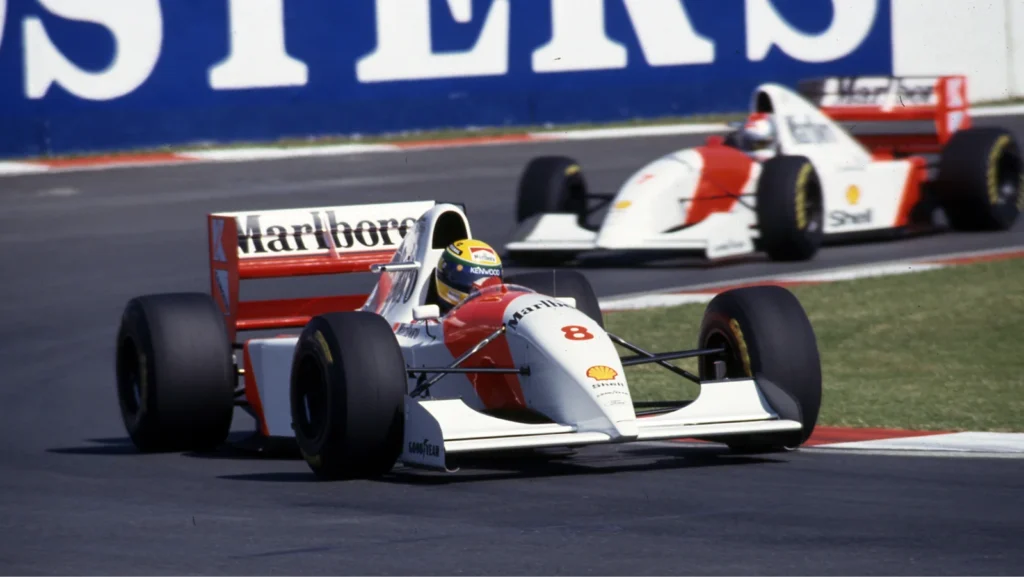
4. Lewis Hamilton (2007–present)
Lewis Hamilton is the strongest modern candidate in the greatest F1 driver debate. He arrived in Formula 1 in 2007 and immediately proved himself a championship-level driver, nearly winning the title as a rookie before claiming his first crown in 2008 in one of the most dramatic season finales in the sport’s history.
The case for Hamilton rests on outstanding numbers across every major category: race wins, pole positions, podiums, and world titles. Very few drivers in Formula 1 history have matched his combination of speed, longevity, and consistency.
He has succeeded under different regulations, with different teams, and across a remarkably extended career. He is strong in qualifying, exceptional in wet conditions, efficient on tyre wear, and competitive throughout full championship campaigns.
That is why Hamilton ranks here and why many fans consider him the greatest F1 driver of all time.
3. Jim Clark (1960–1968)
Jim Clark ranks third in this analysis and stands as one of the most naturally gifted drivers Formula 1 has ever seen. He won 25 Grands Prix from just 72 starts, claimed two world championship titles, and dominated entire seasons in ways that still stand out even against modern comparisons.
Clark spent his Formula 1 career with Lotus and delivered some of the most commanding performances in the sport’s history. His winning margin at the 1963 Belgian Grand Prix and his brilliant 1965 season — in which he also won the Indianapolis 500 — form a large part of his legend.
Many drivers and historians still regard Clark as the most naturally gifted racing driver ever to have sat in a Formula 1 car. His life and career ended tragically in 1968, meaning his statistics do not fully reflect what he might otherwise have achieved.
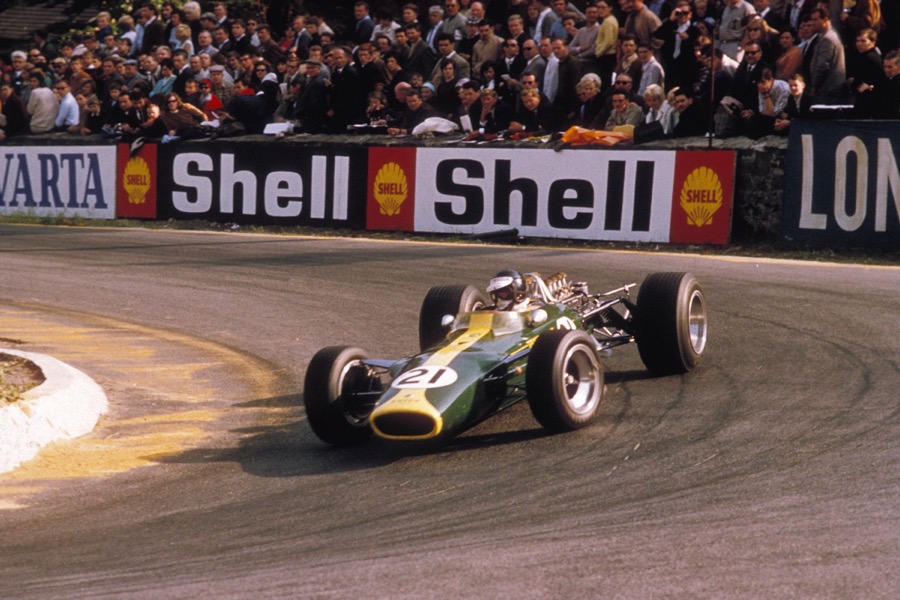
2. Alberto Ascari (1950–1955)
Alberto Ascari ranks second and remains one of the most efficient winners in Formula 1 history. The Italian contested just 32 races but won 13 Grands Prix, took 14 pole positions, set 12 fastest laps, and claimed two world titles.
That level of dominance explains his high position in this efficiency-weighted formula. Ascari was the first truly great Ferrari champion and one of the defining stars of the early 1950s. He and Fangio were the great rivals of that era, and their competition for supremacy helped shape the opening chapter of Formula 1 history.
His career was tragically brief, which is the only reason his numbers sit below some of the modern legends. But that brevity is precisely what makes his efficiency score so striking. Had he raced longer, he would have mounted an even stronger challenge to Fangio at the top of this ranking.
1. Juan Manuel Fangio (1950–1958)
With a score of 57.6, Juan Manuel Fangio ranks first in this analysis and is our answer to the question: who is the greatest F1 driver of all time?
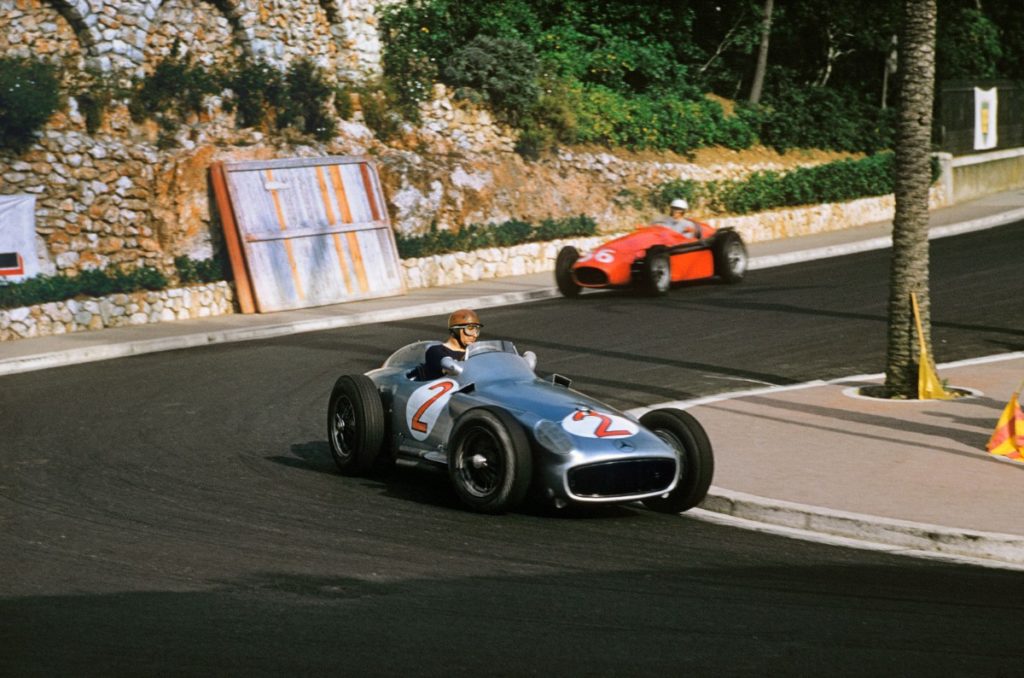
Fangio won five world championships in just eight Formula 1 seasons, took 24 victories from 51 starts, and claimed 29 pole positions. His efficiency is extraordinary: he did not need a long career to establish an outstanding record because he dominated almost every time he had the machinery to do so.
He also won championships with multiple teams — Alfa Romeo, Maserati, Mercedes, and Ferrari — a level of adaptability across different cars and organisations that only reinforces his standing as the best in history.
Many modern fans have never watched Fangio race, but the numbers remain remarkable. Stack titles, wins, poles, fastest laps, and starts against any driver in history and Fangio still leads. That is why he remains the benchmark in any all-time Formula 1 driver ranking.
Meta description: