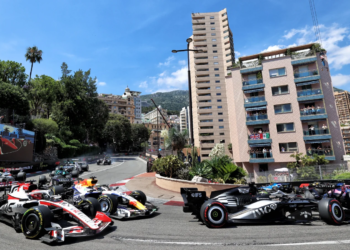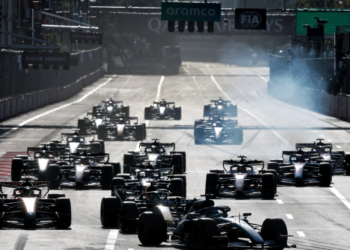
Motorsport is built on rivalries like Senna versus Prost, Hamilton versus Verstappen and Alonso versus Schumacher…
The individual time sheets and championship points matter, but what captivates audiences is the head-to-head battle, two competitors fighting for the same piece of tarmac, separated by milliseconds, each refusing to yield.
PVP gambling captures this same competitive essence in a digital format, where two participants face off directly with stakes that make every outcome personally significant.
The parallel is not superficial. Both motorsport and PVP gambling reward competitors who manage risk intelligently, who understand when to push and when to protect, and who maintain composure under pressure.

The arena differs, but the competitive psychology that drives a driver to brake later into a corner is the same psychology that drives a gambler to enter a high-stakes duel. For motorsport enthusiasts, PVP gambling speaks the language of rivalry they already understand.
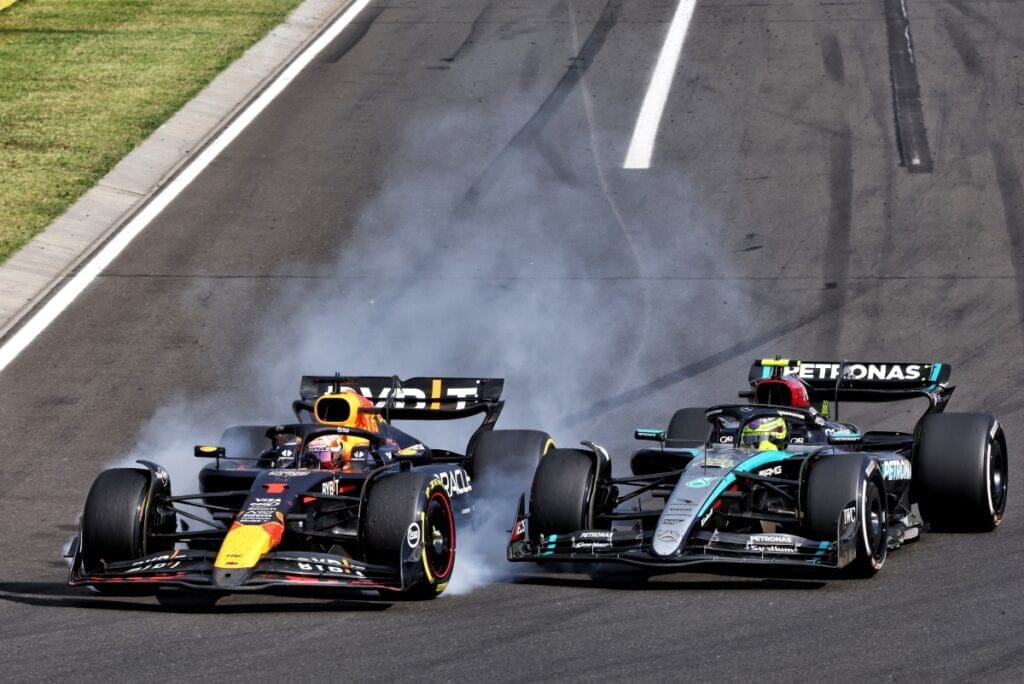
Wheel-to-wheel as the original PVP format
Long before video games or online gambling existed, motorsport provided the purest form of player-versus-player competition.
Two cars entering a corner side by side create a zero-sum scenario: the racing line can only accommodate one car, and whoever controls it gains the advantage. The other must yield or risk contact. This instant-by-instant negotiation of space and advantage is competition at its most visceral.
PVP gambling distils this head-to-head dynamic into its essential form. Two participants, equal stakes, one winner. The complexity of wheel-to-wheel racing, the skill, the machinery, the physical danger, is replaced by provably fair randomness.

But the emotional core remains: two humans competing for the same prize, with the outcome determining who walks away with the reward. The format works because the competitive instinct it activates does not require physical danger to produce genuine engagement.
Motorsport fans understand this instinctively. They do not watch races for the cars; they watch for the battles between drivers. Similarly, PVP gambling participants do not engage for the mathematical mechanics, they engage for the competition against another person. In both cases, the human rivalry is the product, and everything else is infrastructure.
Risk management on track and in the arena
Motorsport risk management is a continuous calculation. A driver pushing for an overtake must evaluate the probability of success against the probability of contact, the consequences of losing position against the consequences of a mechanical failure, and the strategic implications of the current lap relative to the remaining race distance.
These calculations happen in real time, at speeds where the margin for error is measured in centimetres.
PVP gambling risk management operates on a slower timescale but involves analogous decision structures. Choosing when to duel, at what stakes, and how many duels to complete in a session involves evaluating probabilities, assessing consequences, and considering the strategic context of one’s current bankroll position.
A player who has just won several duels faces a decision very similar to a race leader deciding whether to push for a faster lap or manage the gap: is the potential gain worth the additional risk?
The best motorsport drivers and the most disciplined PVP gambling participants share a common trait: they distinguish between calculated risks and reckless ones. A late braking overtake attempt with a clear plan is calculated.
Diving into a closing gap on worn tires with nothing to gain is reckless. Similarly, entering a duel at stakes that represent a reasonable fraction of bankroll is calculated. Entering a duel that represents the majority of one’s funds after a losing streak is reckless.
The distinction in both contexts is whether the risk is proportionate to the potential reward and compatible with the long-term strategy.
The rivalry economy in motorsport and PVP gambling
Motorsport has always understood that rivalries drive commercial value. The Senna-Prost rivalry did more for Formula 1’s global audience than any marketing campaign could achieve. Rivalries create narratives that extend beyond individual events, turning casual viewers into invested followers who return week after week to see how the story develops.
PVP gambling platforms are beginning to generate similar rivalry dynamics, albeit at a smaller scale. Regular participants develop recognition of frequent opponents, creating informal matchup histories and personal stakes that transcend individual duels.
A player who has lost three consecutive duels to a specific opponent has a personal narrative driving their engagement, the desire for redemption, the pursuit of rivalry balance, that no house-versus-player game can generate.
Platforms like 500 Casino facilitate these rivalries through features like duel history, opponent tracking, and public leaderboards that make competitive records visible. These features mirror the championship standings that give motorsport rivalries their context.
Without visible records, individual battles are isolated events. With persistent tracking, they become chapters in ongoing competitive narratives.
Team strategy parallels
Motorsport is unique among sports in combining individual driver competition with team strategy. A driver’s race is shaped by pit stop timing, tire strategy, team orders, and engineering decisions that are made collectively. The best results come from alignment between driver skill and team strategic execution.
While PVP gambling is currently an individual activity, the strategic framework mirrors team motorsport in interesting ways. A PVP gambling participant’s session is shaped by pre-set bankroll limits (analogous to fuel strategy), duel selection criteria (analogous to race strategy), and session duration management (analogous to tire management).
The individual makes the competitive decisions, but these decisions operate within a strategic framework that determines the session’s overall trajectory.
Some PVP gambling communities have even developed informal team structures, where groups of players share strategies, analyse outcomes collectively, and coordinate sessions.
This team dimension mirrors the engineering support that motorsport drivers receive, providing analytical backup and strategic perspective that individual players might miss when caught up in the competitive moment.
The spectator experience
Motorsport television production has refined the art of making head-to-head competition visually compelling. On-board cameras, split-screen comparisons, timing graphics, and expert commentary transform the raw experience of two cars racing into a narrative that millions of viewers can follow.
The production does not just change the competition; it also makes it accessible and engaging for spectators.
PVP gambling content creation serves the same function. Streamers who broadcast their duels on platforms like Twitch provide commentary, emotional reactions, and narrative framing that transform individual wagers into watchable entertainment.

The best PVP gambling content creators are essentially motorsport commentators for a different arena, they build tension, explain the stakes, and create emotional investment in outcomes that the viewer has no financial stake in.
This spectator dimension is crucial for PVP gambling’s growth because it creates awareness among audiences who might never seek out gambling content independently. Motorsport fans who follow content creators covering the intersection of racing and gaming are exposed to PVP gambling in a context that frames it as competitive entertainment rather than pure gambling.
As motorsportweek.com covers the competitive narratives that define motorsport, the PVP gambling format represents a digital extension of the same head-to-head rivalry dynamics that make racing compelling.
Fair competition as the non-negotiable standard
Motorsport’s credibility depends entirely on the perception of fair competition. Technical regulations, scrutineering, steward decisions, and penalty systems all exist to ensure that every competitor operates within the same rules.
When this fairness is questioned, through fuel flow controversies, illegal aerodynamic devices, or inconsistent penalty application, the sport’s fundamental value proposition is completely undermined.
PVP gambling addresses the fairness imperative through provably fair cryptographic verification. On platforms like 500 Casino, every duel outcome is determined by a combination of server seed, client seed, and nonce processed through SHA-256 hashing, with the server committing to its seed before the duel begins.
This system provides fairness guarantees that exceed what any human-administered rulebook can deliver, because the mathematics cannot be influenced, bribed, or inconsistently applied.
For a motorsport audience that has witnessed its share of fairness controversies, this mathematical certainty is deeply appealing. PVP gambling with provably fair verification offers what motorsport aspires to but can only approximate: a competition where the rules are applied with perfect consistency, every outcome can be independently verified, and the integrity of the competition is guaranteed by mathematics rather than institutions.
The chequered flag
Motorsport and PVP gambling are both expressions of the human competitive drive, channelled through different formats but powered by the same desire to test oneself against another person with stakes that matter.
The rivalry, the risk management, the strategic thinking, and the demand for fair competition connect these worlds more closely than their surface differences might suggest.
For motorsport fans who understand that the greatest races are defined by head-to-head battles rather than solo performances, PVP gambling offers another arena where the same competitive spirit finds expression, faster, more frequent, and with the mathematical fairness that only cryptographic verification can provide.