New developments in racing simulation are changing how motorsport teams prepare for competition, while highlighting the growing influence of digital technology across the wider entertainment industry.
Simulation technology has become an increasingly important part of professional motorsport, allowing teams to analyse vehicle performance, evaluate circuit conditions and prepare drivers for upcoming races. In 2026, several developments have demonstrated how digital systems are continuing to influence motorsport, particularly in Formula 1, Formula E and junior racing categories.
The technology is also part of a wider trend in digital entertainment, where sophisticated software and visual design are creating increasingly detailed virtual environments.
Racing simulators become more advanced
Professional racing simulators are designed to reproduce the behaviour of real vehicles using detailed software models, specialist hardware and information collected from circuits. Unlike conventional racing games, these systems allow engineers to examine how vehicles respond to changes in suspension, aerodynamics and track conditions.


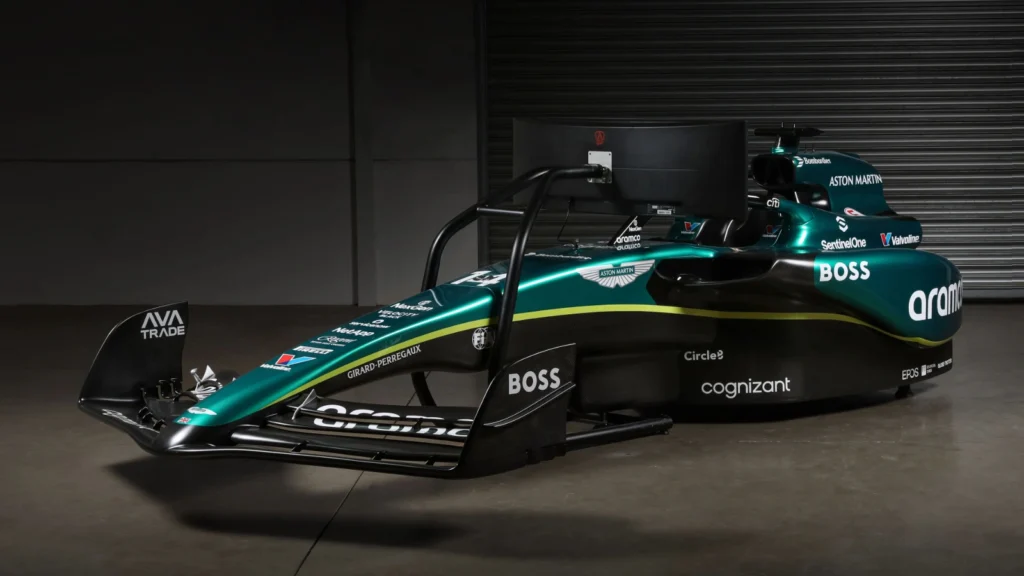
In June 2026, British simulator manufacturer Dynisma introduced its DMG-S system, designed to make technology derived from Formula 1 simulation programmes available to a wider range of motorsport organisations. The system uses motion technology to reproduce driving sensations, including changes in vehicle balance, tyre grip and track surface conditions. Its introduction reflects the growing demand for sophisticated simulation equipment beyond the highest levels of professional racing.
Digital technology extends beyond the racetrack
The development of advanced motorsport simulators also reflects broader changes across digital entertainment. Modern software increasingly combines detailed graphics, responsive interfaces and carefully designed audiovisual elements to create interactive experiences. These technologies are used across numerous digital platforms, including driving simulators, virtual reality applications and online entertainment.
For example, digital slot games use graphical interfaces, animation and software-based systems to present their content, although their underlying mechanics and purposes differ substantially from racing simulators. While professional motorsport simulators rely on physics models, driver inputs and performance data, digital gaming platforms use technologies suited to their particular functions.
The comparison illustrates how different industries can employ similar software development techniques without necessarily sharing the same objectives.
Motorsport teams invest in virtual preparation
Recent developments have also highlighted the importance of simulation facilities in driver development. In March 2026, Rodin Motorsport confirmed that a new high-performance simulator had become operational at its Driver Performance Centre near Farnham in Surrey.
The facility supports preparation for competitions including Formula 2 and Formula 3, combining simulation equipment with data analysis and specialist training resources. The centre features a full-motion simulator alongside additional static systems, allowing drivers and engineers to examine different aspects of vehicle performance.
Meanwhile, Formula E team Envision Racing announced an agreement in April 2026 to introduce advanced simulation technology as part of its preparations for the championship’s next generation of vehicles. Such investments demonstrate the increasing importance placed on virtual preparation across multiple racing categories.
Data analysis remains essential
One of the main advantages of professional simulation technology is its ability to generate information that can be examined by engineers. Teams can compare vehicle configurations, study driving techniques and assess potential changes before implementing them during track sessions. Simulators also provide controlled environments in which specific scenarios can be repeated, making comparisons between different configurations easier.

However, virtual testing remains a complement to physical track activity rather than a complete replacement. Real-world conditions introduce variables that simulation systems must continually be updated to represent accurately.
The future of simulation in motorsport
As computing technology continues to develop, simulation systems are expected to remain an important area of investment for racing teams and technology providers. Improved motion systems, increasingly detailed vehicle models and advanced data processing could further strengthen the relationship between virtual preparation and real-world competition.
The developments announced throughout 2026 underline the role of simulation as an established engineering resource rather than simply an extension of recreational gaming. For professional motorsport, the central objective remains unchanged: using reliable technology and accurate information to support vehicle development and preparation for competition.