
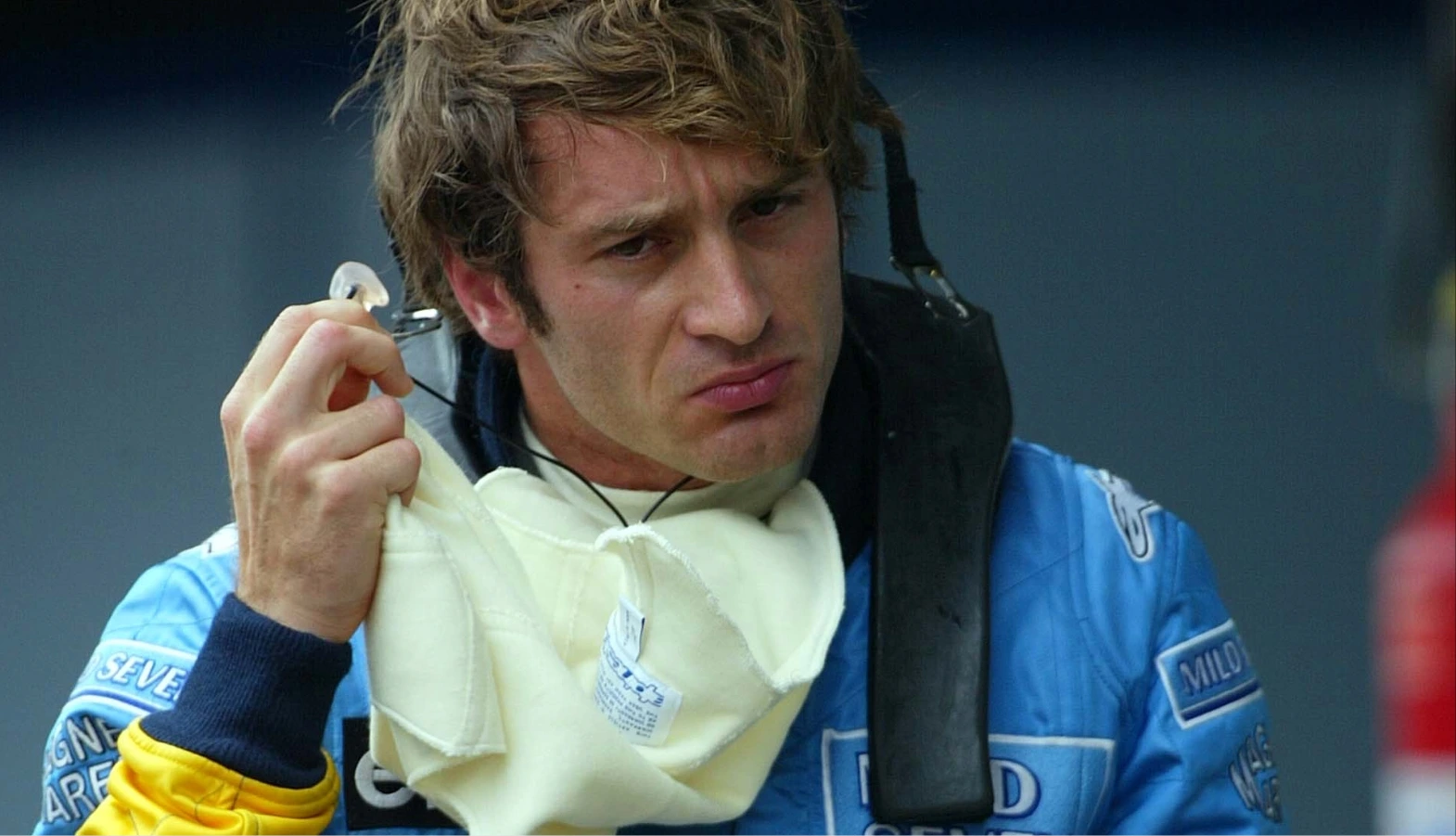
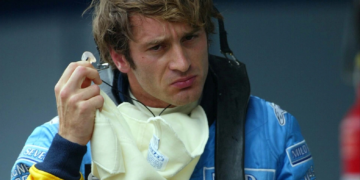
Jarno Trulli is one of the few Formula 1 drivers that can be identified by just the use of a single word or phrase: the Trulli Train.
There are some F1 drivers that can be identified by just the use of a single word or phrase. Red Baron, for example, is Michael Schumacher. Mika Häkkinen is the Flying Finn; Alain Prost is The Professor; Red Five is Nigel Mansell. The list endless. These nicknames were all given because of each driver’s unique characteristics, all achieved through excellence during their peak years when they were at their most iconic and dangerous.
But other drivers are remembered for all the wrong reasons: Riccardo Rosset and Jean-Denis Deletraz. These two, in particular, are recalled with less-than-fond memories by former team members and fans. But they do not warrant nicknames [the infamous tosser name sticker for Rosset doesn’t count, though!] as both were just morbidly dreadful to the point that their names alone conjure images of misery and amateurism.
But what happens when a driver is beyond the baseline of being rubbish, is good enough to score points, but still prone to more performance drop-offs than Manchester United on a bad day? You are left with a driver with a nickname born out of frustration that opportunities to win and secure high-point finishes were constantly squandered. A nickname that addressed not only the driver himself, but also his victims.
I am, of course, talking about Jarno Trulli and his infamous Trulli Train. Like the British rail network, this is not a train you wanted to be on. Because if you were, your race was doomed to be a monotonous ordeal, stuck in a gaggle of cars, all unable to utilise their speed as an Italian lapped the circuit at a leisurely pace while the cars ahead of him streaked clear. Trulli’s tenure in F1 is a complex story to unpack, full of unfulfilled potential, reaching inane heights, and a slow ending in self-immolation.
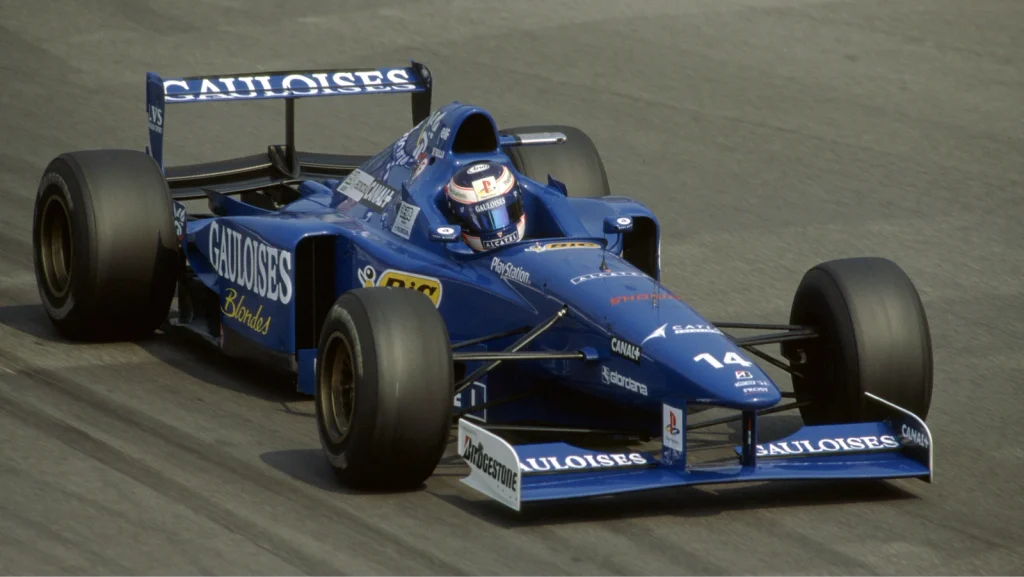
1997-1999: A promising start with Minardi opens door to Prost
Trulli was one of the last drivers to be announced for 1997, signed by Minardi as an up-and-coming talent. For his part, Trulli did not lack confidence, stating he “belonged in F1” and wanted to be “strong” in his maiden season. He would make an immediate impact in his first race, for all the right reasons.
To describe the Minardi Hart M197 as a dog would be unkind, but it is not far away from the truth. It lacked poise, grip and, most crucially, power. The Hart V10 proved slow, if dependable. The Italian qualified 17th in Melbourne [which in itself was an achievement], but through determination and grit, he finished a highly respectable 9th on race day. Putting that kind of performance in a Minardi is going to get you noticed.
Another ninth place in Argentina put him in the metaphorical shop window for a better seat, with an opportunity arising from difficult circumstances for a rival. At the Canadian GP, Oliver Panis crashed into the barriers and broke both his legs, leaving Pros needing a new driver for the rest of the season. Trulli suddenly found himself a golden ticket, with a powerful Mugen Honda to help him.
His one-lap pace was immediately apparent, as he qualified sixth in his first race for the team in France. Race pace, on the other hand, looked to be a tad more challenging, as he dropped to tenth by the chequered flag. Pace drop-offs would later come to define the Italian’s career. In 1997, however, all the Motorsport world could see was potential and rightly so. He took fourth place in Germany, scoring his first points after starting 11th.
But his most iconic performance of the year came in Austria. Qualifying third in the spare car, he passed both McLaren’s and Williams’s Jacques Villeneuve, pulling an astonishing 10-second lead in 22 laps, leading for 37 in total before dropping to second after his first pit stop. But, as every new driver to F1 learns the hard way, the sport can be horrifically cruel. On Lap 58, his Mugen Honda engine expired, leaving him and Prost gutted at a lost victory. This would be the high point of the year, with Panis returning for the last three races. But Trulli had done more than enough to secure his F1 future with Prost.
Sadly, he may well have wished that he hadn’t. Political factors brough Peugeot into the fold for 1998, and the AP01, combined with a temperamental carbon fibre gearbox, proved to be nothing short of a disaster. Retirements were rife, and Trulli found himself condemned to the back of the pack. It is here that the issues for Trulli began. Any standout qualifying performances were quickly undone on Sunday. Just one point came in 19998, at the rain soaked Belgian GP. 1999 proved no better, with an opportune second place at the Nürburgring in a race ruled by chaos.
2000-2004: Jordan and Renault see the introduction of the Trulli train
Trulli now wanted to move up the competitive order once again, and signed for Jordan for 2000. The team had come within a whisper of winning the world championship the previous season, so the sky seemed the limit. Those dreams, however, were about to die faster than a Ferrari fan’s hopes in 2026. The issue: Jordan reliability, or lack of it, to be precise.
Appalling reliability would cost Trulli, dear, in 2000, scoring points on just six occasions in 16 races, while taking no podiums. We would call the turn of the millennium the worst of his career to date, and it was not exactly difficult to see why. Imagine starting on the front row in Monaco, only to have gearbox failure during the race. That result alone summed up his season. This vein continued in 2001, where he had 10 non-finishes that year, and no podium.
But Trulli was not entirely blameless. During this challenging period is when the Trulli train first reared its head. In 2001, two notable races created the impression that the Italian would put in fantastic performances on Saturday, only to apparently turn up for a leisurely drive on Sunday. In the rain-affected Brazilian GP, he ran as high as third before dropping back to fifth once the weather cleared up, lapped by race-winner David Coulthard. In Imola, he moved up to third before creating the first of his trains as he held up the frontrunners on a track not known for overtaking. Fifth by the chequered flag, McLaren voiced its frustration after the race for his lack of pace.
Fed up with lack of success at Jordan, Trulli joined Renault for 2002, partnering Jenson Button. This season further cemented his reputation as a driver that could qualify, but lacked speed in races. Outqualifying his teammate regularly, he was outscored by Button by 14 points at season’s end. He even incurred the wrath of Martin Brundle in a broadcast, who lamented at Trulli for driving slowly in Germany as a gaggle of cars followed his Renault. But given Team Principal Flavio Briatore managed Trulli, it was Button who left the end of the year to make way for Fernando Alonso, and he stayed for 2003.
But 2003 acted as a changing of the guard. Alonso proved quickly that he aimed to dethrone Michael Schumacher, taking pole position and third in Malaysia, before taking an iconic first victory in Hungary. And Trulli? He failed to score a podium, but would be retained for 2004 despite holding up rivals.. He needed to up his game big time to stand a chance of keeping his seat in 2005.
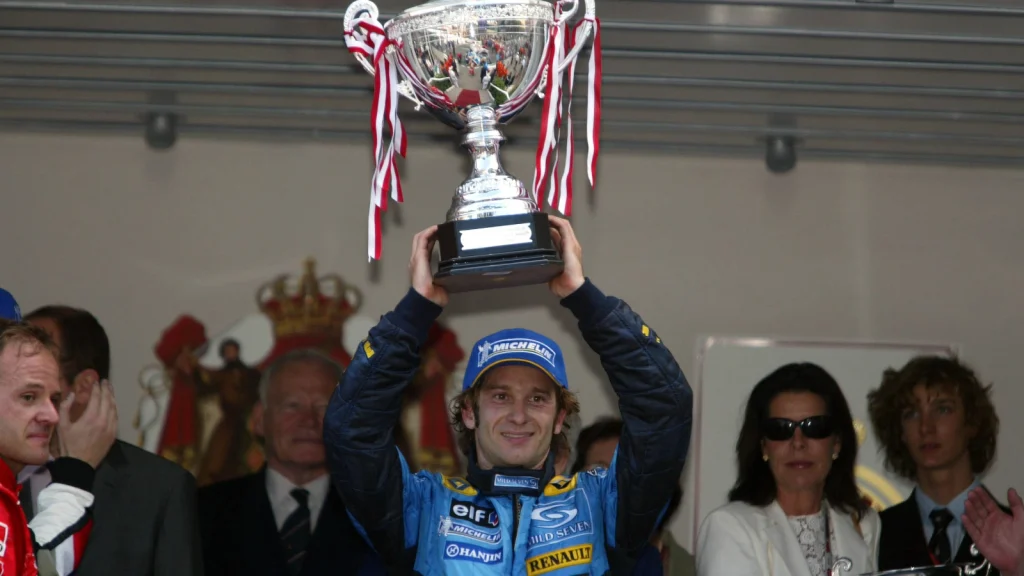
To call 2004 a mixed bag would be like saying it’s unfortunate that the Ferrari drivers crashed into each other in 2026. Trulli became the first driver, other than Michael Schumacher, to win a race that season in Monaco, brilliantly defending against former teammate Button, now with BAR. But just a few races later, his career as a front-running driver came crashing down when, on the last lap in France, having let Rubens Barrichello get too close, he let the Ferrari past to snatch a podium place, infuriating Briatore.
From then on, he scored no points for the rest of the year, going so far as to accuse the team of favouring Alonso. Perhaps Spa best encapsulates his second half of the season. He started on pole before dropping back to ninth as the leaders swept past him with unusual ease. This proved to be the final straw for Briatore, who dropped him for the final three races. Having already agreed a deal with Toyota for 2005, he started his contract early, replacing Ricardo Zonta.
2005-2011: Underachievement at Toyota and Lotus
Trulli’s tenure at Toyota followed the same pattern of unfulfilled potential and disappointing performances, despite having his best season during his inaugural year with the team in 2005. He finished 2nd in Malaysia, 2nd in Bahrain and 3rd in Spain, putting Toyota on the map. He even took pole position in Indianapolis but withdrew with all the other Michelin runners due to safety concerns. But in an all-too-familiar pattern, teammate Ralf Schumacher beat him at season’s end by two points after he faded away in the second half of the season.
From 2006 to 2008, he disappeared into the ether as Toyota’s mammoth budget failed to produce results due to corporate interference and ways of working incompatible with F1. The 2009 technical regulation changes would be the test of the rebuilding that he and the team executed behind the scenes-with mixed results.
He took third place in Australia after Lewis Hamilton lied to the stewards, and took pole position in Bahrain. But Toyota’s inexperience running at the front of the field showed badly, as a poor strategy cost them a one-two, with the Italian eventually finishing a disappointing third. This would be the high point of his year, before the now-iconic scenes of him running up to Adrian Sutil in Brazil to vent his displeasure came to define it. Toyota withdrew at the end of the year, and again, Trulli needed a new home.
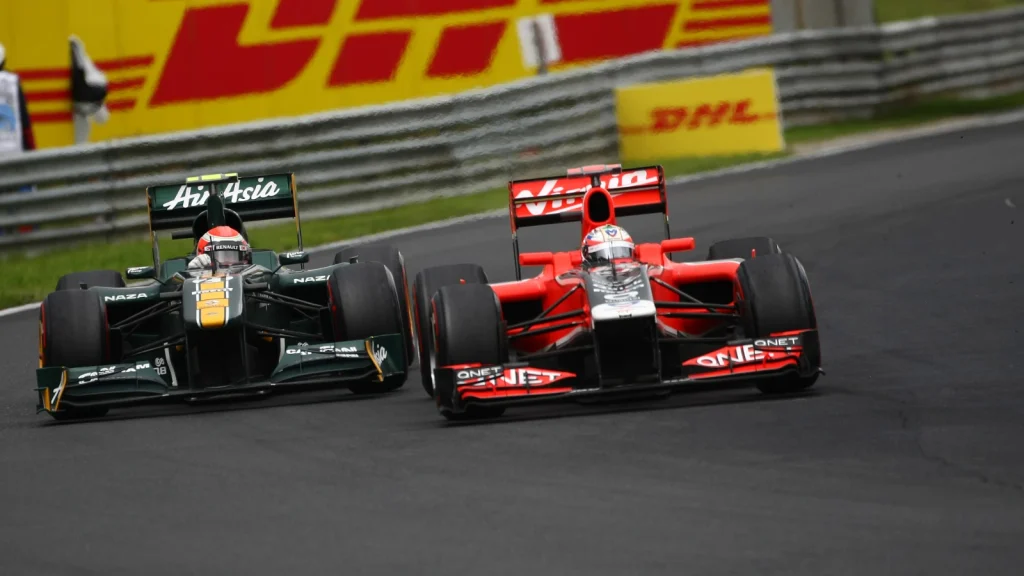
His final two seasons were spent at the new Lotus team, an outfit hopelessly underfunded and ill equipped to race in F1. The Trulli Train never made an appearance again as he was relegated to the back of the field before bowing out of F1 at the end of 2011. Whilst Trulli more than justified his F1 tenure, he was never going to be one of the greats.
The Trulli Train was, indeed, very much like taking a trip on the UK rail network: great on its day, but normally too slow, unpredictable and a let-down most of the time. Like a UK train, it could start well, then fade so you arrive at your destination far too late and very grumpy.




Discussion about this post