
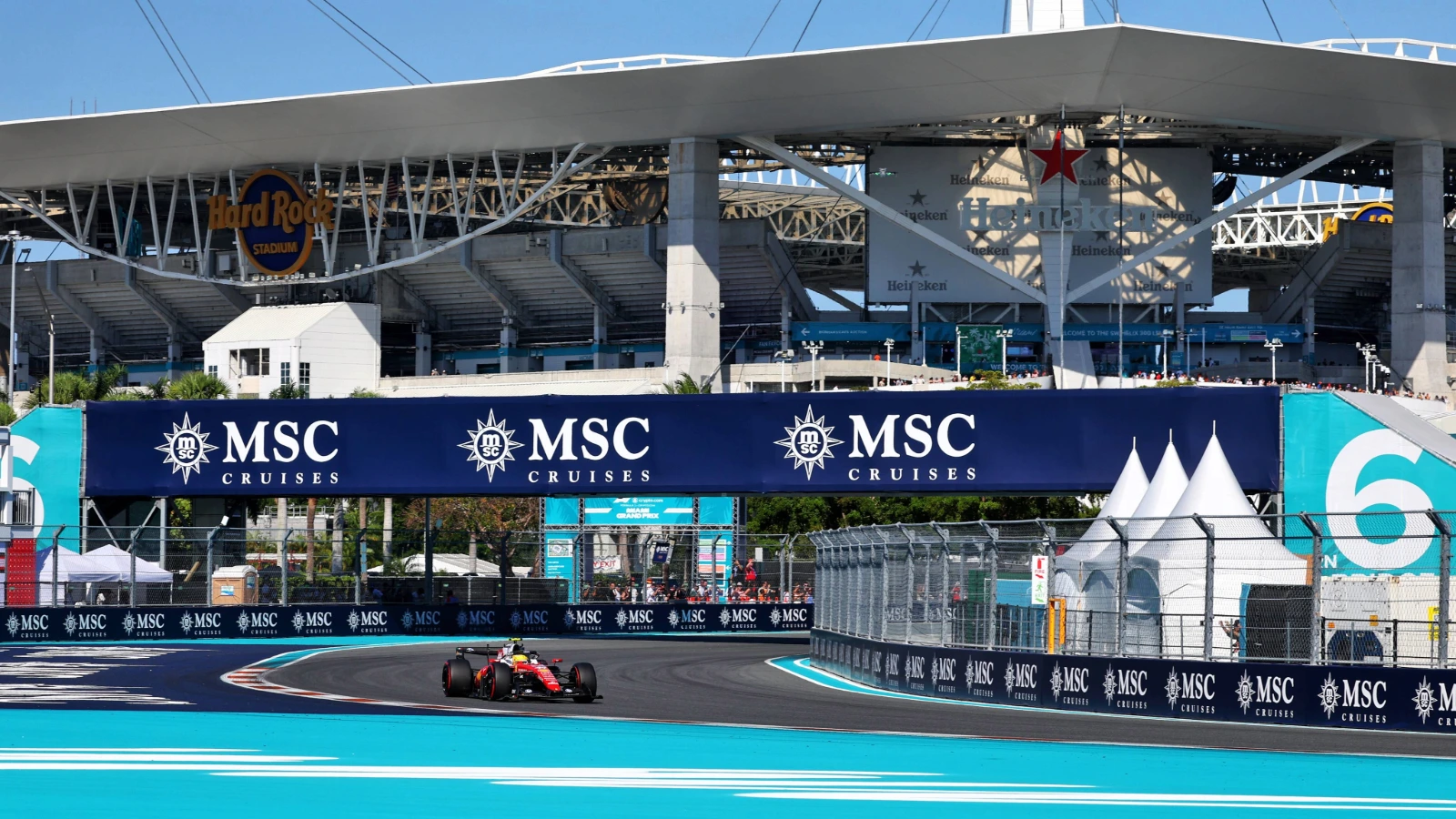
Two things made my eyes widen to the point that I could have been in a horror movie this week. The first was rather unpleasant news; the second was the factoid dropped on Saturday at the Formula 1 United States Grand Prix that over 200 track limits violations were registered during one session on Friday.
Sky Sports called this ridiculous issue something along the lines of “a situation brewing.” Personally, I found it ludicrous that we had that many cases of arguably the two most cursed words in Motorsport – more than the shapeshifting grass from Netflix’s Stephen King adaptation.
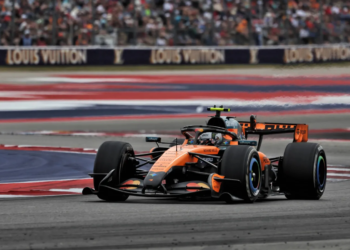
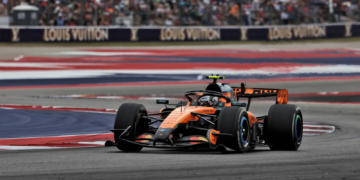
Thankfully, barring Max Verstappen’s second Q3 lap being deleted after all four wheels of his Red Bull left the white line, we got away with a minimum of issues during qualifying. But the fact that we were braced for multiple grid penalties shows that we have now moved so far away from the principle of taking a corner: a driver needs to enter at maximum speed, and take and exit the apex in the fastest possible way.
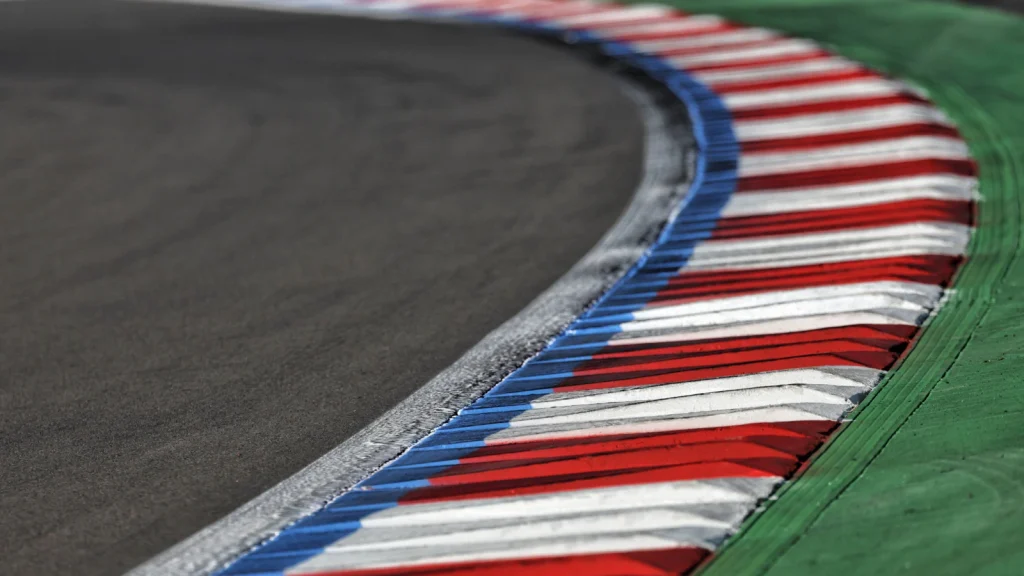
Today, this is now actively being punished. Instead, drivers are subjected to penalties if all four wheels leave the track. The wording of the track-limits regulation in the FIA Driving Guidelines is clear-cut and leaves no ambiguity, setting a firm stance with no exceptions.


“Drivers will be judged to have left the track if no part of the F1 Car remains in contact with it and, for the avoidance of doubt, any white lines defining the track edges are considered to be part of the track but the kerbs are not.”
A slow encroachment of white lines?
At some of the circuits F1 visits, track limit issues simply do not exist. Run wide at a track like Silverstone, Spa, Monza or Montreal, and a driver has a one-way ticket to the barriers and an awkward debrief with their team after the session or race, as well as guilt for wrecking a car.
But in the last decade, we have seen the rise of a new problem at some of the circuits F1 tends to visit – track limits. As much as I loved visiting the Red Bull Ring, the number of cars losing lap time for violations was still unprecedented, even after the installation of gravel in certain corners.
Then there are tracks like Abu Dhabi, which, if I’m being honest, remind me a lot of a level from the PlayStation 1 game Crash Team Racing, where you collect boxes to freeze time in what is essentially a giant car park. The amount of run-off on this circuit is huge, and errors, while costly, do not have the same impact as those on the more traditional tracks.
Of course, the biggest issue with run-offs the size of a car park at Disneyland Paris is that it encourages drivers to push harder over the almost flat kerbs. A white line can be painted to mark the end of the circuit, but a driver is still going to go over a kerb if it gives them a better exit out of a corner, particularly if there is no consequence for the car itself.
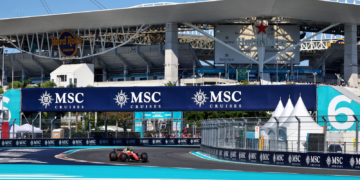
This is the one major bugbear I have with many modern circuits: drivers face few consequences for running wide at corners beyond track-limits violations. That, to me, dilutes the spectacle and reduces the challenge to the drivers. F1 should reward drivers who show bravery, but instead, track limits have become a curse that can impact results at the front of the field in recent times. Miami is one of these. No amount of blue paint can mask the run-offs. Paul Ricard tried that, and that circuit really does resemble a car park.
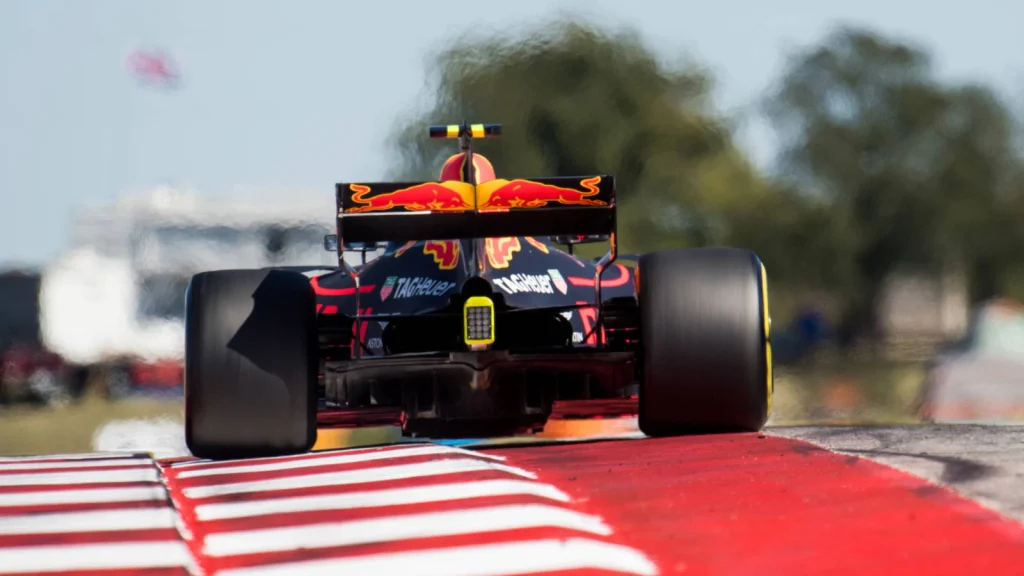
I can recall the race at Austin back in 2017 where Verstappen was awarded a five-second time penalty for passing Kimi Raikkonen for third on the final lap with all four wheels on a kerb. Verstappen reacted angrily, stating, “We had a really great race, but with those stupid decisions you really kill the sport.”
A comparison to yesteryear
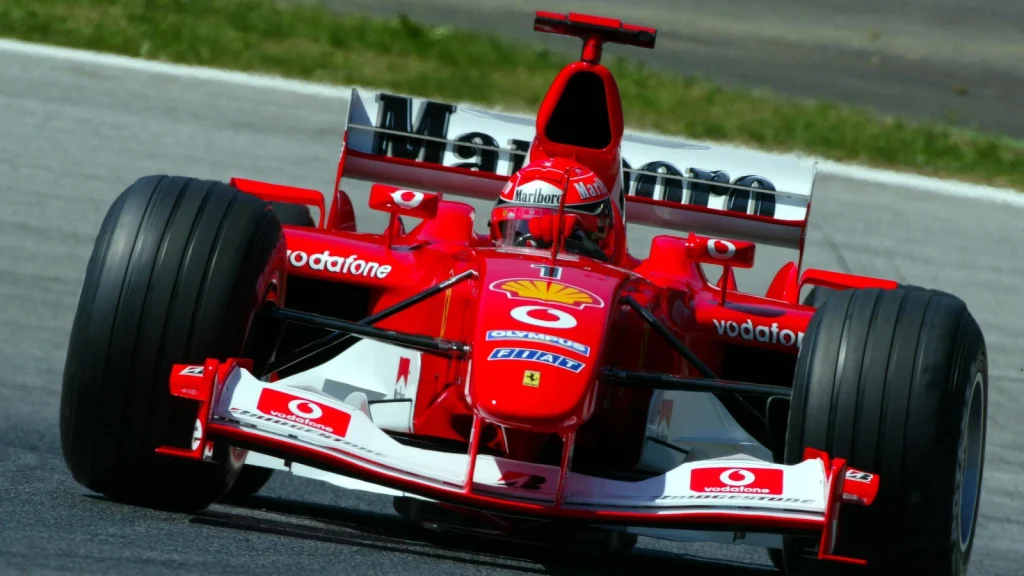
Looking back, I cannot recall when F1 decided to penalise drivers for daring to stray over kerbs. These days, that is seen as sacrilege, and like many avid F1 followers, I still don’t understand why. We all know the current formula: three warnings from the FIA for consistent breaches, followed by a five-second penalty. But it was not always this way. In fact, there was a period in the early 2000s when cars had free rein, and it was utterly glorious.
Forgive me for mentioning social media, but my sudden tangent has a point. Two video clips are continuously popping up in my social media feed. One is onboard with Michael Schumacher in the F2003GA in Austria, while the other is onboard with Fernando Alonso at Magny-Cours in 2004. Both videos are qualifying laps.
While the sound of the glorious V10 engines is fantastic, they are not the only focus of these clips. Instead, it is the complete free rein the drivers have over the track. Schumacher and Alonso are riding high kerbs, all four wheels off the track, and in the case of Alonso, having all four wheels well and truly off the track. Just by watching, you can see how much he is enjoying pushing the car.
Then there’s Schumacher in Austria. Ascending the hill towards Turn 1, he runs onto the green kerbs and continues to give as much power as he can, the Ferrari V10 reacting with note changes. The grass and gravel next to him past the short run-off loom close, but he judges it to perfection. Today, if anyone tried that, it would be deemed dangerous, and the lap time would naturally be deleted. Teams would almost go as far as to claim the grass would take him.
The issue of track limits long existed before the FIA began clamping down on it in recent years. As newer tracks and reprofiled corners at older tracks introduced run-offs in the 2010s, race stewards began to grapple more and more with drivers gaining advantages. The question has to be asked, of course: why did circuits or designers believe tracks where run-offs became excessive were a good idea to present to race drivers? It’s like dangling a huge cake in front of someone who craves it. They are going to take advantage of this situation.
The politicisation of track limits occurred in 2016 when the F1 Strategy Group met in Geneva and voted to relax the increased crackdown on track limits. Then FIA Race Director Charlie Whiting deemed this inappropriate and introduced the rule set that F1 fans have come to know verbatim due to the frequency of its occurrence.
Is there a way back?
In a nutshell: no. The rightful clampdown on safety means drivers are more looked after than they ever have been. But the borderline extreme move to excessive run-offs has diluted the show; there is no getting away from it. Yes, drivers can continue if they make a mistake, but they are also not being punished for mistakes. And of course, the one thing they are punished for is daring to cross a white line.
There is an answer to this quandary. Well, two actually: reintroduce grass and gravel – though not the nasty shapeshifting kind. It’s no coincidence that racing is better at circuits like Melbourne and Silverstone, where drivers are punished for errors, including running over the kerbs too much. Run wide at old-school circuits and a track limits violation is the least of your problems.
But there is hope that a compromise can be reached to police drivers seeking an advantage vs the spectacle suffering. I mentioned Austria installing gravel at certain corners: this had the start of the desired effect. Drivers avoided being greedy, or risk damaging their car. I harbour hope that this can be rolled out to other circuits, like Abu Dhabi. Not every track can have this though. Baku, for example, is great as it is, and needs no artificiality added.
Today’s cars are heavier, so a return to the clips seen from the early 2000s is unlikely. But I’d argue that as F1 continues to grapple with regulations that are dividing the fanbase, the simple introduction of grass and gravel could provide a plaster to a year dogged by problems. It won’t solve F1’s current predicament, but could prevent teams from having their own eyes open on stilts when they see their driver subject to a penalty. Being stuck in the long grass is preferable to concrete, no.





Discussion about this post