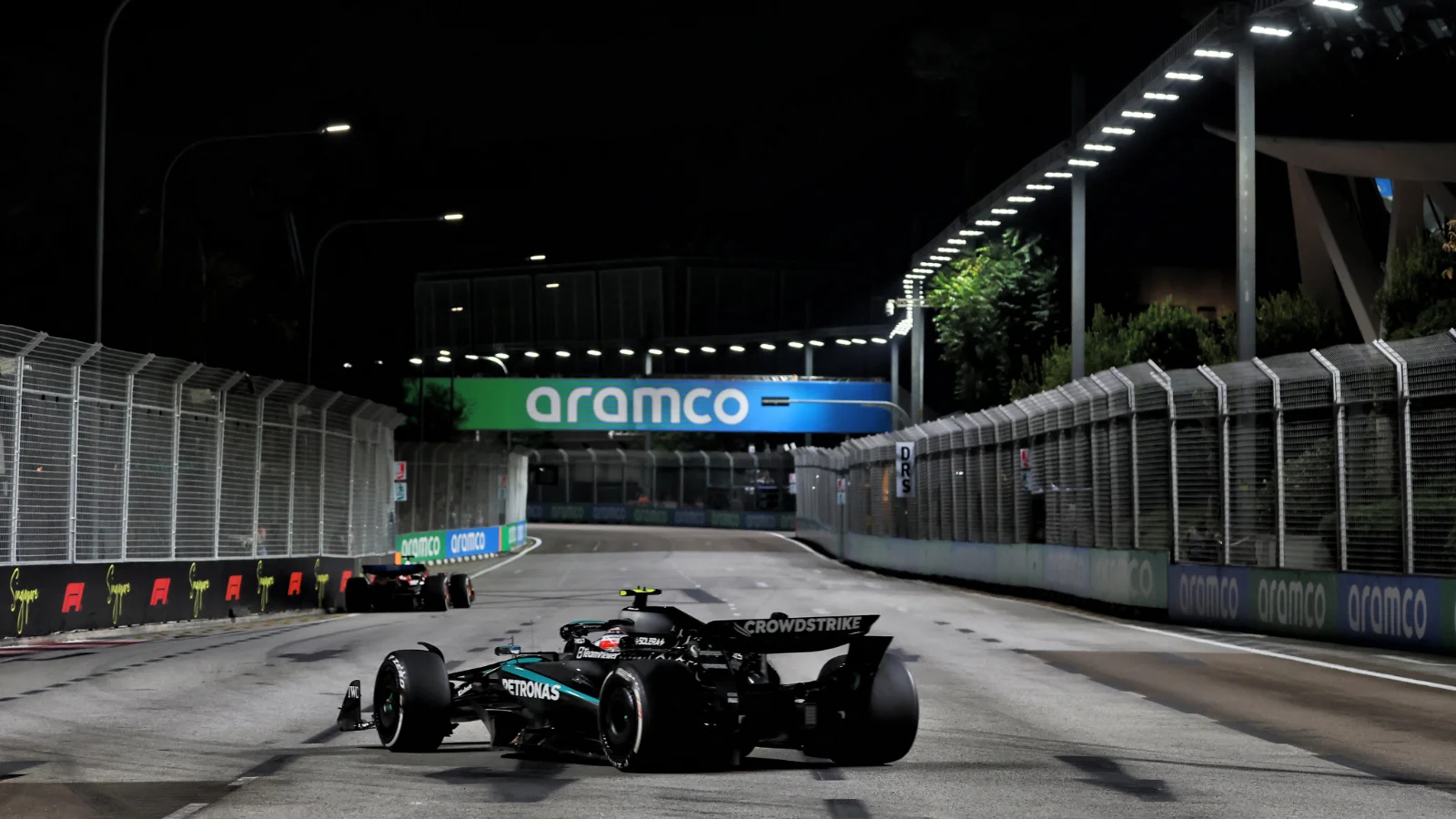
Mercedes’ decision to run different W17 specifications at the Singapore Grand Prix creates an opportunity to compare its recent development work.
It does not create a perfectly controlled experiment. George Russell and Kimi Antonelli will still encounter different traffic, tyre histories and driving demands, all of which can affect the apparent result.
Motorsport Week’s report on Mercedes splitting its Singapore car specifications explains the immediate choice: Russell is returning to the earlier package while Antonelli keeps the latest updates. The significance lies in how the team can distinguish a genuine aerodynamic difference from everything else that changes a lap.
A useful comparison needs matching conditions
A lap time is the combined result of several influences. Fuel load, tyre compound, tyre age and track conditions all affect the number. Comparing two headline times without that information can produce a confident explanation for the wrong cause.


The details within the lap matter as well. A change that improves one type of corner may make the car more difficult elsewhere. If a driver cannot consistently reach the desired balance, the theoretical gain may not become a repeatable performance advantage.
Singapore’s Sprint format makes the timing of that learning especially important. With one practice session before Sprint Qualifying, the team has a compressed opportunity to establish a direction before competitive running begins. The Saturday Sprint adds evidence, but it also introduces the complications of racing another car.
The grid position is a separate variable
Russell’s power unit penalty adds another reason not to treat the weekend’s finishing order as a direct verdict on the two packages. A driver starting deeper in the field faces a different race, including more traffic and different opportunities to use strategy.
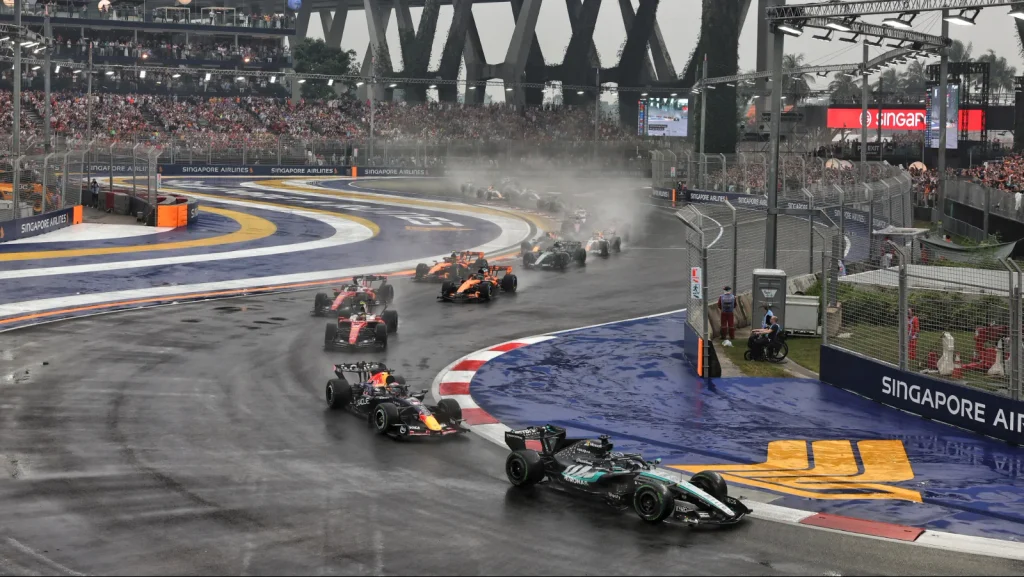
That separation is essential when reading different categories of F1 market. A qualifying outcome concerns one performance window, while a Grand Prix result incorporates the starting position, race strategy and reliability. The markets on F1 betting site Betway need to be understood in relation to the named event and its rules. A specification that produces a competitive lap can still belong to a car with a compromised route through Sunday’s race.
The reverse can also happen. A favourable strategy sequence can improve a finishing position without proving that the underlying car is faster. Mercedes will have much more information than the public classification, and its conclusions should reflect that wider evidence.
Repeatability is the important signal
The most useful observation is whether a driver can reproduce the same response over comparable corners and runs. A car that feels predictable may allow more consistent braking and throttle application, even before the team extracts every available fraction of performance.
PlaybookWire’s account of the technologies that changed motor racing provides background to the importance of the floor in aerodynamic performance. The immediate engineering question is narrower: how does this particular package behave across the conditions Mercedes encounter?
A clean comparison would look for a pattern across runs rather than elevate the most attractive lap. Where the evidence remains mixed, the useful conclusion is to identify which condition needs further investigation.
Mercedes have created a way to learn from two configurations at the same venue. The value of that decision will depend on the discipline of the comparison, not on whether the two cars happen to finish in the order observers expect.