
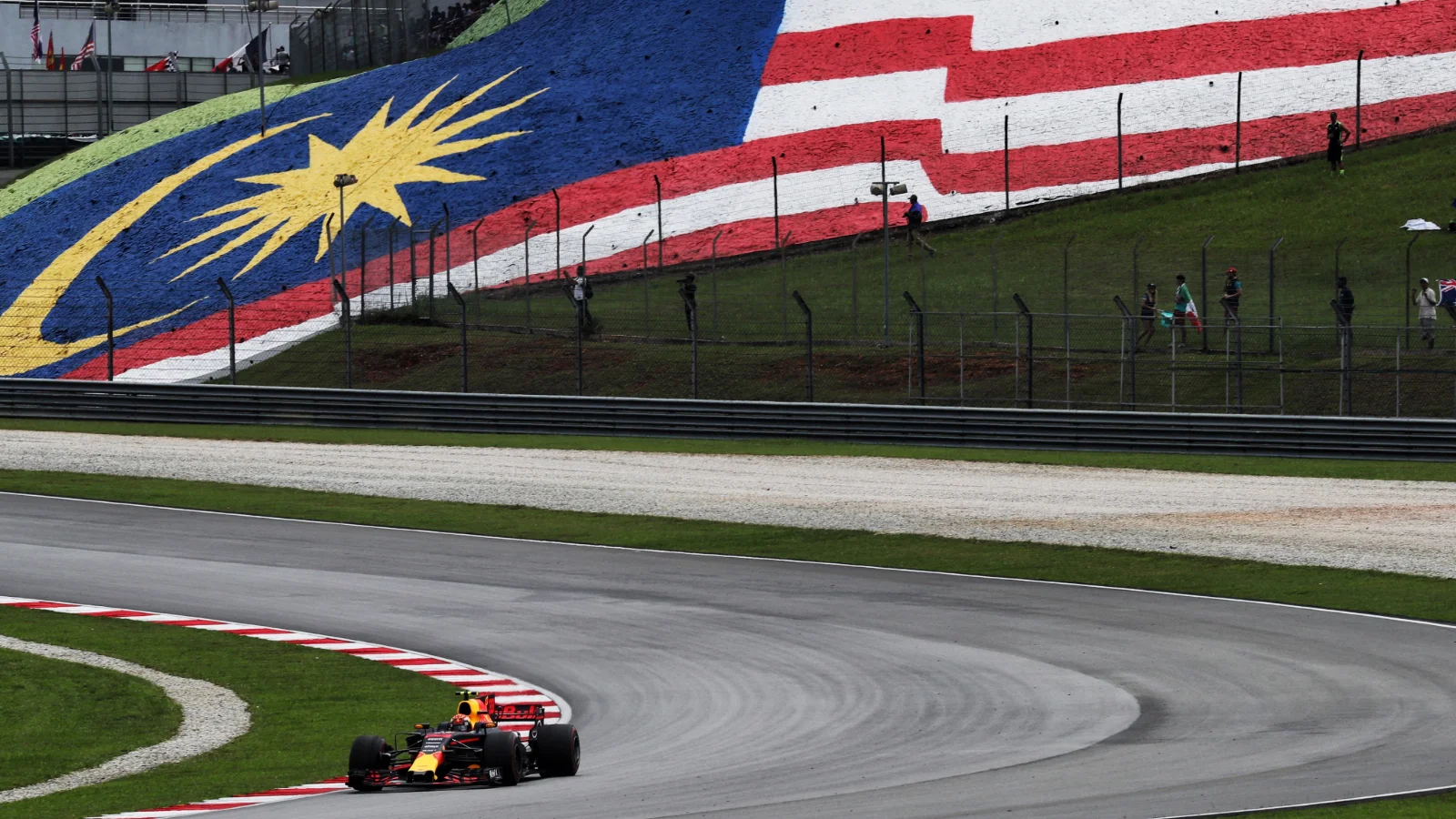
This weekend, Formula 1 sees a welcome return to Malaysia, as the country steps in to host the cancelled Bahrain Grand Prix.
Due to rising costs of hosting its own Grand Prix, Malaysia’s Sepang circuit was forced to withdraw from the calendar after 2017, after 18 years on it.
However, the facility, designed by Hermann Tilke, is still perfectly race-ready, and with an agreement with Bahrain after it was forced to abandon its own race due to the ongoing Middle East crisis, the drivers’ and fans’ favourite is back.
And given the nature of the circuit and the unpredictable weather the area brought, there was always a chance of high drama in the Far East.
Here are Motorsport Week’s Top 5 races hosted in Malaysia!
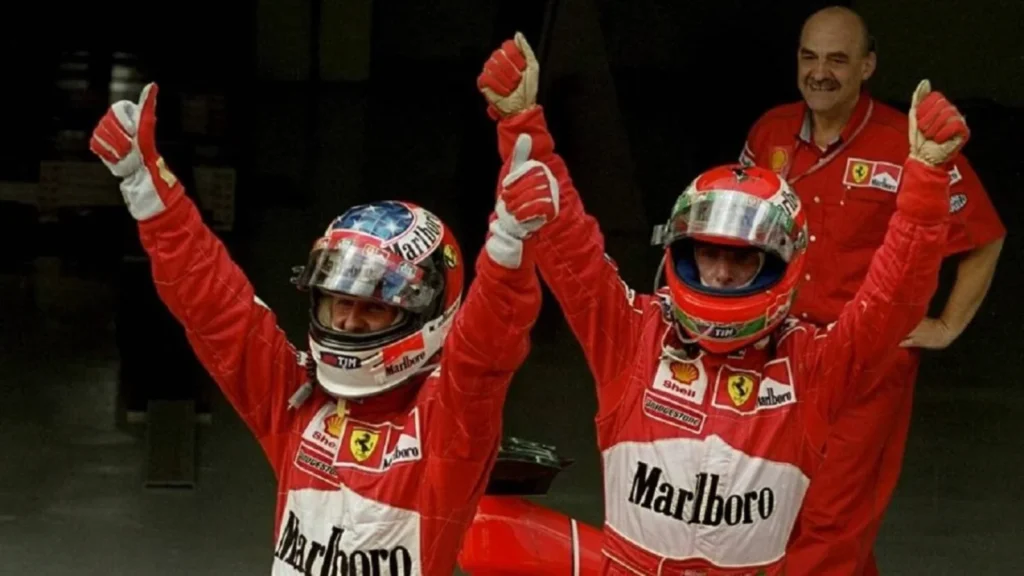
5. 1999: Ferrari triumphs in the courts as Schumacher stuns on comeback
Sepang’s first time on the calendar was in 1999, the facility then brand-new, and for its first two seasons, was at the end of the calendar, rather than its eventually-traditional early date.
And its first running of the Malaysian Grand Prix certainly had some unexpected drama that saw the eventual race result decided in the FIA courts.
Michael Schumacher made his return to F1 after breaking his leg at the British Grand Prix a few months before and therefore, with his championship chances now over, was tasked with helping teammate Eddie Irvine win the title.
The Ulsterman, in the German’s absence, had taken two wins – taking his season tally to three overall – and was a fierce challenger for the crown against reigning champion Mika Hakkinen.
But all eyes were on Schumacher, and if there were any doubts that he would be a little ring-rusty upon his return, they were soon banished, as he took pole position by nearly a full second from Irvine.
But after lights out, Schumacher let his number two through into the lead, and did so again after pit stops, to ensure him victory, and a four-point lead over Hakkinen going into the final race in Japan.
However, scrutineers found illegality with the size of both Ferraris’ bargeboards, and were disqualified. This gave Hakkinen and McLaren both championships.
But it wasn’t over. Ferrari took the matter to the FIA court of appeal, and were victorious, confirming a last-round decider, in which Hakkinen took victory and the title.
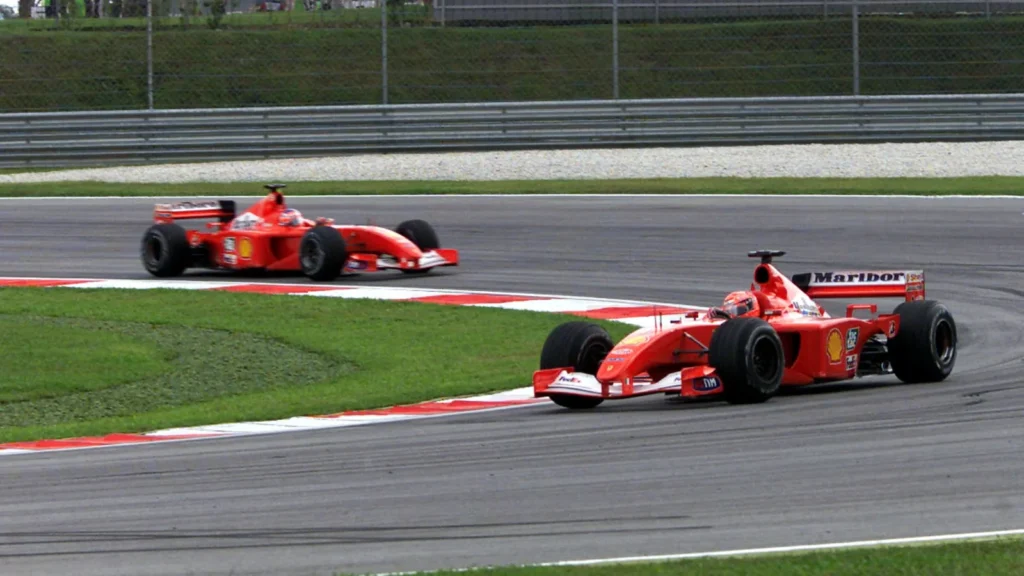
4. 2001: Singing in the rain
In its first year at the start of the calendar, Malaysia saw the first of its now-notorious wet-dry races which shook up the field and left those in the grandstands, and in the pit lane, soaked to the bone.
After Giancarlo Fisichella’s parking in the incorrect grid slot, a second formation lap delayed proceedings, but once the race got going, rain began to fall.
But rather than the elements, an oil slick off another car saw both Schumacher and Rubens Barrichello’s Ferraris sliding off the circuit and into the gravel trap, whilst runnings 1-2.
Jarno Trulli, as a result, inherited the lead in the Jordan, and by the end of the lap, the Sepang circuit was now under a blanket of relentless monsoon-style rainfal.
With cars aquaplaning and spinning off like over-wound-up kids’ toys, the Safety Car was deployed as teams frantically took in their cars for wet tyres. Ferrari double-stacked, which took an age to complete, seeing the red cars drop even further down the order.
As the rain subsided and the spray cleared, it transpired that David Coulthard was now in the lead, with both Ferraris out of the points, but Schumacher quickly entered ‘Beast Mode’.
Working his way through the field, the World Champion quickly caught up to Coulthard, and at the start of Lap 16, overtook him at Turn 1 for the lead, and didn’t look back.
Barrichello followed suit and was soon up to second, where he remained, despite a late charge from Coulthard. Schumacher, over 20 seconds up the road, made it two wins from two races.
3. 2003: The ‘Iceman’ cometh
2001 saw the debut of Kimi Raikkonen, who spent his debut season at Sauber, and after a series of splendid drives, secured a marquee move to McLaren, taking the place of Hakkinen, who entered into a sabbatical which turned into a full retirement.
The new ‘Flying Finn’ quickly established himself with the Woking-based squad, and 2003 was truly a breakout year, in which he came just two points off the World Championship.
2003 was the first year of the one-lap qualifying rule, with drivers given just one flying lap in two sessions to determine the polesitter, and it was another young gun, Fernando Alonso [what happened to him?] who took a maiden pole position.
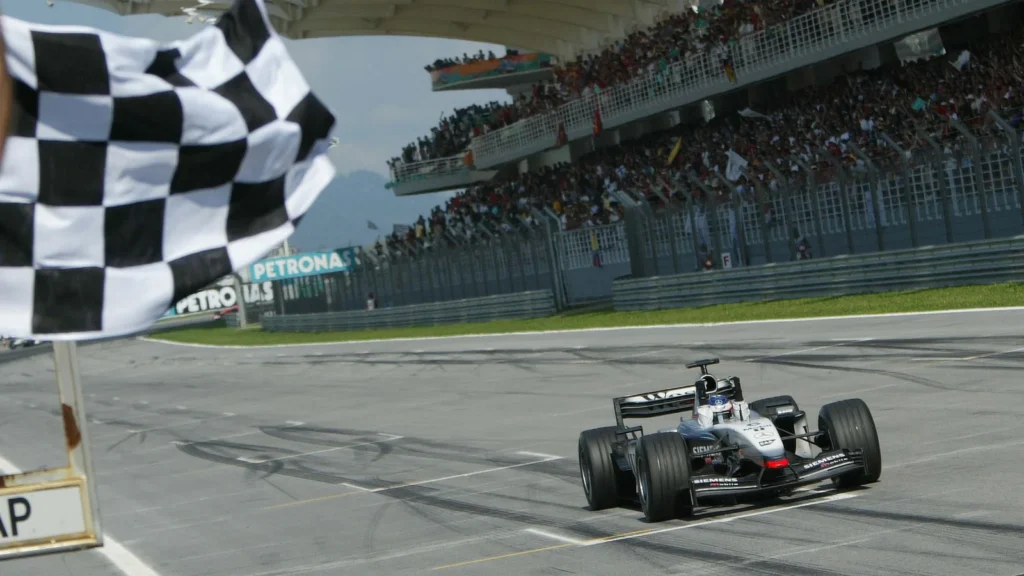
Raikkonen, who started seventh, quickly moved up the field, benefitting from contact between Schumacher and Trulli ahead of him. Before half distance, the first round of pit stops saw him emerge as leader ahead of Barrichello, and that is where he duly stayed at the flag, taking a maiden victory by a whopping 39 seconds from the Brazilian.
Alonso held third, his first-ever podium in F1, with Schumacher sixth, recovering from 14th and a drive-through penalty, both triggered by his clash with Trulli.
2. 2009: Rain, rain, go away!
2009 saw a sweeping new set of technical regulations, which were best interpreted by Brawn GP, a team that former Ferrari technical whizz Ross Brawn bought for £1 from the withdrawing Honda squad.
It meant that Jenson Button was in the box seat for the World Championship, and after taking a dominant win in Australia – with teammate Barrichello second – the one-season wonders headed to Malaysia anticipating more of the same.
Button scored pole position, but botched the start, dropping to fourth, effectively swapping places with Nico Rosberg’s Williams, which entered Turn 1 at the front.
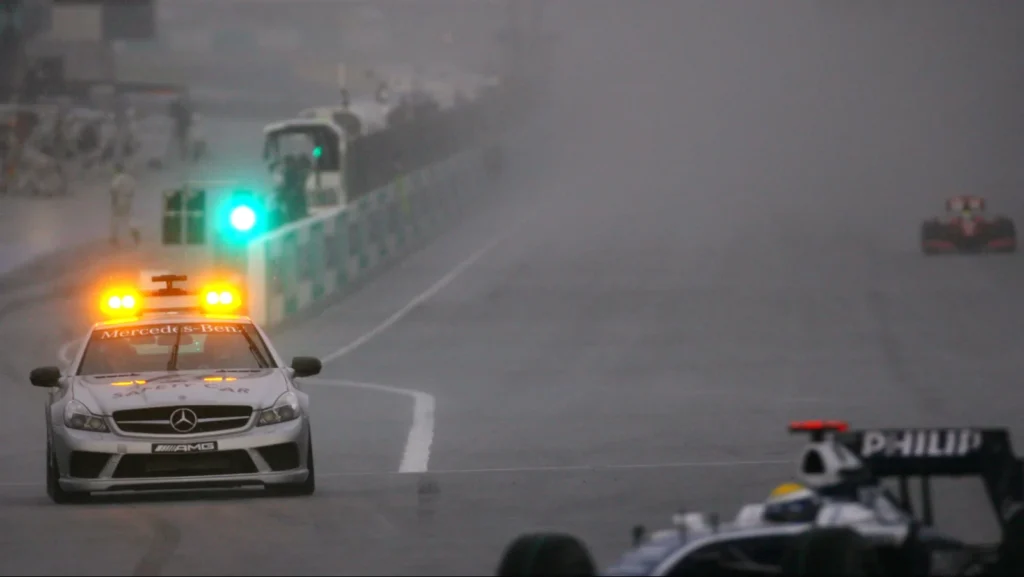
The Briton was in the lead eventually found himself back in the lead by the time rain began to fall heavily, and with the conditions too treacherous for racing, the red flag was brought out on Lap 33.
After a significant wait to see if the showers would subside, the decision was taken to abandon the race, with Button declared the winner, albeit with half-points handed out, given the race had not completed 75 percent distance.
1. 2013: ‘Multi-21, Seb’
Sebastian Vettel was now the undisputed King of Formula 1, having become the youngest-ever champion in 2010, and retained his crown in the following two seasons, and entered 2013 favourite to do so again.
He looked on course to win in Sepang, having taken pole position from Felipe Massa, with Red Bull teammate Mark Webber down in fifth.
The race began under damp conditions due to a pre-race thunderstorm, but the track dried out as racing continued. Vettel led the early stages, but Webber was race leader by Lap 15.
Later tyre stops saw the Australian retain his lead and on Lap 45 – with just 11 remaining – it looked as if he would take victory, as Vettel was handed the now-infamous code “Multi-Map 21” over radio – meaning he would hold station in second.
With Red Bull playing conservatively due to worries of tyre wear and fuel management, the aim was for both cars to now take it easy to the finish, but remain in their respectively positions. But Vettel had other ideas.
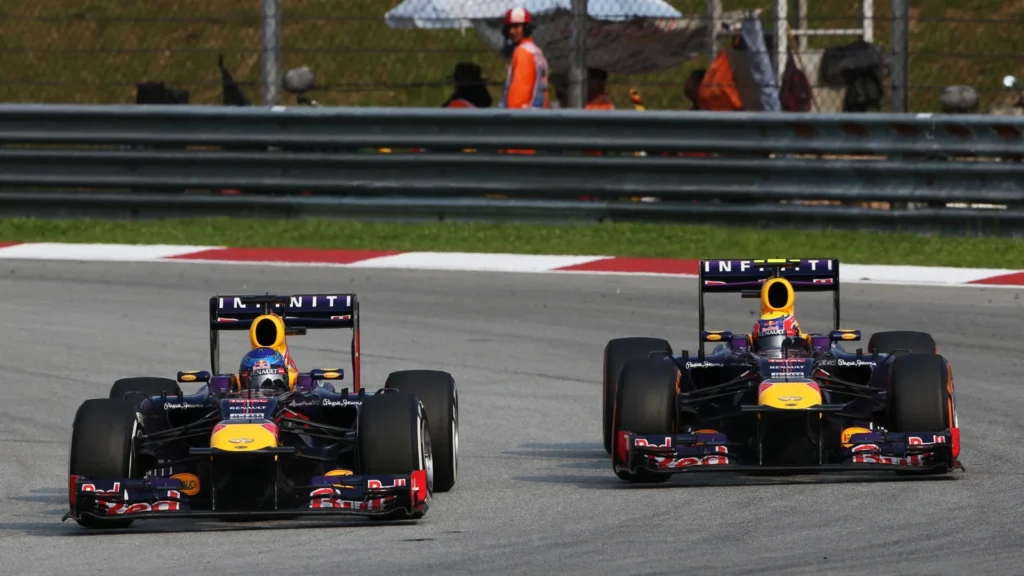
A lap later, and with the memory of a near-collision with Webber at the previous year’s Brazilian Grand Prix still fresh in his mind, Vettel disobeyed team orders and challenged his teammate for the lead.
Webber initially held off Vettel after duelling across the first few corners, but Vettel took the lead at Turn 4, drawing the ire of Team Principal Christian Horner, who took to radio: “This is getting silly, Seb, come on.”
Vettel pulled clear and won the race by four seconds, and the usually humid and oppressive Malaysian heat was replaced by an atmosphere in the cool-down room before the podium ceremony which was frosty.
An insensed Webber walked into the cool-down room and faced his teammate.
“Multi-21, Seb. Yeah, Multi-21,” he said. pointedly.
Vettel offered no response.
With F1 then conducting post-race interviews on the podium, Webber, in front of Vettel, third-placed Lewis Hamilton and the entire world, made his feelings clear.
“After the last stop the team told me the race was over and we turned the engines down and go to the end,” he said. “The team made their decision. Seb made his own decision and he will have protection as usual.”
It’s fair to say that the Malaysian Grand Prix stoked up its fair share of drama, controversy and action. There will be concerns as to how today’s energy-harvesting cars will cope with the high speed of it, but there is no doubt that it is good to see it back.
READ MORE – Fernando Alonso reveals the self-belief fuelling his F1 future




Discussion about this post