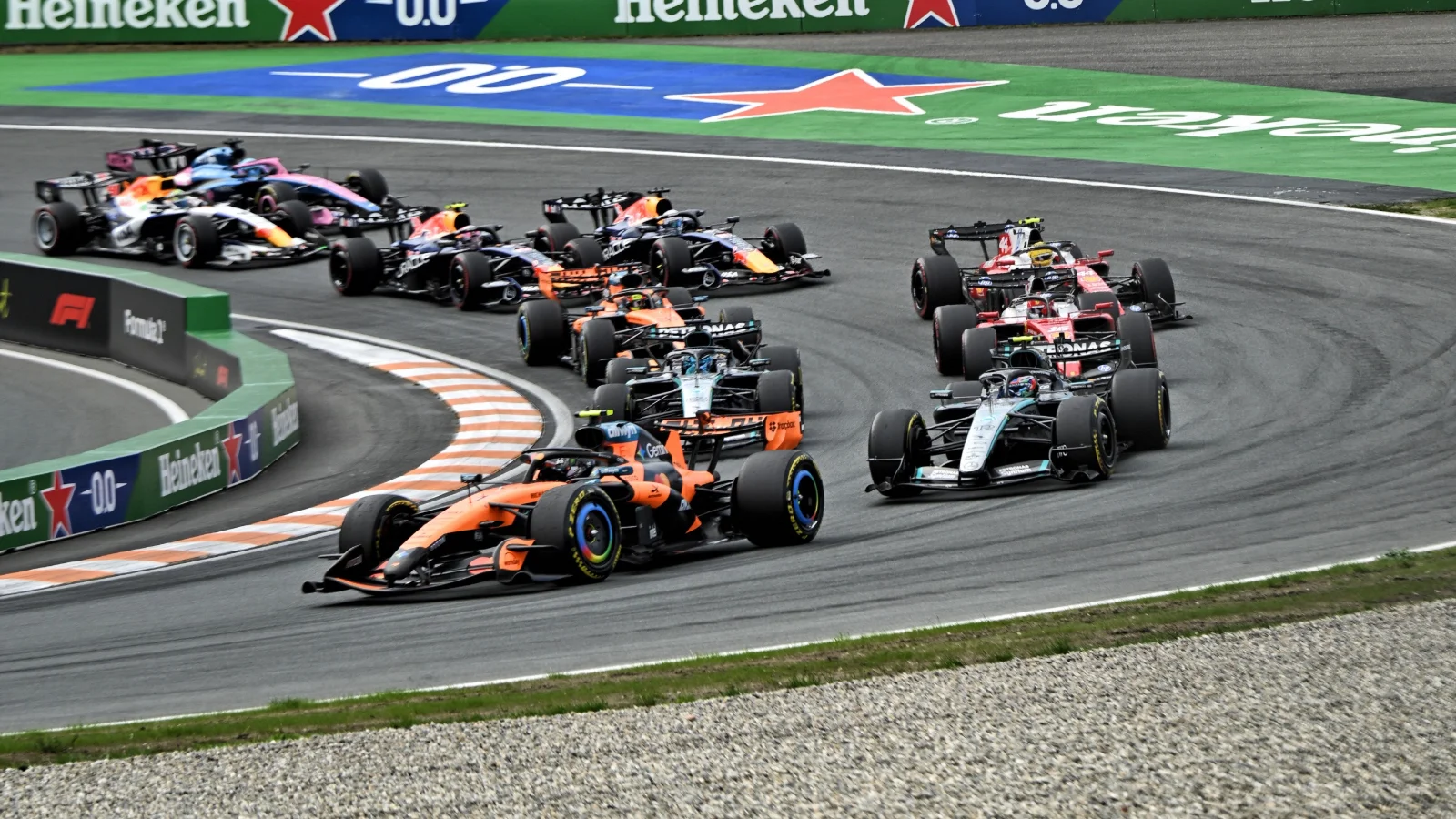
When Formula 1 rewrote its technical rules for 2026, most of the noise was about how the cars look.
The bigger story sits inside the power unit, and it has scrambled the competitive order more thoroughly than anything since the hybrid switch in 2014. Twelve rounds in, the championship table bears almost no resemblance to last year’s, which is why every form guide, season preview and pricing model — including the markets carried by Twinsbet sports betting — had to be torn up somewhere around Melbourne.
That kind of volatility is rare. Nobody could read the field with confidence over the winter, and by the opening flyaways operators such as Twinsbet were quoting a far flatter championship market than a normal season would produce. The cause was a single component.
The MGU-K did the damage
The MGU-K has gone from 120kW to 350kW. The MGU-H, which teams spent a decade learning to exploit, has been deleted outright. Electrical energy now accounts for roughly half of total output, against about a fifth under the previous formula, and recovery under braking has doubled to 8.5MJ per lap. Five manufacturers committed to the new rules: Mercedes, Ferrari, Red Bull Ford, Honda and Audi.


The chassis regulations pull in the same direction. Cars are 30kg lighter at a 768kg minimum, 200mm shorter in the wheelbase at 3,400mm, and 100mm narrower at 1,900mm. Downforce is down around 30 per cent and drag by 55 per cent. Active aerodynamics give drivers two wing modes front and rear, and Manual Override Mode hands extra battery deployment to a car running within a second of the one ahead. Every drop of fuel is now advanced sustainable fuel made from carbon capture, municipal waste or non-food biomass.
Mercedes got it right, Red Bull did not
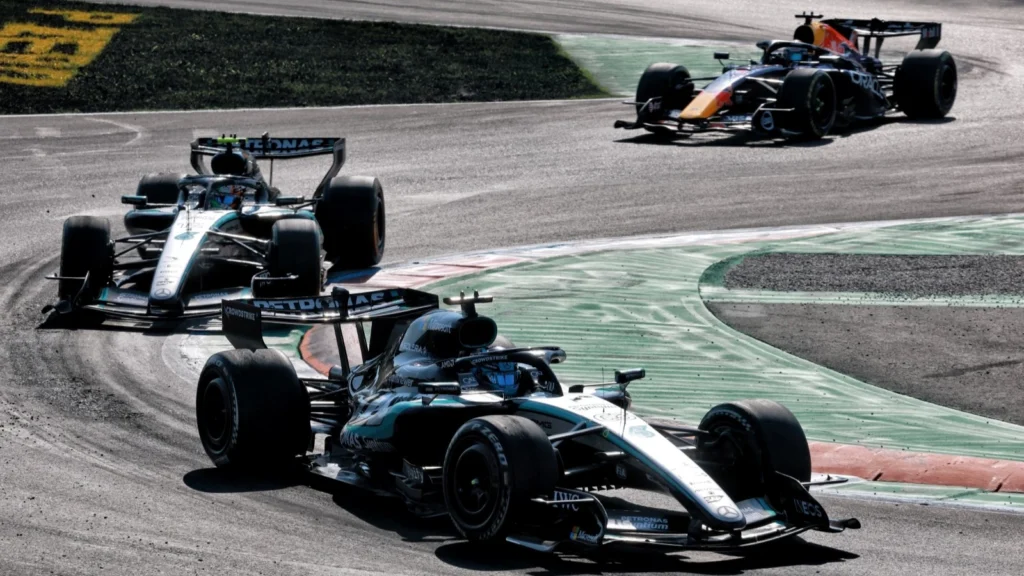
The standings after twelve races tell the story better than any technical briefing. Kimi Antonelli leads the drivers’ championship on 242 points with six wins, ahead of George Russell and Lewis Hamilton on 183 each, Lando Norris on 159 and Charles Leclerc on 155. Max Verstappen sits sixth on 112. Mercedes lead the constructors’ standings on 425 points, with Ferrari on 338, McLaren on 263 and Red Bull on 186.
Verstappen’s frustration surfaced at Silverstone, where he qualified 0.15 seconds behind Isack Hadjar and blamed the Red Bull DM01 unit directly. Straight-line speed was missing and the battery was running flat by the final sector. “The engine just isn’t working,” he said afterwards. That is the blunt reality of a power unit reset: the deficit is not in the driver’s hands and it is not fixable over a weekend.
The new entries are learning the hard way
Cadillac arrived with an experienced pairing in Sergio Pérez and Valtteri Bottas and has scored nothing through twelve rounds. Its best finish is Bottas in 13th in China, and the internal qualifying head-to-head sits at 6-5 to Pérez. Audi is eighth with 16 points. For a first season built around an untested formula, neither result is a surprise, though neither is comfortable either.
The calendar has changed too. Twenty-four races run from Melbourne on 6 March to Abu Dhabi on 6 December, with Madrid making its debut on a 5.47km circuit beside Ifema in September and Imola dropping off.
What to watch in the second half
The interesting question is convergence. Power unit deficits in 2014 took roughly two seasons to close, and there is no reason to expect faster progress now that engine development is tightly restricted. If Mercedes hold their advantage into 2027, the 2026 rules will be remembered less as a reset than as a reshuffle that stuck.
There is a second question that matters more to viewers. Active aero and Manual Override Mode were sold as overtaking aids, and early evidence is mixed: passes are happening, but a good number of them look automated rather than earned. Drivers have been careful in their public comments, which usually means the paddock is still forming a view. Expect that debate to sharpen once the championship tightens, because a rules package judged good for racing survives its teething problems and one judged artificial does not.
For now, the season has done what a regulation reset is supposed to do. It broke a settled hierarchy, rewarded the team that read the brief best, and gave the field something genuinely difficult to solve.