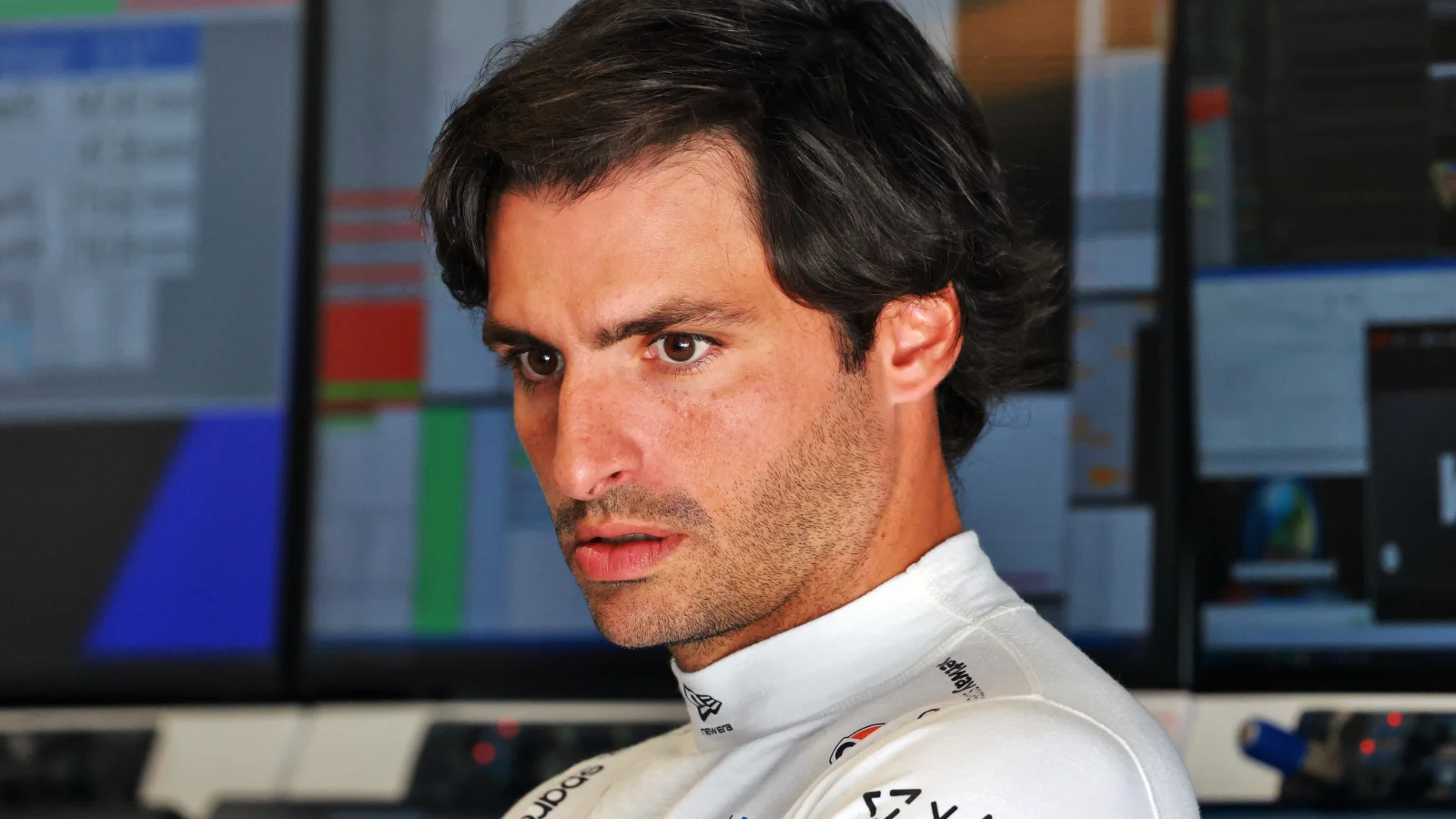
For Carlos Sainz, the 2026 Madrid Grand Prix will not be just another racing weekend. The Williams driver was born in Madrid, grew up around motorsport and has spent more than a decade racing in Formula 1.
Yet he has never started an F1 race in his home city. That changes on 11 to 13 September, when Formula 1 arrives at the new Madring circuit for the first time.
Everyone starts with a new track, so there is no famous qualifying lap from five years ago, no tyre strategy from last season and no list of drivers who traditionally perform well here. That gives fans a local hero to follow. Sainz was born in Madrid, and he is also Madring’s official ambassador after taking on the role when construction began in April 2025.
The circuit itself should attract just as much attention. Madring is a roughly 5.4km hybrid track with 22 corners, combining urban roads around IFEMA with a purpose-built section in Valdebebas. It has a long straight, fast linked corners, heavy braking zones and one enormous banked bend — La Monumental — that organisers hope will become one of Formula 1’s most recognisable corners.

Formula 1 is back in Madrid after 45 years
Madrid has hosted Formula 1 before, but most of today’s fans have never seen it happen. Jarama, north of the city centre, held the Spanish Grand Prix several times before Madrid’s final World Championship race in 1981. Gilles Villeneuve won that day for Ferrari, and Formula 1 has been absent from the Spanish capital ever since.
Madring is not an attempt to revive Jarama. It is a completely new venue in another part of Madrid, built around the IFEMA exhibition centre. The race takes place from Friday 11 September through Sunday 13 September. Practice begins on Friday, qualifying is scheduled for Saturday and the race runs over 57 laps on Sunday. With no historical data to draw on, the odds and outright markets for the Spanish Grand Prix will be driven primarily by simulations and current car setups. Formula 1’s agreement with IFEMA runs from 2026 through 2035.
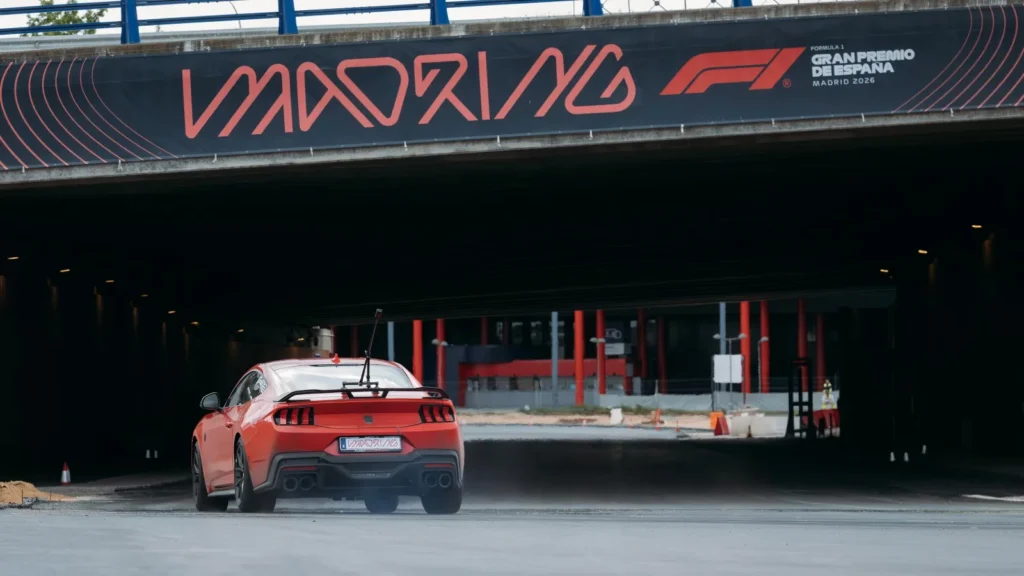
Carlos Sainz finally gets a Formula 1 race in Madrid
Sainz was born in Madrid in 1994 and entered Formula 1 with Toro Rosso in 2015. Since then, his career has taken him through Renault, McLaren, Ferrari and Williams.
His father, two-time World Rally Champion Carlos Sainz Sr, was a well-known name in motorsport long before Carlos Jr reached F1. Yet the younger Sainz never had the chance to compete in a Formula 1 grand prix on the streets of the city where he was born. Until now.
When Madring construction formally began in April 2025, Sainz was announced as an official ambassador for the grand prix. He attended the ceremony and helped reveal the updated circuit design. He described La Monumental as a potential icon of the track and spoke openly about how much Madrid means to him.
Once the weekend starts, however, sentiment will not help with lap time. Sainz still has to learn the braking points, kerbs, bumps, grip levels and best racing lines like everyone else. Being born a few kilometres away gives him no advantage over a circuit nobody has raced on before.
A closer look at the Madring track layout
The Madring track layout is not a traditional permanent racetrack like Silverstone or Suzuka. It is not entirely a street circuit like Monaco either. Madring is a hybrid.
The track runs around IFEMA MADRID and into Valdebebas, combining sections built specifically for racing with roughly 1.5 kilometres using public roads. The current layout has 22 corners after being revised from the original 20-corner proposal.
The mix should produce an exciting race. Standard track sections can be designed around Formula 1 cars, giving organisers control over corner radius, run-off, elevation and track width. Urban sections have to work around roads and infrastructure. The result is a circuit that moves between slower parts and much faster areas rather than maintaining the same pace for an entire lap.
Madring is also a very fast track where straights should allow cars to reach around 340km/h. The circuit also includes several significant braking zones and elevation changes.

The long straight could be Madring’s best overtaking spot
One of the first important sections comes after Turn 3, known as Hortaleza. From there, drivers enter the urban section of the lap before reaching the circuit’s longest straight — roughly 1.3 kilometres, with speeds expected to climb above 300km/h.
That immediately creates two challenges. The first is drag: teams need enough straight-line efficiency to avoid becoming easy targets down such a long flat section. The second is braking stability: long straights are the main overtaking spots only when there is enough space to attack at the end. Drivers need to get alongside and then control the car under hard braking without locking a tyre or running out of road.
Nobody will really know how good that section is for overtaking until the F1 cars are actually racing on it. Simulations can estimate speeds and racing lines. They cannot account for dirty air, defensive driving or 20-plus cars fighting for the same braking zone. That uncertainty is one reason the Spanish Grand Prix in Madrid will be fascinating from the opening practice session.
La Monumental is the corner everyone will be watching
Madring already has a signature corner: La Monumental at Turn 12. The name comes partly from the corner’s huge semicircular shape, which is intended to resemble a traditional bullring.
La Monumental stretches for roughly 550 metres, and drivers are expected to spend around six seconds turning through it at high speed. It also has 24% banking — the longest banked corner currently in Formula 1. For clarity, 24% banking means the track rises 24 metres for every 100 metres of horizontal distance, which works out to roughly 13.5 degrees. Still extremely steep for an F1 circuit.
The preceding Turns 10 and 11 form a chicane designed to manage the approach before cars reach La Monumental. Organisers expect drivers to attack the banked section at very high speed before accelerating beyond 300km/h on the exit. Then comes Turn 13, where drivers are expected to slow to around 140km/h — making it one of the more obvious places for an attack immediately after the long banked corner.
La Monumental will have a real impact on the racing, not just provide one of the best camera shots. The exit could determine whether a driver is attacking or defending into the next braking zone.
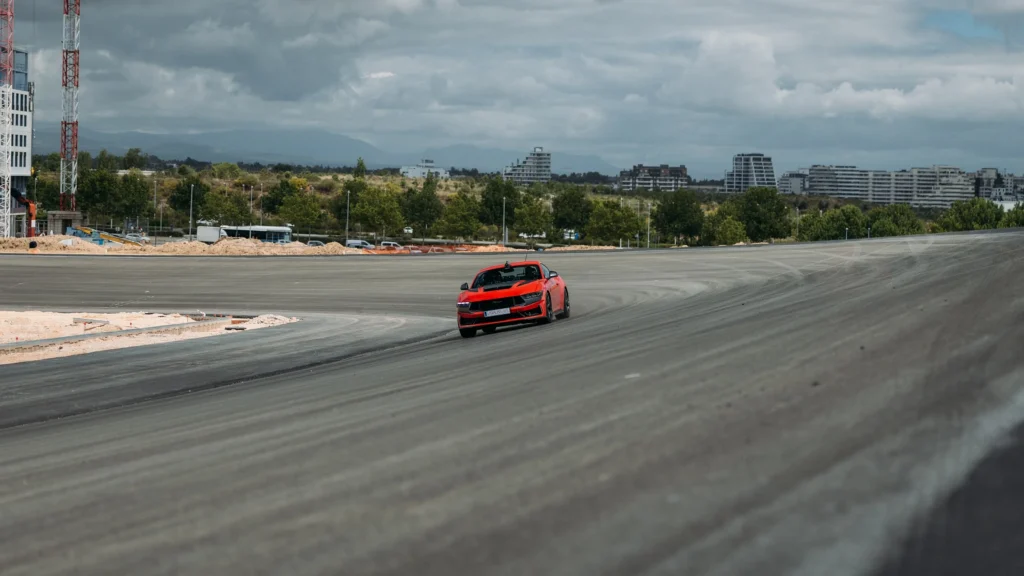
Turns 14 to 16 bring the speed back
After Turn 13, the layout changes again. Turns 14, 15 and 16 make up Las Enlazadas de Valdebebas, a fast area where Formula 1 cars are expected to go flat out. Drivers then brake heavily for Turn 17, with projected speed falling from roughly 280km/h to around 100km/h.
A long stretch through La Monumental, hard braking at Turn 13, a quick acceleration through several linked corners and another major slowdown at Turn 17. For drivers, getting each section right will be crucial — a small error can affect several corners rather than costing time in only one place. For engineers, the problem is finding a setup that works everywhere. Madring’s first race should reveal which teams found the best solution.
A new circuit creates a different kind of Formula 1 weekend
Established tracks come with enormous amounts of data. Teams know which kerbs can be attacked at Monza. Drivers understand how wind affects Silverstone. Engineers have years of tyre information from Barcelona, Suzuka and Bahrain.
Madring starts almost from zero. Teams will arrive with simulator work, computer models and information collected during circuit preparation, but Friday practice is going to be the true first test. The first laps will show how closely reality matches the simulations. New asphalt often changes considerably as more rubber is laid down over a weekend — grip on Friday morning may be very different from grip during qualifying on Saturday.
Madrid takes the Spanish Grand Prix name from Barcelona
The Barcelona race is still on the calendar. The Circuit de Barcelona-Catalunya held its race on 12 to 14 June under the Barcelona-Catalunya Grand Prix name. Madrid, meanwhile, has taken the official Spanish Grand Prix title.
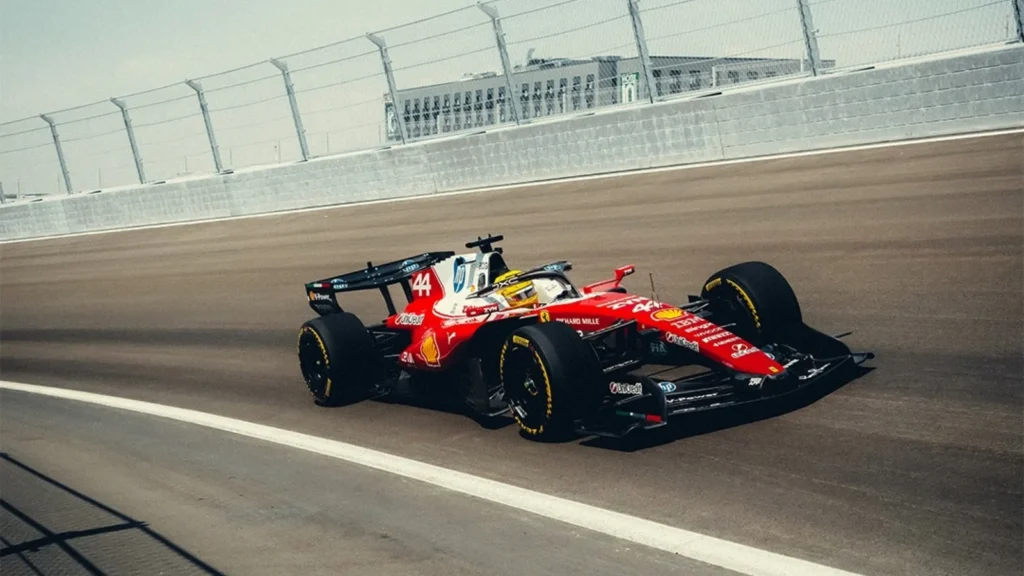
That means Spain has two Formula 1 rounds in 2026 — the only season in which both Madrid and Barcelona are guaranteed to host F1 races. Madrid has a long-term contract to host the Spanish Grand Prix from 2026 through 2035. Barcelona has moved to a rotating schedule: after its 2026 race, it is currently confirmed to return in 2028, 2030 and 2032, alternating with Spa.
Reports often cite a figure of €450-500 million for the circuit, but that is the estimated yearly boost to Madrid’s economy, not the construction cost. The actual construction contract was worth approximately €83.2 million — well below the original €111 million budget.
Getting to Madring should be easier than many F1 circuits
Madring has one practical advantage: it is actually inside Madrid.
Plenty of Formula 1 venues carry the name of a major city while sitting a considerable distance away. Madring surrounds IFEMA in north-east Madrid and is close to Madrid-Barajas airport. Metro Line 8 serves Feria de Madrid, while Cercanías trains stop at Valdebebas. IFEMA originally stated it wanted as many as 90% of spectators to reach the venue using public transport — making the Madrid Grand Prix considerably simpler to attend than weekends requiring long drives or shuttle journeys to isolated permanent circuits.
Carlos Sainz will get more attention
Racing at home does not make Sainz a favourite, but it does make him one of the biggest stories of the weekend. Few drivers will arrive in Madrid with more attention on them.
He helped introduce the circuit. He became its ambassador. He has talked about La Monumental becoming its defining corner. Now he has to drive it at Formula 1 speed in front of a home crowd. That creates a lot of pressure — a strong qualifying lap becomes a huge moment, and a mistake gets replayed endlessly.
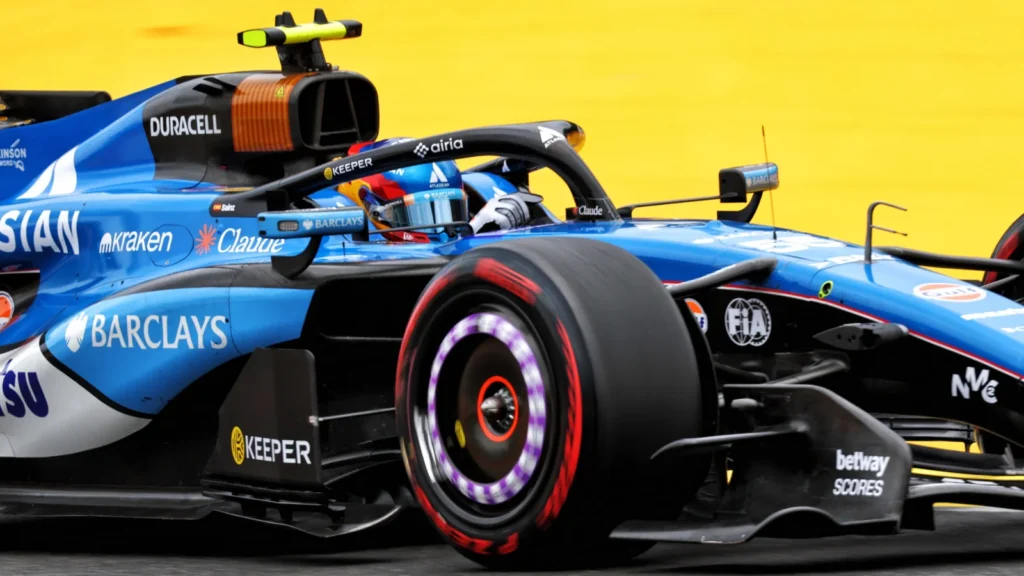
Nobody really knows what a good Madring car looks like yet
The long straight rewards efficiency. La Monumental requires confidence at sustained high speed. The linked Valdebebas corners need stability, while the slower turns and major braking zones demand good grip and traction. But nobody has previous F1 race data to prove which characteristics will dominate.
Madring still has to establish its identity. By Sunday evening, we should understand far more about where overtaking happens, whether La Monumental is as spectacular from inside an F1 car as it looks from the grandstands, and which teams figured out the circuit fastest.
Madrid’s first weekend will write the history
The first qualifying session will create the circuit’s first Formula 1 pole-sitter. Sunday’s winner will become the first driver to win at Madring. Somebody will set the first official fastest lap, while the opening race will finally show whether the circuit’s planned overtaking zones work.
And somewhere in the middle of all that will be Carlos Sainz, lining up for a Formula 1 grand prix in his home city for the very first time.