
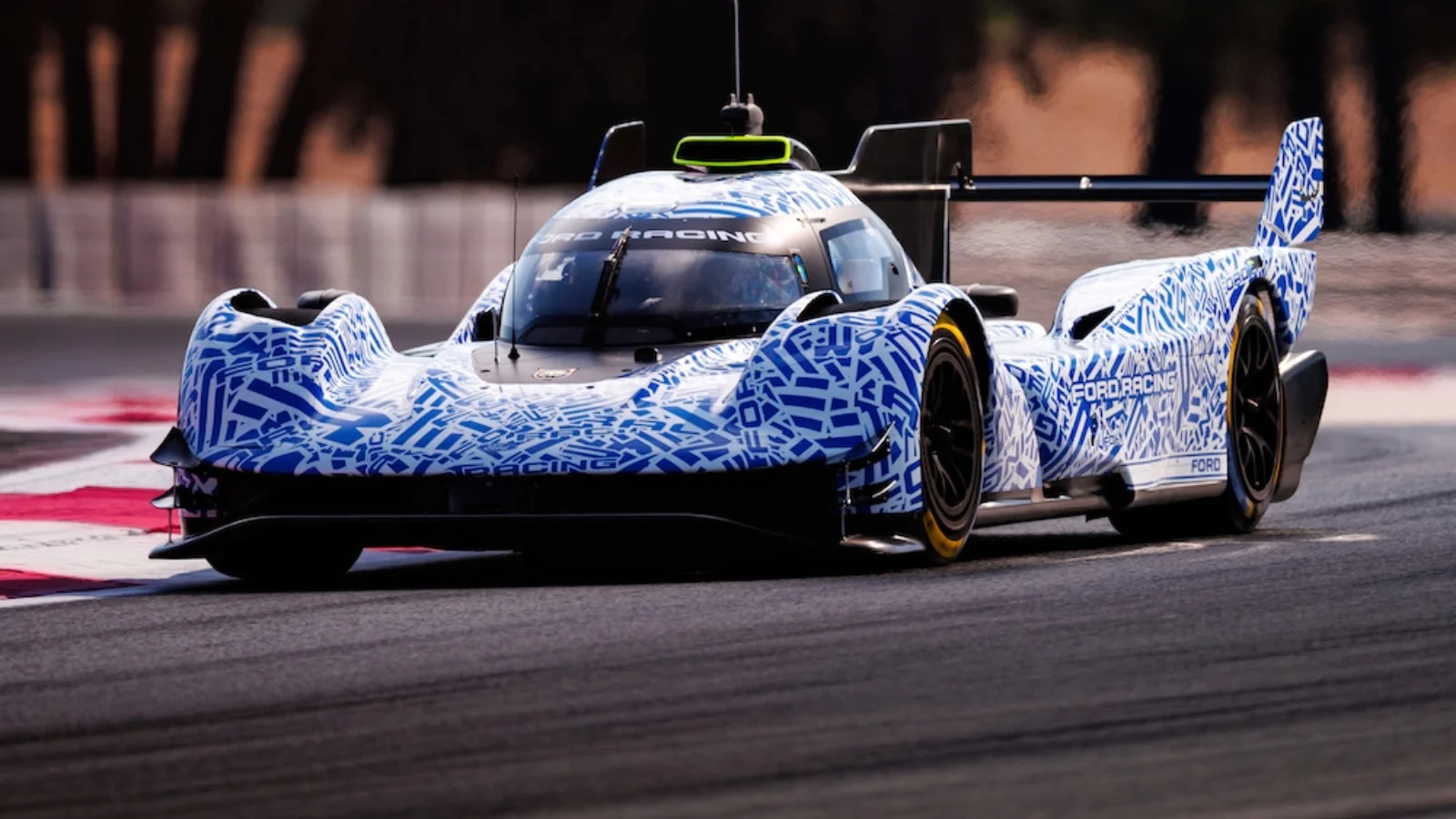
Ford has given the world its first proper look at the Hypercar it will take into the FIA World Endurance Championship in 2027, with the new LMDh prototype completing its first full track test at Circuit Paul Ricard in France earlier this week.
The American manufacturer released the first official images of the car on August 17, revealing the prototype as its long-awaited return to the top level of international endurance racing moves into a new phase.
The Paul Ricard running follows an initial shakedown programme that began earlier this month. Ford says those early runs went according to plan, allowing the team to move into more comprehensive testing of the car and its systems.
At the heart of the new prototype is a naturally aspirated 5.4-litre V8 derived from Ford’s Coyote engine family. The engine has been developed in-house by Ford and is paired with the standard hybrid system required under LMDh regulations. The chassis itself has been supplied by ORECA.


Ford has yet to reveal detailed performance figures for the engine, with the early stages of the programme instead focused on validating the car’s systems, reliability and overall operation. Matt Campbell and Logan Sargeant were the first drivers to take part in the latest Paul Ricard test, while Tom Blomqvist is also scheduled to get behind the wheel as Ford continues to work through its development programme.
The manufacturer has assembled a six-driver roster for its WEC project. Campbell, Blomqvist and Sargeant are joined by Mike Rockenfeller, Seb Priaulx and Nick Yelloly, with all six expected to contribute to the testing process ahead of homologation.
Ford’s return to the Hypercar category represents a major new chapter for the company in endurance racing. The 2027 programme will put the manufacturer up against established WEC competitors, with the 24 Hours of Le Mans naturally standing out as one of the biggest targets on the calendar. For now, however, the focus is firmly on development rather than outright performance.
The team is expected to continue testing the prototype at circuits across Europe in the coming months. That work will be used to refine the car before it reaches the homologation stage and makes its competitive debut in 2027. The images from Paul Ricard also offer the first real indication of the car’s design, although the prototype remains covered in camouflage and its final appearance could still change before it reaches the grid.



Discussion about this post