Weather is one of the most important factors in motorsport, and every experienced team and driver knows it.
A race that begins under clear skies can end in heavy rain, and that sudden change can have a devastating effect on tyres, grip, visibility, and strategy. Here is a closer look at how weather shapes everything that happens on track.
Track temperature and tyre performance
Track temperature plays a crucial role in determining how well tyres perform. When the surface is warm, tyres reach their optimal operating temperature more quickly, allowing them to generate grip more efficiently. When the track is cold, getting heat into the rubber becomes a challenge from the very first lap.
This is one of the more technical aspects of motorsport that has become increasingly popular with fans who follow the sport closely. Many visit Efirbet.com to find bookmakers offering markets related to tyre strategy and other performance variables. Entire engineering teams focus on tyre behaviour across different temperature ranges, and the results can be dramatic.


Rain and changing grip levels
Rain produces some of the most dramatic racing in motorsport. Water reduces the contact between tyre and road surface, disrupting the plans of almost every team on the grid. Drivers must use smoother inputs and avoid sudden movements — any aggressive action can cause a snap that is difficult to recover from at racing speeds.
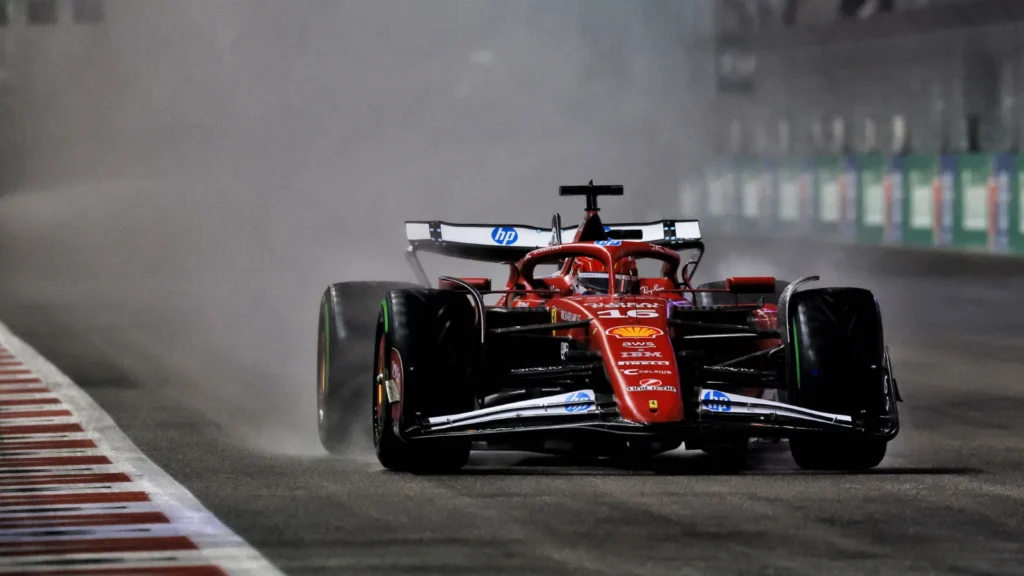
The racing line changes completely in the wet. On a dry track, drivers follow the section of the circuit that offers the most grip, worn smooth by repeated use. In the rain, those polished surfaces become the slipperiest parts of the circuit, and drivers search for grip on less commonly used sections instead. The result is unusual and unpredictable racing lines.
Standing water adds another layer of danger. When tyres cannot clear water quickly enough, the car begins to aquaplane and becomes extremely difficult to control — a situation that can develop within a single lap as a shower intensifies.
Picking the right tyres
Tyre selection becomes critical when weather changes, and it is one of the most overlooked aspects of a race weekend. Different compounds exist for dry, damp, and fully wet conditions, and the team must decide which to use — often with incomplete information and very little time.
Switching to wet-weather tyres too early typically costs time, while waiting too long can leave a driver without sufficient control and at serious risk of an accident. Teams must weigh the evidence carefully and commit to a decision before the track reaches the point where the choice is made for them.
If you have followed some of the greatest Formula 1 races across the sport’s history, you will already know that the timing of a tyre change can decide the outcome of an entire race. Teams that react quickly to changing conditions regularly gain multiple positions, while a delayed decision can turn a podium into a midfield finish.
Visibility and driver concentration
Poor visibility is a serious and often underestimated hazard in wet-weather racing. Spray thrown up by other cars can obscure braking markers, corner entry points, and even the vehicles immediately ahead. Incidents can develop in seconds when drivers cannot see clearly enough to judge the gap.
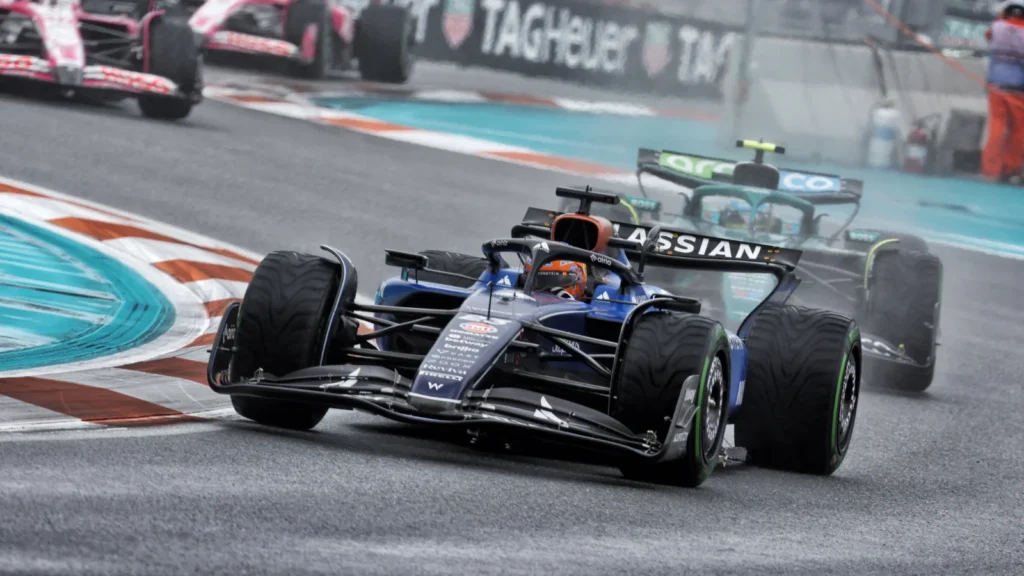
In reduced visibility conditions, drivers rely on experience, track memory, and fast reactions. Even then, they must simultaneously manage lower grip levels and stay in constant contact with the pit wall — a combination that demands exceptional concentration throughout the race.
Weather and race strategy
Weather affects far more than driving technique alone. It influences fuel consumption, pit stop timing, tyre selection, and car setup simultaneously. Teams rely on radar systems and local weather forecasts to predict incoming rain, but those tools are not always accurate enough to guarantee the right call.
The best teams always have multiple strategies prepared and switch between them as conditions develop. Clear communication between drivers, strategists, mechanics, and engineers is essential when decisions must be made within seconds.
Weather adds genuine uncertainty to every motorsport event. It can erase a championship leader’s advantage in a single lap and create opportunities for drivers who seemed out of contention. The teams and drivers who adapt fastest are almost always the ones who gain the most when conditions change.