
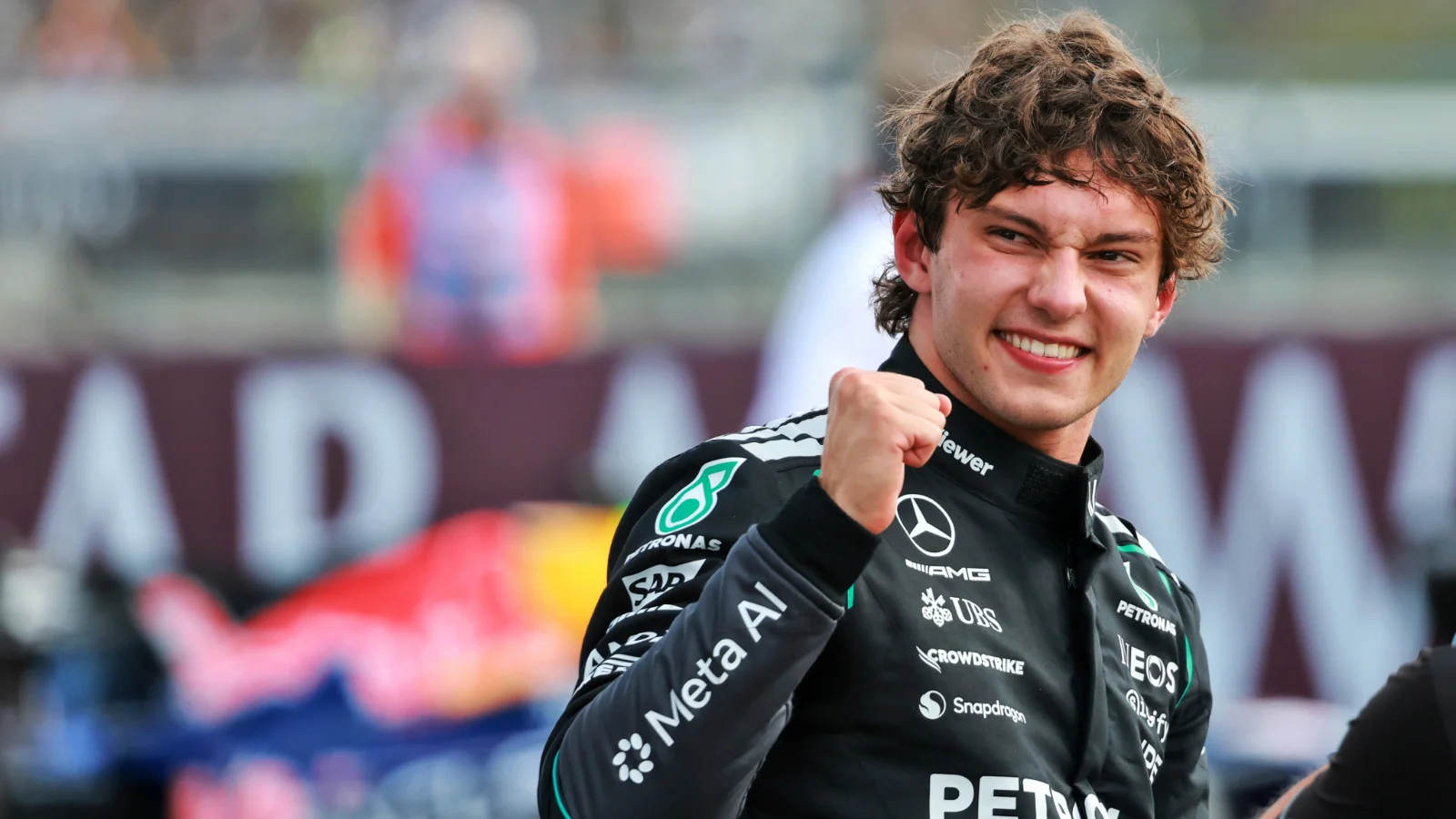
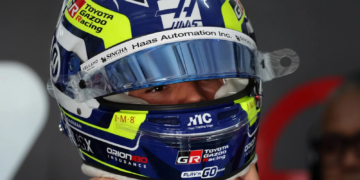
Kimi Antonelli has explained the counterintuitive and “unnatural” driving style that secured him pole position for Sunday’s Formula 1 British Grand Prix.
Antonelli stormed to pole position at the British GP, beating Charles Leclerc’s Ferrari by just under two tenths of a second to secure the coveted top spot on the grid.
The nature of the circuit of Silverstone had left drivers concerned about battery deployment and closing speed ratios, given the historic track’s famous high speed corners.
This was on display in the Sprint Race, as Antonelli took advantage of deployment differences to surge past Lewis Hamilton for the lead at the midpoint of the race.
Qualifying for Sunday’s Grand Prix presented a different challenge, with drivers to manage their batteries and deployment whilst the engines are at maximum power.
The Italian’s pole lap continues what has been a sensational rookie campaign, with Antonelli now consistently mixing it with the sport’s most experienced operators at circuits that reward both raw pace and technical understanding of the power unit.
Silverstone’s blend of long straights and sweeping high-speed corners made it a particularly demanding test of energy management, with several drivers commenting throughout the weekend on the fine margins between lap time and battery depletion.
Antonelli alluded to the challenges, labelling qualifying as an “unnatural” experience.
“It was not easy”, he said to media in the post qualifying press conference, including Motorsport Week.
“but I think if you say I didn’t actually, but for sure it’s tricky, because with this power unit, you need to, sometimes driving in a certain way, that feels a bit unnatural.”
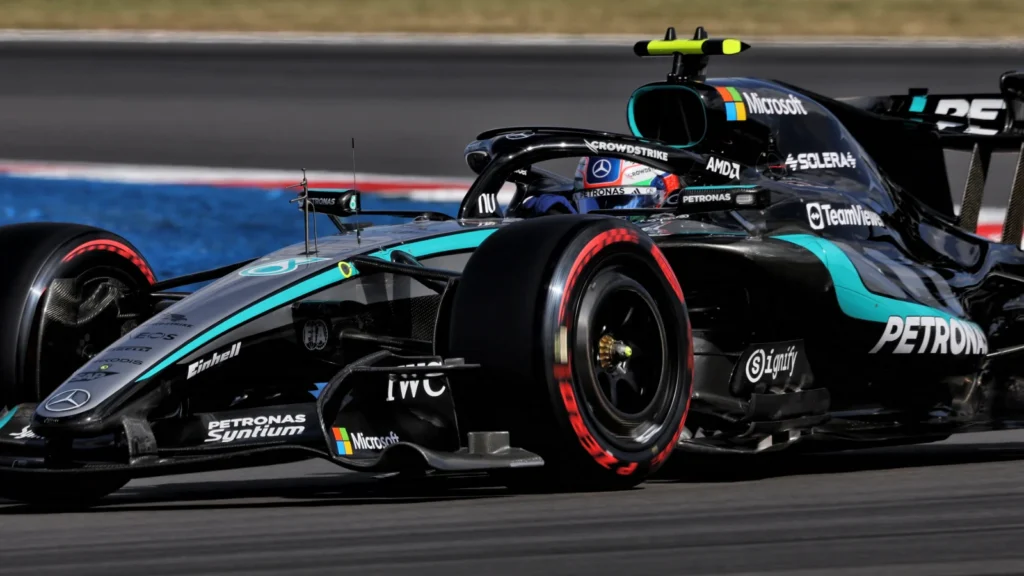
Kimi Antonelli explains “unnatural” pole lap
Antonelli then explained the detail behind his pole lap, revealing the unusual steps needed to extract maximum power from the power unit.
“Sometimes, going on throttle later, so in high speed, you carry more speed and you go on throttle later, then you may lose a little bit on exit, but then you regain it, because by delaying your throttle point, then you get more energy, and a bit later into the straight as well, so it’s just tricky, you know, you need to work your way around, and that’s why sim work has been extremely crucial.
“Because, just to make sure that these kind of things kind of become natural, because in the first place, you’re even like, why do I need to lift?
“You know, so, it’s just tricky at times. But with the team, we’ve done a lot of preparation, and luckily these kind of things have become kind of second-hand.”
The comments offer a rare insight into the mental adjustments drivers must make when chasing lap time under the current regulations, where instinctive braking and throttle points are often overridden by the demands of energy deployment. For a rookie still building experience at some of the calendar’s most historic venues, the ability to override natural racing instincts in pursuit of a quicker lap speaks to the level of preparation now required simply to compete at the front.
Antonelli will start Sunday’s race from pole for what would be a maiden Grand Prix victory, with Leclerc alongside him on the front row and Hamilton set to start further back after a difficult qualifying session of his own.




Discussion about this post