
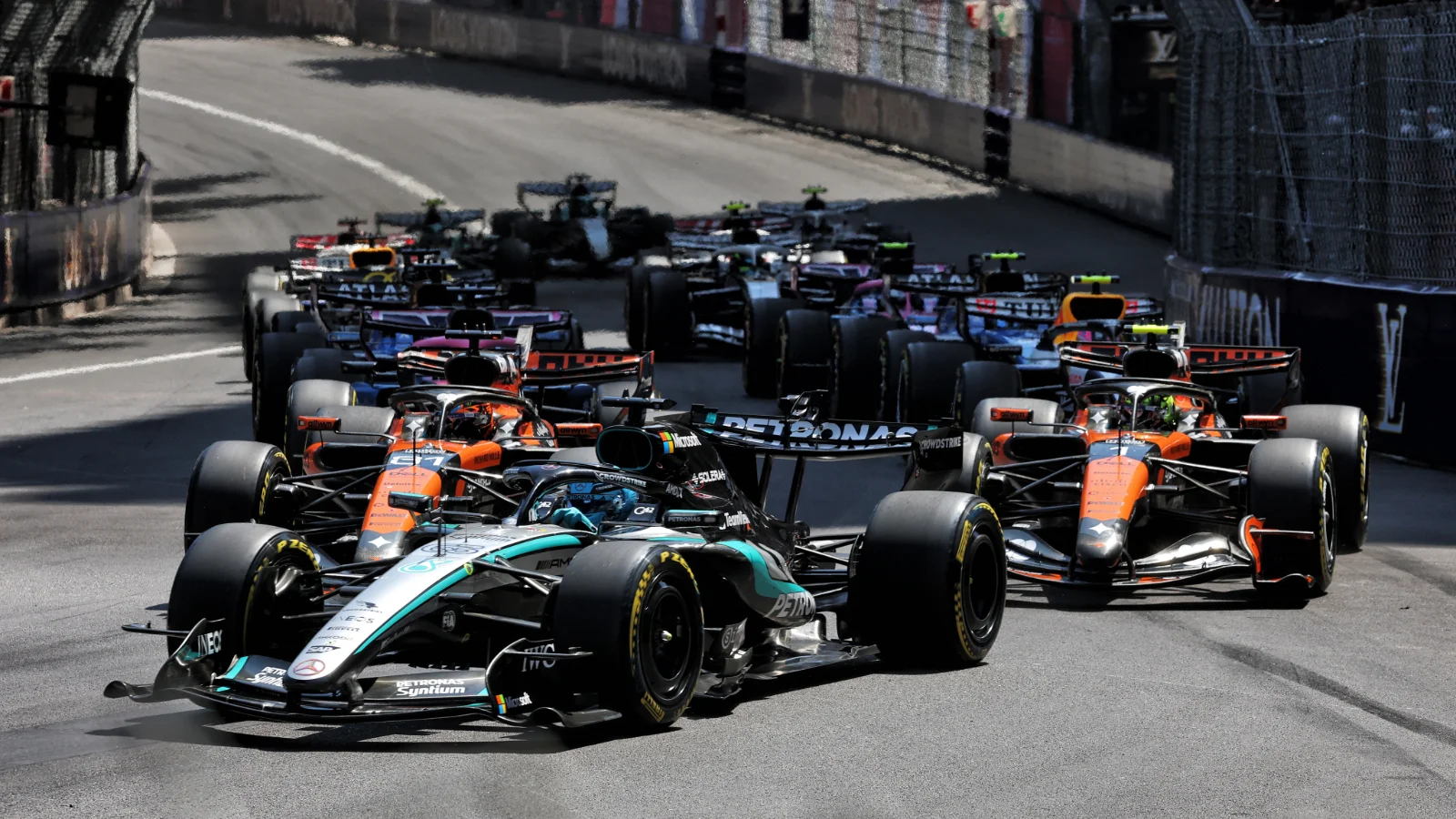
Monaco, home to the rich and famous. Fabled streets that wind around the principality, covered on both sides by the French Riviera.
Cars racing on the harbour front, through a hotel tunnel, surrounded by yachts that most can only dream of stepping on, never mind owning…Monaco has a truly unique feel.
It is hard to explain the atmosphere of Monaco without experiencing it for yourself. A bit like someone who has skydived, they are hard-pressed to express the emotions as they descend through the heavens, because, simply, few of us have the amount of brain cells to try and therefore empathise with their experience.
Simply put: once you’ve been to Monaco, you understand why Formula 1 returns here and has done so almost every year since 1929. It is a place of glitz and glamour, modernity, and tradition all rolled into one. Even away from the track, the unique feel of Monte-Carlo can be found.


Built into a side of steep mountain ranges, and covering just 0.805 of a mile, space is at a premium. So how do you get from A to B? Through escalators and elevators, built into the hillsides outside. It is a trademark of a location that knows its uniqueness.
Even getting from the train station to the track, a seemingly daunting task when greeted by the view of the harbour from a steep hill outside, is made possible by a strategically placed elevator and tunnel that lead to Saint Devote. Upon arrival, you are greeted by eateries and various ways to legitimately tempt you.
Of course, what 95 per cent of fans and those who watch F1 care about is the racing. And here is where things start to get a little tricky for F1’s jewel in the crown.
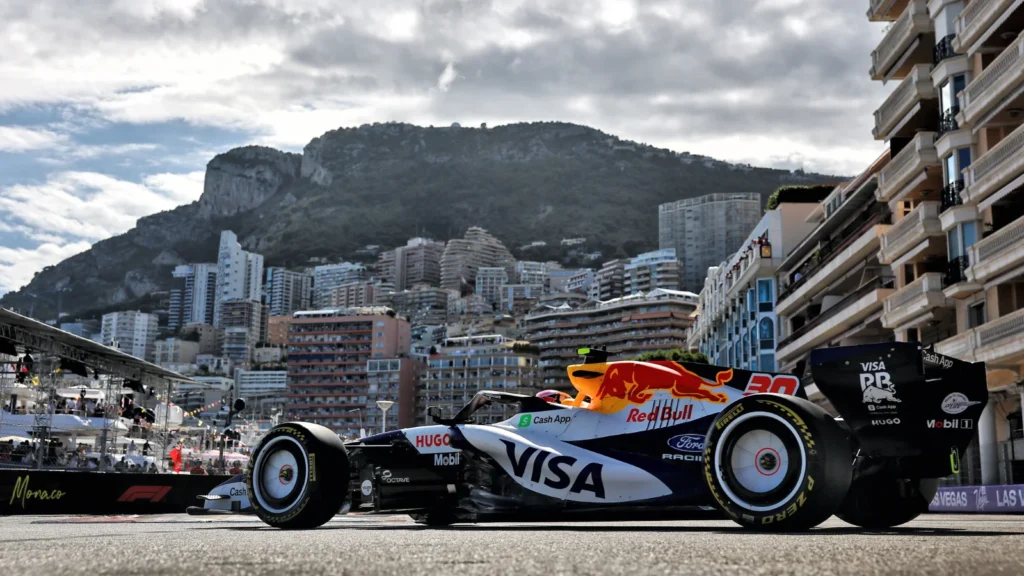
Monaco outgrowing cars?
Suffice it to say, Monaco now looks very different to the one in which cars first raced around in 1929. A health and safety officer’s worst nightmare, cars quite literally raced around the harbour with nothing to protect them from the harbour; accidents and deaths were frequent.
But Monaco, only founded in 1911, barely resembled the built up metropolis seen today. As a result, the roads were far larger than today, and barriers were laughable compared to today’s standards.
As the circuit hones in on its 100th anniversary, the question is now being asked, as more real estate is added, and more people flock to this tiny location, is Monaco outgrowing F1? The simple answer is no.
Why? Quite simply, Monaco has always been difficult to overtake on. Max Verstappen, speaking to media, including Motorsport Monday, in the Thursday press conference, said that wailing and shouting for Monaco to come off the calendar has only been a factor of the last twenty years, when social media started to control our lives.
But to play devil’s advocate, there is no escaping the sheer size of the modern-day F1 car, particularly the last generation. Race day in Monaco has always been processional, but watching those bulky cars was a bit like watching airport buses attempt to “race” around streets where overtaking is at a premium.
But what the modern-era, TikTok generation of F1 fan has decided without taking any heed of history, heritage and tradition, is that it’s a boring race that needs to be removed. Presumably for yet another street circuit, devoid of any soul, atmosphere or identity, like most of the new ones we currently endure that take coveted spaces on the 24-race calendar.
Monaco has always been, and still is, a supreme test of drivers’ skill and concentration. Surgeon-like precision is needed to thread a car through the principality’s streets. To sum it up: there is a reason why Nelson Piquet likened it to riding your bicycle through your living room.
To that end, qualifying has been one of the big highlights of the weekend. Putting the aforementioned skill into use, but also going as flat out as one can muster in order to secure as good a grid slot as possible. If you get pole on Saturday, your chances of the win on Sunday are higher than any other Grand Prix on the schedule.
So, you might ask: is that it? No, it’s not. Every Grand Prix always carries a vague air of unpredictability, but Monaco possesses the possibilities of a race of attrition. One lapse in concentration sees you in the barrier. That might see another car tag you from behind, and before you know it, a slew of carbon fibre peppers the Mediterranean air and the Safety Car is out, or even the red flags, compromising the race of someone totally uninvolved in that incident.
It has famously even been chaotic through weather, with 1982 and ‘84 good examples of what a little rainfall can do to throw up a little excitement. If you care to liken it to a piece of bland, plain food, then all you need is a bit of hot sauce, and the whole taste changes.
And what better example could there be than 2026? Max Verstappen’s car said “computer says no,” and along came one big talking point. Lance Stroll’s Aston Martin ends-up in the Anthony Noughes barrier, and we have a Safety Car. Then home hero Charles Leclerc plants his Ferrari in the wall at the exact same spot, and we have a red flag, a track inspection, and a 10-lap shootout to the chequered flag.
Combine that with a flurry of pit lane speeding penalties and a pinch of other prangs, then what you had was, overall, a race awash with gripping moments, talking points, and the prestigious race’s youngest-ever winner in Kimi Antonelli.
After years of ridiculous, unsubstantiated and downright churlish calls for a race that boasts nearly a century of racing to be abolished, two hours’ worth of drama puts paid to all of that.
By all means, carry on, but we’ll be busy with my trusty brushes – the jewel in motorsport’s crown needs a polish.




Discussion about this post