
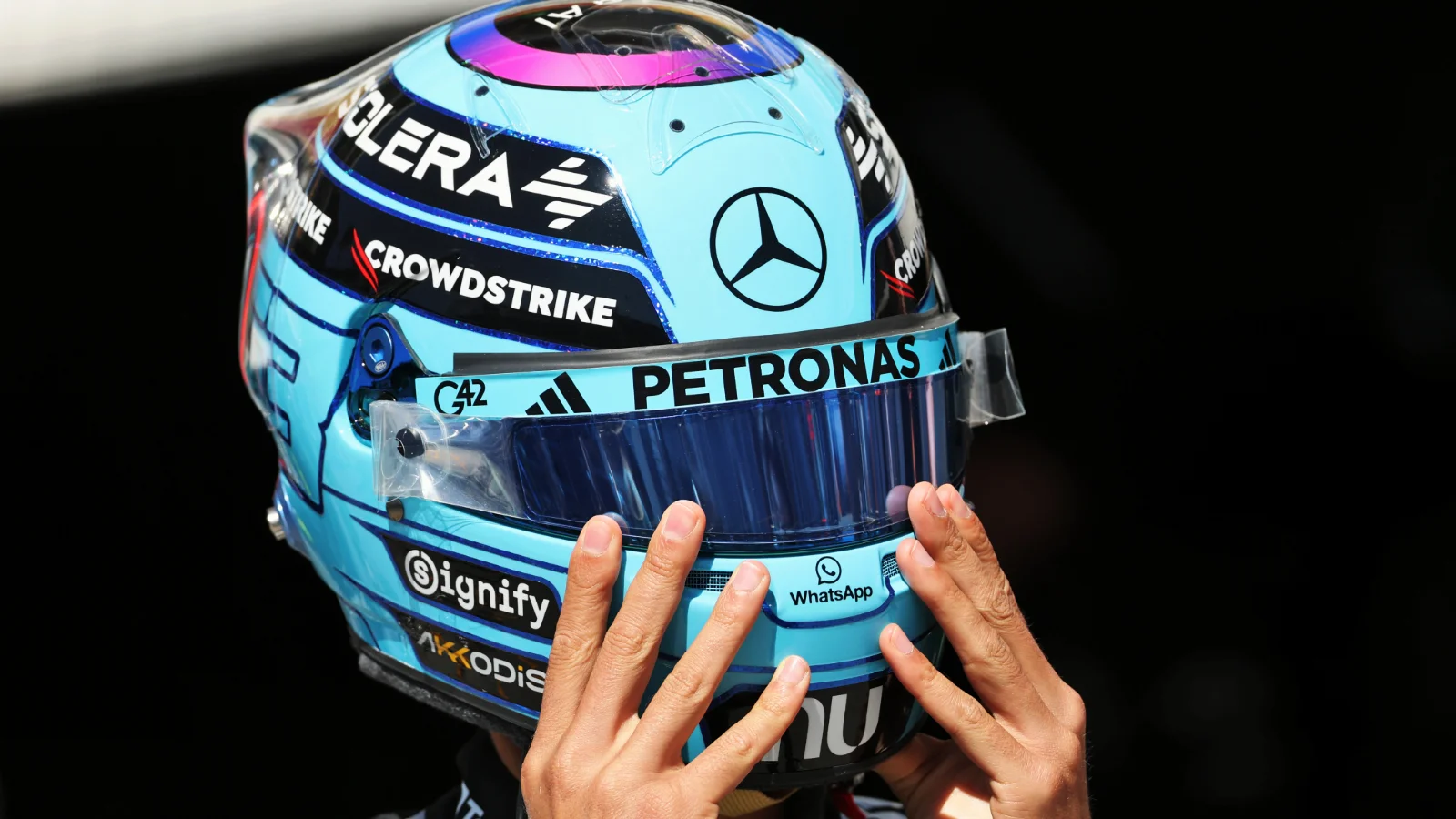
Mercedes faces a crippling delay in its efforts to understand the cause of George Russell’s ERS failure at the Formula 1 Canadian Grand Prix.
Russell and teammate Kimi Antonelli were engaged in a duel for the lead at last weekend’s F1 Canadian GP, dicing for position in the opening stages of the race.
However, a rare and unexpected ERS failure curtailed Russell’s afternoon early, his W17 grounding to a halt after taking to the grass.
This was the second reliability issue for Mercedes in as many races, with Antonelli suffering a battery issue during practice in Miami.


Deputy Team Principal Bradley Lord explained that the damage went beyond the additional failure.
“It was absolutely no fault of George’s; he drove brilliantly all weekend and I think would have been a very worthy winner of the grand prix as well after his performance to take two pole positions and the sprint win,” Lord confirmed on the Nu Silver Arrows radio show.
“It was a sudden sort of kill of the ERS system on the car as he came into turn 8 and then that did a reasonable amount of damage afterwards as well. We got the car back and were able to get the module out of it.”
“Unusual” reasons for Mercedes ERS shipping delay
Lord confirmed however that a post mortem on the failure of the unit faces significant delays due to “safety procedures” that must be carried out in Canada.
“It had to undergo some unusual safety procedures and then has to be shipped back actually to the UK.
“It will therefore be several months before the hardware gets back and we need to really dig through the data to understand exactly what went wrong and then work out how we try and prevent a repeat on any of the other modules in the future.”
Delays in understanding a part failure leaves Mercedes in a precarious position.
Without a confirmed underlying cause, Mercedes risks a repeat failure in upcoming races, a scenario it can ill afford while fighting an intra-team title battle.






Discussion about this post