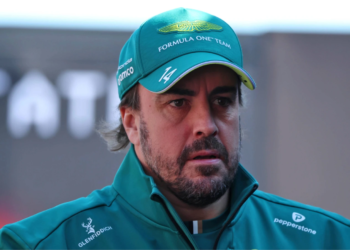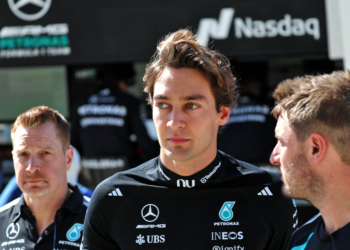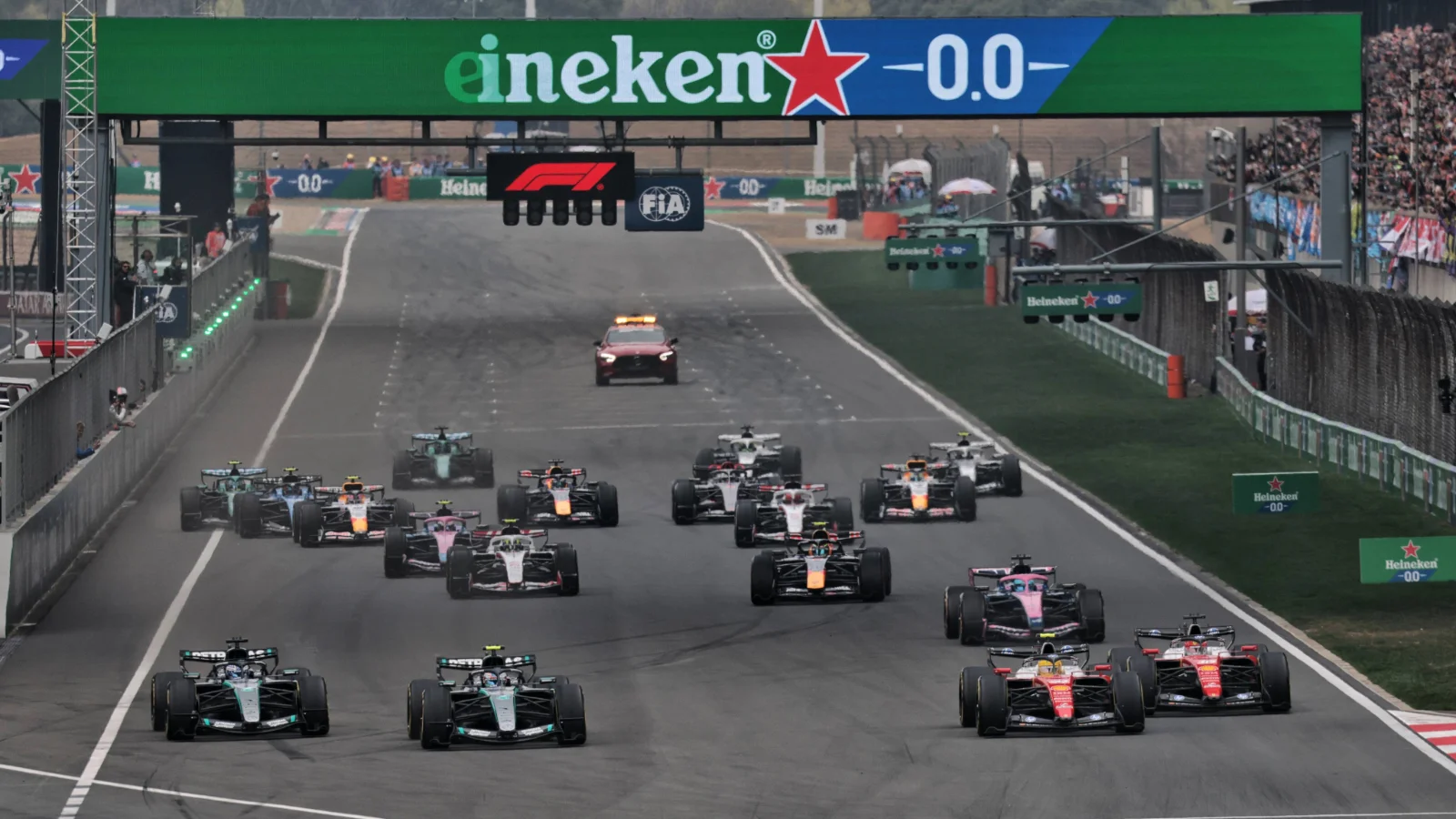
Four races into 2026, Formula 1 already looks less like a gentle rules reset and more like a hard audit of every factory’s winter work.
Mercedes has won Australia, China, Japan, and Miami, while Kimi Antonelli leads the drivers’ standings with 100 points and George Russell sits second on 80.
Ferrari is not buried at 110 constructors’ points, but Mercedes is already on 180, and that gap gives every upgrade sheet a sharper edge before Canada on May 22-24. The first month has been clean enough to read and strange enough to distrust.
Mercedes found the new language first
Mercedes has not looked lucky. Russell won the Australian Grand Prix over 58 laps in 1:23:06.801, then Antonelli took China, Japan, and Miami before anyone else had a race win. That is the part that bites: under a new rules package, Toto Wolff’s garage is already 4-for-4.

The 2026 cars are 30kg lighter, carry 30% less downforce, and cut drag by 55%, according to the FIA outline. Mercedes seems to have understood the new energy game early, while others are still finding out where the losses hide.
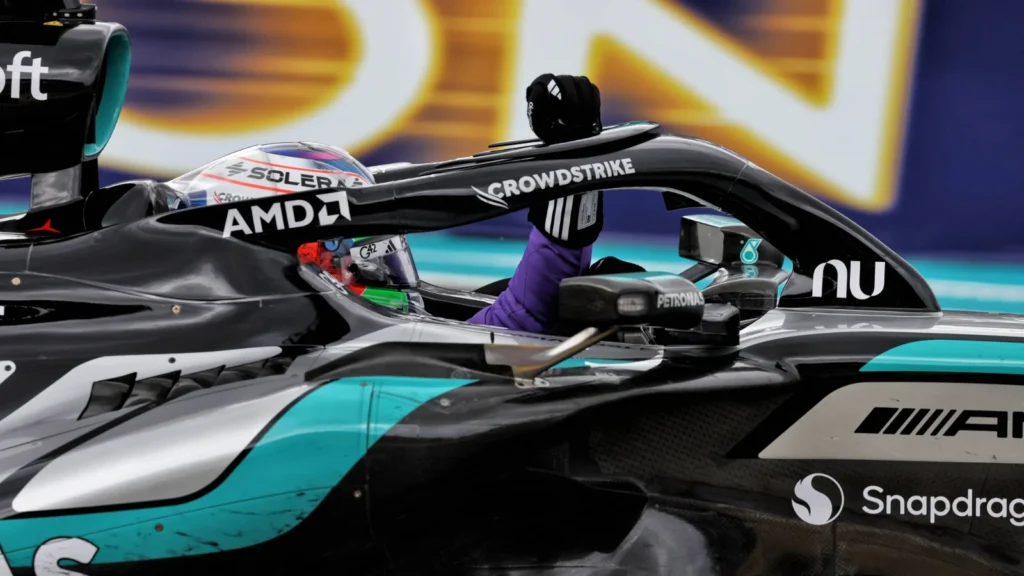
Antonelli is no longer a prospect
Antonelli’s start has turned a rookie story into a championship story before Monaco has even arrived. The official standings put him on 100 points after four rounds, 20 ahead of Russell, with wins in Shanghai, Suzuka, and Miami rather than one lucky Sunday in mixed conditions.
The small observation from Miami was the calmness after the final stop: he did not overwork the rear tyres, and the Mercedes kept its straight-line efficiency without losing the front in the medium-speed corners. That matters because rookie speed is common enough; rookie tyre patience at 19 is a different matter entirely.
Ferrari has names, not control yet
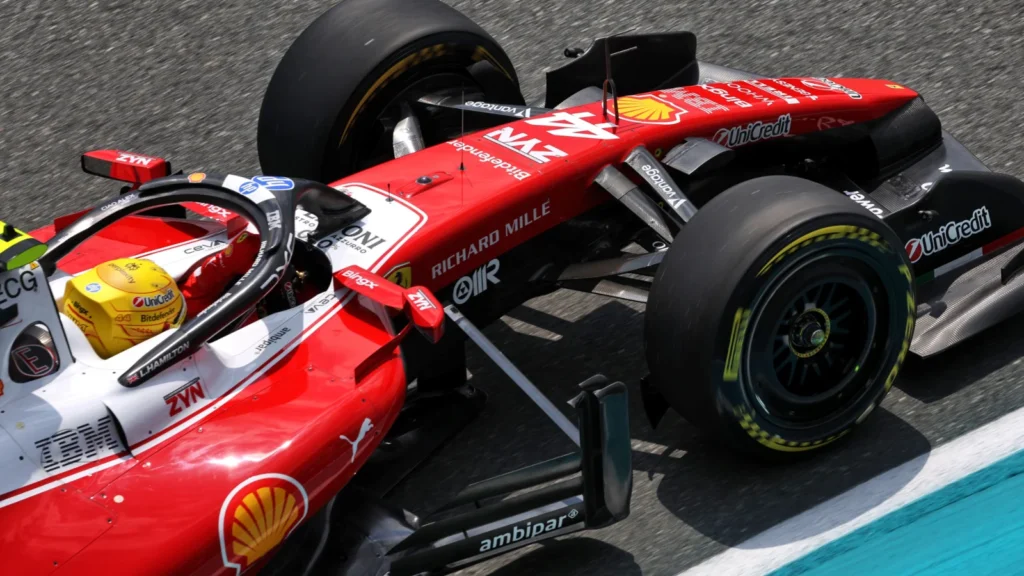
Ferrari’s problem is not driver pedigree — Charles Leclerc sits third with 59 points and Lewis Hamilton is fifth with 51. The problem is that those numbers are already at odds with Mercedes’ maths, and Ferrari has not yet turned the Leclerc-Hamilton pairing into the kind of weekend pressure that forces Mercedes to split strategy.
The 2026 package has to work across active aero modes, battery deployment, and tyre warm-up, which means one strong qualifying lap can still fade if the car eats its rear axle in traffic. Ferrari is close enough to make noise and far enough to keep Maranello tense.
Betting screens watch the details too
The new rules have made live reading more technical for fans, because the obvious result rarely explains the whole race. A driver can be within one second of the manual override energy burst and still fail to pass if the battery state or wing mode is wrong at the corner exit.
In that same second-screen habit, ملبت (Melbet) sits beside timing towers, sector splits, tyre-age charts, and weather radar for adults who follow F1 markets during race weekends. The responsible read is not about guessing a winner from a starting grid; it is about stint length, safety-car probability, degradation, and whether a team has burned too much electrical energy defending on lap 22. The championship has become harder to price lazily.
Red Bull’s silence is the loud bit
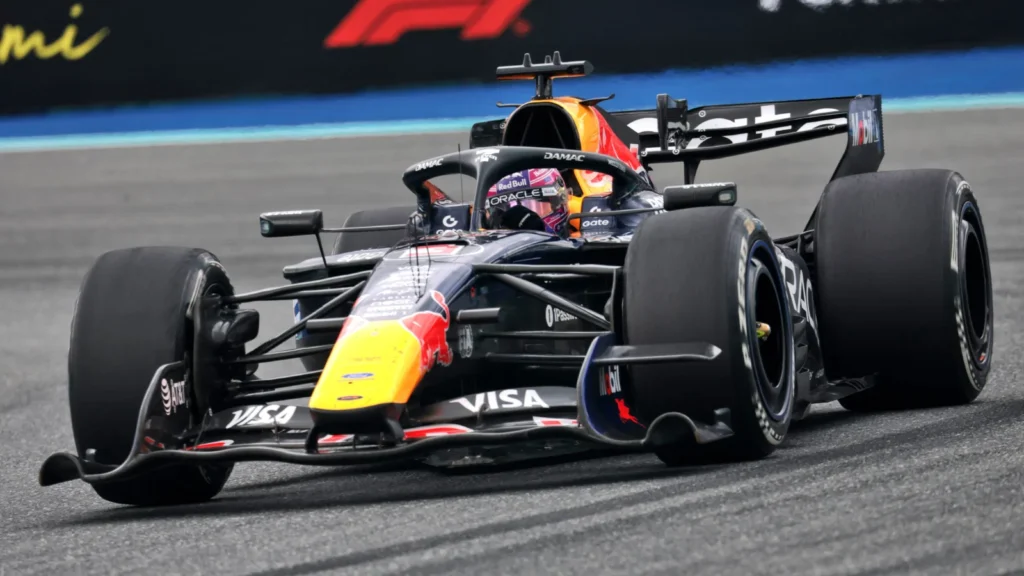
Red Bull Racing has 30 constructors’ points after four races, and Max Verstappen is seventh on 26. That line alone would have sounded absurd in 2023, when the team could control races by lap 15 and still leave a margin in the tyre.
The Ford-backed Red Bull Powertrains era was always going to be judged harshly because Honda left for Aston Martin, and the 2026 power-unit split gives electrical efficiency more weight than the old package demanded. The small thing to watch is not the headline speed; it is whether Red Bull can defend without draining the battery too early on long straights.
Cadillac learns in public
Cadillac has arrived, and the timing screen has not been kind. Zero points after Miami is not a shock for a new team, but it still looks cold on the standings page. Formula 1 confirmed Valtteri Bottas and Sergio Perez as the 2026 pairing, with Ferrari power units for now and General Motors aiming at its own engine project from 2029.
Graeme Lowdon’s group is not chasing Mercedes in May; it is chasing clean pit stops, stable cooling, sensible upgrades, and a race weekend where two veterans can turn a bad Sunday into something the engineers can use. New teams lose seconds in places television barely notices.
The calendar will expose the pretenders
The next stretch should tell whether the first four races were a Mercedes breakaway or only the opening act of a messy regulation year. Canada comes on May 22-24, Monaco follows on June 5-7, then Barcelona lands on June 12-14 with the kind of long-corner profile that usually tells the truth about balance.
If Mercedes still has a clear edge after those three circuits, the championship shape gets darker for Ferrari, McLaren, and Red Bull. If not, the 2026 season will finally start behaving as the rules reset promised.