
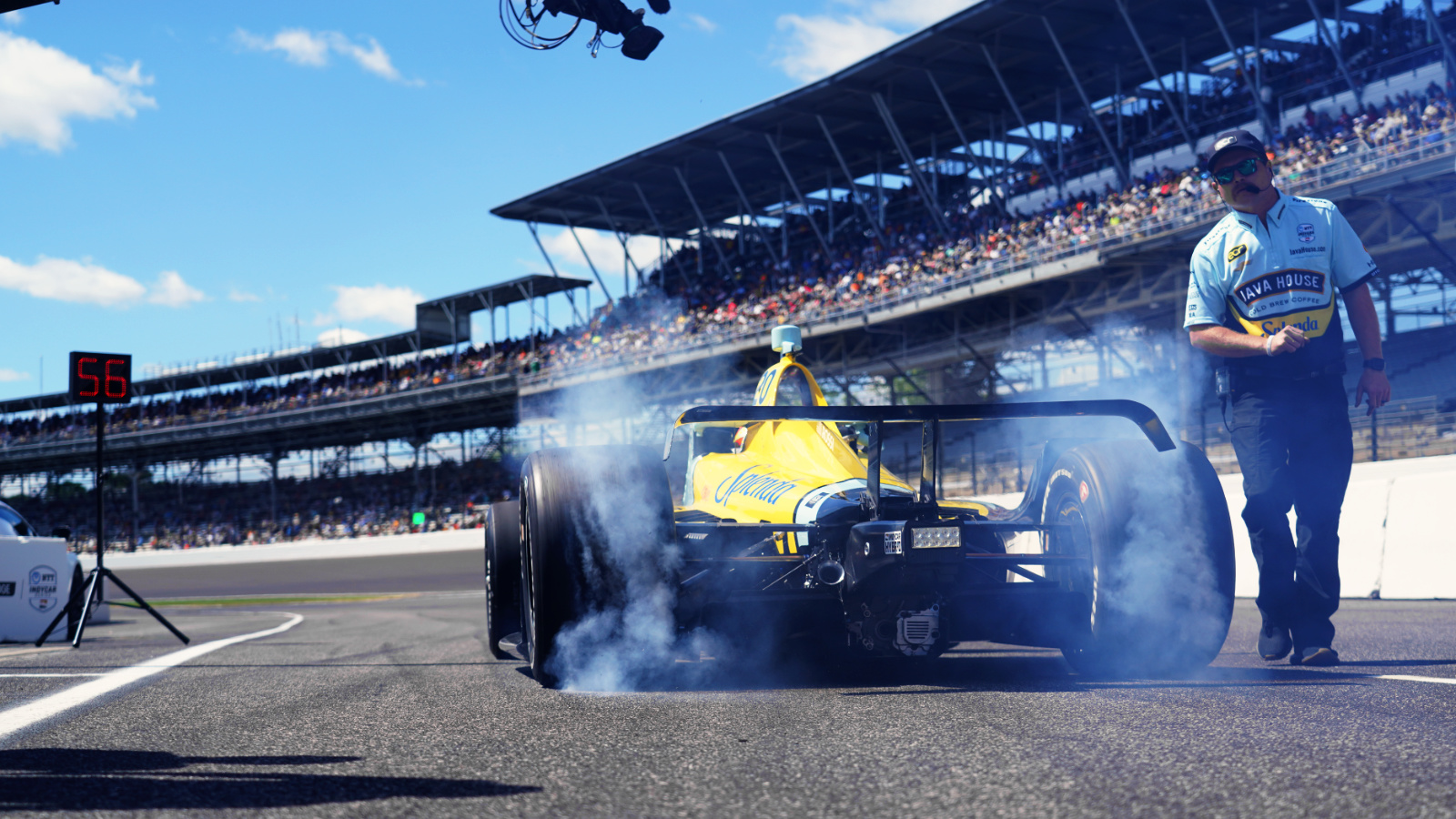
The NTT IndyCar Series has outlined the qualifying procedure for this year’s Indianapolis 500, and there are a couple key changes.
Qualifying remains a two-day affair, with a good portion of the field locking in positions on Saturday and pole position decided on Sunday.
This year, because there are only 33 entrants and there will not be any bumping, an additional qualification round has been added to the schedule.
On the first day, all drivers will make qualifying runs and can continue to take additional runs until time concludes at 5:50 PM.
At that time, positions 16-33 are locked into their grid positions. In addition, the fastest nine drivers will be locked into the Top 12 round.
On Sunday, the six drivers that were ranked 10th through 15th will get a single qualifying run to advance into the Top 12. The slowest three drivers will be locked into 13th through 15th on the grid at that time.
From then, the procedure mirrors recent years. The 12 remaining drivers will make runs, with the fastest six advancing to the Firestone Fast Six round.
The advancing cars will be allowed to circulate the track at approximately 100 MPH in order to cool internal components down, and also provide a small bit of entertainment to the fans waiting for the finale.
Then the final qualifying runs finally take place late in the afternoon, with the fastest six drivers making one last four-lap effort to earn pole for the race.
The additional “Final 15” round effectively serves to fill in the gap that was created by the lost bump session.
Qualifying takes place this upcoming Saturday and Sunday, with the 110th running of the Indianapolis 500 the following weekend on May 24.







Discussion about this post