
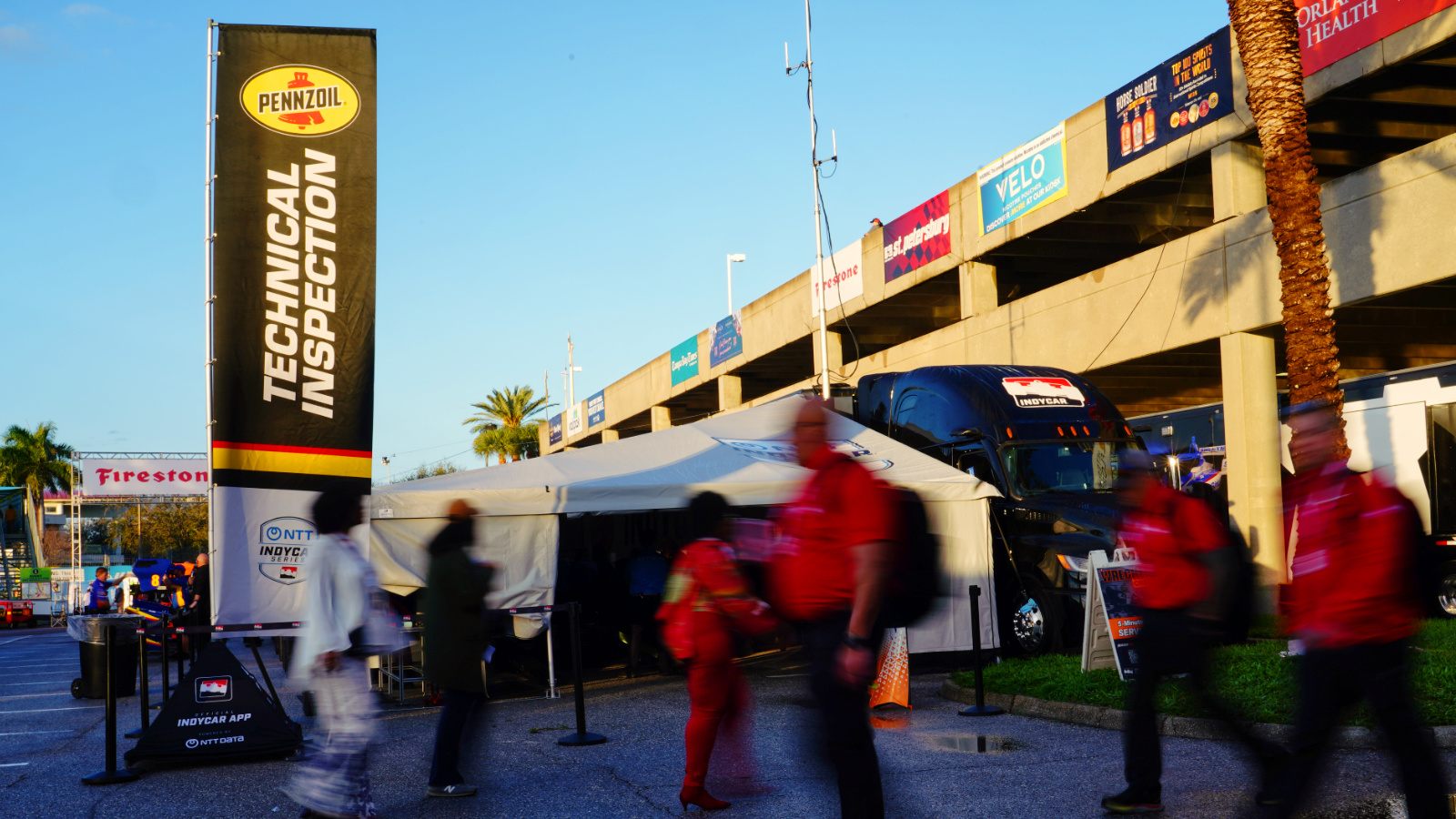
IndyCar’s new Independent Officiating Board has made one of its first public-facing changes after being implemented for this season.
On Tuesday, IndyCar announced a change to the series’ Push to Pass system that allows competitors to use the system at all times during race restarts.
The change comes after the IOB analyzed an error during the Grand Prix of Long Beach that mistakenly allowed the system to remain available during a restart.
A comprehensive review found that 12 cars used the system on lap 62 for a total of 89 seconds. Felix Rosenqvist was the biggest offender, utilizing 18.5 seconds of boosted power during the restart lap.

The rules stated Push to Pass should not have been allowed during that lap, but because it was made available to drivers erroneously there were no penalties levied.
It was found that the only change of position due to the technically unapproved use was when Marcus Armstrong overtook Santino Ferrucci.
But because Ferrucci also used Push to Pass at the same time, it was deemed that no lasting advantage was gained.
In addition to changing the availability of the system, the IOB recommended that the rules be reworded to place responsibility for using the system on drivers themselves.
Even if the system is available for use at an incorrect time, any inappropriate use of Push to Pass by the driver will be deemed penalty-worthy going forward.
What exactly went wrong?
The IOB detailed in its findings the technical details of the mistaken Push to Pass availability in Long Beach.
Essentially, multiple commands were sent to cars through the CAN (Controller Area Network) system, and those commands interrupted each other.
The cars on track never received the signal that disabled Push to Pass, leaving it available for use on the lap 62 restart.
The IOB worked with IndyCar’s technical team to ensure that simultaneous signals would no longer be sent, and instead would be queued and sent one after another.
Updated code that manages the CAN signals was tested during the Indy 500 open test last week and displayed no unforeseen errors.
“The Independent Officiating Board would like to thank IndyCar’s software and powertrain engineers who have helped us work through this review,” board chair Raj Nair said.
“We believe the protective measures that have been established will ensure there are no more system issues moving forward.
“Additionally, the board fully endorses the rule change involving the burden of responsibility and also supports the Push to Pass rule update made by IndyCar to allow overtake on race restarts. This has been a comprehensive and thorough process, which has led to a favorable result.”
With a combination of more reliable car signaling and responsibility of correct use shifted to the drivers, the board feels this will help prevent further ambiguous situations surrounding Push to Pass.
Notably, the findings identified a completely separate root cause than what allowed Team Penske cars to incorrectly apply Push to Pass during the 2024 St. Petersburg event.
In that case, the team’s cars had received the CAN signals but had been modified to not adhere to the instructions disabling Push to Pass.
Newgarden was stripped of his win for the infraction, as opposed to the recent Long Beach event where no penalties were handed down.




Discussion about this post