
To start this walk down memory lane, please cast your mind back to the blindsiding shock in 2024 that Lewis Hamilton had signed for Ferrari. This momentous driver move made headlines all over the world and sent the F1 paddock into a frenzy, matched only by a school of hungry piranhas circling an unlucky victim from a James Bond villain demonstration.
Why? Quite simple, really. It heralded the coming together of F1’s statistically most successful driver and the sport’s oldest team. The possibilities were endless and boundless. Hamilton, with his extreme marketability and known skills behind the wheel, combined with the borderline religious following and outreach of Ferrari, was (and still is) being targeted for great things.
Winding back to 1995, and a very similar feeling swept Italy, as a young Michael Schumacher signed to drive for the Prancing Horse. But unlike with Hamilton, CEO Luca Di Montezemolo and Team Principal effectively handed the German a blank sheet of paper and said: “The team is yours.” He would arrive as the undisputed number one at Maranello, free to build the team around him.
This latter point was critical, as Ferrari was deep in a rebuilding phase. It had gone from a political hotbed of incompetence to a race winner when the right circumstances allowed it. Engineering and reliability-wise, a lot more needed to be done to turn the tide, as the Scuderia continued to churn out unreliable cars.
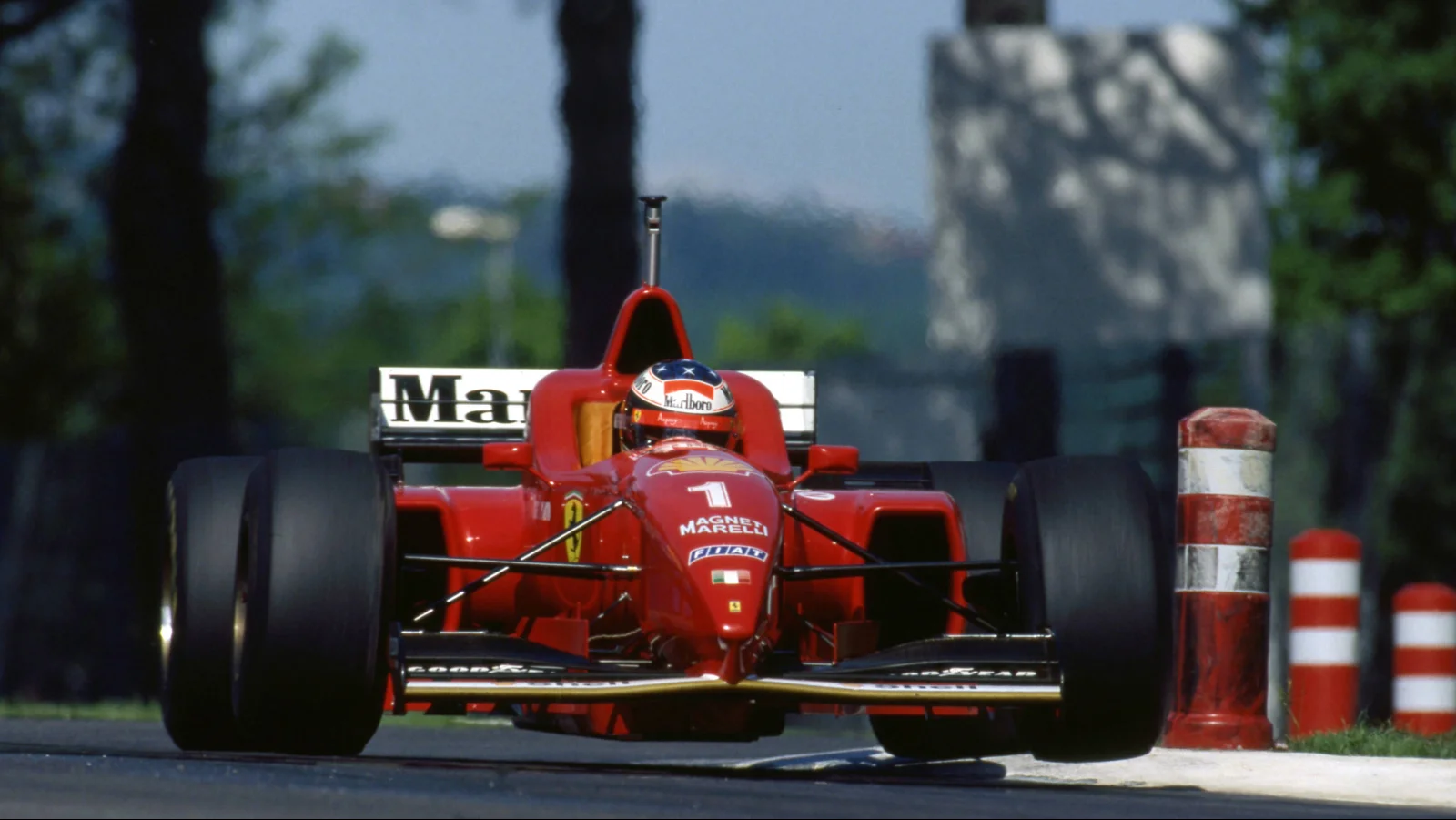
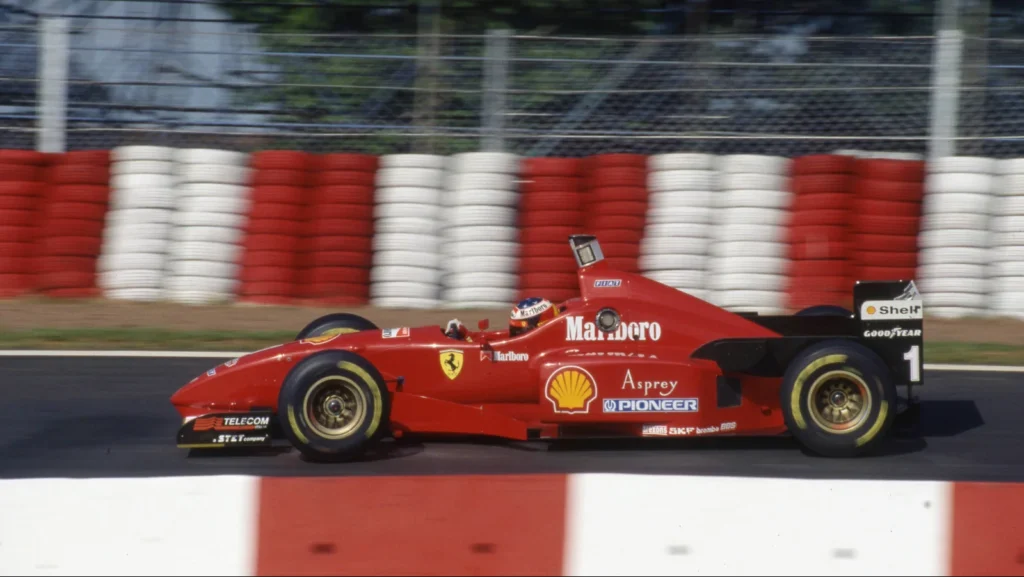
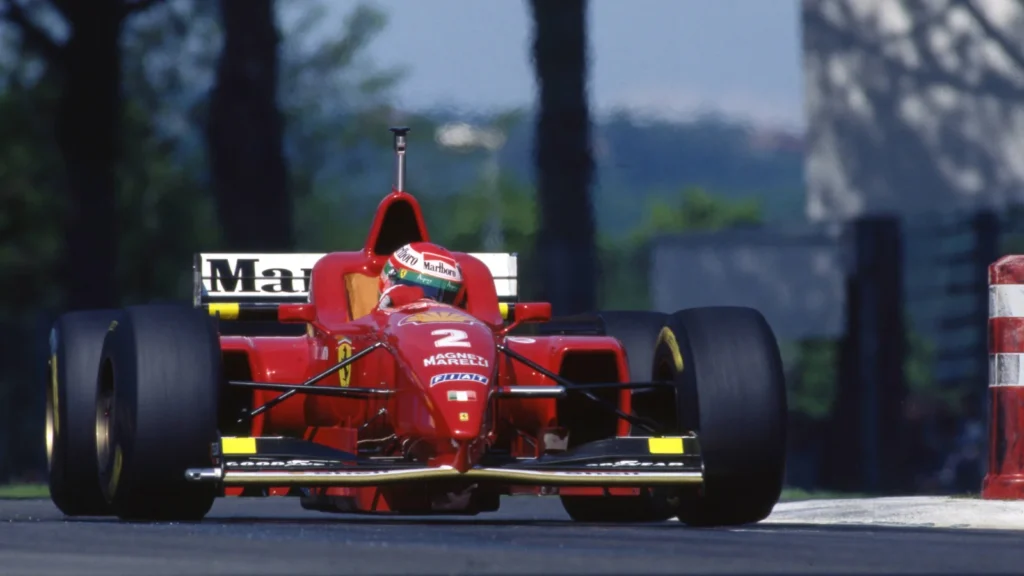
1996 was to be the first year of the “new Ferrari”, with Schumacher leading the charge, in all the new regulations that Ferrari could begin to master. The end result was the Ferrari F310, one of the team’s ugliest, and more of a diva than any of the self-professed ones found on reality TV.
Delays and gremlins from the get-go
The 1996 regulations created, to put it mildly, absolute dogs of cars. Downforce was reduced further, and super high cockpits resulted in cars that the 1970s would likely reject. But Williams once again got it right, creating the aerodynamically elegant and ultra-efficient FW18 that would dominate the season.
Last week, we saw what happens when interpretations of cars go wrong, with the McLaren MP4/10 midwing disaster. Extrapolate that to an entire car, and this is how the Ferrari 310 turned out. The team had badly interpreted the regulations; the car looked radically different to fellow frontrunners Benetton and Williams, and not in a good way. To make matters worse, it was launched late, losing the team valuable testing time. Several reasons underpinned this.
The first was the engine. Ferrari had raced V12’s throughout the 1990s. Known for their goosebump-inducing soundtrack, they were also sadly recognised for their spectacular engine failures. An 11th-hour decision to replace the planned V12 with a V10 added extra development time, as the entire internal architecture needed to be redone.
The high cockpits caused the second issue. Ferrari’s cockpit sides were massive, akin to trying to fit the state of Manhattan into a tiny English village. The result, like this, looked terrible, but in Ferrari’s case, it had a disastrous effect. The sheer size of them blocked the air intake into the engine, causing it to overheat. This forced a complete redesign to allow the car to quite literally breathe.
Barnard then attempted to cram in as many new innovations as possible into a car that was already hamstrung. Starting with the sidepods, these were detached from the chassis and incorporated a “fighter jet”- style design to improve airflow to the rear wing. The results actually created internal issues for the F310. A labyrinth of wires and internal plumbing was required for cooling, while the V10 risked overheating due to limited airflow reaching it.
The final issue was the gearbox, a component on the car that Eddie Irvine would come to despise. Barnard decided on a revolutionary design for the F310: an ultra-narrow titanium gearbox casing. Now, whilst innovation is a vital part of development in F1, it only works if the team can manage and develop it. In the case of the F310, this proved impossible; manufacturing parts was challenging due to the bespoke and complex internals. Naturally, this led to failures galore: Irvine suffering eight consecutive gearbox failures, a statistic almost impossible to believe, a bit like a diva queen meltdown “caught on camera”.
Expectation management
The launch of the car was a classic exercise in expectation management. Team Principal Jean Todt looked to move Ferrari into the next phase of its fightback as a championship team, and pitched 1996 as a building year as part of his ten-year vision. The Frenchman knew expectations would be sky high on Schumacher’s arrival, and the ship had to be steadied before progress could be made.
But this included stability, a trait that even today, Ferrari is not exactly known for. Usually, when the team is suffering badly, calls for the Team Principal are common and executed quickly. Todt’s era would be the only one in recent history where this fate was avoided. He had complete and total control of Ferrari, with Schumacher now integral to the team’s future and part of this vision.
At the launch, he said: “A new chapter in the history of Ferrari begins today. It is not just about a new car or a new engine, but a new way of working. We have a team that is finally beginning to find its structure, but we must be humble….
… We have the best driver in the world, but Michael cannot work miracles if we do not give him the tools. This year is for building. If we win a few races, we should be happy. The goal is to be ready for the championship in the future, not necessarily today.”
“When I arrived, Ferrari was like a ruined work of art. We have spent the last two years cleaning it. Now, with the F310, we are starting to paint again.”
Schumacher was publicly positive about the car. He called the F310 the best car he had driven in the wet, joining Todt in pushing the long-term plan for Ferrari to return to greatness. However, he let his true opinion rip behind closed doors.
The almost Freudian cockpit sides impacted the German’s vision, and his ability to move while inside the car, infuriating him. The car’s overall design led to aerodynamic instability as Schumacher wrestled it around Fiorano. If the front wing moved the tiniest millimetre out of alignment, the car’s aero stopped working instantly and became unpredictable. Reality TV diva queens can stop functioning in a similar way if someone leaves the wrong flavoured sweet in their pack.
For a driver of Schumacher’s talent to say this to engineers would have sent alarm bells ringing. The wing was, in reality, far too low and would be redesigned from mid-season. Think of a machine breaking on a factory line: the process still works, but normal results become impossible.
Schumacher would describe the car as driving with a parachute attached. The only way he could extract maximum performance from the car, according to engineers, was to drive it at 110%, not a sustainable solution.
Irvine was far blunter. During testing, when the scale of Ferrari’s miscalculation with the F310 became apparent, he and Schumacher commented to each other just how different the car looked to its rivals. Irvine later labelled the car “a heap of junk”, an understandable comparison, considering the season that would befall the straight-talking Irishman.
Eye-opening start to the season
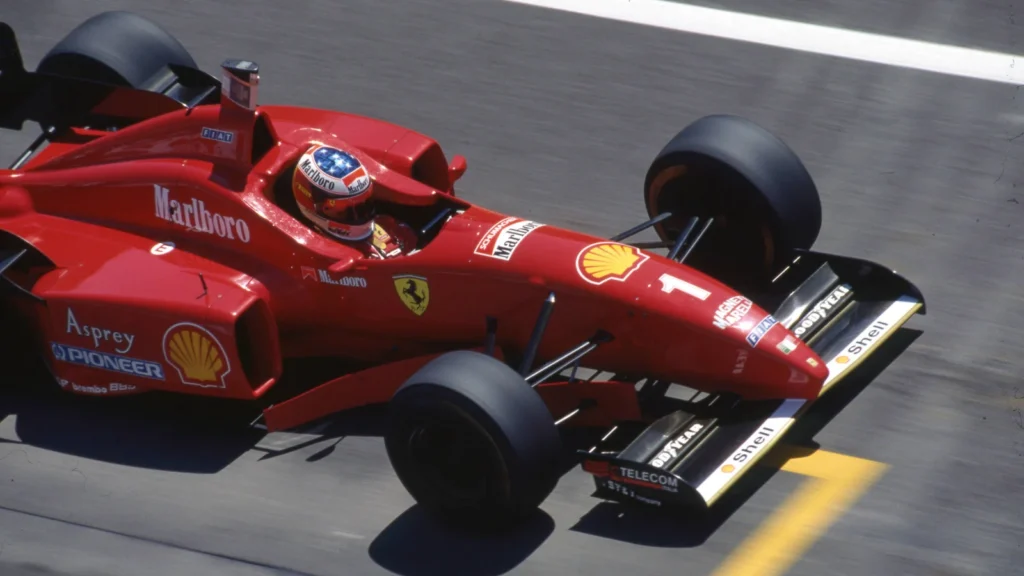
The Australian Grand Prix provided a metaphorical ice-cold water splash to the face for Ferrari and the Tifosi on the scale of the journey it faced. Irvine was third, while Schumacher was outqualified by Irvine, both over a second away from polesitter Jacques Villeneuve Williams.
The first start saw the two Ferraris advance into second and third by the third corner, displacing the second Williams of Damon Hill. But this progress ended just yards later when Martin Brundle’s Jordan flipped over in the gravel, bringing out the red flag. While Brundle walked away unhurt, Ferrari would need to replicate its restart.
At the second time of trying, Irvine and Schumacher held position off the line, Irvine once again holding the advantage of his illustrious teammate. Schumacher’s race ended on lap 32 with brake failure, the first of many to befall Ferrari in 1996. Irvine, although dropping back, stayed in third, finishing over 60 seconds away from victor Hill. It was a welcome result but a reality shock.
Qualifying in Brazil followed a similar pattern to Australia. Schumacher qualified fourth, over a second away from Hill. Irvine, however, suffered a nightmare, lining up in tenth. Wet weather made for an exciting early part of the race, as Schumacher battled inside the top six but was unable to challenge the Williams. He finished in third, a lap down on Hill’s Williams, Irvine out of the points in seventh.
Argentina, however, was nothing short of embarrassing. Irvine once again qualified in tenth, but Schumacher pulled out an unbelievable lap to start second, giving the promise of a false dawn at Ferrari. On Sunday, while Irvine recovered to fifth, over a minute behind race winner Hill, Schumacher endured a nightmare. A rear wing endplate fell off at random before it retired with a broken airbox. Forced to watch the race from the pit wall, he saw arch-rival Hill take his third consecutive victory.
Extracting an iconic victory from a dog
But a surge of good luck, combined with Schumacher’s genius, would see the tide start to turn for Ferrari. The European Grand Prix at the Nurburgring offered German fans a chance to see their star driver in home territory. The crowd spurred Schumacher on, resulting in a shock second place the grid on the race, albeit over seven tenths of a second behind his now former adversary.
The race came alive in the closing stages, with Villeneuve leading Shumacher in the closing stages following a disastrous race for Hill. After the second round of stops, Schumacher began to close on the Williams, pushing for a win from second place. In modern-day F1, the German would likely just breeze past with DRS, never to be seen again. But back in 1996, drivers had to pass their rivals on track without the use of spectacle-cheapening overtaking aids, so both became locked in a tight duel for victory. Villeneuve would secure victory by just seven-tenths of a second.
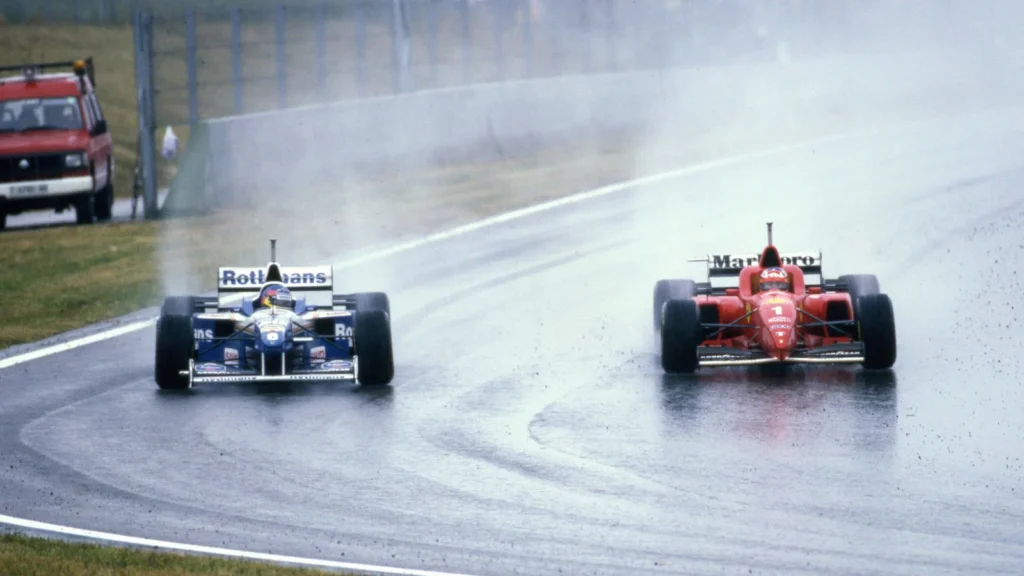
Pole position sent the Tifosi into raptures, but second place would be the result on race-day, and this came with a sting in the tail. A front brake disk exploded, locking the right front tyre once he took the chequered flag. It would not be until Barcelona that victory was secured. Schumacher’s maiden win red remains one of his most iconic. In soaking wet conditions, he overcame a poor start where he dropped to fifth to take the lead of the race, pulling over 45 seconds clear by the chequered flag, in a victory reminiscent of Ayrton Senna’s lap of the gods in Donington just three years before.
Of course, every Ferrari win, while welcome in Italy, also comes with borderline ridiculous expectations. Schumacher was now a Ferrari winner, and the all-conquering Williams team had been beaten. But this had not been a straight fight. Appalling weather allowed the German to show his wet-weather prowess, and he took full advantage. So when, inevitably, Ferrari’s form began to slump, questions were raised over the project.
France threatened to derail the Scuderia’s season. A hard-fought pole position came to nothing when a massive plume of smoke emanated from the rear of the F310 on the formation lap, ending the reigning champion’s race before it had even begun, having a meltdown that would make today’s reality TV divas look like amateurs.
The day only got worse when Irvine retired, with a gearbox failure. Britain saw more of the same, both cars out after just five laps. The Ferrari board, now restless, sought change. But Schumacher was resolute, stating categorically that if Todt left, he would leave too. The board, unable to act, relented and allowed Todt’s project to continue.
Their patience was rewarded with an unlikely victory in Belgium. Following a nasty crash in the Sunday warm-up, a fortunate timed Safety Car allowed Schumacher to take victory at a circuit where the F310’s flaws were brutally exposed. But this paled in comparison to the next race, where Schumacher took an emotional and iconic win at Monza. Victorious in front of the adoring Tifosi, mistakes from the Williams duo gave the German the opportunity to strike. Irvine, by this time, was stuck enduring gearbox failures at every race.
Schumacher’s ability to extract wins and podiums from this complete dog of a car secured Ferrari second in the championship at season’s end. The stats speak for themselves. Schumacher finished third in 1996, scoring 59 points, three wins, eight podiums and four pole positions. Irvine, by comparison, ended the year tenth with just 11 points, one podium and ten DNF’s.
The F310 acted as a bridging of worlds. It marked the not-yet fully closed period of poor execution by Ferrari, coupled with the optimism and step up in the fledgling Todt and Schumacher era. Iconic, devious, attention-seeking and full of surprises, reality television divas could learn a lot from a car that was acting out long before they could even walk.
READ MORE: Why Formula E must make major changes to ensure huge fan growth




Discussion about this post