
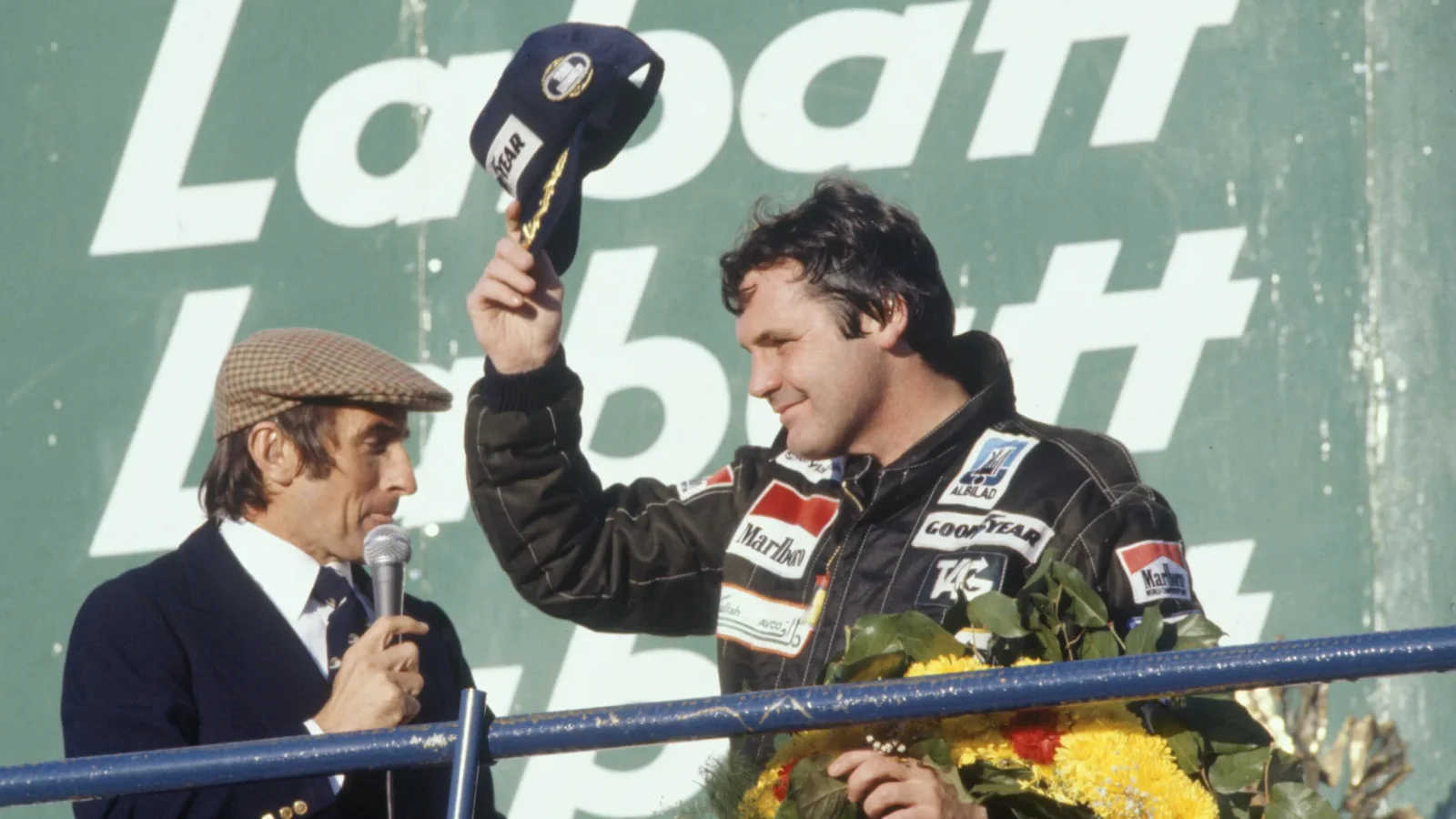
Motorsport Week takes a look at the life and career of 1980 Formula 1 World Champion Alan Jones, who died last week.
Sometimes, a driver and a team form a partnership that spawns such telepathy, synergy and, if it’s a newer team, the foundations for success that echoes through generations.
Such a partnership was formed between Williams and Alan Jones, who died this week, aged 80.
Born to a racing driver in Stan, Jones had lofty ambitions to race in Europe and despite initially finding little inroads, showed that ambition by first moving to England whilst still in his teens. Eventually, after a four-year wait, scored a drive in British Formula Three.
By the time he narrowly missed out on the championship two years later, he had already tested for March’s Formula 1 programme. A little career drifting ensued, with stints in Formula Atlantic and Formula 5000 following, but his contacts with former F3 champion Harry Stiller – who had enabled his drive in the latter – that saw him given the chance to achieve his F1 dream.
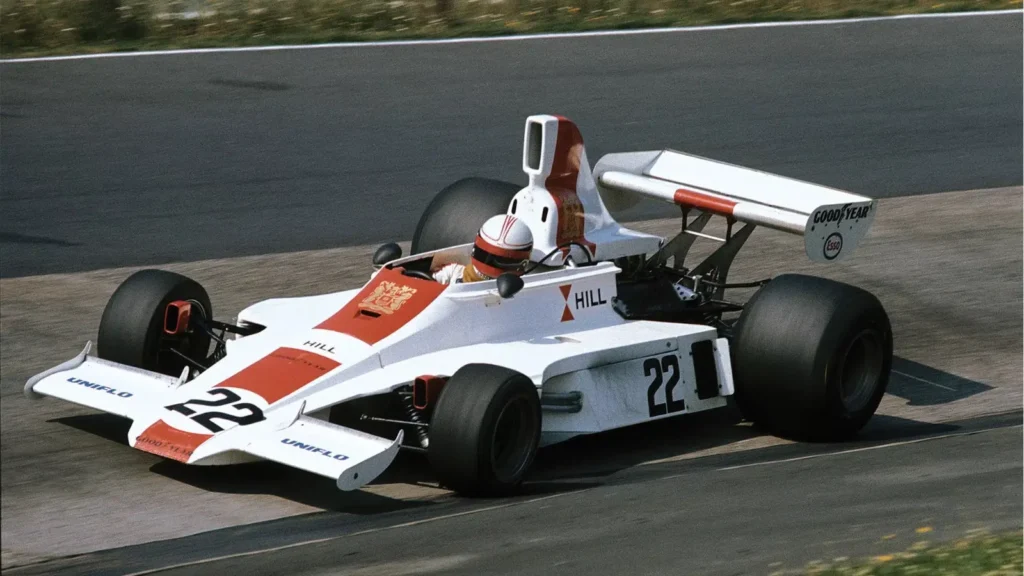
The start of his journey in the pinnacle was modest, in Stiller’s privately-entered Hesketh in 1975. His debut came at the notorious and tragic Spanish Grand Prix at Montjuic Park, which saw the deaths of four people after Rolf Stommelen’s Embassy Hill vaulted the barrier.
The German’s injury in the crash coincidentally brought up the chance to race his car for Hill, with Stiller’s team having been wound-up after a further four rounds.
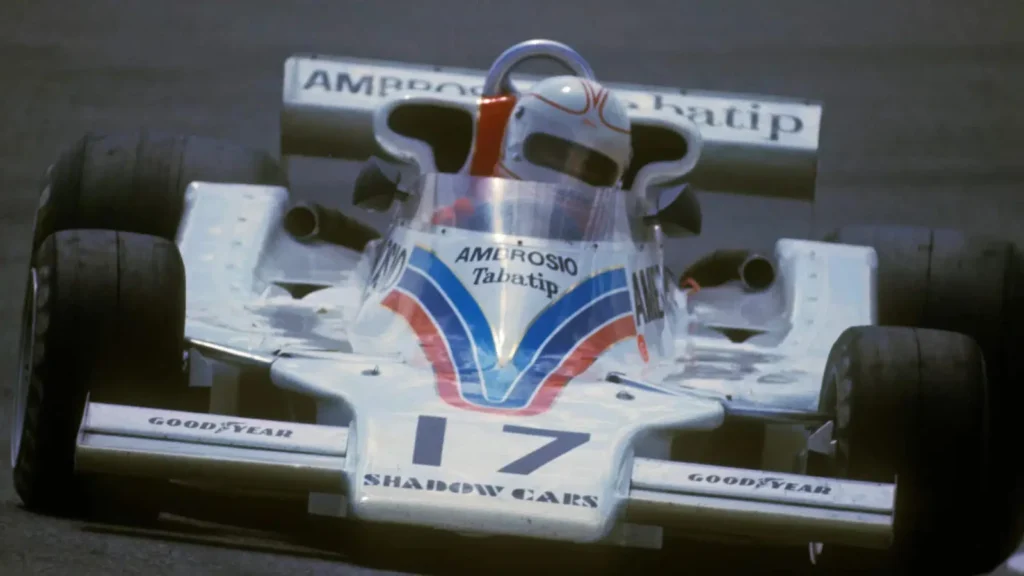
Casting the greatest Shadow and heeding the Williams call
Jones competed four times for Graham Hill’s squad, the last of which saw him score his maiden championship points, with fifth place at the Nurburgring. As a result, he bagged a drive for another ex-World Champion in the shape of John Surtees and his eponymous outfit.
1976 saw modest success, with three points finishes, the third coming at the final round in Japan, finishing fourth, just behind James Hunt, who clinched the World Championship.
There was little affection felt between Jones and the team, and the decision was taken by Jones not to continue with the team. There was contentment to take a year out, but a fresh chance came, once again through tragic circumstances.
Shadow was rocked by the death of Tom Pryce at the South African Grand Prix, in a horrifying crash in which the Welshman’s car hit a marshal, the impact claiming Pryce as well. Jones was hired at Pryce’s replacement, and only took three races to be in the points.
Jones’ talent was formally realised at the Osterreichring, with a maiden victory, by 20 seconds ahead of home hero Niki Lauda. Jones would finish the season seventh in the championship with a total of 22 points. The performance helped catch the eye of Enzo Ferrari, who explored the possibility of signing him, but ultimately decided on Gilles Villeneuve. It would not be the first time Jones’ considerable talents were recognised by the Scuderia.
When the door of Enzo’s farmhouse closed, Frank Williams’ opened instead. And when Jones walked inside, the partnership that helped take perhaps the last of the true garagistas from dreamer to winner was thus forged.
1978 was not the most glistening of starts, with second place at Watkins Glen the best result that year. 1979, however, would be the truest beginning.
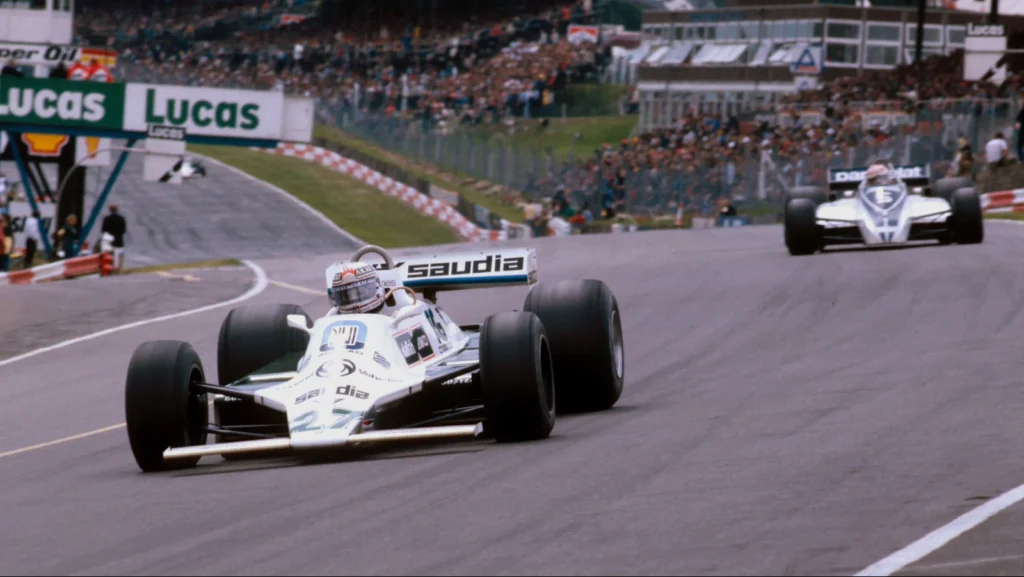
The ’78 car, the FW06, competed the first four rounds of the 1979 season, but its successor, the FW07, was a game-changer. Jones was furious after an overheating water pump caused its Cosworth engine to fail at Silverstone, denying him the chance to take Williams’ first victory. Teammate Clay Regazzoni gained the lead a result and was afforded that unique accolade.
Jones didn’t have to wait long for the wins to come, however, as he scored P1 in Germany. With five races now left, Jones won three of them, securing his and the teams’ place as ‘best of the rest’, with Ferrari and Jody Scheckter having already captured both titles.
Title success and ‘burying the hatchet’ with Reutemann
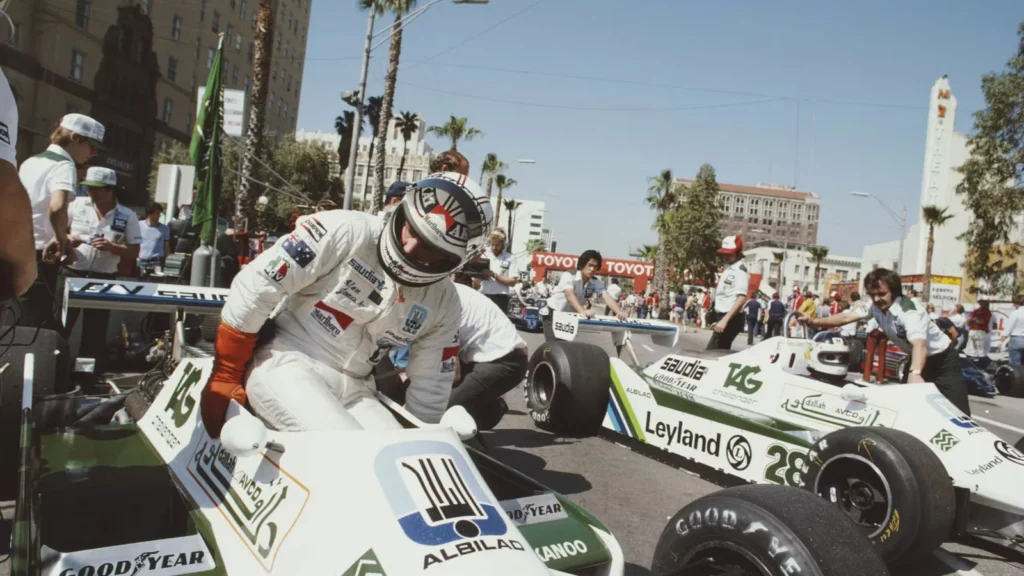
1980 saw Ferrari unable to keep up their high standards, Williams and Jones’ main competitors would be Nelson Piquet and his Brabham team. But Jones set the tone at the opening round in Argentina with victory, and despite retirements in South Africa, at Long Beach and in Monaco, the mid-season run of two wins and two podiums set him up as the championship favourite.
After a podium at Monza, the penultimate round in Canada saw Jones take victory, and with Piquet retiring, he was confirmed as the champion, and the second Australian to do so after Sir Jack Brabham, 14 years since his third triumph.
1981 saw him miss out on retaining his title by four points, losing to Piquet, and finishing third in the standings, with teammate Carlos Reutemann second. But that only told a fraction of a fractious story.
After winning Round 1 at Long Beach, Jones was running second behind Reutemann, who was considered the ‘Number 2’ in the team. Orders were given to the Argentinian to cede the lead to Jones, but he ignored them, and duly took the win. Jones was incandescent and failed to show up for the podium. Williams were equally as miffed, and were said to have fined Reutemann the money he earned as race-winner.
Jones’ chances of winning the title were mathematically ended prior to the final round, held in the Caesars Palace carpark in Las Vegas. He qualified second with Reutemann on pole. Piquet was fourth, and Reutemann held a one-point advantage, so therefore was, on paper at least, the favourite. It would be fair to say, however, that the former Ferrari man was not expecting assistance from Jones, who explained in his own colourfulway why he wouldn’t.
“I don’t see how I can help him,” he was quoted as saying. “I would not go holding up people as I am a member of the British Commonwealth and I would consider that unsporting.” Given Jones had been given an MBE by the British state for his title heroics, it wasn’t an unreasonable rationale.
Reutemann was noted by many for having a brittle mentality, something required to take on a driver of Piquet’s psychological nous, as well as his own expertise behind the wheel. Jones motored into the lead straightaway, and Reutemann fell back into the pack. A lack of fourth gear did little to help his chances, and Piquet duly passed him, and finished second to Jones, winning the title.
It was later said that with the season over and the dust settled, Reutemann approached Jones and requested they ‘bury the hatchet’. It was met with a typically blunt and hilarious response from Jones.
“Yeah, in your back, mate.”
The last hurrah with Haas
Reutemann continued with Williams until the Falklands War took hold, giving him an opportunity to bow out of the team and the sport altogether, but Jones was already gone. He had retired after ’81, and began to enjoy his time back in Australia. However, this time was met with, upon reflection, a big regret – a second discussion with Ferrari.
With Gilles Villeneuve perishing at Zolder and Didier Pironi suffering horrific injuries in a crash at Hockenheim, Ferrari was short on luck and drivers. Il Commendatore picked up the phone and offered Jones the #28 car for the remainder of the season. But with Australian sunshine feeling good on his skin and with a pretty decent legacy already secured, he delayed his response, and fed-up waiting, Ferrari reached out to Mario Andretti.
Jones kept his hands busy at the wheel, this time taking in a few cameos in the World Sportscar Championship, but was enticed back to F1 in an unlikely team.
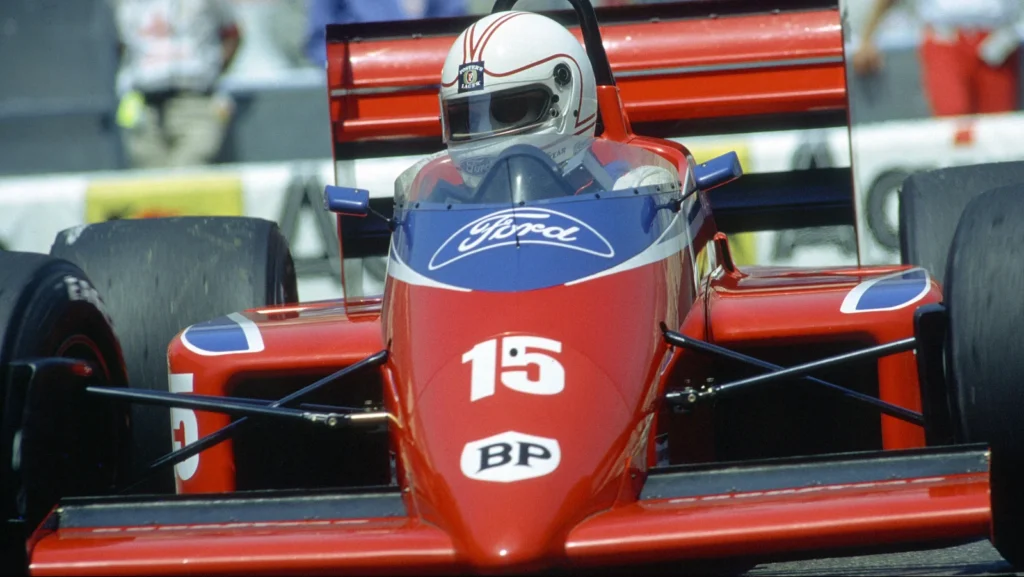
Carl Haas decided to give F1 a go, having developed a successful IndyCar squad with Hollywood star Paul Newman. Backed with money from Beatrice Foods, Haas teamed up with British manufacturer Lola to enter an F1 team midway through the 1985 season. Jones was hired to be the front man to help develop the car for 1986. Having driven for Haas in sportscars, Jones was also plonked into Andretti’s IndyCar seat for a one-off at Road America when the 1978 F1 champion was out injured. Jones finished a brilliant third.
Three races followed saw Jones wrestle a woefully uncompetitive car around, with the ultimate goal of being competitive for the following year still in range. With former McLaren boss Teddy Mayer in place, and with a base in the UK, Jones committed to moving back, too, and was joined by fellow veteran driver Patrick Tambay.
Unfortunately, the car could not match the establishment, and the writing was on the wall when Beatrice pulled its backing during the campaign. It gave Jones the chance to say a proper farewell to F1 in his homeland, the Australian Grand Prix being his final-ever race, by which time he proved he had lost none of his knack behind the wheel with a fourth place in Austria and a sixth place at Monza.
Enjoying his retirement, Jones fulfilled his enjoyment of racing with a flurry of Australian touring car outings, and made himself known to a new generation of F1 fans by becoming one of its pundits and commentators the season after his second exit from the sport. He remained in that post until 2002, when the Network Nine channel lost its rights to cover F1.
In later years, he held the licence for the Australian franchise in the A1GP series, as well as a time as an FIA driver steward.
Many of the sport’s most popular, beloved and colourful characters have driven for the Williams team, and many of them also exited it on less-than-harmonious terms, but it speaks volumes about Jones’ character and skill as a driver that Sir Frank’s daughter Claire bestowed a glowing epitaph after his death was announced.
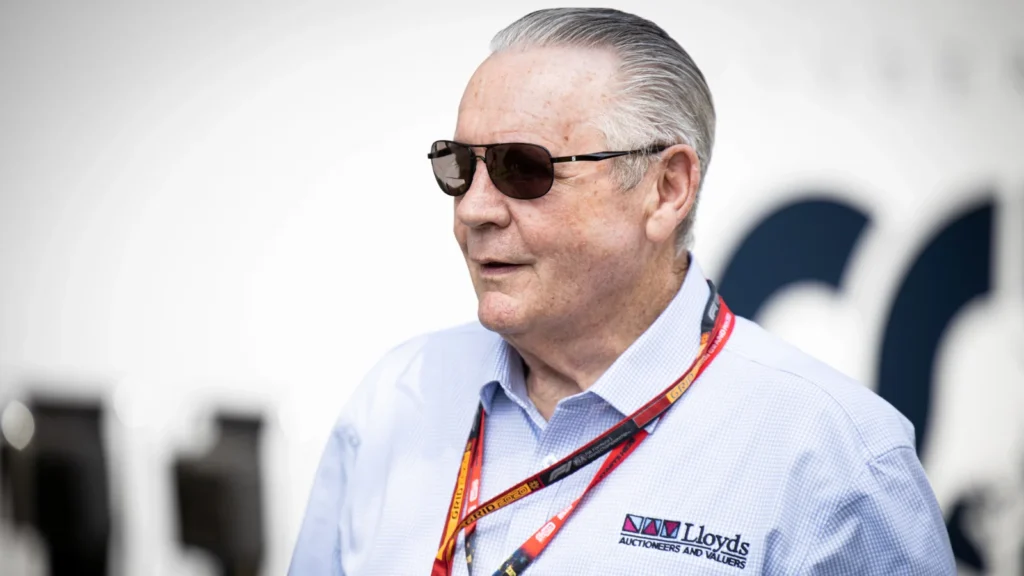
“Dad was enormously fond of Alan; I think he was one of Dad’s favourite drivers of all time,” she wrote. “Alan was a much-loved figure in the paddock, keeping in touch with the team over the years, and always a much-welcomed and supportive friend to me during my time running the team.
“He was a wonderful racer, bringing heaps of talent, natural leadership, strength, and tenacity to Williams in its earliest days.”
Coincidentally, whilst in attendance for Motorsport Week at the US GP recently, I witnessed the Grand Prix Masters race, with a grid comprised of many classic F1 machines, including the #27 FW07. I watched in awe as it motored past for about 20 laps, typically at the right end of the field.
Alan Jones, with the help of that barrel-chested Aussie brute strength, wrestled that car to his, and Williams’, debut World Championship. His bold, brave and perhaps understated artfulness was truly the booster that shot the Williams rocket into orbit, one that still circles the globe as a member of the grid to this day.
That’s quite a legacy to depart this Earth with.
Vale Jonesey.
Alan Jones – 1946-2026
READ MORE – Max Verstappen reveals ‘night and day’ Red Bull issue despite seismic Sao Paulo comeback




Discussion about this post