F1: The Movie moves one of APXGP’s arguments away from the circuit and into a poker game. Technical director Kate McKenna arranges a game between Sonny Hayes and Joshua Pearce. The winner will be the team’s number one driver for an upcoming race. The contest supplies a winner, but the more revealing part is how one driver allows that result to happen.
Pearce wins, but Entertainment Weekly’s account of the scene identifies the detail he does not know: Hayes folds a winning hand. Pearce receives the position under Kate’s terms; Hayes has chosen not to pursue the victory his cards could deliver. The game settles who gets priority, while giving Hayes a decision that changes the meaning of his apparent defeat.
The poker rules behind Sonny’s concession
Sonny’s fold depends on a basic distinction in poker: holding strong cards and choosing to continue are separate things. Folding carries the same meaning in a friendly game and in online poker at Ignition Poker Australia — the player withdraws their claim to the current hand, regardless of its strength. The cards may offer a route to victory, but their holder can choose not to pursue it.
A showdown settles the contest by comparing the remaining hands under the game’s rules. When everyone except one player folds, that comparison becomes unnecessary. The remaining player wins without having to demonstrate that their cards were strongest. Discarded cards need not be revealed either, so a result can be clear while the other player’s understanding remains incomplete. That explains how Pearce can win without knowing what Sonny has conceded.


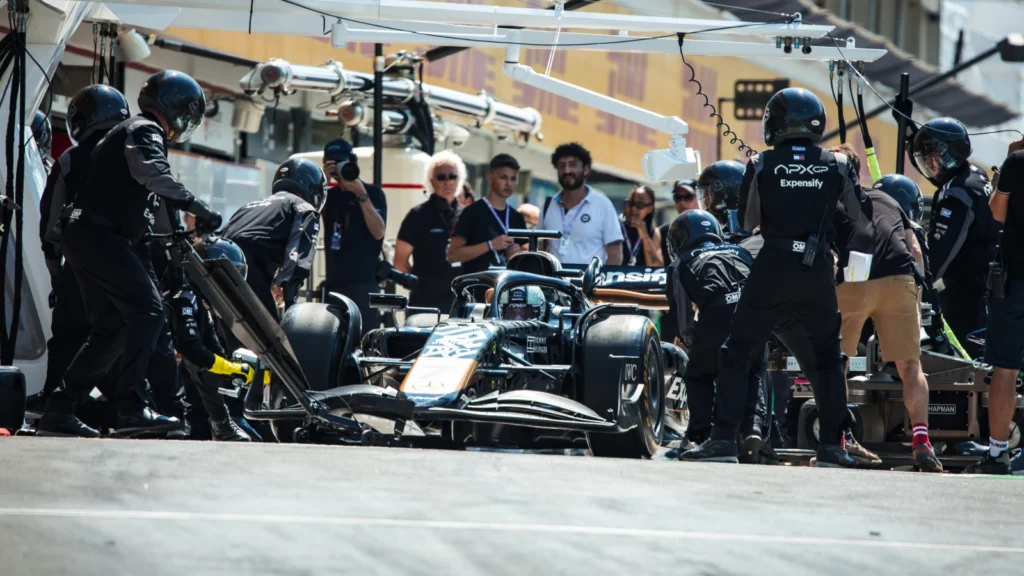
The reported winning hand gives Sonny’s decision its significance. He has a route to claiming the priority Kate has offered, yet allows Pearce to take it. His fold can therefore be read as a concession to his team-mate. Poker gives the film an action that settles the immediate contest while revealing something about how Sonny chooses to handle their rivalry.
Kate gives the rivalry a clear question
Within this fictional team, Kate turns the argument into something specific: who receives priority for the upcoming race? That gives the contest a clear purpose. Her arrangement does not require a verdict on every disagreement between the drivers before this particular decision can be made.
Cinema Scholars singles out the friendly poker game when discussing Kerry Condon’s performance as Kate. The review describes her as APXGP’s technical director and a former aerospace engineer. Here, she becomes an active participant in the relationship between the people driving the car, alongside her technical role in developing it.
The same review notes the film’s wind tunnels, simulators and operations room. Those details place technical work around the racing; the poker scene gives that work a human counterpart. Kate’s contribution involves how two drivers work together, as well as the machinery they use. The scene makes her involvement in both parts of the team clear.

Brad Pitt’s Hayes is the returning veteran, while Damson Idris’ Pearce is the younger star already at APXGP. Kate gives their competing claims a shared set of terms. She initiates the arrangement, Pearce receives the priority, and Hayes chooses to concede. Each has a distinct part in how the dispute reaches a decision.
What Pearce’s victory leaves unspoken
By conceding the game, Hayes accepts that Pearce will have priority. It does not remove him from the team. He remains Pearce’s team-mate, so his decision concerns how they will participate in the same undertaking. This gives the veteran something specific to contribute beyond another demonstration that he can prevail.
Pearce’s incomplete knowledge then separates the meaning of the victory from the full circumstances behind it. He receives the role without knowing about Hayes’ winning hand. His result is clear to him; Hayes’ willingness to step aside is not. The scene therefore contains a concession that does not depend on its recipient recognising or acknowledging it.
The review’s author, Kevin Jordan, describes Pearce as a younger Hayes. Read alongside that observation, the concession suggests a connection between two competitive temperaments at different stages. Hayes can make space for the younger driver while retaining the ambition they share. Their rivalry acquires another dimension beyond the question of which man can prevail.
The poker detail is essential to that reading. Folding and being beaten at showdown produce different accounts of the same apparent defeat. Knowing that Hayes chose to withdraw changes the interpretation of his part in the contest, even though it leaves the designated winner unchanged.

Priority for one race
The immediate decision concerns an upcoming grand prix. Extending it into a permanent settlement of APXGP’s hierarchy would ask the game to answer a much larger question than Kate has posed.
Nor does the result assess the drivers’ pace, feedback on the car, or execution on track. Those are different questions from who receives the role attached to this contest. Pearce’s victory establishes the agreed priority; it does not supply a comprehensive ranking of the two men as racing drivers.
The film can therefore settle this practical question while leaving their wider rivalry intact. A decision about one race need not become a judgement about every aspect of either career. Its force comes from its limited reach: Hayes accepts a particular concession in Pearce’s favour.
The scene leaves the two drivers with different understandings of the result. Pearce has priority. Hayes has chosen to let him have it. Their partnership can be read through that difference, with competitiveness and accommodation occupying the same relationship.