
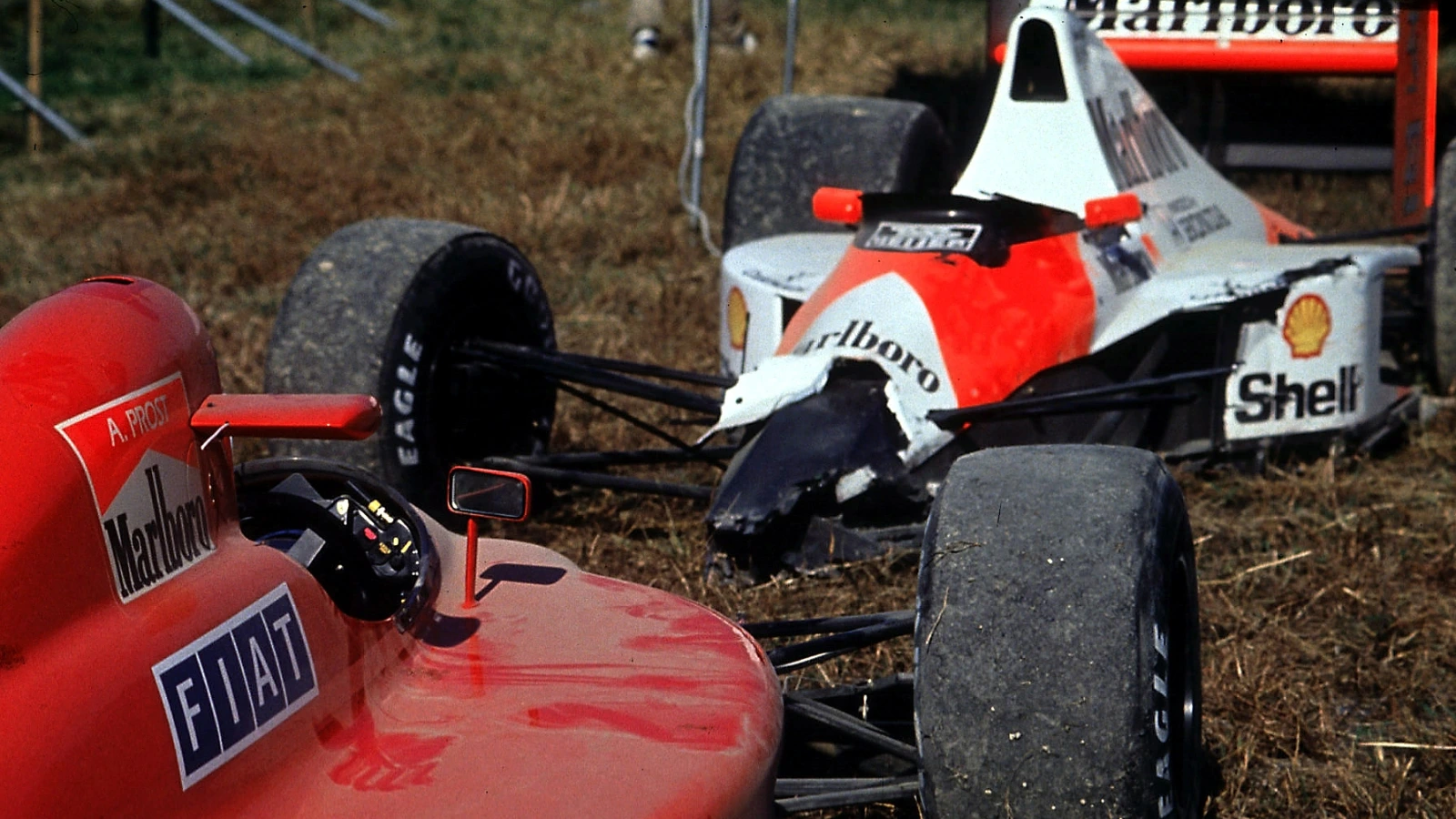
On this day in 1984, 1990 and 2007, the Formula 1 World Championships were decided in all totally different, but equally-memorable ways.
1984 saw a season-long battle between McLaren duo of Niki Lauda and Alain Prost, culminating in a final-race showdown at Estoril, Portugal.
Lauda had shown he had lost none of his old skill, having returned to F1 after a premature retirement at the end of 1979.
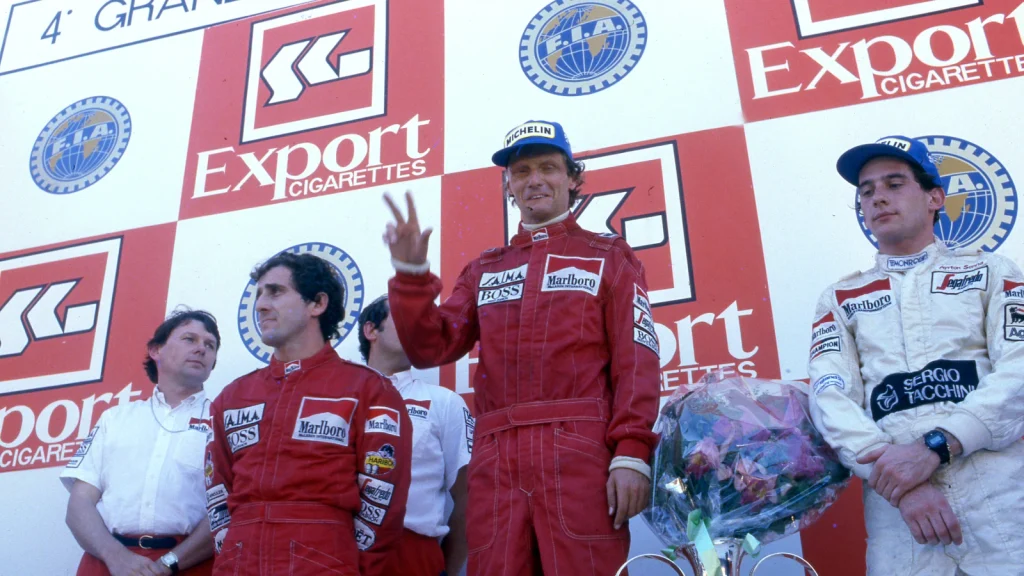
Whilst his two hard-earned and hard-fought championships in 1975 and 1977 – plus the heroic and stunning return from his near-death accident in 1976 – left him with nothing to prove, Lauda proved a worthy match for his younger teammate.

With the title going down to the wire, Lauda went into it with a 3.5 points advantage, but a disaster in qualifying left him starting in 11th place, with Prost starting in second.
Lauda later recalled that prior to the race, he discovered items of clothing from McLaren celebrating Prost’s likely World Championship triumph. This was all the motivation Lauda needed to give it everything he had.
Prost won the race, but Lauda finished second, which was enough to secure the title by 0.5 points – the closest title finish in F1 history – after the Monaco Grand Prix’s red flagging earlier in the season saw half-points handed out.
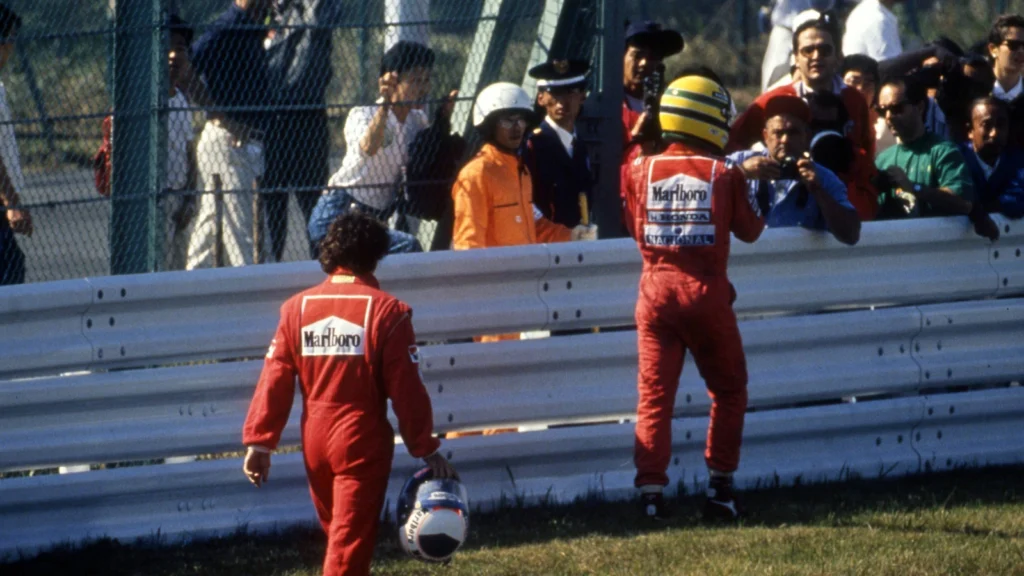
1990 – Prost/Senna Round 2: ‘And it’s happened immediately!’
1990 saw a title battle full of contention, bitterness and hard feeling lingering over from the season before.
Ayrton Senna and Prost endured a huge battle for the title as the McLaren team were, once again, the runaway team, having been so in 1988, with Senna taking a maiden championship success.
The pair’s infamous collision in Suzuka in 1989 sowed the seeds for a rivalry that had already been bubbling under, but was now at a raging, rolling boil.
Prost had had enough of McLaren as a result, and duly switched to Ferrari for 1990. Keeping Senna honest all season, there was a chance of the title being decided in Suzuka, the penultimate round – just like 12 months previously.
Senna could wrap it up by finishing ahead of Prost, but was enraged to discover the pole position marker on the grid – that he earned in qualifying – was on the dirty side of the track. Protestations fell on deaf ears, and as the cars lined up for the start, retribution stirred ferociously within the Brazilian.
Predictably, Prost utilised the cleaner P2 position to sweep into the lead. But Senna tucked in behind him, and as they approached Turn 1, the brake pedal was left untouched.
Senna drilled into the right-rear wheel of Prost’s Ferrari, sending them both into the gravel trap, ensuring a whirlwind of dust kicked up into the Nagoya sky. As it settled, it became apparent both men were out. This, by default, gave Senna title number two.
Still talked-about to this day, Senna’s action are used as a reference point for when and where the lines of sportsmanship are drawn.
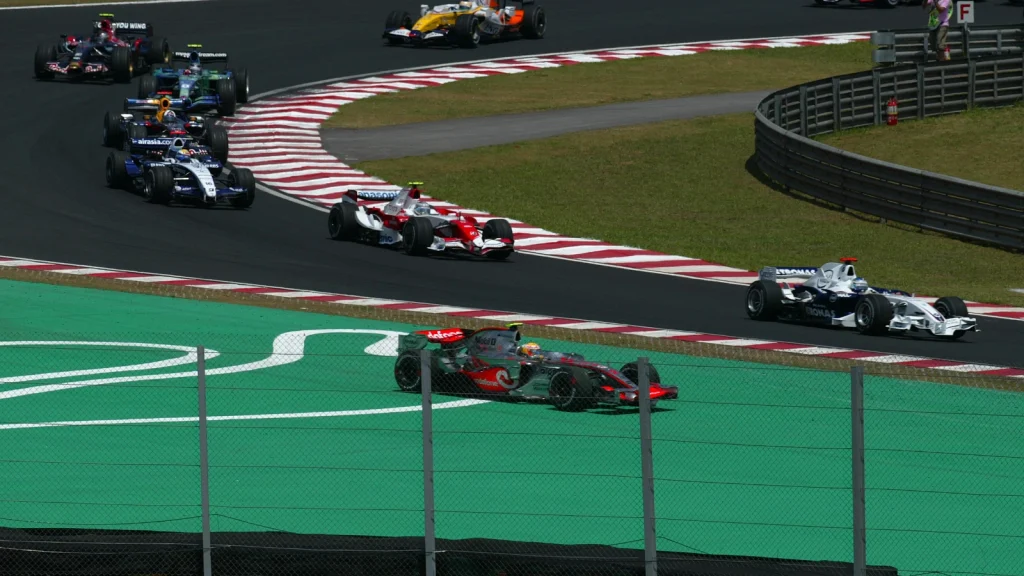
2007: Raikkonen and Ferrari outmanoeuvre McLaren to deny Hamilton rookie F1 title
2007 was another season-long battle between teammates at McLaren, and similarly, was full of needle.
Fernando Alonso arrived as reigning World Champion, having been so the previous two years, but left Renault to try his worth at McLaren.
With Kimi Raikkonen filling the sizeable shoes of Michael Schumacher at Ferrari, the second space in the Woking-based squad’s roster would be taken by reigning GP2 Champion and McLaren junior, Lewis Hamilton.
Expected to be the inexperienced and dutiful number two driver, Hamilton went on a mesmeric season-long quest to become the first-ever rookie World Champion.
He may well have done it in Fuji, but McLaren’s inexplicable strategy call saw him skid into the gravel on bald tyres. Raikkonen won that race to keep his slim hopes alive, having been in the shadows of the fight throughout the season.
Hamilton and Alonso’s intra-team duel was legendary, with a backdrop of the lingering ‘Spygate’ scandal adding layers to the drama.
In qualifying, the Ferrari’s locked-out the front row, with the McLarens behind. Despite it being his home race, Felipe Massa ensured he played the support role for Raikkonen. Behind them, the jostling McLarens would be set for battle with no quarter given.
But it all went wrong for Hamilton straightaway. Locking up and skidding off at Turn 4, Hamilton dropped down the order, and then a gear selection problem sent him to the very back of the field.
The mysterious McLaren anomaly righted itself, and Hamilton mounted a monumental comeback drive to work his way into the points.
But up ahead, Raikkonen took victory with Massa second and Alonso third. Hamilton could only manage seventh, handing the Finn the World Championship by a single point.
It would be Raikkonen’s only title win, but the context of winning it in Ferrari’s first Schumacher-less season in 12 years added prestige to the achievement.
Alonso saw the grass greener back at Renault, and would return there after the season ended.
And as for Lewis Hamilton – whatever happened to him?






Discussion about this post