
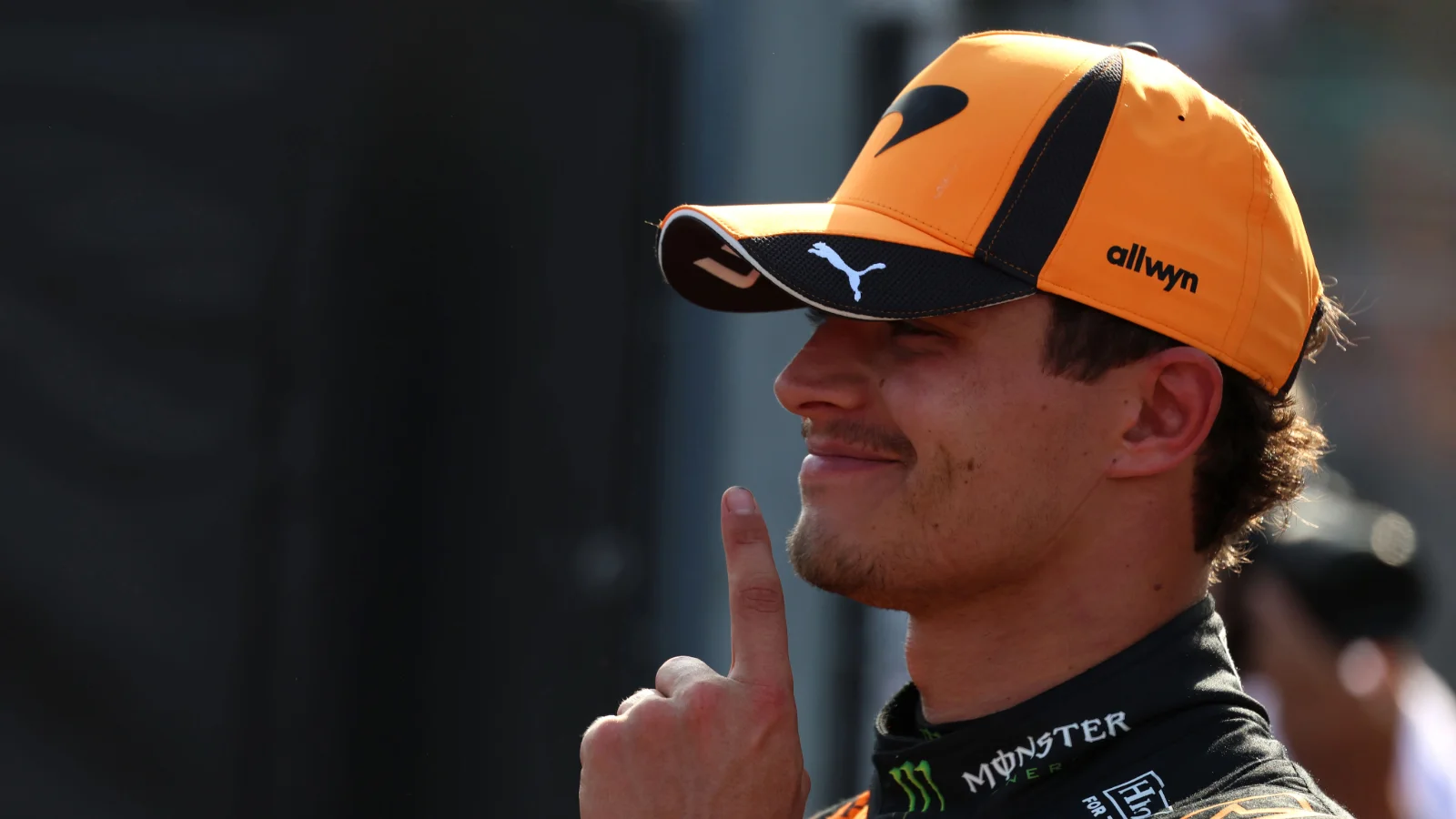
Lando Norris extending his contract with McLaren until 2030 is not exactly a surprise.
Norris has embedded himself as part of the furniture, as integral to the team’s operations as one of their amazing media breakfasts that we’ve both become very used to in 2026.
The top teams are closing ranks and keeping their existing drivers. Max Verstappen has been locked in [albeit rather dubiously] until 2030, while Lewis Hamilton looks set to remain at Ferrari, having started to mount a title challenge this year following his breakthrough win in Barcelona– although Ferrari’s inability to consistently match Mercedes’ tactical prowess threatens this. Second drivers are also performing at a high level, leaving no room at the metaphorical inn.
But Norris’ deal holds another intriguing piece of McLaren’s existing structure and why he has chosen to stay at the reigning Constructors’ champions. There is a reason Norris is seen as the future of McLaren, and why one side of the Woking team’s garage is happy while the other is rumoured to be very unhappy.
The legacy of 2025’s successful run to championship glory
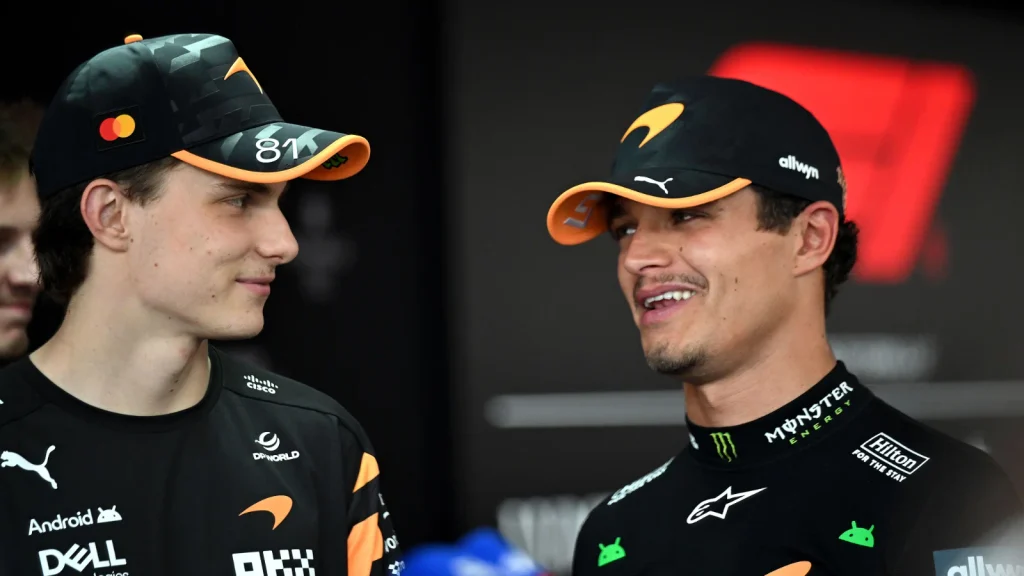
2025 was not just the battle for the drivers’ championship between Norris and teammate Oscar Piastri. It was also a battle for lead driver at McLaren itself, one which Norris won convincingly at the back end of the season. His performance, particularly under the strain of Verstappen and Red Bull’s late charge all but secured him as lead driver at McLaren.
McLaren gave both drivers an equal bite of the cherry when chasing the title, but Piastri’s mid-season slump cost him dearly, falling to an outside chance of becoming world champion. Norris meanwhile galvanised the team and led the metaphorical way, holding its head up. This has had a massive impact in 2026, as Norris is now the de-facto team leader in all but name.
McLaren, until Hungary, looked like a shadow of the team that dominated the majority of 2025. But two consecutive races has left it on the fringes of a late championship charge similar to the one Verstappen mounted against them. Both victories came courtesy of Norris, with Piastri far behind. This is not a coincidence, and the struggles from early in the season may have led to Norris’ position at McLaren becoming all the stronger.
Challenging times in an F1 team test a driver’s patience, but also their approach. Multiple retirements in the opening rounds and below par pace led to McLaren adjusting expectations. But through it all Norris has remained quiet and absolute, while Piastri is rumoured to be rapidly losing patience with McLaren management.
This is not because he is unhappy at the MCL40’s performance, but that it has become very apparent that Norris now leads that team. Piastri has essentially lost the battle for the team itself, and is rapidly being reduced to a supporting role to Norris, an achievement that will have likely played a factor in Norris’ decision to extend his time at McLaren; he knows this battle has been won.
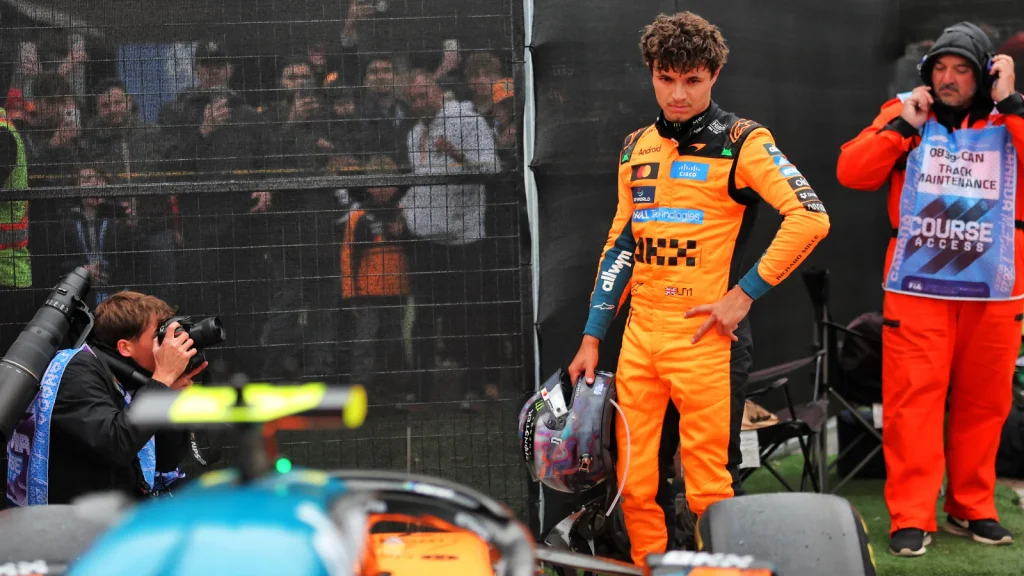
So where does this leave Norris exactly?
Perhaps in a position not seen since the days of Lewis Hamilton, essentially in a team built around you so well, the concept of McLaren itself feels like it’s fitting around him like a Savile Row suit. Essentially, he is McLaren’s version of Charles Leclerc at Ferrari: the golden child around which everything can be, to some extent, based. And often, there is proof that it works.
Hamilton’s days in this position at McLaren was somewhat stunted by his ship-jumping to Mercedes, amid a dip in performance for McLaren that left him often trailing in the wake of Sebastian Vettel. If you care to look back a little further, you will find it in the days of Mika Hakkinen. Having proven his speed over a number of years – including after a near-death accident at Adelaide – he was afforded the chance to mount a title challenge in 1998, and the flashpoint was the team orders fiasco in Melbourne, when teammate David Coulthard let him through to take victory. That pushed the equilibrium firmly out of existence and pushed the spirit level bubbles into Hakkinen’s lap.
The circumstances around what Piastri is or isn’t feeling is permeating in the background whilst Norris makes use of the rejuvenated MCL40 to take two wins in a row, and in such a style that even someone of his sometimes-excruciating level of self-depreciation can admit that he is driving well.
Before Hakkinen, it was Ayrton Senna. Joining in 1988 as a proven race-winner but not in consistent title-challenging machinery, the Brazilian quickly displaced Alain Prost as the main man in the team, despite the Frenchman having held court there for some time, even alongside the likes of Niki Lauda. A flashpoint there was perhaps the pair’s collision at Suzuka in 1989, where Senna was disqualified, handing Prost the title, but McLaren appealed the result of Senna’s win.
It’s not a besmirching of Piastri or his talent, which is undeniable. But like in all walks of life, there is a ‘right place, right time’ aspect to anything. Norris was promoted to the F1 team at a time when McLaren was also in recovering from a freefall from respected establishment team to backmarkers powered by a Honda Fernando Alonso described as a “GP2 engine”.
Norris has fitted in as McLaren, under Zak Brown’s stewardship, began to find its feet again and gradually move from the midfield to the front. And with that, the opportunity to show his talent was presented. Yes, sometimes there have been doubts about bottling the starts and not getting to grips with cars as quickly as Piastri, but with the odd papaya rule here and some great performances there, Norris earned bearing #1 on his car this year.
So yes, all the doors were closed. But who cares? I’m sure he doesn’t. Good drivers find good teams at the wrong time, or find that that team isn’t suited to their personality. Sometimes it’s hard to know what side your bread is buttered.
But for Lando Norris, I think he’s found it. And it’s toasted, golden brown. With a hint of papaya.




Discussion about this post