
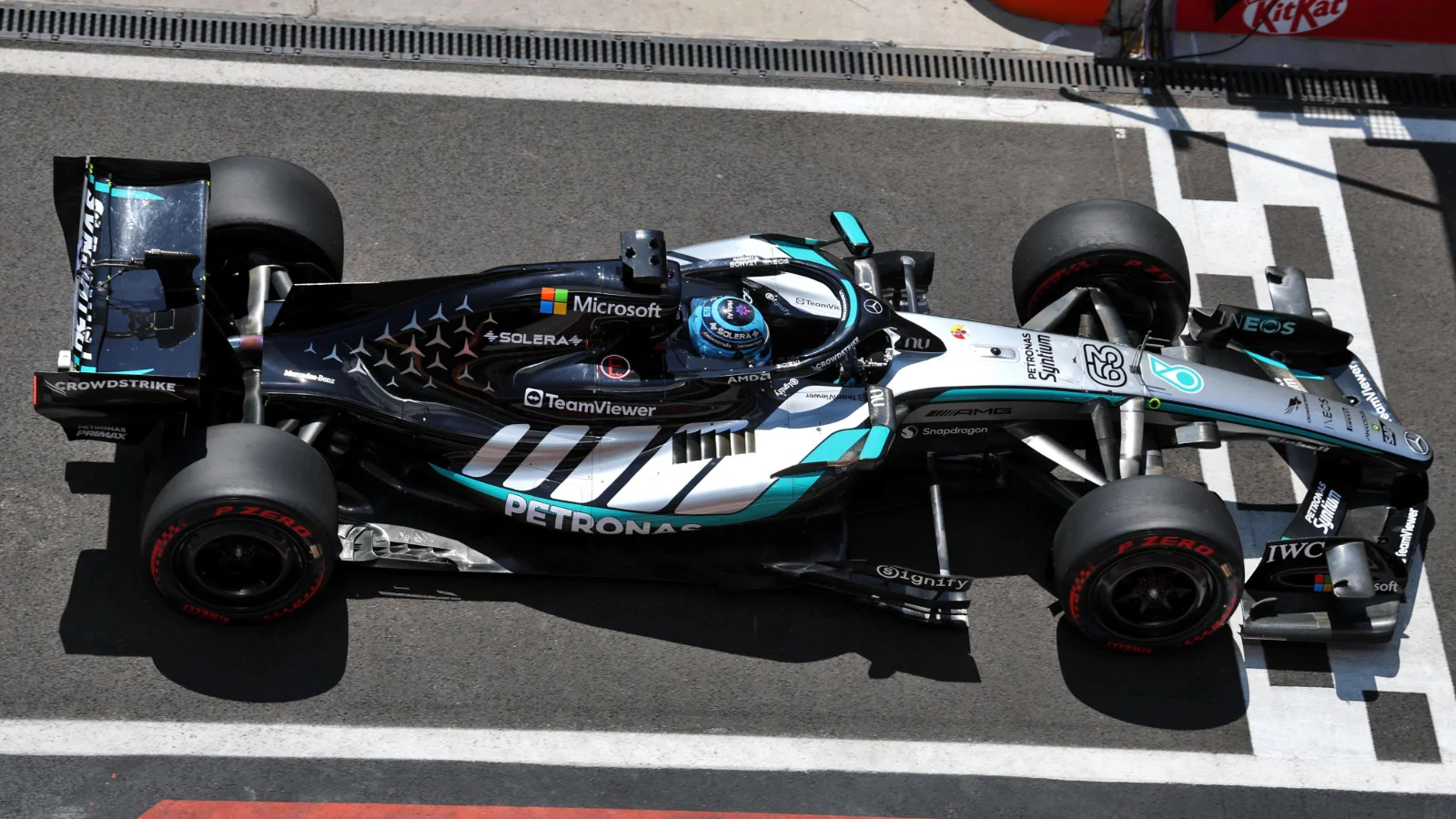
Mercedes revealed the intensity of the development war in Formula 1, as it seeks to secure its first double championship win since 2020, when the season resumes next weekend.
The Silver Arrows ended the first half of the season in dominant form, taking eight wins in the first 11 races, leading the Constructors’ championship by 70 points.
Kimi Antonelli also holds a commanding 50-point lead over the Ferrari of Lewis Hamilton, and a 59-point advantage over teammate George Russell.
But the dominant W17 has shown signs of being caught in the final races before the summer break, with the team only securing victory twice in the last five races as rivals begin to catch.

McLaren and Ferrari have both brought substantial upgrade packages in recent races, transforming their performance, and closing the gap to the championship leaders.
Mercedes Technical James Allison revealed that that teams are still finding time, given we are only 11 races into F1’s dramatically different new technical regulations, confirming the lap time that could be found.
“One of the defining characteristics of this regulation cycle is just how immature the regulations still are,” he said on the Nu Silver Arrows Podcast.
“Development rates are enormous compared to previous years. On the aerodynamic side, the gain rate we’re seeing in the wind tunnel is roughly six or seven times greater than it was last season.”
“It’s roughly half a second every couple of months, which is a very significant rate of progress.”
Mercedes confirms impact of 2026 development strategy
Allison then detailed Mercedes’ rationale for its development strategy this year, explaining both the benefits and the downsides of its approach.
“We made a conscious decision before the season to push the first car harder than we’ve ever pushed one before. We left things later than usual and effectively built a programme with almost no contingency.
“The upside was that we were able to capture as much of that steep development curve as possible before the first race, which is why the car arrived with such a strong level of performance.
“The downside is that we essentially spent all of that performance upfront. Other teams finalised their cars earlier and were therefore able to begin developing upgrades earlier. We’re now slightly out of phase with some of our competitors.
“They have been introducing upgrades while we’ve been rebuilding our development pipeline. What we’re seeing is that everyone is making gains at a broadly similar rate. That means the competitive picture can change very quickly.
“Our objective is simply to keep our nose in front and ensure that the next wave of upgrades restores the advantage we built at the start of the season. In the meantime, we just have to ride out those moments when other teams arrive with significant new developments.”
The development race in 2026 is proving to be one of the season’s major talking points. Expect the competitive order to keep shuffling as teams continue to understand the new technical regulations.






Discussion about this post