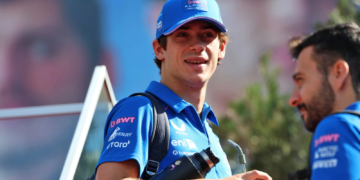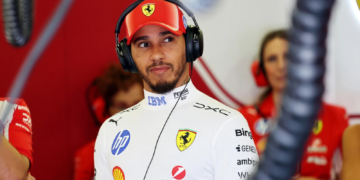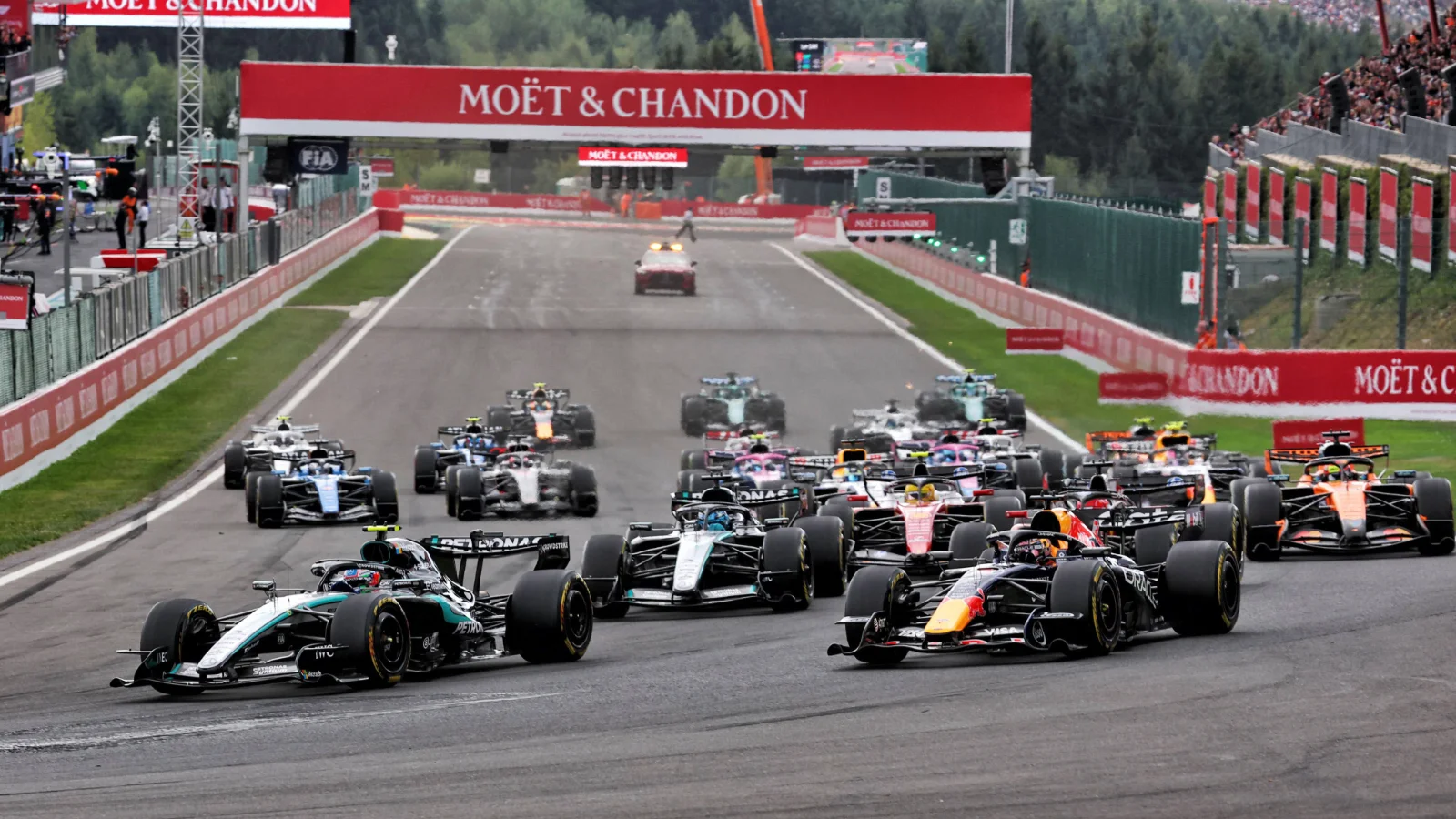
A driver on the grid has a resting heart rate that would concern a cardiologist in any other context, a helmet that removes most peripheral sensory input, and roughly ninety minutes ahead in which a lapse of half a second has consequences that do not apply in other sports.
What is interesting is not that this produces anxiety. It is that the techniques drivers use to manage it are more mundane, and more transferable, than the mythology suggests.
Arousal is not the enemy
The first thing sports psychologists working in motorsport tend to correct is the assumption that calm equals fast.
Performance across most demanding tasks follows an inverted U against physiological arousal. Too little and reactions are slow and attention drifts. Too much and attention narrows excessively, fine motor control degrades and decision-making becomes rigid. The optimum sits somewhere in the middle and differs between individuals.

That reframes the goal. Drivers are not trying to eliminate nerves. They are trying to land in a band, which is a considerably more achievable objective and one that applies equally to a job interview or a stage performance.
Routine does the heavy lifting
The most consistent feature across elite drivers is not a psychological technique. It is a fixed pre-session sequence.
The same order of preparation, the same timings, the same physical actions. The content varies enormously between individuals; the consistency does not.
The mechanism is straightforward. A rehearsed sequence occupies working memory that would otherwise be available for anticipatory worry, and it produces a reliable physiological state through association. It is also the intervention with the lowest barrier to entry, since it requires no equipment and no coach.
Breathing, specifically exhalation
Controlled breathing is the technique that appears most often, and the useful detail usually gets lost in the general advice to breathe deeply.
Extending the exhalation relative to the inhalation is the part that shifts autonomic balance. Something in the region of a four-count in and a six or eight-count out, repeated for a couple of minutes, produces a measurable effect for most people.
Drivers use it on the grid because it works within the time available and can be done inside a helmet without anyone noticing. The same applies to anyone in a situation where visible coping is not an option.
Where attention actually goes
The distinguishing feature of high performers under pressure is not the absence of intrusive thoughts. It is what they do with attention afterwards.
The pattern that separates them is external, process-focused attention. Thinking about the braking marker rather than about the outcome of the race, about the specific action rather than about how it is going. Internal focus on outcomes reliably degrades performance and reliably increases anxiety.
This is trainable, and it is the thing most amateurs get wrong — because outcome focus feels like taking it seriously.
The unlicensed product problem
Motorsport, like most demanding pursuits, attracts a large market of products claiming to improve focus or reduce anxiety, and the regulatory position on many of them is worth understanding.
A licensed medicine has been assessed by the regulator for safety, quality and efficacy. An unlicensed one has not. GOV.UK’s guidance on supplying unlicensed medicinal products is explicit that these products do not hold a marketing authorisation in the UK and may not have been assessed by the MHRA. They can be supplied under Regulation 167 of the Human Medicines Regulations 2012 where no licensed medicine meets an individual patient’s clinical need, as determined by the prescriber responsible for their care.
That distinction matters when reading claims about any product. It is also why supplements marketed for focus or calm — which are not medicines at all — carry no such assessment and frequently no meaningful evidence.
Cannabis-based products and what the evidence supports
This category has grown considerably since 2018, when cannabis-based products for medicinal use were rescheduled and became prescribable by specialist doctors in the UK.
Most such products are unlicensed, which places them squarely in the category described above. They are prescribed by specialists on a named patient basis where conventional treatments have not worked, and access runs largely through private services rather than the NHS.
Comparisons of the best cannabis clinics are a reasonable way to understand what that sector looks like from the outside, though the clinical question of whether treatment is appropriate for any individual belongs entirely to a qualified doctor.
Terpene claims have outrun the evidence
Within that field there is considerable online discussion of terpenes — the aromatic compounds in cannabis — and their supposed effects on mood. Some of it substantially overstates what is known. Material addressing which terpenes cause anxiety is worth reading alongside the caveat that this is an area where consumer claims have run well ahead of clinical evidence.
This is general information and is not medical advice. Anxiety is a treatable condition, and the appropriate first step is a conversation with a doctor rather than with a product page.
What racing cannot teach you
Worth being honest about the limits of the analogy.
Competition anxiety is anticipatory, bounded and attached to a specific event. It ends when the chequered flag falls. Clinical anxiety disorders are not bounded that way, do not resolve when the situation passes, and do not respond to breathing exercises alone.
Techniques drawn from sport are useful for performance situations. Presenting them as a treatment for an anxiety disorder is a category error, and one that delays people getting help that works.
What transfers
For anyone facing a high-pressure situation, four things carry over reliably.
Build a fixed preparation routine and keep it identical. Use extended-exhale breathing in the minutes before. Direct attention to process and to external cues rather than to outcomes. And treat arousal as fuel to be aimed rather than a fault to be suppressed.
Drivers arrive at these through necessity rather than theory. The fact that they converge on the same short list is the strongest argument for it.