
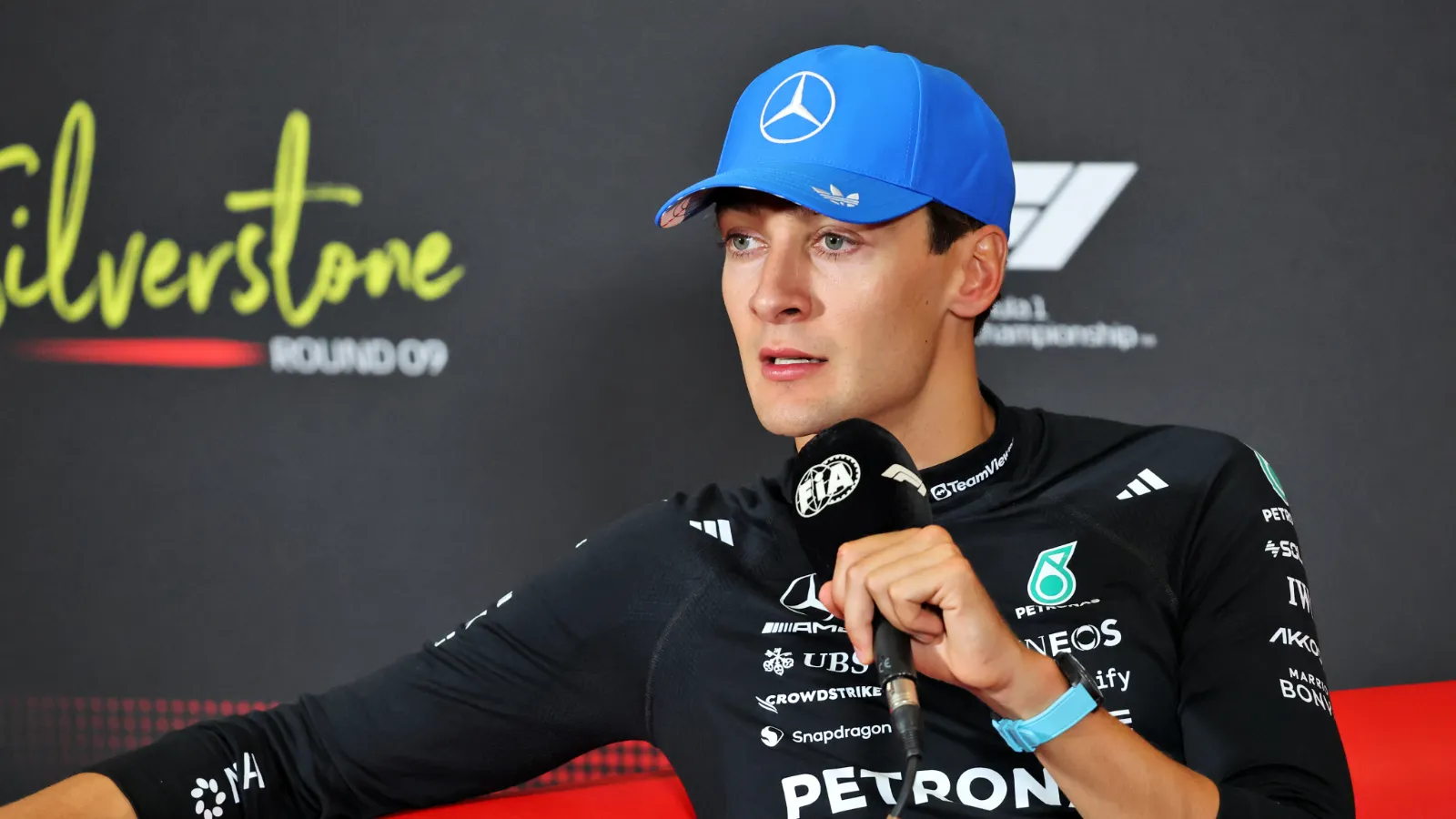
George Russell has responded to Carlos Sainz’s demands to punish drivers who cause yellow or red flags during Formula 1 qualifying sessions.
Russell secured pole position for the Austrian Grand Prix, after judging the single-waved yellow flag to perfection caused by Max Verstappen’s crash out of Turn 9.
His team-mate, Andrea Kimi Antonelli assumed it to be a double-waved yellow, and the ensuing confusion eventually benefitted the Briton, who had claimed at the time that common sense had prevailed.
At Silverstone, however, GPDA Director Sainz had voiced his opinions on qualifying incidents that could ruin the session for other drivers.


The Williams driver had suggested that the FIA should punish every driver who causes a yellow or red-flag during the qualifying sessions.
Russell acknowledged the Spaniard‘s inputs but deemed the idea to have both “pros and cons” if implemented.
“It definitely has been spoken about before that if somebody causes a yellow or a red flag, it should be punished,” he said.
“Because it does have an effect on other drivers whether your fastest lap is deleted, and we see that in other series, but on the flip side, people would also say that drivers are not taking as much risk come qualifying, and you want to see drivers pushing the limits.
“No one wants to see someone get hurt, but you want to see drivers going off track at points and going beyond the limit, so there are pros and cons both ways.”
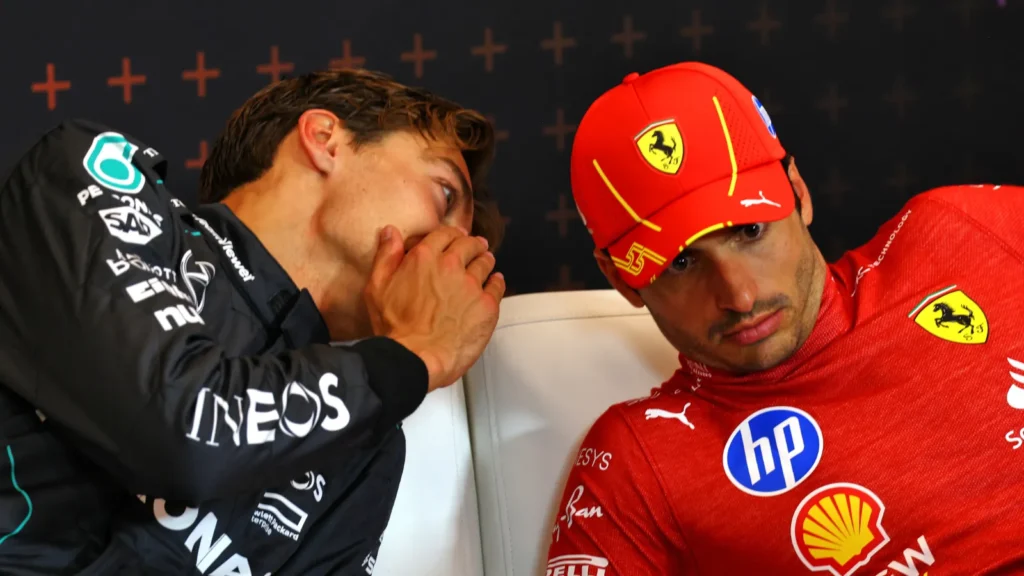
Implementing F1 qualifying rule change ‘not so easy’ – George Russell
Russell explained that under the current rules, a single yellow flag will be the initial call of a marshal. Thereafter, if the FIA deems it fit, it may upgrade it to a double-waved yellow or red flag the session.
But given the high stakes and split-second decision making required, the Mercedes driver surmised that tweaking the rules as Sainz would have it or otherwise would be a “not so easy” job.
“I think it stemmed from Baku, when a lot of drivers would lock up and run down the escape road, and the drivers felt that it should not be a double yellow,” Russell added.
“Because it completely ruined the lap of another driver, but that a single yellow would be sufficient, unless the FIA thought otherwise.
“That was the rule of thumb that has been taken forward, which is that whenever there is an incident in qualifying, it would be a single yellow, but we also have to remember the person putting out a single yellow is a volunteer, the marshal.
“It is not the FIA to start with, the FIA review it and then upgrades it if they think it is necessary, and I’ve been talking for 30 seconds now with that answer, and they need to react in the space of five, six, or 10 seconds – and that just isn’t possible.
“So should the Austria incident have been a double yellow? Of course it should have been, but there are many times in the past where drivers say it shouldn’t have been a double yellow, and that a single yellow is sufficient, so it is not an easy job.”
With the FIA and FOM open to tweaking the current rule-set, driver input will surely be taken into consideration moving forward to get the best racing spectacle and balance it out with safety out on track.
READ MORE – Ex-F1 boss calls on FIA to alter F1 red flag rules ‘for the fans’








Discussion about this post