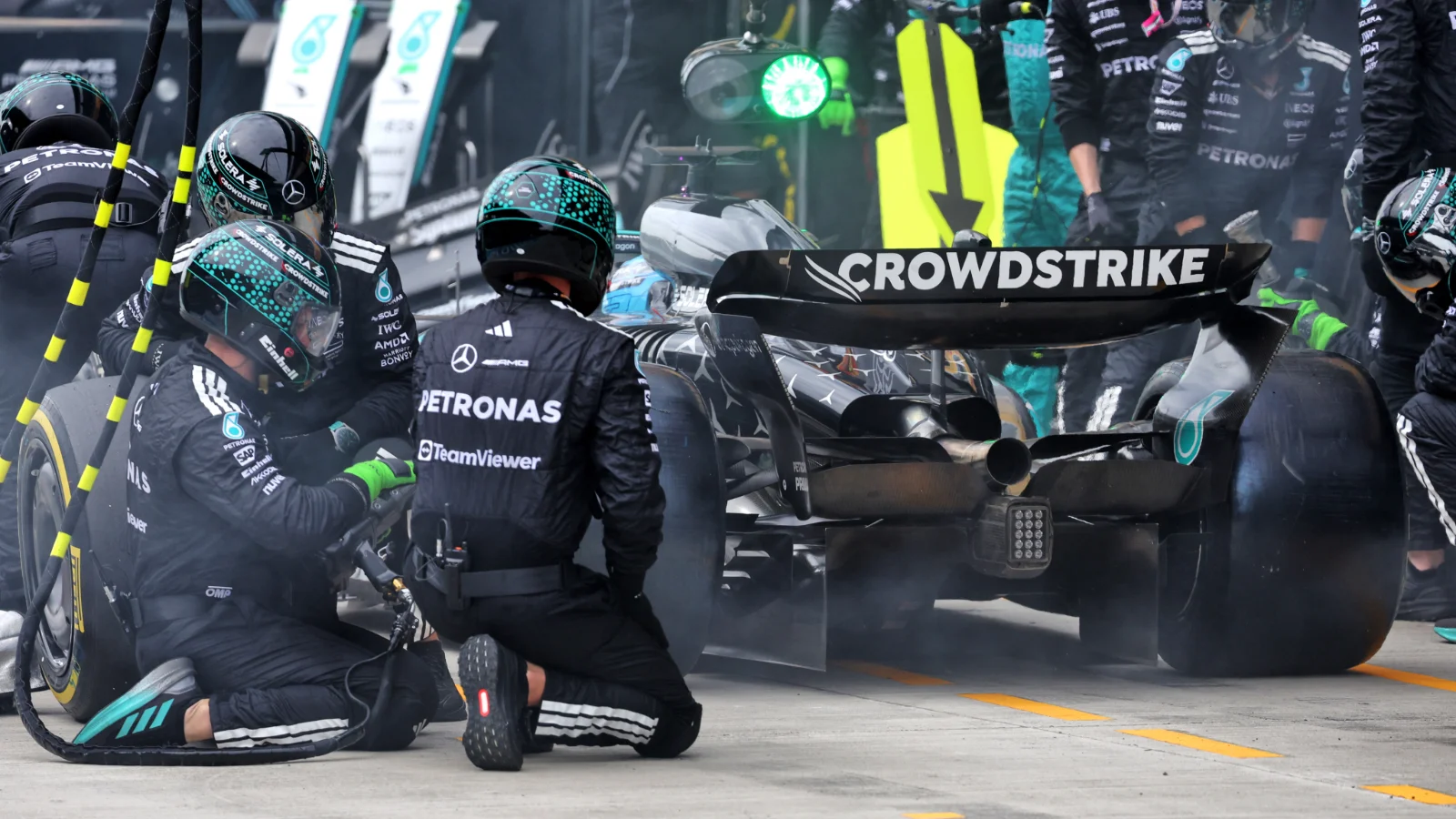
There is a particular violence to a Formula 1 pit stop that television never captures.
The car arrives hot, low, and impatient. The crew steps into its path with the calm of a bomb disposal unit. Wheels are off, wheels are on, the jack drops, and the driver is released before the fans could process what’s happening.
The impressive part is not only the speed. It’s the absence of surprise.
Nothing about a modern Formula 1 stop is left to chance. The crew knows the lap window, the tyre life, the weather risk, the likely traffic on exit, and the exact role of every hand around the car. It looks dramatic because Formula 1 is dramatic. But underneath, it is mostly discipline.


Which raises a useful question for the average Mercedes owner: if that attitude keeps a grand prix car alive at the limit, why does so much road-car maintenance still happen only after something has gone wrong?
The F1 pit stop as a philosophy
A pit stop is not really a repair. In most cases, it is controlled intervention: the team has already calculated when the tyre performance will drop or risk will rise, and the stop simply executes a decision made long before the car reached the box.
That is the culture that separates racing from ordinary ownership. In Formula 1, parts are logged, heat-cycled, inspected, and replaced before they become a problem. A vibration, a slow pressure loss, or a slightly odd temperature reading is not ignored because the car still feels fine. It becomes data that determines what to do next.
Road cars live much easier lives, of course. A Mercedes E-Class on the freeway is not a W16 being thrown over kerbs. But the principal travels surprisingly well. The best maintenance is rarely heroic. It is boring, timely, and done before the warning light turns on.
Where road car owners fall short
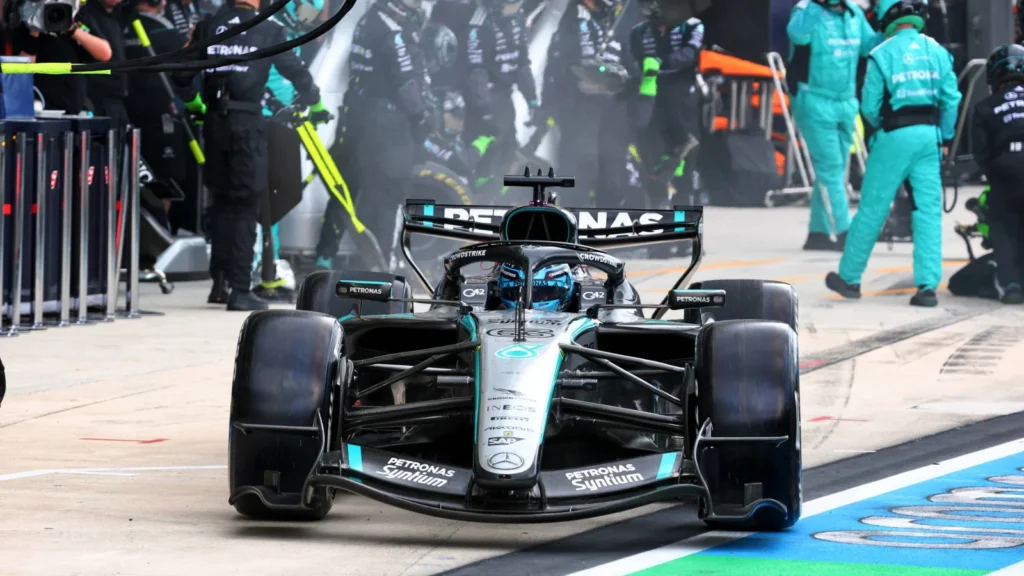
Most owners are not careless; they are busy. A service reminder appears, and if the car still starts, stops, and cruises quietly, it’s tempting to stretch the interval a little. Oil can wait. Brake fluid can wait. Transmission service can definitely wait, especially if no one has mentioned it since the car left the showroom.
The problem is that Mercedes engineering tends to reward precision and punish neglect in equal measure. These cars are built around systems that include cooling, lubrication, fuel delivery, electronics, emissions control, suspension, and driveline management, all working together. When one area is allowed to drift, the effect is rarely isolated.
That is where the old pit-lane mentality becomes useful. Not because a road driver needs to behave like a race engineer, but because a premium car deserves to be maintained as a whole machine, not as parts replaced only after they complain loudly enough.
Bringing the pit lane mentality home
For Mercedes owners, informed maintenance starts with understanding what the car is actually asking for. Not just “service due,” but what that service is meant to protect.
Oil quality is not just about lubrication. It affects heat control, turbocharger health, timing components, and long-term wear. Brake fluid is not always a garage upsell. It absorbs moisture over time, and that matters when the car is heavy, fast, and expected to stop with authority.
This is where factory-level information has value. Owners trying to take a more disciplined approach often begin with the car’s official documentation, because a Mercedes repair manual gives access to the specifications, service intervals, torque values, and procedures that sit behind the badge.
It is the road-car equivalent of preparation before the car enters the pit box. The work may still be completed by a professional technician, but the owner arrives with a clearer picture of what is due and which questions are worth asking.
The interval mindset in practice
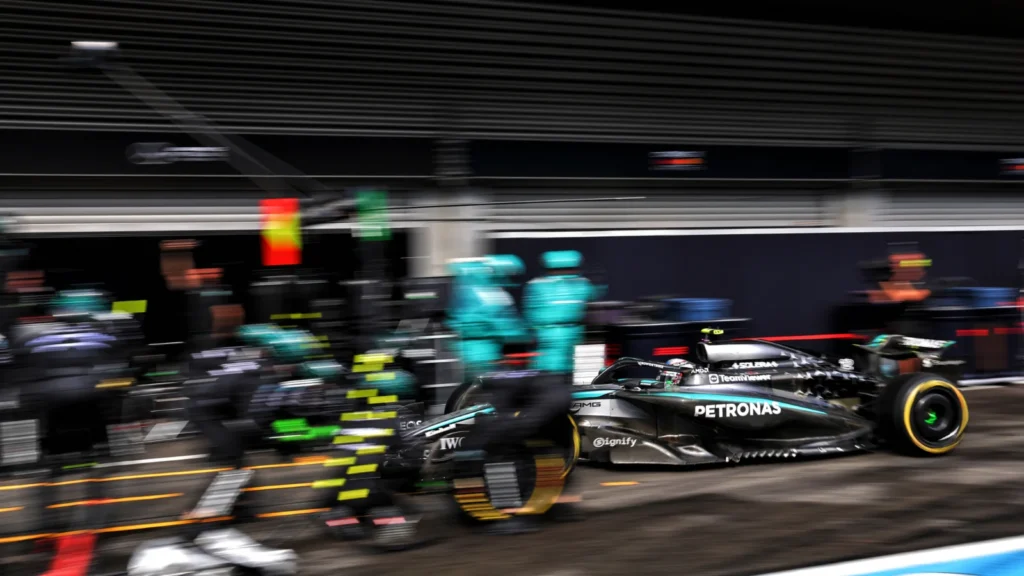
That being said, applying Formula 1-style discipline to a Mercedes does not mean over-servicing it or treating it like a delicate race car. It means respecting intervals as engineering decisions, not polite suggestions.
It’s a checkpoint for fluids, filters, wear items, software checks, seals, belts, bushings, and all the small things that keep refinement from turning into repair cost.
It also means paying attention to patterns. A slight coolant smell, a lazy start, a change in shift quality, or a new knock over rough pavement should not create panic but rather make you curious.
Race teams survive by noticing small changes early. Road owners save money the same way.
Last words
At first, comparing a Mercedes road car to a Formula 1 race car feels a little exaggerated; one lives on the limit, the other spends most of its life in traffic and on motorways.
But the more you think about it, the more the lesson starts to hold. Not because a road-going Mercedes needs pit-crew treatment, but because the thinking behind it still applies. The best teams in Formula 1 do not wait for failure before they act. They prepare, measure, inspect, and respect the life of every component.
That is the lesson worth taking from the pit lane. For the average Mercedes owner, precision doesn’t have to mean obsession. It can simply mean treating service intervals as part of the ownership experience, not an interruption to it.
Anyone can buy a car with a three-pointed star. But properly owning one means understanding that the badge was built on discipline, and the car still rewards the same in return.