
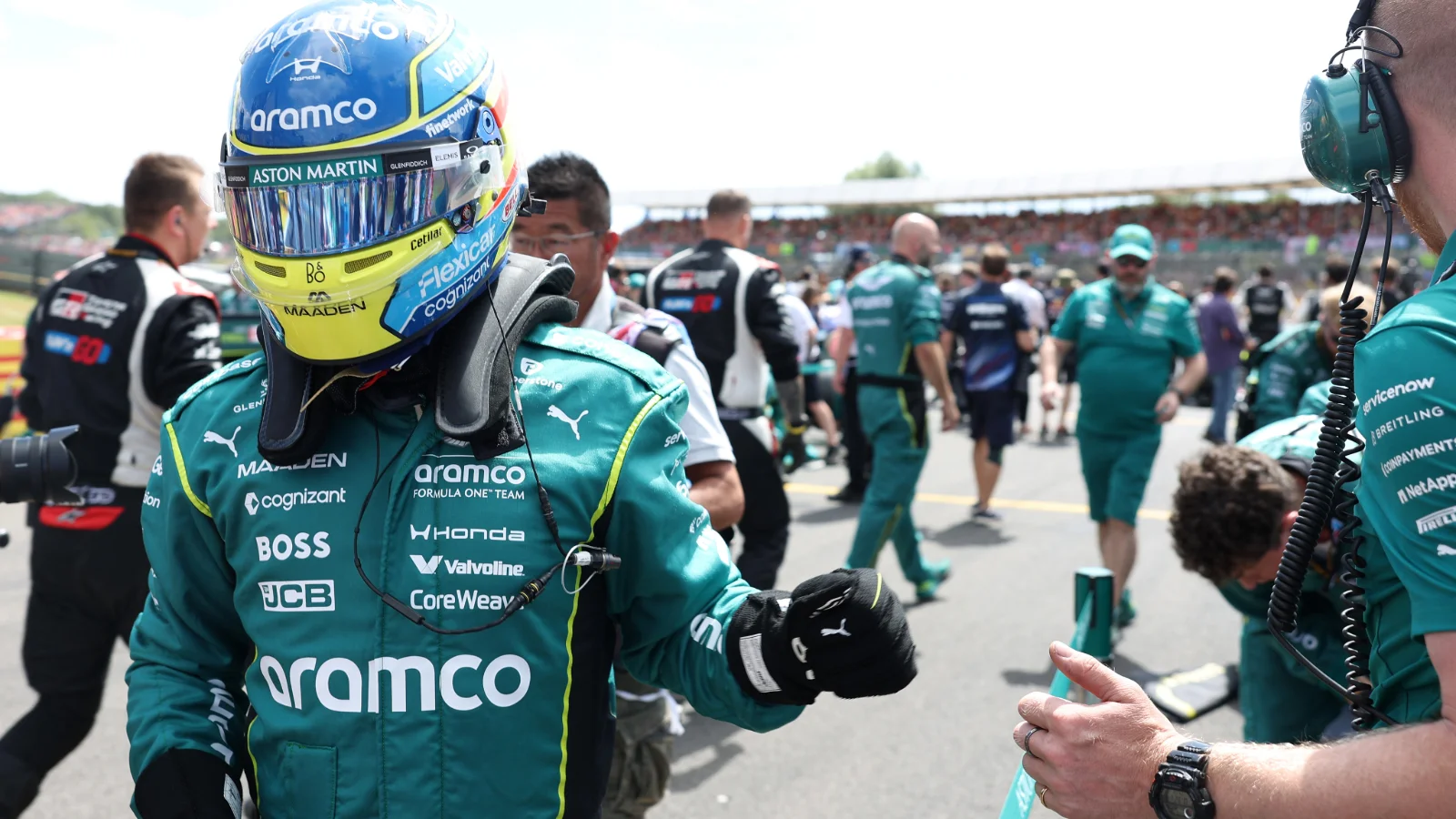
Fernando Alonso has raised concerns that Formula 1 cars at this weekend’s Belgian Grand Prix may be slower than Formula 2 cars in certain areas.
As has been proven throughout 2026, the fastest way around a lap in the new generation of cars is not necessarily to drive flat out through a lap.
Instead, battery management and deployment continue to be the main tools needed to extract speed during a lap, though this has proven problematic on power dependent circuits.
This week in Belgium looks to exacerbate these issues, with the Kemmel Straight out of Eau Rouge alone heavy on power.


Alonso believes that, like Silverstone, Spa will see a repeat of deployment issues, leading to cars decelerating on the long straights.
“Silverstone and Spa, they are very thirsty on energy, and you cannot deploy in all the straights,” Alonso said to media, including Motorsport Week.
“Next week, it’s going to be the same thing. If you deploy at Spa from Turn 1 to 5, finito for the rest of the lap”.
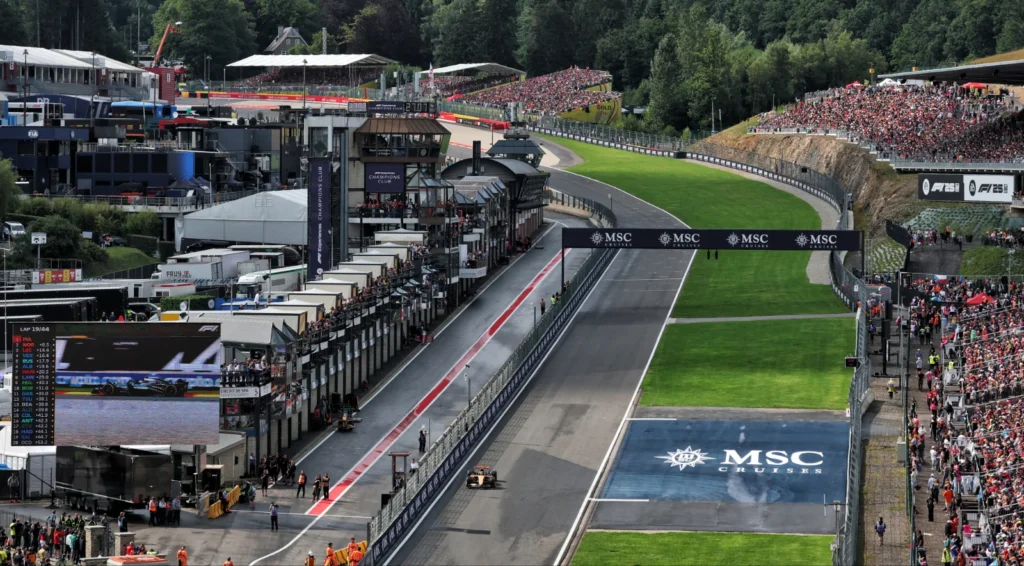
Fernando Alonso outlines challenges facing drivers at Spa
Outlining the challenges facing drivers, Alonso believes that cars could go over a minute without deployment, which would have dramatic consequences for the speed of the cars at the end of the lap.
He then gave a warning of an unfavourable comparison to Formula 2 cars, believing F1 could end up with less power than its support series.
“You need to save a little bit there to have deployment from [Turn] 14 to the Bus Stop. But, if you deploy on those two straights, which is the optimal deployment, then there is a one-minute Sector 2 with no deployment at all.
“And with no deployment at all, we cannot forget that this year we have significantly less power than last year, and less power than F2. That’s the case when you cut the deployment.
“So, it’s a challenge.”
The figures give weight to Alonso’s argument. F2’s spec Mecachrome V634 engine, unchanged since 2018, produces 620bhp at 8,750rpm from its 3.4-litre turbocharged V6, with no hybrid deployment to call upon. F1’s 2026 power units, by contrast, are built around a near 50/50 split between combustion and electrical power, with the internal combustion engine alone capped at roughly 400kW, or around 536bhp, once the MGU-K’s contribution is stripped away.
On a straight where a driver has already spent their battery charge, that leaves an F1 car running on meaningfully less raw horsepower than a Formula 2 car half a grid below it, even though combined peak output across a lap, with the MGU-K’s near-469bhp contribution factored back in, comfortably exceeds 1,000bhp.
It is that gap between total headline power and what is actually available in an energy-starved sector that has become the defining storyline of 2026’s power unit era, and Spa’s long, sweeping second sector, running from Eau Rouge through the Kemmel Straight to Les Combes, is shaping up as one of the most demanding tests of that management yet.
With Aston Martin already toiling near the back of the grid this season, Alonso’s frustration reflects a wider unease among drivers, Max Verstappen and Lando Norris among them, about a formula that has repeatedly forced cars to lift and coast through sections once taken flat.








Discussion about this post