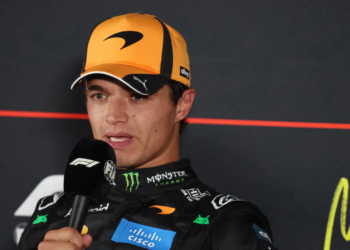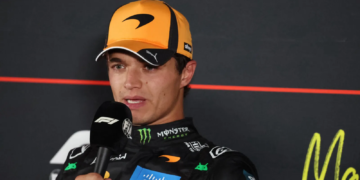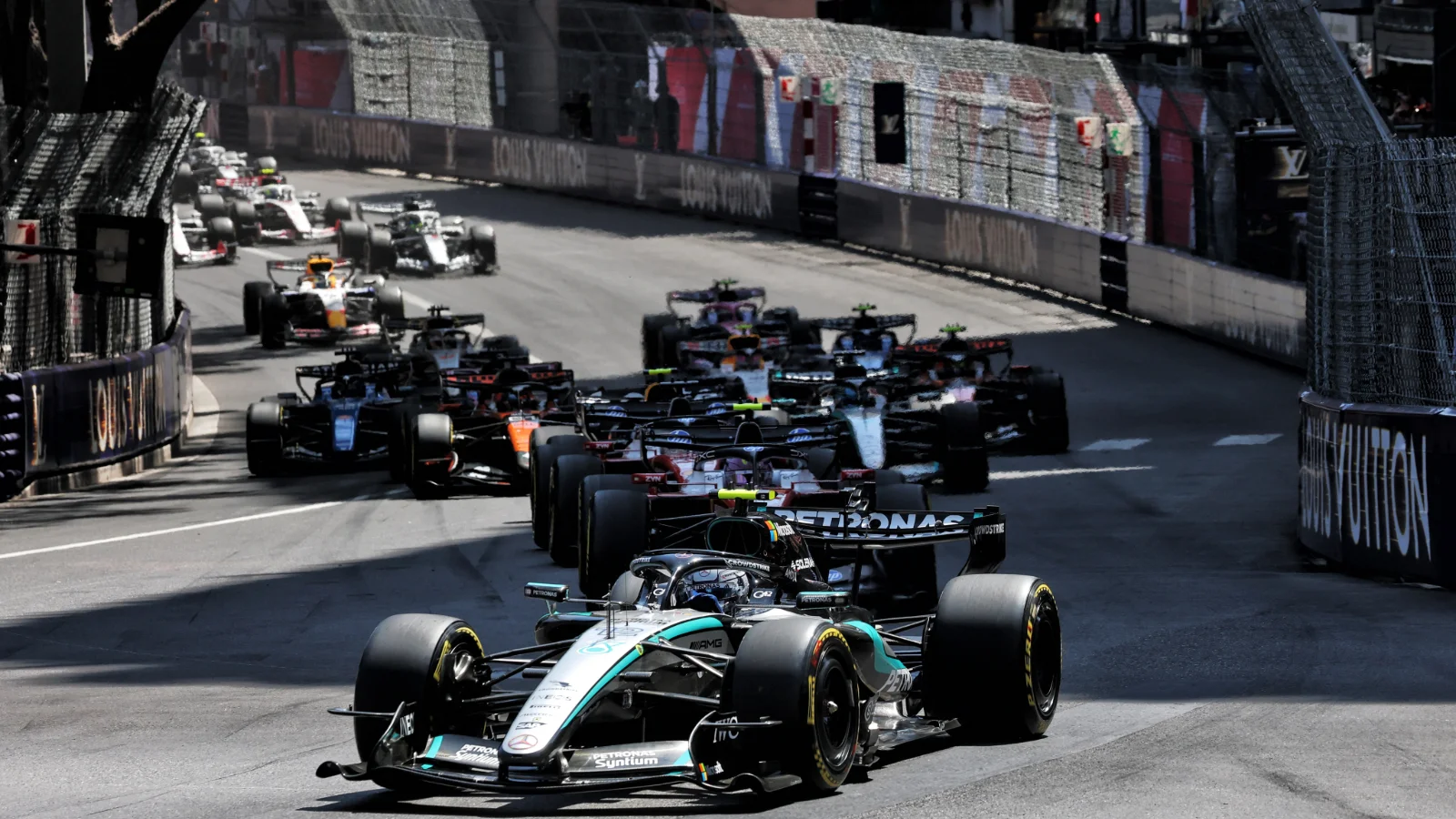
With a 66-point cushion over the field, Kimi Antonelli arrives in Spain with a considerable advantage — but surviving the Monaco street circuit is one thing.
Ripping through the full-throttle sweepers at Circuit de Catalunya is an entirely different engineering challenge, and no team is going to simply copy the championship leader’s floor design without knowing how it handles dirty air through fast corners.
The title fight gravity well in Catalonia
After five consecutive wins, there are 66 points separating the championship leader from everyone else on the grid. That kind of structural lead allows engineers to split floor setups between both cars during initial practice sessions without risking their overall position.
Telemetry clearly shows different engine map configurations between the top three operations and the midfield. Power generation at full tilt on the main straight looks to be the key to defending position through the first braking zone. Without a solution to their high-speed instability, contenders at the rear of the field may suffer heavy degradation over long stints.

Aerodynamic demands at Circuit de Catalunya
Managing downforce balance while reducing front-axle scrubbing is the primary technical challenge at this layout. Pirelli’s C1, C2, and C3 compounds are in play across the entire weekend because the asphalt is highly abrasive, and sustained lateral forces through Turn 3 generate significant thermal stress on the tyres.
Launching out of the final chicane dictates top speed down the main straight, while throttle profiles remain constrained by front-left tyre carcass temperature throughout the stint.
Reading the board from Monaco to Spain
Looking at the numbers from the last round shows that tracking tyre wear strategies gives much better predictive data than watching raw qualifying laps. Ignoring front-row hype helps bettors spot real race pace before the lights go out.
With five straight wins already banked, the market has Antonelli at evens (1/1) to make it six in a row on Sunday, and it is hard to find a reason to argue with that price. George Russell at 5/2 is the most logical alternative given he shares the same machinery, while Norris and Verstappen both sit at 8/1 for anyone willing to back an upset. Hamilton at 16/1 is an interesting look for Ferrari given what the timing sheets showed in Monaco.
For F1 fans looking to get money down before Barcelona, a bet365 bonus code is worth picking up before placing your first wager. Just as reading tyre degradation data beats chasing qualifying headlines, shopping your entry bonus before betting is better than leaving value on the table.
Race strategy calls for close attention to track surface temperatures ahead of each team’s pit window determination. Changes in track temperature directly affect how the hardest compounds grip over a 30-lap run, and drivers who modify their lines toward cooler pavement should gain tyre longevity as a result.
Dissecting the gaps from the principality
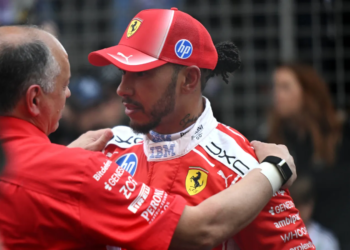
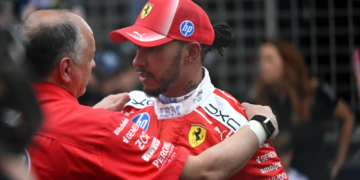
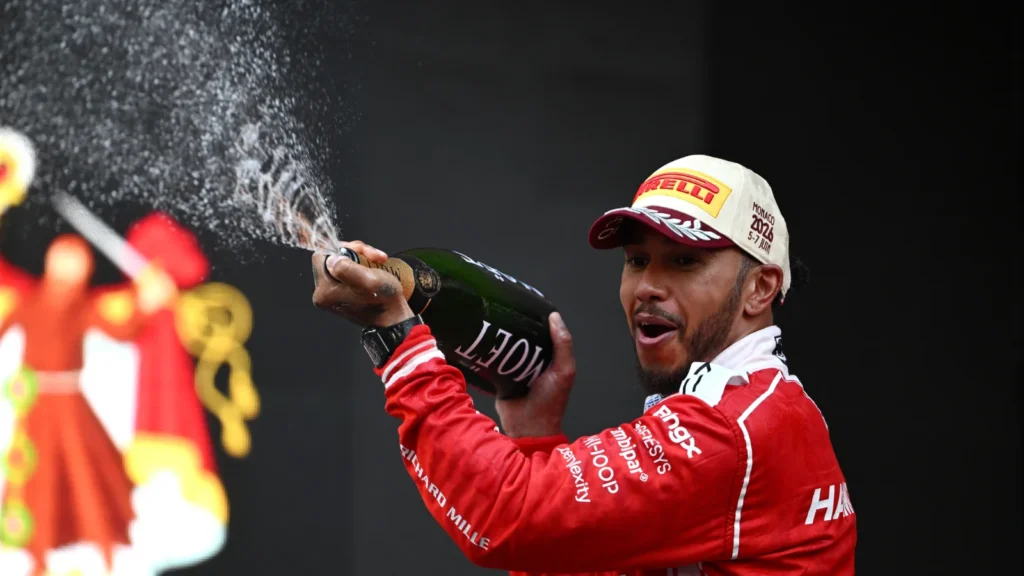
Looking at the timing screens from Sunday, the split between the front runners and the rest was dramatic. While the battle at the very front was extremely close — Hamilton finishing just seven seconds off Antonelli — as soon as that pair pulled clear of the field, the gaps stretched significantly. Hadjar and Piastri ended up more than 23 seconds off the pace, and Lawson took fifth position for Racing Bulls some 26.5 seconds adrift.
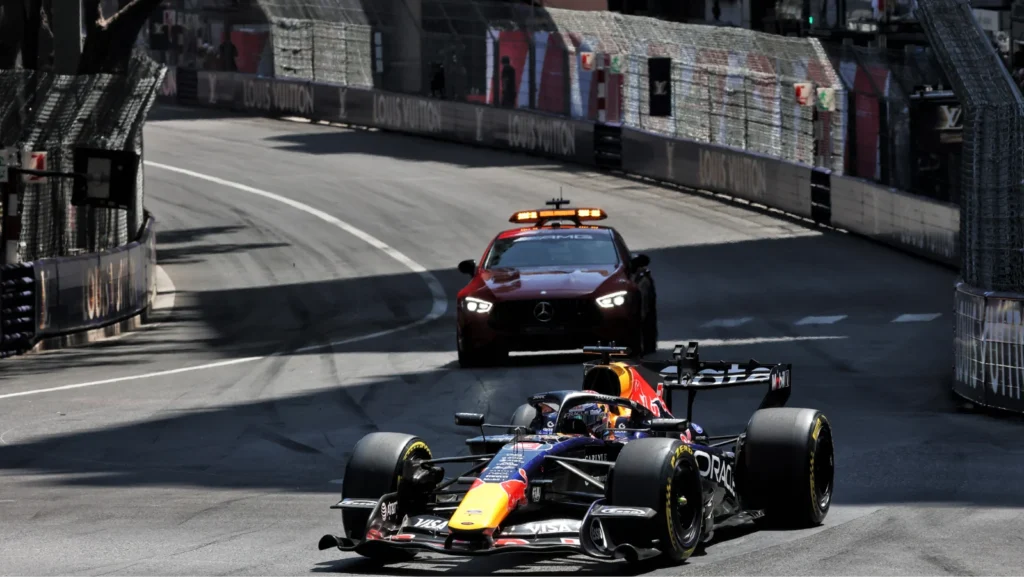
That picture changes at Montmeló. The long, fast right-handers penalise a car without stable aerodynamic properties at high speed from the very first lap. Cars that used compliant suspension to deal with Monaco’s kerbs face a significant deficit through the fast sectors here. Improving overall chassis balance before the race is the highest priority for every technical director this weekend.
Translating street pace to permanent tracks
A temporary street circuit benefits greatly from compliant mechanical suspension to absorb kerb strikes. A permanent circuit almost wholly rewards a rigid underfloor aerodynamic platform capable of producing consistent downforce through high-speed corners. Monaco rewards compliance; Barcelona rewards stability.
Cockpit psychology and the summer grind
Red flags are damaging when a driver is managing a comfortable lead. Antonelli would later describe the mental pressure of an unexpected standing restart while already in battle with multiple world champions — a reminder that even a dominant season produces genuine stress.
The Montmeló performance data will form the definitive benchmark for underfloor aerodynamic performance as the second half of the season approaches. Whichever teams get on top of stable platform balance this weekend will carry a concrete technical edge into the high-speed races that follow. “The job’s not finished. It’s still a long season,” Antonelli reminded the paddock.