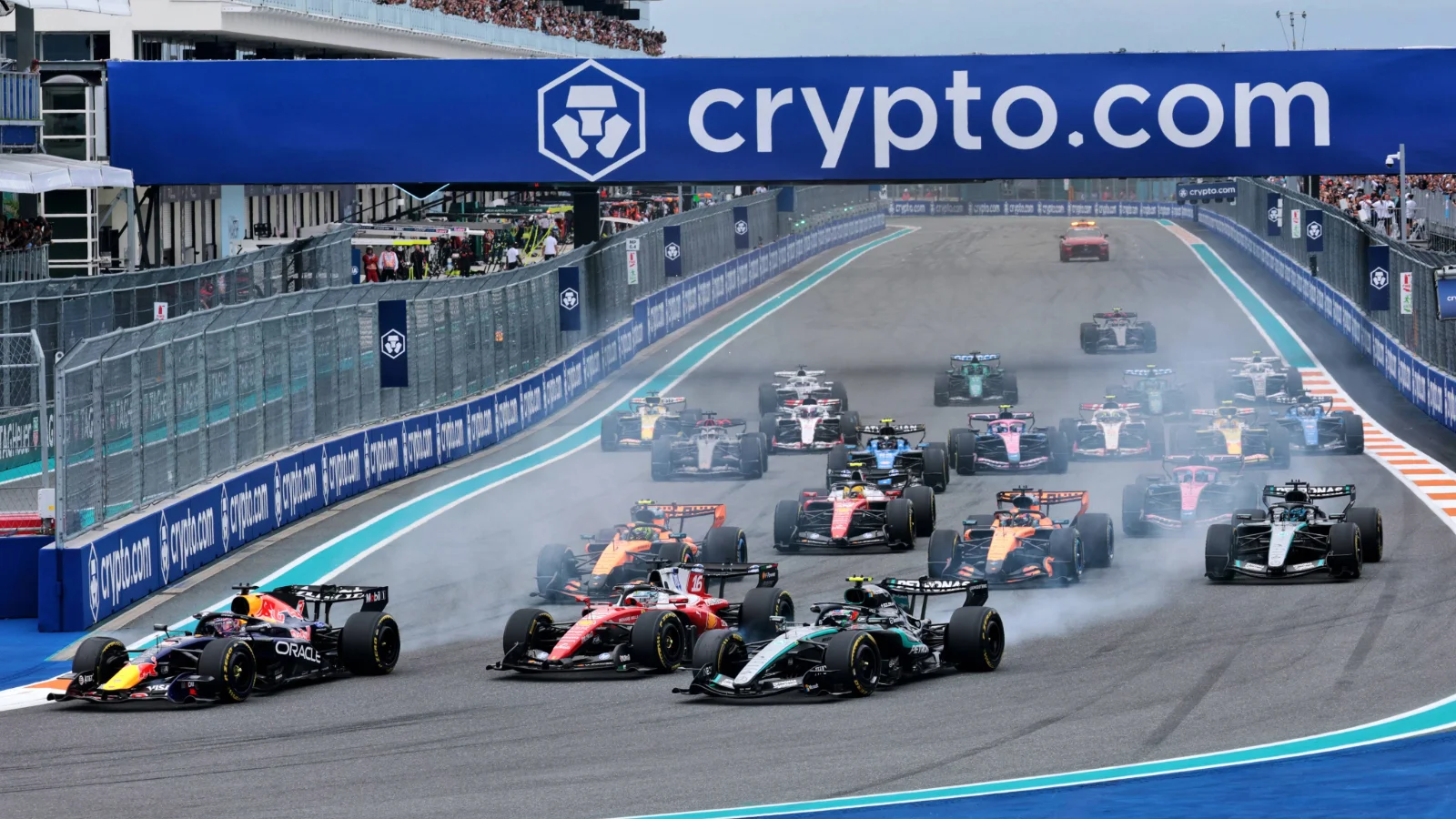
Winning a Formula 1 world championship, a MotoGP title, or a Le Mans overall victory is never purely the product of the fastest car or the most gifted driver.
Behind every celebrated champion sits a command structure — engineers, data analysts, sporting directors — whose decisions made within seconds routinely determine whether a race result becomes a footnote or a dynasty.
Strategy is the sport’s invisible engine, and understanding how it operates separates the casual viewer from the genuine student of motorsport.
The data infrastructure behind modern race strategy
Contemporary top-tier teams generate staggering volumes of real-time telemetry. A modern Formula 1 car carries over 300 sensors, producing roughly 1,500 data points per second, transmitted live to a pit wall that may simultaneously be connected to a factory operations room hundreds of kilometres away.

Ferrari’s remote operations centre in Maranello and Mercedes’ technical hub in Brackley both monitor race data in parallel with trackside crews — a practice governed by the FIA’s Technical Regulations covering permissible forms of external support during race weekends.
This infrastructure exists for one purpose: to reduce the uncertainty that defines every strategic call. When a safety car is deployed, a team principal does not act on instinct. The call to pit — or stay out — is informed by gap data, tyre degradation models, historical pit-lane loss times at that specific circuit, and rival team positions drawn from live timing.
Motorsport Week has covered the growing complexity of these operations in detail, documenting how teams like Red Bull Racing have built dedicated strategy departments that function more like quantitative trading desks than traditional engineering groups.
Tyre strategy: The central variable
Since Pirelli’s return as the sole F1 tyre supplier in 2011, rubber management has become the defining axis around which race strategy revolves. The FIA mandates that each driver use at least two different dry tyre compounds during a dry race — a structural puzzle that teams must solve under live competitive pressure.
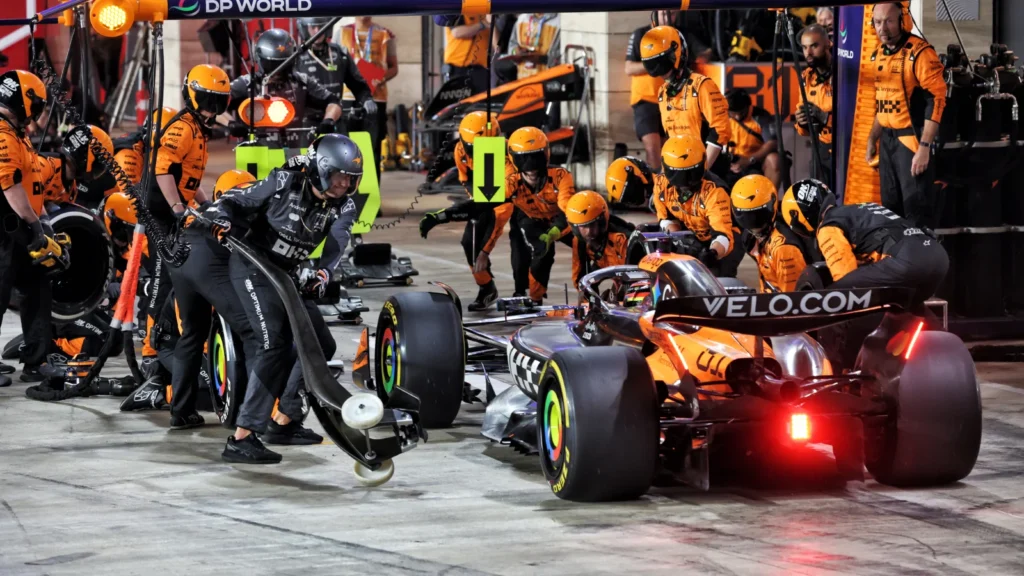
The variables a race strategist must model when building a tyre strategy include:
- Degradation rate per lap — measured as a lap-time delta against a reference pace model built during Friday practice sessions.
- Undercut and overcut windows — the number of laps required for a fresh-tyre advantage to overcome a position deficit following an earlier stop.
- Track evolution — rubber laid down by successive laps improves grip levels, altering the relative value of each compound as the race distance increases.
- Rival pit windows — the risk of emerging in traffic after a stop versus the reward of track position gained by extending a stint.
- Safety car probability — statistically derived from historical incident data at each venue, influencing the value of an early, aggressive pit call.
- Weather forecast margins — particularly consequential at circuits like Spa-Francorchamps or Interlagos, where a dry-to-wet transition can invert an entire race order within minutes.
Understanding these variables in combination — not in isolation — is what separates a championship-calibre strategy call from a reactive one.
The 2021 Abu Dhabi Grand Prix remains the most scrutinised recent example of how safety car management and tyre state intersected with sporting regulations to determine a world championship outcome. Motorsport Week’s post-race analysis from that weekend remains one of the most referenced breakdowns in both fan and industry discussions of the event.
The psychology of the pit wall
Numbers alone do not win championships. The strategist’s role also involves what behavioural economists call decision-making under uncertainty — acting on incomplete information within a compressed time window while managing the pressure of a live global broadcast.
Research published in the Journal of Sports Sciences has examined decision latency among high-performance motorsport engineers and found that experienced operators exhibit significantly lower cortisol responses to sudden race-phase changes, enabling cleaner signal-to-noise separation when processing live data.
This cognitive dimension extends beyond the pit wall. Drivers must communicate tyre feel, understeer tendencies, and energy-recovery states through radio exchanges while maintaining race-pace concentration. Scuderia Ferrari, for example, uses a structured radio protocol — documented in FIA team-principal briefings following strategy controversies in the 2022 season — that assigns specific terminology to tyre states in order to reduce ambiguity during time-sensitive calls.
The same appetite for reading variables and making calculated decisions under time pressure appears in other competitive arenas that attract an analytically minded audience. Motorsport fans who follow races across time zones and manage event budgets with the same precision they apply to race analysis tend to be equally selective about how they handle online transactions. For those based in Australia or New Zealand, payment methods that eliminate unnecessary steps matter. Platforms such as betpokies.co.nz outline why POLi appeals to users who prefer direct bank transfers without card details or third-party accounts — a level of operational simplicity that any pit crew optimising for lost time would recognise.
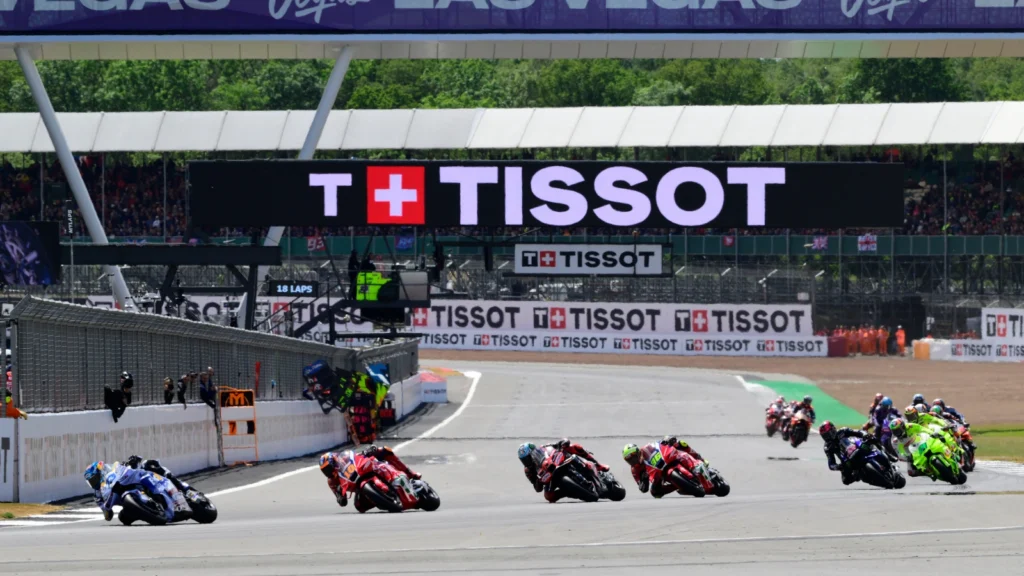
MotoGP and the tactically different world of two wheels
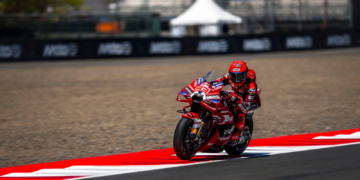
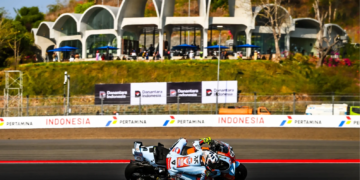
Formula 1 receives the bulk of mainstream strategy analysis, but MotoGP presents its own distinct strategic architecture. Unlike F1, MotoGP regulations do not mandate compound changes during a dry race, which shifts strategic emphasis toward tyre allocation decisions made before the event — reached through conversations with Michelin’s trackside technicians and based on circuit-surface abrasion data collected over previous seasons.
Motorsport Week’s MotoGP coverage has consistently highlighted how Ducati’s dominance between 2022 and 2024 was not solely a function of aerodynamic superiority. It also reflected the team’s ability to tailor race-weekend tyre selection to their specific chassis-loading characteristics — a strategic edge that rival manufacturers spent subsequent seasons attempting to replicate at the regulatory and development levels.
Endurance racing: Strategy across 24 hours
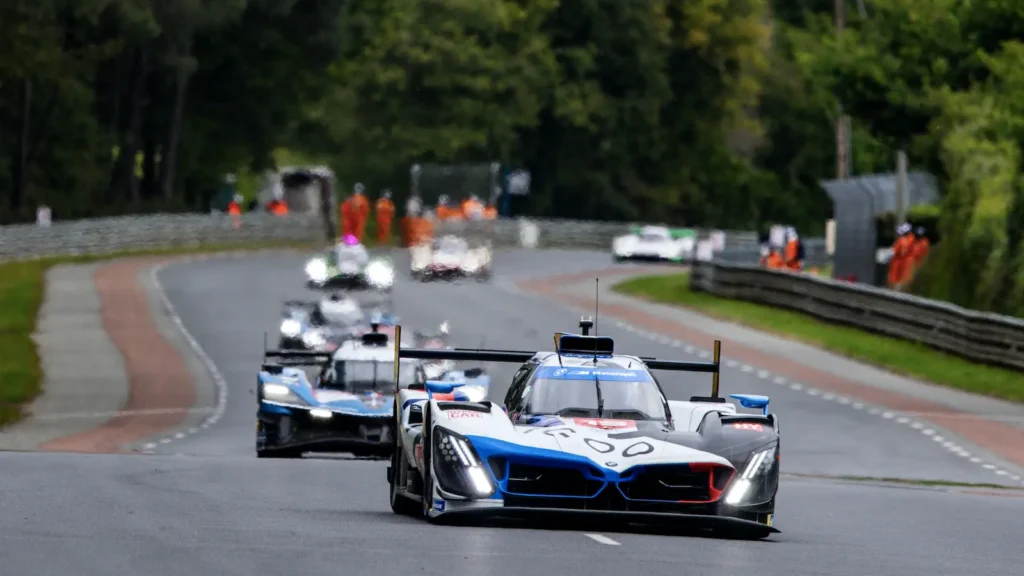
At the Le Mans 24 Hours and throughout the FIA World Endurance Championship, strategy operates on a fundamentally different time horizon. A team managing a Hypercar entry across a full day-and-night cycle must balance driver rotation schedules, fuel load optimisation, energy recovery deployment, and the probability of full-course yellow periods — all while managing the physical limits of mechanical components across a distance equivalent to multiple Formula 1 race weekends combined.
The Automobile Club de l’Ouest, which co-governs the WEC alongside the FIA, publishes detailed Balance of Performance documentation that serves as the strategic baseline for every team. Understanding how BoP adjustments between rounds affect fuel flow rates, minimum weight, and energy allocation has become a specialist discipline within endurance team management, with dedicated BoP analysts now standard practice among the leading Hypercar programmes.
What actually wins championships
Championship success in motorsport is the cumulative result of marginal decisions made correctly over an entire season. The team that lifts a constructors’ trophy does not do so because it identified one brilliant strategy call on one afternoon in one city.
It wins because its decision-making infrastructure — data quality, simulation accuracy, crew execution speed, and driver communication protocols — produces better expected-value outcomes across twenty or more race weekends than any competitor can match.
The fastest car is an advantage. Consistent strategic execution is the force multiplier on that advantage. When machinery, data, and decisions converge across a full calendar — when the right call is made at the right moment, repeatedly, under pressure, by people who have built systems rather than relying on instinct — championships follow not as surprises, but as logical conclusions.