
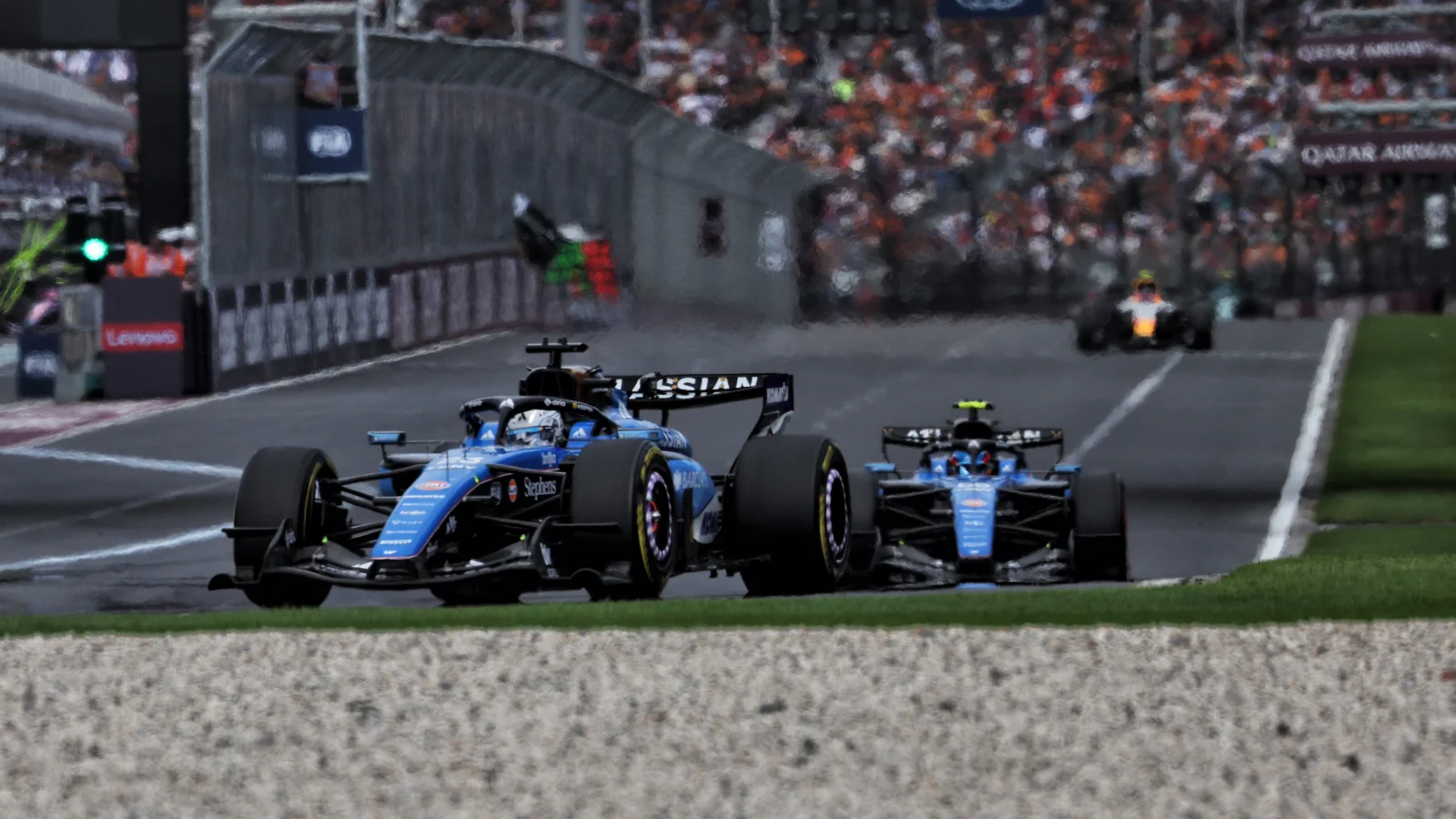
Mercedes stunned its Formula 1 rivals at the Australian Grand Prix, by appearing to extract significantly more performance from the new power unit than its customers
The opening race of F1’s new era could not have provided a better result for the British-based team. George Russell led Kimi Antonelli to the team’s first 1-2 finish since the 2024 Las Vegas GP.
It was a dominant performance from the team, who Ferrari challenged in the early stages of the race; however, an ill-timed VSC unravelled Ferrari’s race.
Whilst many tipped Mercedes to be the team to beat in 2026, many of its rivals remained shocked by the team’s performance gap.

Mercedes-powered teams such as Williams, McLaren and Alpine had a relatively major gap in performance to the works car.
Under the regulations, customers must receive identical equipment and engine modes.
However, it is up to each team to decide how their power unit is utilised, namely with their energy management systems. Whilst Mercedes has mastered its own systems, their rivals have found themselves falling behind.
Williams surprised by Mercedes’ power unit performance
Williams, in particular, struggled the entire weekend. The fellow British team ended the weekend with both cars finishing outside the points. However, James Vowles emphasised that Melbourne was a learning experience for the team to gather as much information as possible.
“What Mercedes are doing on the power unit is something that caught us off guard,’ Vowels told media, including Motorsport Week, ahead of the Australian Grand Prix
“It took a qualifying for us to really see just how off the pace we are. In that regard, that’s probably three tenths [of deficit on the engine side] – something in that ballpark.”
Vowles does not believe Mercedes is hiding any crucial information from their customers; in turn, are following the regulations of the sport.
However, the Williams Team Principal highlighted that Mercedes evidently found critical gains, which translated into positive on-track performances.
This competitive gain is not something that F1 teams typically share, leaving it up to Williams to extract as much as they can over the coming races.
“It is not an open door, as you would imagine, because that’s where the performance is found,” he said.
“So it is down to us to try and work around it.
“We have to acknowledge that we, as Williams, do not have the sophistication that they have in other technologies, and definitely that’s on us.”

Vowles remained eager to understand the engine and potentially find information that Mercedes themselves lack.
“I would say the converse is that there’s some inherent knowledge they have which we don’t. And that’s down to us to figure out.”
Thoughts from other Mercedes customers after Melbourne
McLaren’s Andrea Stella supported Vowles’ idea of a knowledge gap between Mercedes and their engine customers. Something that is contributing to the performance difference seen in Melbourne.
Whilst the team has the same engine as Mercedes, McLaren does not understand how to efficiently manage energy deployment as successfully as their engine supplier. Ultimately contributing to the team’s performance.
It was only in qualifying that teams were able to understand what their engine was truly capable of.
“Somehow it took a qualifying, it took to be all in the same condition, on track, same power unit to actually have enough of a reference to understand what is possible,” Stella told media including, Motorsport Week.
“From this point of view, being a customer team doesn’t put you certainly on the forefoot. This doesn’t have to do with the hardware. This has more to do with learning about the hardware and identifying the best way to exploit it.
“All these factors become essential. And in a way, this is a new language and also a new way of thinking.”

Meanwhile, Alpine, which shifted to using Mercedes engines for the 2026 season, struggled in their first hit out in Melbourne.
Whilst scoring a singular point through Pierre Gasly on Sunday, the team still have a major performance gap from themselves, Mercedes and even McLaren, another Mercedes customer.
Despite not having the strongest performance in Melbourne, Alpine managing director Steve Nielsen emphasised that the team are on the right learning path.
Claiming that Mercedes has done everything by “giving us (Alpine) as much assistance as they can.”
Like Williams and McLaren, Alpine faces a steep learning curve in understanding how to maximise the Mercedes power unit under the new regulations.
“All I know is the working relationship with them is very good. They’re also learning. I’m sure they’re passing the stuff on as quickly as they can to us. And we’re appreciative of it when we get it. They’ll learn. We’ll get better.”
READ MORE – Toto Wolff revives Christian Horner rivalry with F1 team bid




Discussion about this post