
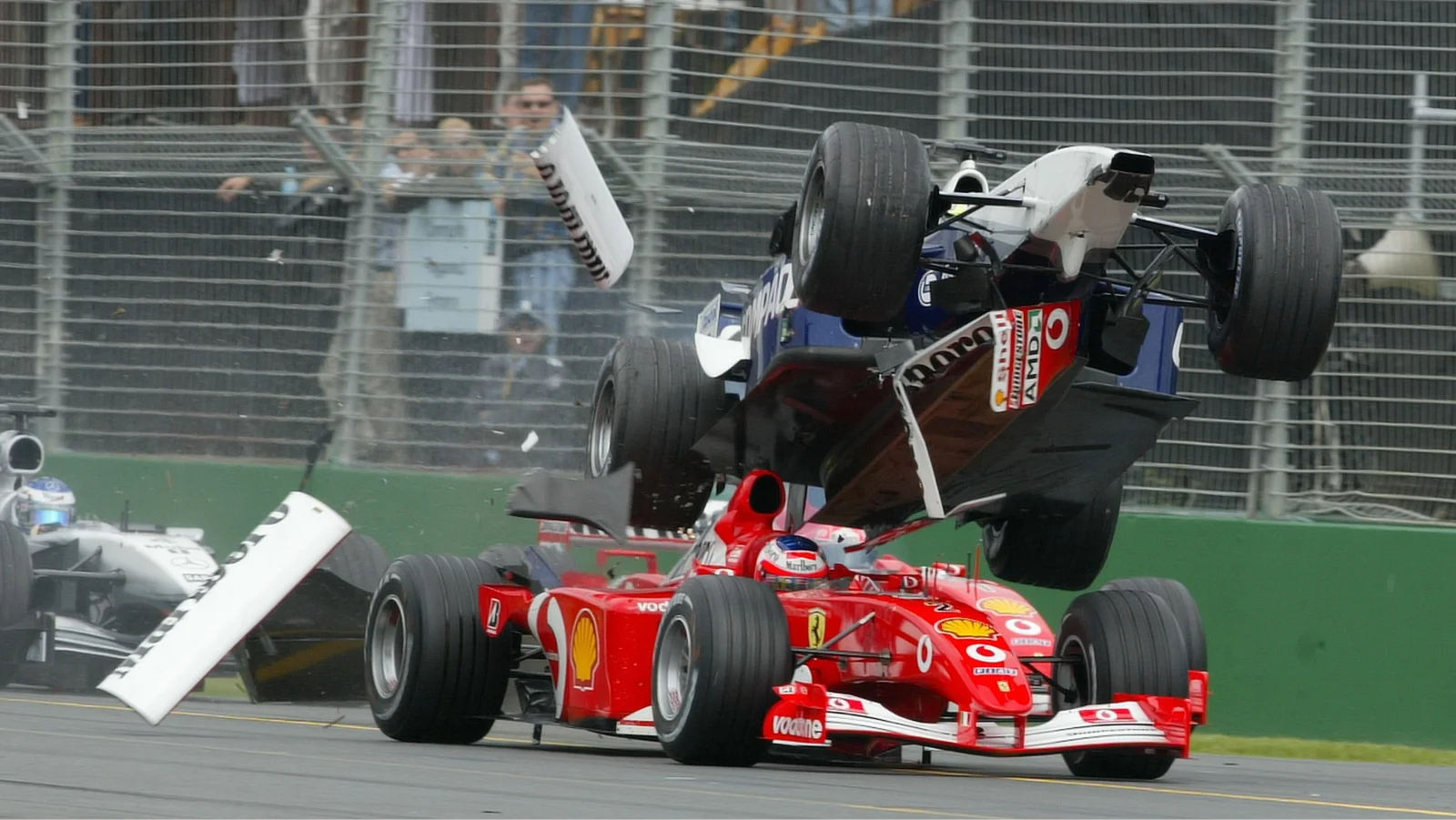
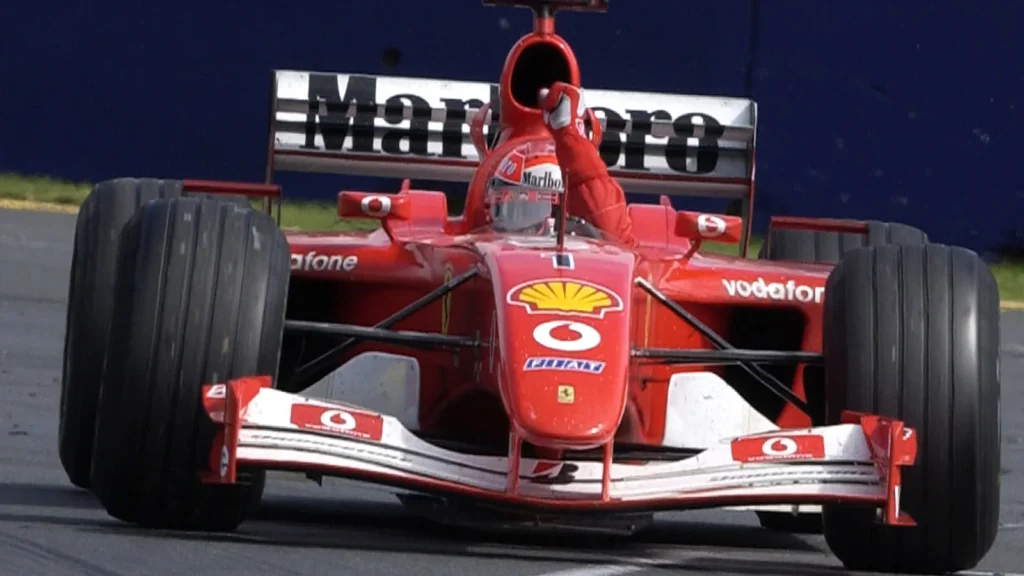
On this day [March 3] in 2002, the Formula 1 season kicked off in Melbourne, and it was Michael Schumacher who took victory, but that wasn’t the whole story.
The 11 teams arrived in Australia all raring to prove their worth in their respective new machines. Except for Ferrari, that is.
Its F2002 machine had passed all the in-house litmus tests when it came to speed, but its reliability was still under question. Given the domineering swagger of the previous car, the F2001, the Scuderia felt comfortable to arrive down under with it.
The grid might have lost the Prost team, but the eagerly-awaited debut of Toyota had finally arrived, with drivers Mika Salo and Allan McNish, the latter finally having the F1 door opened to him after years of polite knocking upon it.
And there was no reason to feel reticent about it, as the old car took pole position, via Rubens Barrichello, five thousandths ahead of Schumacher, with the nearest challenger, Michael’s brother Ralf, third, four tenths further back.
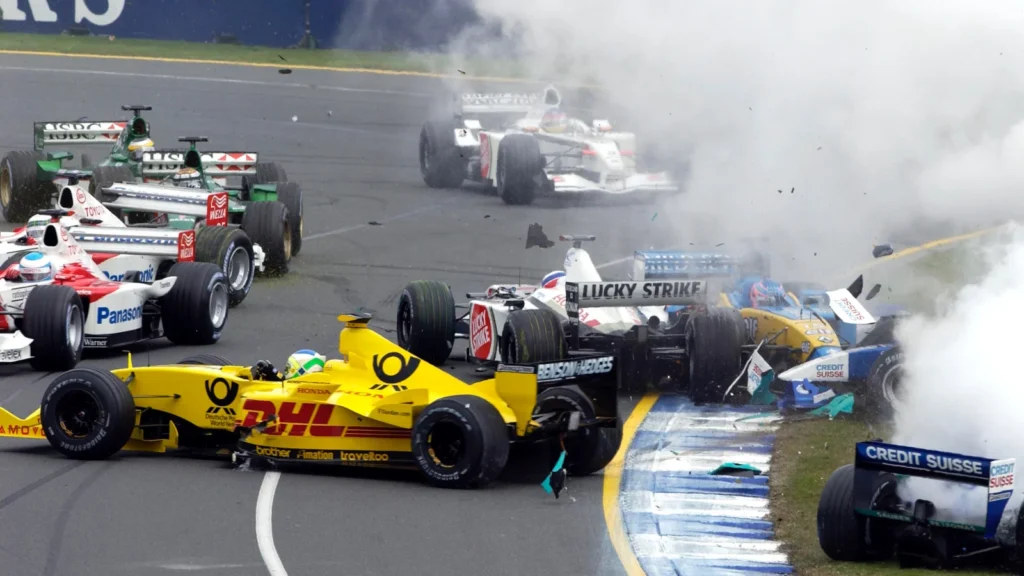
At lights out, Ralf got the jump on Michael and slotted into second behind Barrichello. But as Turn 1 approached, mayhem and chaos ensued.
Barrichello braked earlier than Ralf had expected, and the Williams launched over the top, the FW24’s [or what was left of it] pointed towards the sky like Concorde.
The chain reaction was humungous, with cars sent into the gravel and grass at the corner, with Michael taking evasive action. Incredibly, the race was not red flagged, and the Safety Car was released.
Schumacher and Montoya do battle in F1 Australian GP
With dust and debris now settled, it transpired that David Coulthard – who had qualified fourth – was leading, with Jarno Trulli second, the Italian driving for the Renault team, which was making its debut as the rebadged Benetton outfit.
Juan Pablo Montoya was third, with Michael Schumacher fourth, but the Colombian put wheels on an oil spill, letting Schumacher through.
Schumacher began bearing down on Trulli, who, under pressure from the Ferrari, slid wide on the exit of Turn 2 and clouted the barrier, sending him out, and signalling the return of the Safety Car.
It would be on track for only two laps, but when it re-entered the pit lane, Coulthard, suffering from an electrical malfunction, locked his brakes and slid onto the grass on the penultimate corner, letting Schumacher into the lead, but he would lose it immediately.
Montoya, as desperate as ever to prove he was a worthy rival to the German, made a daring move around the outside into Turn 1 to take the lead. The rest of the field, currently lead by the Jaguar of Eddie Irvine, were now being left behind.
The Williams’ lead would only be enjoyed for six laps, as Schumacher dummied Montoya at Turn 1, and after going deep to defend his position, the Ferrari streaked by around the outside on the exit of Turn 2.
And by Lap 22, Schumacher comfortably led by 11 seconds, with McLaren debutant Kimi Raikkonen, now third, despite enduring a near-50-secod pit stop for damage caused by the Turn 1 shenanigans.
Advance Australia Fair as Webber takes precious points in maiden race
With Schumacher unassailable in front, a B Plot had formed further back.
Just eight cars were remaining on the track, and with some a number of laps down, Mark Webber, making his F1 debut at his home Grand Prix for the ever-popular minnows Minardi, found himself in fifth place. However, he was being caught by the old hand Salo in the Toyota.
Aware that a disgusting number of millions between last and second-to-last in the Constructors’ Championship, Webber valiantly resisted the Finn’s advances, and with just two laps to go, Salo spun at Turn 4 as he tried to get through, sending the partisan Aussie crowd into a fit of delerium. Michael who?
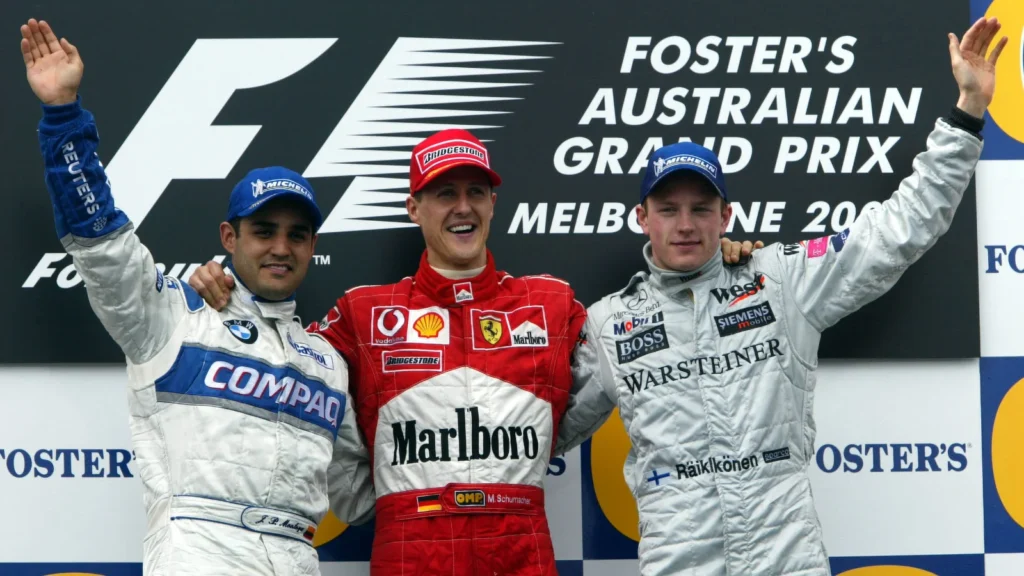
Schumacher coasted home to victory, by over 18 seconds from Montoya, an impressive enough of an achievement, but even more so given it had been in the previous year’s car.
Raikkonen took third, his first F1 podium, with Irvine fourth. Webber was able to see out the remaining miles with some comfort, and crossed the line, celebrating as if he had won the race himself. Salo recovered to claim a still-creditable debut point for Toyota.
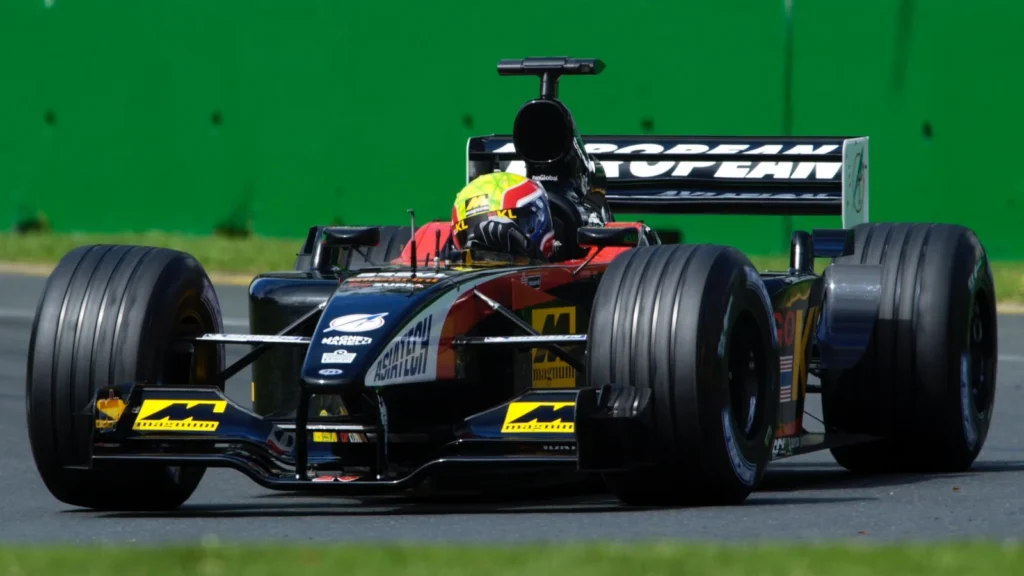
Such was the magnitude of Webber’s achivement, his initial three-race contract with Minardi was extended to the entirety of the season, and the Australian Grand Prix Corporation’s president, Ron Walker, stepped in to add a further chance to celebrate.
With Minardi’s Team Principal, Paul Stoddart, also an Australian, both he and Webber were invited by Walker onto the podium after the top three had sprayed the final dregs of their champagne to rapturous applause. It went down well with the crowd, but not the FIA, whose president, Max Mosley who imposed the event with a £50,000 fine.
Whilst the Australian Grand Prix has conjured up its fair share of drama in before and since, the 2002 iteration was a race like no other, and kick-started the season in spectacular fashion.




Discussion about this post