
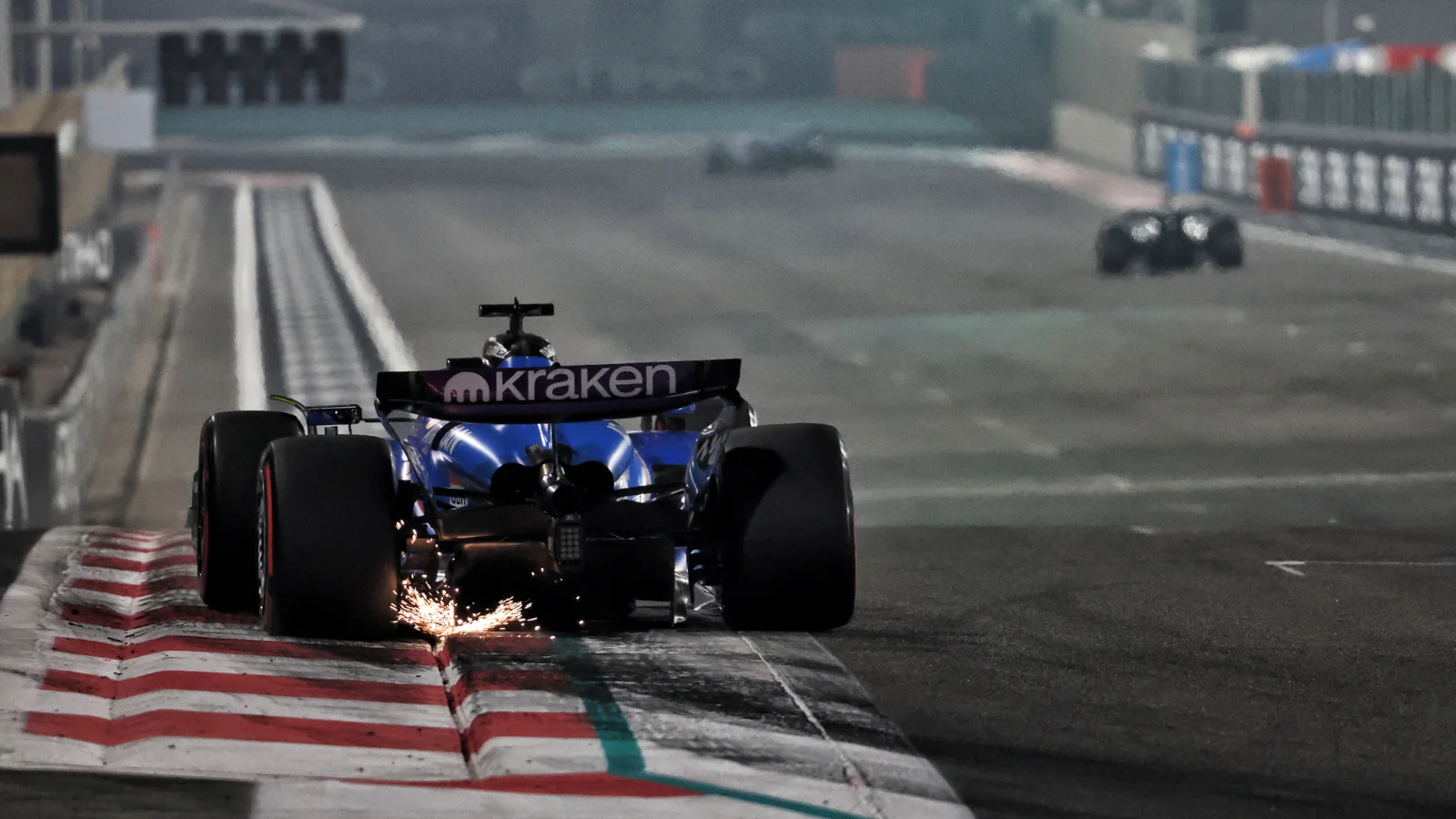
Alex Albon has questioned the FIA’s “random” post-race scrutineering methods in Formula 1, arguing that only full checks on every car can guarantee fairness.
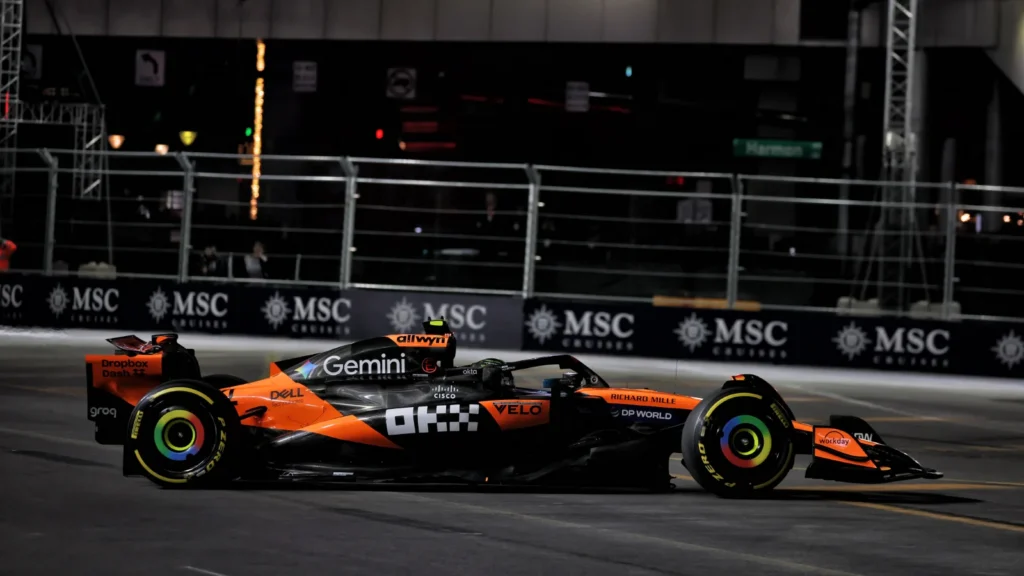
McLaren finished second and fourth at the Las Vegas Grand Prix with Lando Norris and Oscar Piastri, but both drivers were later excluded.
FIA checks found excessive wear on the skid planks of the two MCL39 cars.
Unlike the rest of the field, which were only weighed after the race, the McLarens underwent deeper inspections.

That process led FIA technical delegate Jo Bauer to refer both cars to the stewards.
McLaren later explained that the wear was caused by an “unexpected occurrence of extensive porpoising, inducing large vertical oscillations of the car”.
Meanwhile, McLaren Team Principal Andrea Stella insisted the issue was not down to an “excessive or unreasonable chase of performance”.
Norris acknowledged that teams always work at the edge of legality but stressed that this did not define McLaren’s approach at the Las Vegas Strip Circuit.
Albon sympathises with McLaren over minor rules breach
Albon, however, says pushing those limits is simply part of modern F1.
“We all have to factor in limits,” the Williams driver told media, including Motorsport Week.
“There’s a lot of lap time in these cars being a mil lower than wherever. But of course, everyone makes mistakes, and I get that bit. But, you know, these cars are incredible now.”
Albon highlighted how variables such as wind direction can quickly catch teams out.
“We are setting ride heights down to what winds you get for the next day in the race. If you get a headwind into a main straight, it completely transforms your ride height for the weekend in terms of, obviously, a few more points up with a headwind puts the car a lot lower, and you get porpoising and then you need to make adjustments to the porpoising as well and estimates.
“I think it is really tough, the regulation set. Especially on Sprint weekends or weekends where we have not much running, like Vegas.
“You have to take the safe approach. And sometimes you finish on Sunday as a team, kind of kicking yourself because you have hardly any plank wear, and you feel like you could have optimised the weekend more. But that’s just the way that these, these rule sets are.”

Albon wants changes to the selection of the cars
For Albon, though, the bigger concern lies with how cars are selected for inspection.
While all finishers are weighed, only a handful are chosen at random for further checks due to time constraints.
“I mean, we could run these things to the deck if we wanted to and have no legality issues, but then we’re all finding illegal performance,” he suggested.
“I think the main thing for me is, I don’t like that it’s random.
“I’d almost rather have 20 cars get checked every weekend and then you’d have a fair game, but it’s that randomly selected version that’s a bit tricky.
“But yeah, I mean rules are rules.”
Looking ahead to 2026 when new regulations are being introduced, Albon expects plank wear to fade as a headline issue, but not disappear entirely.
“It’ll be less of a talking point,” he said. “I think the philosophy of at least one part of the car, whether it’s the front or the rear of the car being as low as possible, generally, still applies.
“So it will be much less of a talking point, but it will still be there.”
READ MORE – How Carlos Sainz turned his debut Williams F1 season around





Discussion about this post