
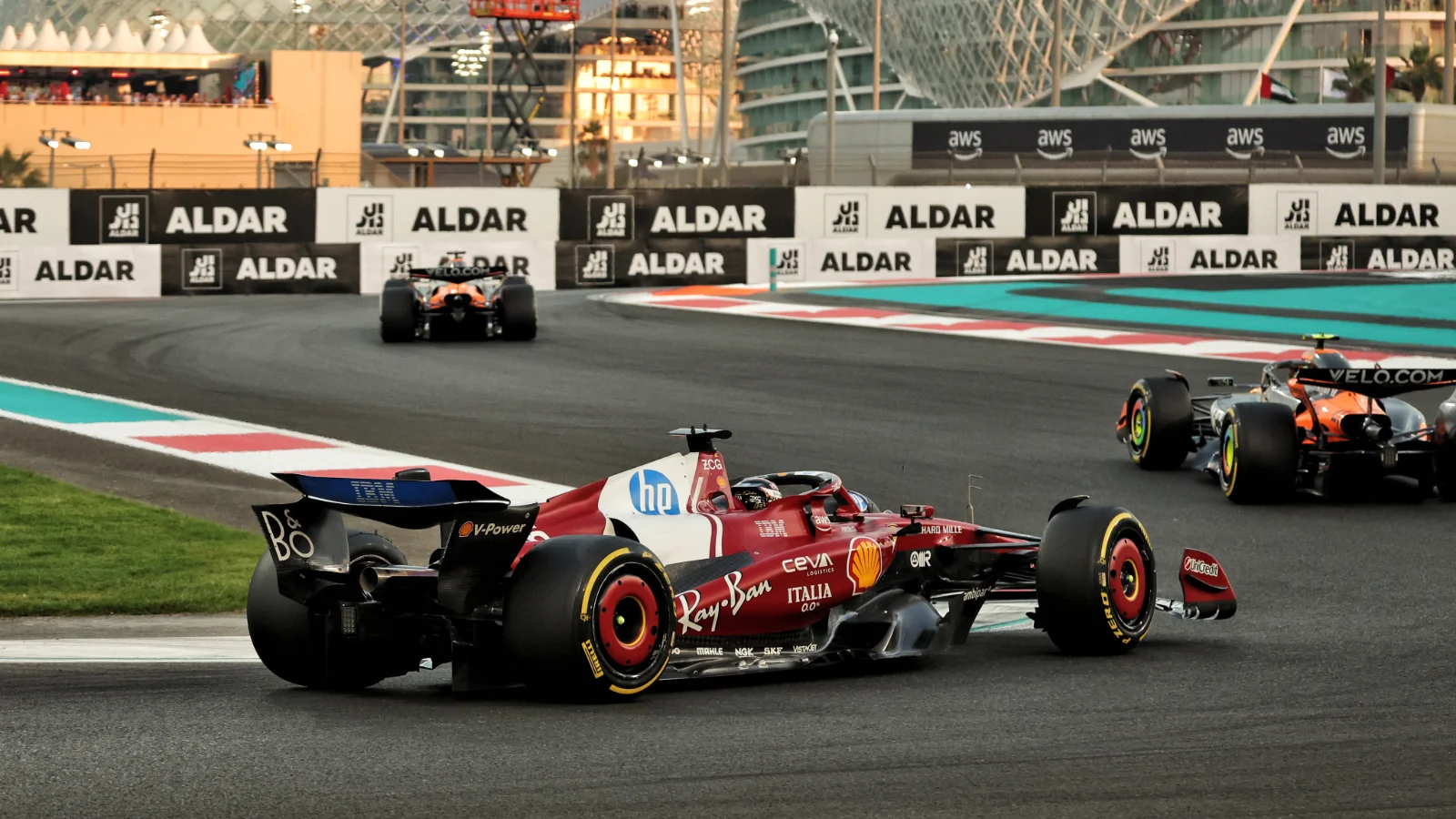
Fred Vasseur has said the ground effects regulations were good for the show but tough for the teams as Ferrari found itself on the wrong end of Formula 1‘s tight margins in 2025.
The Maranello-based squad ended the 2025 campaign in fourth, its worst result since 2020 and a mammoth 435 points behind champions McLaren.
While the season brought the promise of a stellar driver line-up in Charles Leclerc and seven-time champion Lewis Hamilton, Ferrari’s challenger, the SF-25, came out as a weak link.
Vasseur, who had insisted that the team’s decision to stop developing the SF-25 in April was not the reason for its struggles, however, conceded that the team had failed to do a comparable job against its rivals.


“Honestly, it’s difficult because the season was difficult overall, but you have to split the performance of the weekend or the performance of the season and take advantage of the team you compare [to],” he told media including Motorsport Week.
“Honestly, the season was difficult, but it was true from Day 1 in Bahrain. And then the start of the season was very difficult for us with the [double] disqualification [in China]. You are losing 25 points, you are losing six points to your direct competitors, and you are starting the season a bit on the back foot. After three or four races, McLaren was probably 100 points ahead.”
While Vassuer lamented the sluggish start Ferrari endured, he also highlighted how the teams had bunched up quite closely together in the last year of the ground effects regulations.
At the season finale in Abu Dhabi, two weeks ago, Vasseur saw Hamilton suffer a third consecutive Q1 exit – by the slimmest of margins.
“We struggled all the season with details,” he explained. “Yesterday, in Q1, we moved from P6 to P16 for even one tenth.
“You do a small mistake or you are not in the right field. You are out in Q1 and the weekend after, you are P6, P7.”
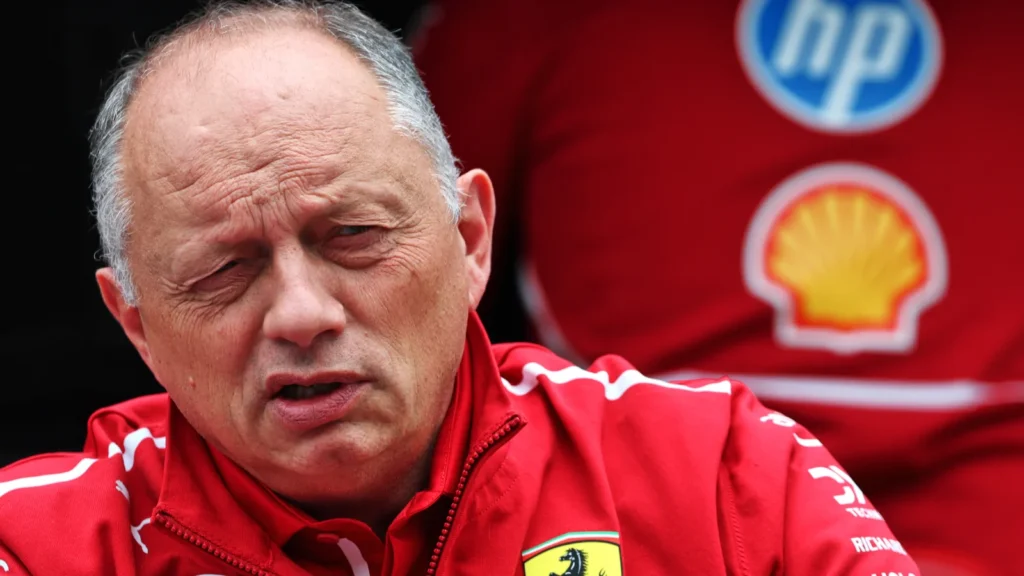
Vasseur laments ‘reality’ of Ferrari’s 2025 F1 woes
The Frenchman’s analysis gains credence when Red Bull’s Technical Director, Pierre Wache, had hinted at a similar problem of “convergence” with the current rule-set last season.
“There are a lot of things you cannot do under the current regulations,” Wache had told the Dutch branch of Motorsport.
“Everyone is working in the same direction and that’s why you see all the cars converging towards the same solution.”
Vasseur hinted at a similar trend, augmented by how much its rivals had developed, that turned out to be an arch nemesis for the iconic Italian marque in 2025.
“This is the reality of the F1. I think today, it’s nice for the show, it’s nice for the sport. Sometimes it’s not for the teams,” he added.
“But overall, I think it’s an important advantage. It’s true that weekend after weekend, you have this risk to be out in Q1. You have the convergence of performance.
“I was speaking this morning with one of you. I don’t know if it’s coming from the allocation of wind tunnels. You know that the last teams are doing more. It’s probably that you have this catch-up.”
Looking forward to 2026, however, Vasseur believes a clean slate would provide more breathing space for teams. That said, he did commend what the sport had achieved through the current ruleset.
“Probably, next year, we’ll start with a bigger gap also,” he concluded.
“This convergence of performance over the year with more allocation for this mountain. It was the target of the F1. Honestly, it was well-managed.”
READ MORE – How Lewis Hamilton inspired Arvid Lindblad’s cheeky F1 prediction to Lando Norris








Discussion about this post