
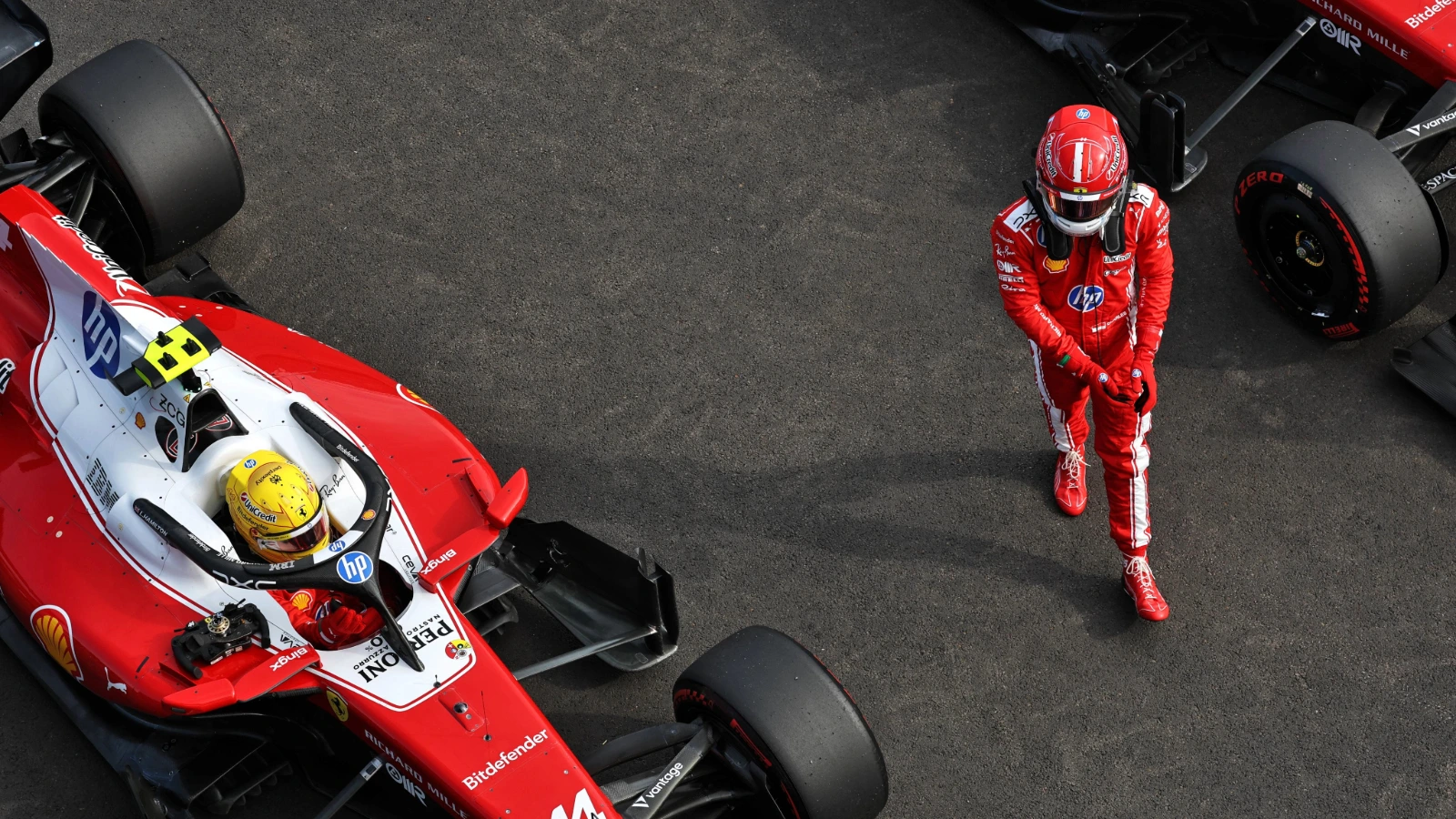
Formula 1 has 11 teams, each with over a thousand employees, covering everything from engineering and PR to management and more. Every year, that team works together to create the best car so their two drivers can fight for the Constructors’ Championship title, a culmination of the team effort.
Yet there’s another side of the coin. Of course, each F1 driver is racing for the team; every driver would love to win the Constructors’ Title and celebrate the hard work paying off. However, they also covet the Drivers’ title; many see it as more valuable. It’s a chance to write their names into F1 history, joining the handful of drivers who can say they are a World Champion. Two drivers can’t win the title, leaving teammates fighting tooth and nail for victory since the sport’s inception.
The Mexico City Grand Prix weekend reignited the discussion of duty to the team versus the battle to win. Should fighting your teammate come with extra caution? How far is too far, and most importantly, is Ferrari bigger than any driver?


Team support vs driver support
As the F1 fan base grows and evolves, you find a wide variety of fan bases within the sport. Of course, you have your fans who are team-focused. It does not matter who drives for them; they are a Ferrari, McLaren or Red Bull fan first, with the driver ultimately coming second.
More common, I’d argue, is the driver-first fan. The lines sometimes bleed between driver and team fans when the driver has spent their entire career at the same place. Charles Leclerc and Ferrari, Max Verstappen and Red Bull or Lando Norris and McLaren are prime examples. Fans of these drivers may say they’re a fan of both the team and driver, but only occasions like Lewis Hamilton leaving Mercedes after decades show that, more often than not, the driver comes first.
This isn’t a surprising revelation. Drivers are the ones the fans see, connect to, win and lose with. Though, of course, the team is a massive part of this, the team is a larger, less personal entity. A single driver is someone fans can connect with on a personal level. Social media has only amplified this; Norris’ streaming on Twitch and YouTube has made fans feel like he’s their friend. Therefore, connected to them in a way they cannot be with McLaren. If the day came that Norris left papaya in search of another team, no doubt the majority of the fanbase would follow.
There’s also a broader issue: the team itself is divided. There are two sides of the garage: a separate team for each car, a separate race engineer. Though they work toward the same overarching goals as a team, they are just as much individual.
Team orders and team expectations
Whether you think drivers should put the team or their own championship battle first, the sport has some widely established rules. Not official, but usually followed.
The top ‘rule’ is: If a championship is on the line, drivers are expected to play the team game.
Depending on the title, the rules change. If it’s a Constructors title, both drivers should always try to maximise their results, even minimising fighting each other if it puts results at risk. If your teammate is leading the race and you think you could overtake, either do so carefully and without backing you both up into whoever is running third, or accept second and take a double podium for the team.
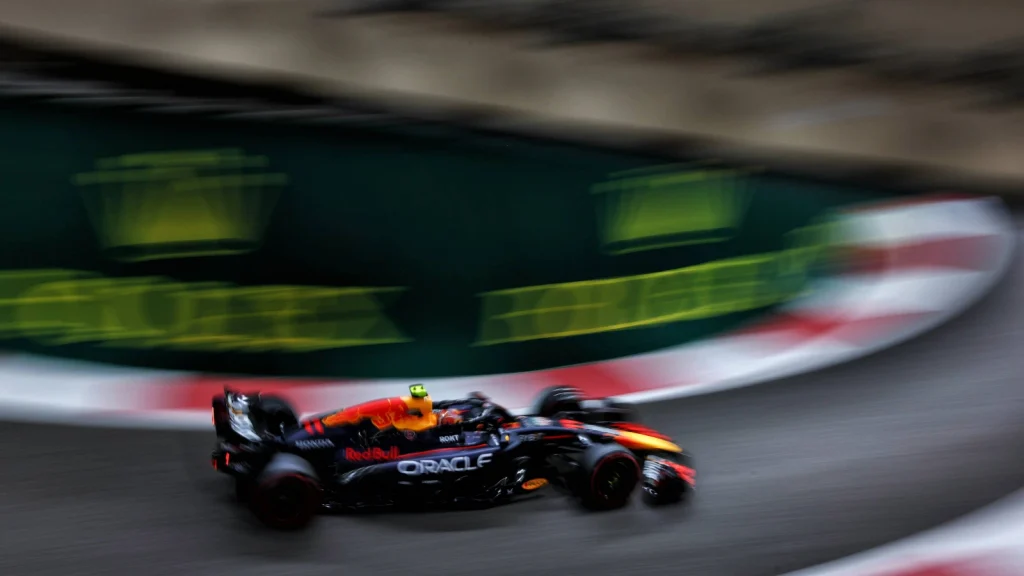
For a Driver’s title, things become more sacrificial. Sergio Perez’ 2021 season is often touted as the best teammate performance. Sharing the responsibility for Verstappen’s maiden title. Perez role was clear from early on in the season: do whatever you can (within the rules) to help Verstappen. This earned him the nickname of Minister of Defence after he held Lewis Hamilton behind him and cost the Seven-time world champion eight seconds in his battle with the Dutchman in Abu Dhabi.
Perez wasn’t focused on his own result; instead, he played the team game and was thanked accordingly.
This dynamic comes from the clear line between first and second driver. When a team adopts this choice of dynamic, life becomes a lot easier. Priority is always clear, and strategy decisions are made much more easily. Unfortunately, teams rarely make things that easy. Because why would you choose to have a first and second driver when you could have two first drivers? What is better than one driver capable of competing and winning a championship title? Two.
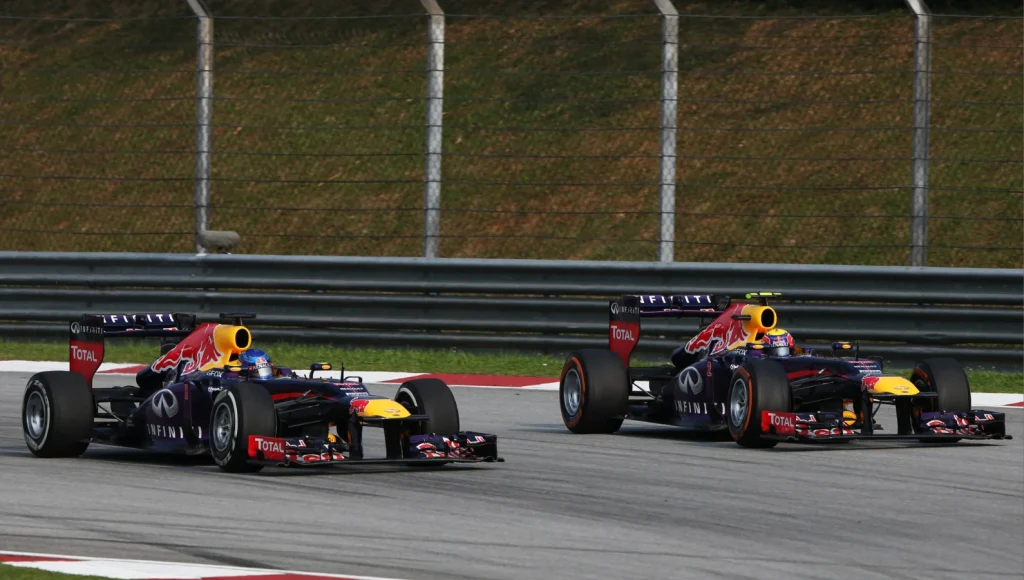
‘Brocedes’, ‘Multi-21’, and ‘Papaya Rules’ are just three examples of times when having two first drivers has led to butting heads, teammate crashes, and volatile media appearances. There is no shortage of examples.
By having two drivers capable of winning a title, you naturally double your chances. However, without rules or terms of engagement, you risk Spain 2016, where Lewis Hamilton and Nico Rosberg, both fighting for the F1 Driver’s title with Mercedes, collided on the opening lap. Or 2016 Austria, or Spa.
When both drivers are neck and neck, it becomes harder to control. Not only can a team not favour one or the other, but how are you supposed to ask a driver fighting for WDC not to try to win? You can’t. Or when you do, Sebastian Vettel ignores you and goes for the win anyway, regardless of ‘Multi-21’.
Drivers who aren’t both fighting for a title are equally as hard to control. If you have treated both drivers as first drivers, why should one be expected to act as a second driver regardless of the championship? Every driver wants to win. If that opportunity presents itself, are they supposed to back off just because their teammate is ahead?
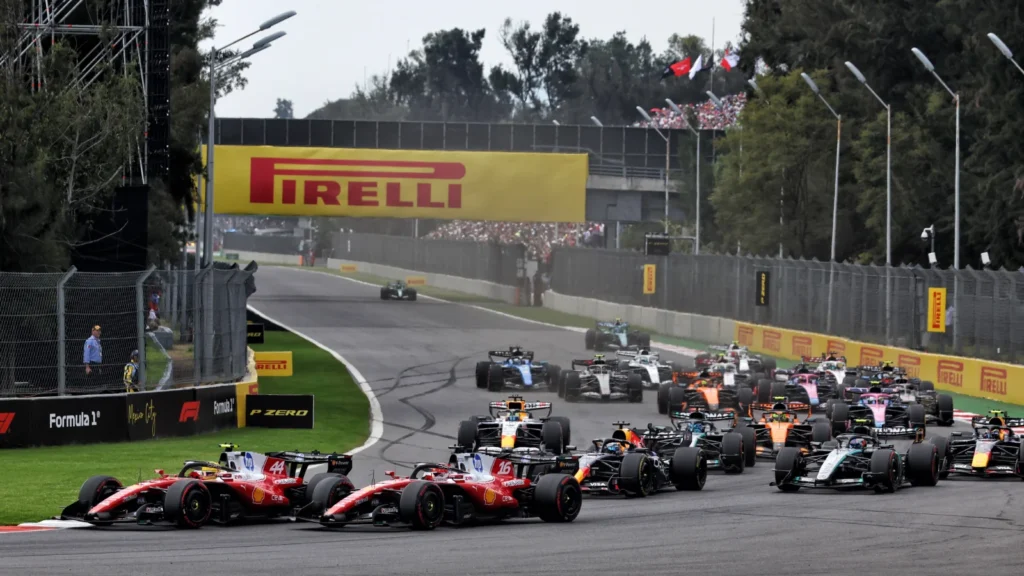
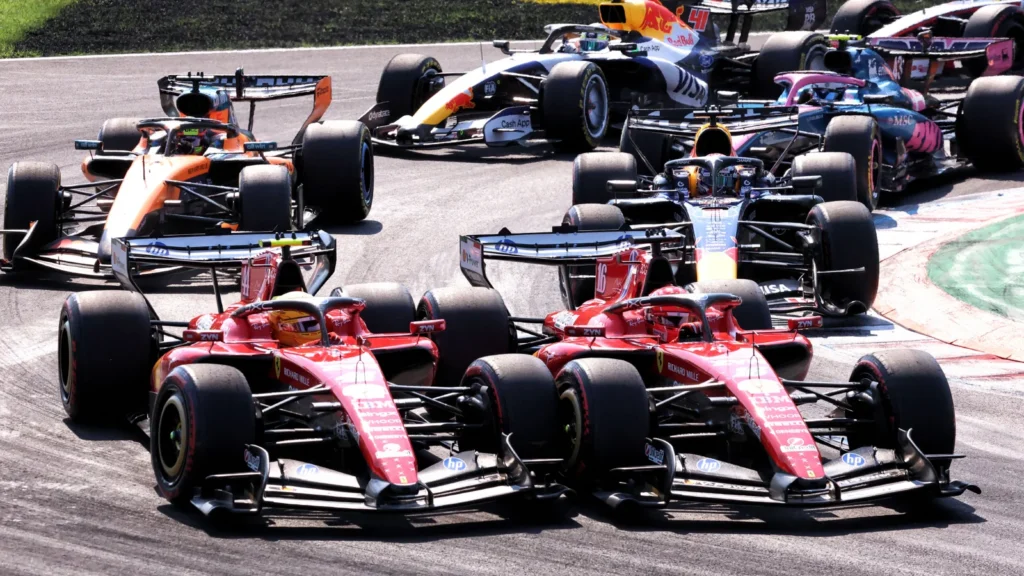
Looking at Mexico, Leclerc and Hamilton had no title on the line. Ferrari sits over 100 points behind Mercedes in the Constructors’ title, and Antonelli was about to wrap up the Drivers’ title. So why should one of them be expected to sit behind the other when a chance to win is on the line?
Mexico is increasingly peculiar, as the incident itself was not that significant. Both drivers broke late. Leclerc cut the corner and picked up a penalty, but the duo did not collide. Leclerc likely would’ve given the position back, but couldn’t because Hamilton had already been overtaken. The Monegasque served his penalty and lost the lead because of it.
The argument is that one driver should give up his fight for the win to secure a team win. At the time, how could Leclerc have known Verstappen would beat Hamilton? He couldn’t. Instead, he saw an opportunity to take the lead of a race and took it. Not the first driver to, and certainly not the last.
When are drivers allowed to be selfish?
Drivers, World Champions or not, have a complicated relationship with the media and how they’re perceived. There’s always a feeling that they can never do it right.
Time also changes people’s views. Very few world champions are beloved while they’re winning. Verstappen was labelled as aggressive, though now people praise his no-nonsense attitude. Hamilton’s championships were seen as boring because of Mercedes’ dominance, yet people now appreciate the lead he built as time has passed. When drivers are confident or outspoken before winning a title, they’re viewed as arrogant, but over time, they’re praised for how they fought for each win.
As a driver, you’re dammed if you do, dammed if you don’t. The only perk is if you win a championship, you always have that as a rebuttal.
For years, Leclerc has been criticised for not standing up to Ferrari when they offered him a failing strategy, team orders, slow pit stops or a slew of criticisable actions. For not making the call himself and taking charge of his races. In Mexico, you could argue he was taking charge, seeing a win on the horizon. Yet he finds himself under fire.
Is it just because Verstappen won the race that Leclerc was criticised? If the Monegasque had held the lead, would the move have been worth it? Should drivers only make decisions on track if the result is assured?
Or does it come down to the Ferrari of it all?
Ferrari is bigger than any driver
Will Buxton once claimed that there are two religions in Italy: Catholicism and Ferrari. That sentiment isn’t just true; it’s ingrained not only in the minds of Italians but in F1 itself.
Ferrari has been in F1 since its inception. They are the most successful team in the sport’s history. It has seen countless of the greats in the sport don a red racing suit and race under its banner. Winning is one thing; winning for Ferrari is another entirely.
The prancing horses, despite their reputation and countenance, have not won a title in nearly two decades. Vettel tried to follow in the footsteps of his hero, Michael Schumacher, returning the team to glory, but was met with the ultimate challenge of trying to change an institution, written into F1 itself.
Ferrari has rules and expectations of their drivers. Number one: no driver is above the team. Ferrari results don’t just impact the team and the people working for the team’s goals, but they impact the Tifosi, the fiercely loyal and dedicated fanbase, the sponsors, the shareholders.
Number two: Never criticise Ferrari to the media. The team deals with everything internally; you can criticise the organisation but keep it to private meetings. Leclerc got used to this quickly, becoming a master at media-trained answers during the disaster of 2022.
That’s why Vasseur was so frustrated after Mexico, airing what he perceived as disrespect from both sides. Leclerc endangered the team’s result, and Hamilton endangered the team’s reputation. In Ferrari, neither is acceptable.
The Monegasque is no stranger to the dynamic, spending all but one year of his career with the team. However, Hamilton has won seven titles, none with Ferrari. His arrival was seen as historic for both parties; it boosted the team’s stock and was widely praised. However, Ferrari will no doubt remind their drivers that no matter how many titles they win, or podiums they achieve, one day they will retire. Ferrari will go on.
But will Ferrari ever win a championship without drivers who aren’t afraid to criticise, or make a decision that might upset a teammate or the team itself?









Discussion about this post