
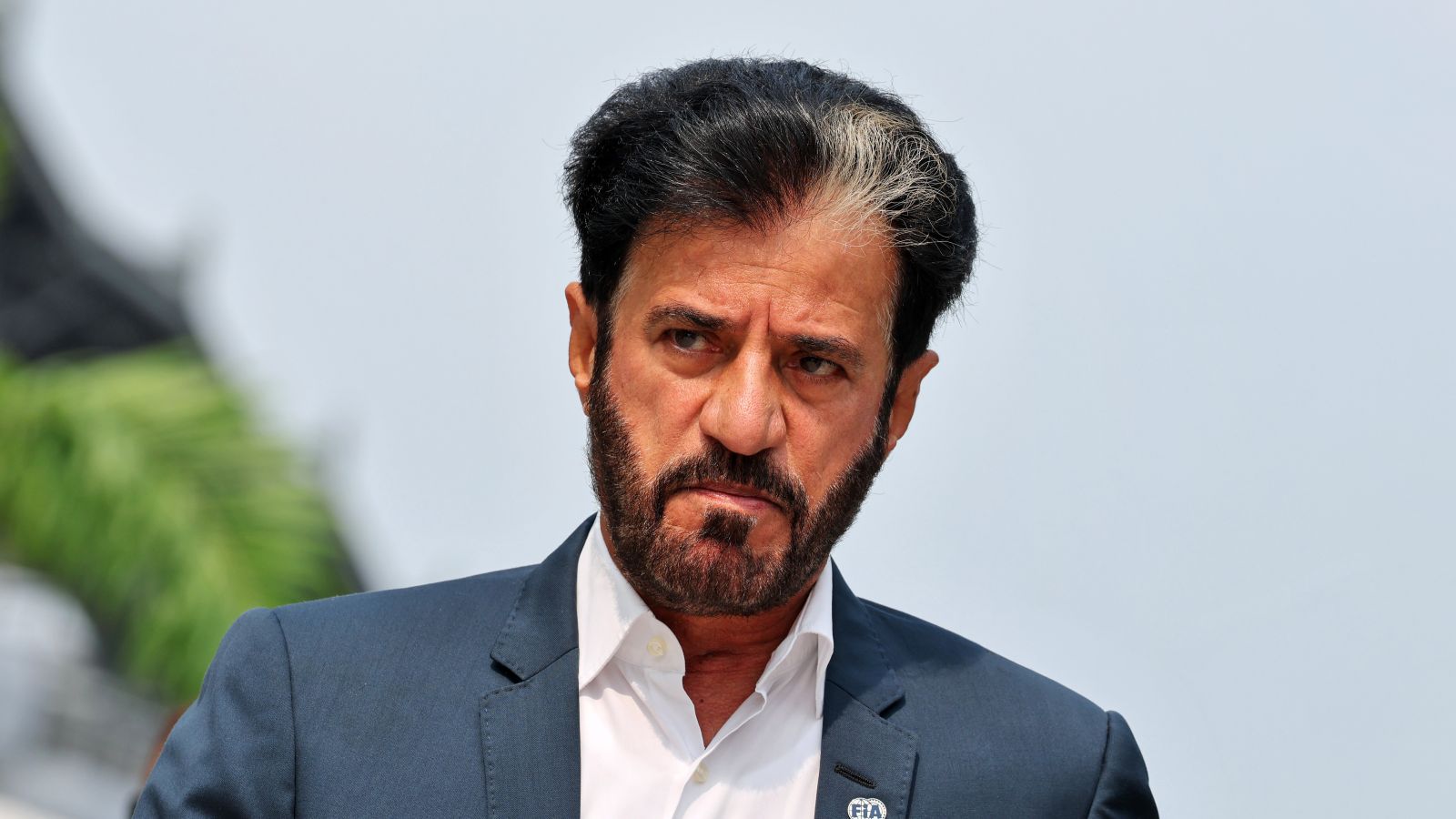
FIA President Mohammed Ben Sulayem wants to bring back V8 engines and their iconic engine sound a year earlier than scheduled to Formula 1, but he needs manufacturer backing to fast-track the 2030 shift.
Just a few months after the introduction of Formula 1’s current power unit regulations, the FIA is already planning its next engine overhaul.
The existing rules have faced strong criticism from both drivers and fans, prompting ongoing discussions about the sport’s next engine cycle. While rumours originally pointed to 2031 for a return to V8 engines, the FIA now aims to bring them and their iconic sound back a year earlier, in 2030.
Since the introduction of the new regulations, drivers have had to adapt their driving style significantly to manage electrical deployment, which now plays a central role in wheel-to-wheel racing.


While the split has produced a high volume of overtaking, critics argue the racing feel has become overly artificial.
Following backlash over the initial 50/50 electric-to-thermal power split, the FIA had already agreed to adjust the hybrid ratio to 58/42 in 2027, followed by 60/40 in 2028.
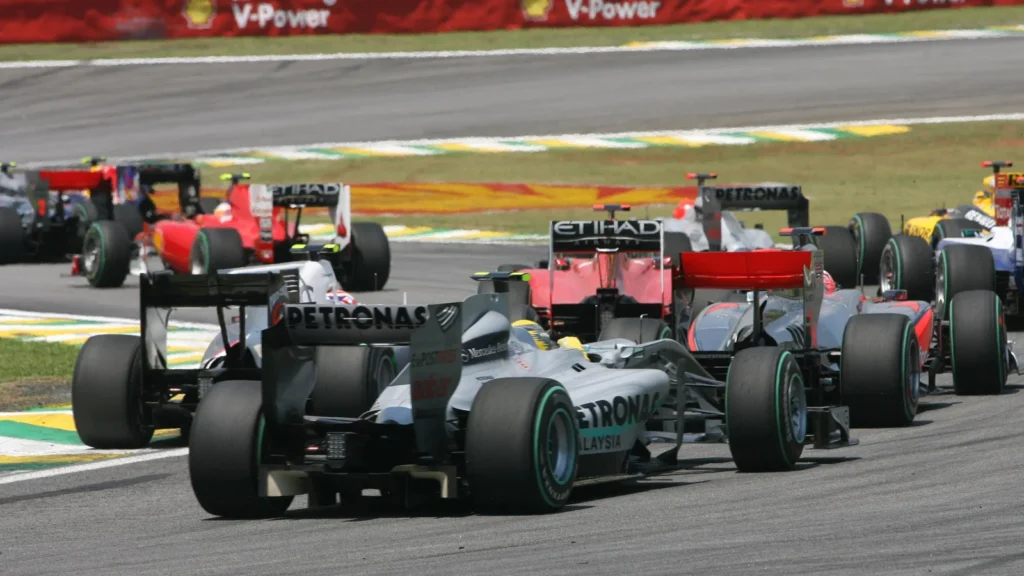
FIA targets 2030 return for F1 V8 engines
Speaking on the sidelines of the official announcement of the Rwandan Grand Prix, Ben Sulayem promised that “it will be agreed, because then there will not be a V8, maybe a V16 if they don’t take a V8, and they know that,” he noted.
For the proposal to go ahead prior to 2031, the FIA president must secure the backing of at least four of the six power unit manufacturers.
“The consultation has been a lot. The papers are with the teams. Teams are reading them. Team principals, PUMs, power unit manufacturers. We consulted a driver about it.”
The Emirati noted that official updates could be expected soon. “In a few months, hopefully,” he said. “Of course, you push the teams and the PUMs to come back to you. We will wait for them to respond.”
Timing, however, is critical. The current engine formula took three years to develop prior to its introduction. This means that any new regulations must be ratified shortly if a 2030 target is to be met.
Towards cheaper, smaller, lighter F1 cars
Beyond addressing complaints about artificial racing dynamics under the current hybrid split, Ben Sulayem is aiming for simpler, lighter, and cheaper cars. This continues the trend started by removing the complex MGU-H from the regulations.
“When you make it simpler, and then you make it half the price, the R&D doesn’t just go down by half. But the simplicity that comes with it means production can take less time.
“So, you know, there are materials also… the block is only for reliability. You go up, and then it’s the power.
“That’s where you have to limit things. Limiting the power means you have to police it so that nobody can use certain materials. Certain materials can be very expensive if you’re trying to get those last few horsepower.”
“But lighter also means a problem for them because then some teams will have to pay more.
“We have the cost cap being controlled, so it’s not just a case of going lighter and lighter. No. You need to go smaller, of course.
“I was at Retromobile this year in France, and there were two cars there. Then I was also at Le Mans, where I saw the old car and the current car, which is huge compared to the old one.
“When you think about it, every year, or every three years of that cycle, it gets bigger. You don’t remember what was there 15 or 20 years ago. But when you put them together, you see how big the car is now.”
He emphasised that engine simplification will directly benefit manufacturers in production time and costs.
“The current engine is very complex. I’m sorry, you had the MGU-H, then it went to the MGU-K. You have a big battery, and it was the demand of the teams and the PUMs.
“Here, when I say simpler, it will definitely be simpler.
“You can go and ask an engine builder, and they will tell you how long it takes to build that type of engine.
“I mean, if they come back, they will not approve only the technical data. They will also approve the time required. They will know how much time it will take.
“And, you know, I am very proud of our team in single-seaters and the amount of work they have done. Believe me, it’s a lot of work. They will not give the teams something that is simply not doable. It is doable for them.”
Bringing back the iconic V8 roar
Ultimately, the proposed shift aims to bring back an element many fans feel has been missing since the end of the V8 era in 2013: the noise.
“And then the sound will be there. Then a very light car, but you have to be very careful about how light you can let it be.”
If ratified, the move would cap the current power unit regulations at a four-season lifespan before F1 transitions into its next engine era.
READ MORE: Max Verstappen issues clear message on F1 racing in Middle East









Discussion about this post