
With Formula 1‘s 10-year deal to race in Rwanda confirmed, Motorsport Week looks back at the sport’s last visit to the continent of Africa.
In 1993, Kyalami’s rennovated and redesigned layout held its second and final Grand Prix, and like 1992, it staged the opening round.
Prior to 1992, the last race staged at Kyalami had been 1985, and it wasn’t just the landscape of the circuit that had changed.
Apartheid finally forced the race’s removal from the calendar, but with now the political situation far different, the popular was finally able to return, albeit with a radical facelift.
![Nigel Mansell won the last Apartheid-era Kyalami race in 1985 [pictured] and the first of the new era in 1992, but would not be there to defend his title in 1993](https://www.motorsportweek.com/wp-content/uploads/2026/10/Nigel-Mansell-South-Africa-F1-1985-1024x577.webp)
1. Mansell out, Prost in
Nigel Mansell won that race final race, and then won the ’92 hosting, too. But with his acrimonious split from Williams seeing him now taking his skills to IndyCar, there would be no #1 adorning his Williams, or indeed any other car.
This meant the unique reality of the British giants running #0 and #2 – the latter taken by the man who was, in part, responsible for Mansell’s departure: Alain Prost.
The three-time World Champion was back after a year’s sabbatical, having been unceremoniously axed by Ferrari for describing the handling of its 1991 machine similar to a truck. A test with Ligier for ’92 eventually came to nothing, and the long game paid off, as a Williams drive would give him the ultimate chance of a fourth title.
But the move did not come without controversy, as the union with Williams did not trigger only Mansell. It triggered Ayrton Senna, too.
2. Senna stays. Just
Senna had been well aware of Williams’ growing power from as far back as the second half of his victorious 1991 season, and Mansell’s barnstorming dominance in ’92 confirmed that. Senna offered to drive for them for free, but Prost’s contract included a veto on Senna being his teammate.
This led to Senna calling him a “coward” after the Portuguese Grand Prix a few months before, and, like Mansell, expressed an interest in IndyCar. Despite going as far as testing a Penske, Senna decided against it, and manoeuvred his way back into McLaren, despite having signed both Michael Andretti and Mika Hakkinen.
Having made the opposite move and arrived from America, Andretti would not be ousted, so Hakkinen was forced to settle for a test driver role, with Senna re-signing on a race-by-race clause.
3. A Swiss squad pops out of the F1 cuckoo clock
After successes in various motorsport, particularly in sportscars with Mercedes, Swiss squad Sauber took its place on the grid for the first time, backed by Mercedes-backed Ilmor engines.
Supposedly, a contract with one of its previous sportscar drivers – one Michael Schumacher – stipulated he would drive for them should an F1 entry ever materialise. With the German settled on the grid with Benetton, the contract was bought out, and instead, JJ Lehto and Karl Wendlinger were hired. Incredibly, Lehto qualified sixth, with Wendlinger 10th.
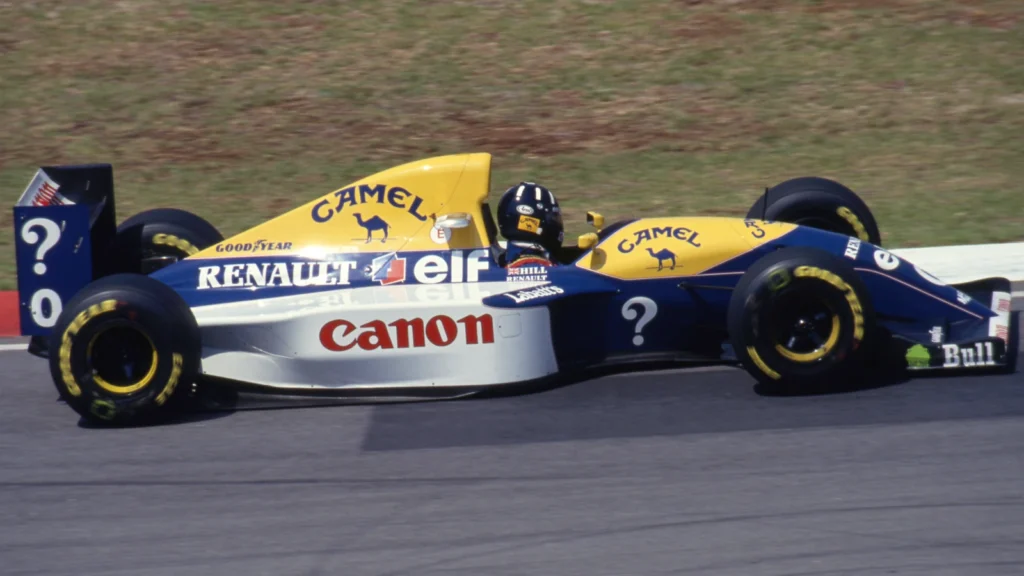
4. The ‘zero’ who would become the ‘hero’
A South African – Jody Scheckter – was ironically the last driver in F1 to race with a ‘zero’ on his car. It would now be used by Damon Hill, Williams’ trusty test driver whose work ethic and speed earned him the promotion to replace Mansell, despite competition from Hakkinen and the experienced Martin Brundle.
Hill would help make up a talented gaggle of five British drivers on the grid that season. Brundle would partner Mark Blundell at Ligier, with Johnny Herbert retained by Lotus, and the quartet would be joined by Derek Warwick, returning to F1 after a two-season gap, and fresh from a Le Mans 24 Hours victory the year before.
Despite the FW15C having all the attributes that made Mansell’s ’92 so dominant, Hill qualified fourth – over a second off of Prost.
5. F1 ’93 is go!
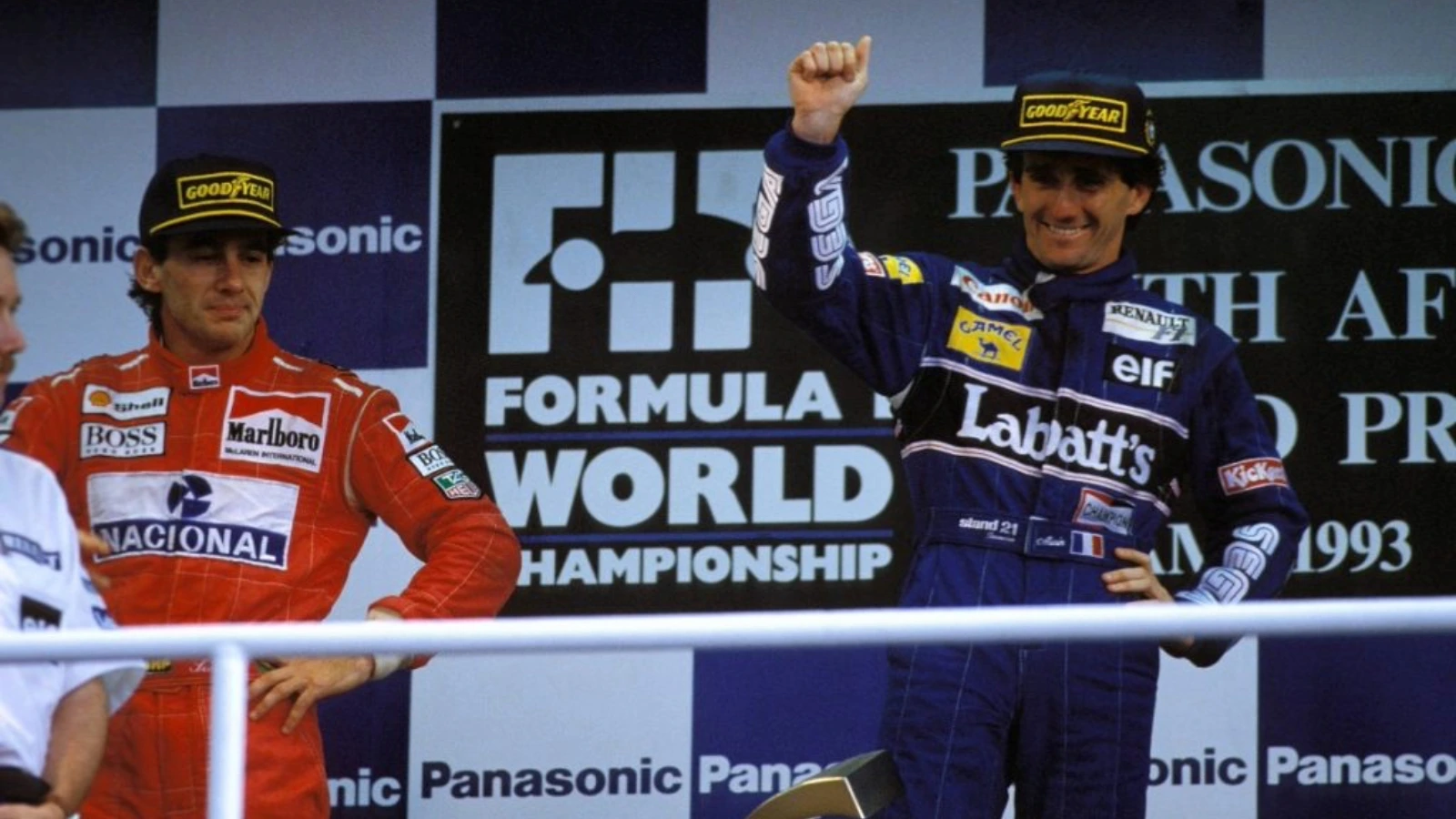
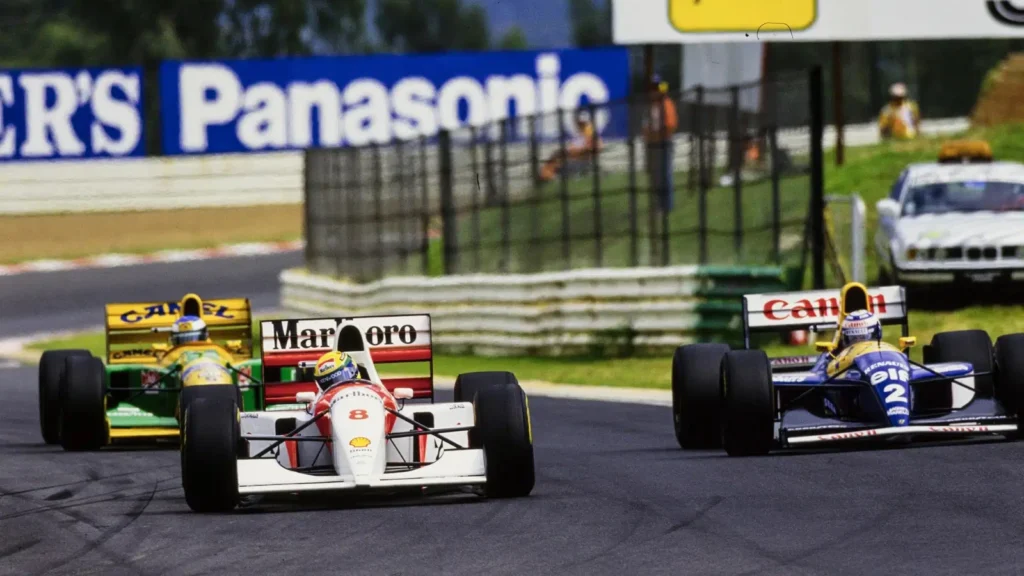
The race got underway with Prost and Senna renewing their old rivalry by starting on the front row. Senna got the jump on Prost and led into Turn 1.
Hill, having had just a handful of races with the moribund Brabham team the year before, found himself in more familiar territory – the wrong end of the field – after spinning on the exit of Turn 2. He would start working his way through the field but was punted off by Alex Zanardi at the final corner on Lap 16.
The spin from Hill left Prost taking avoiding action and dropping to second behind Schumacher. He would soon dispatch the Benetton, and went off in pursuit of Senna. The McLaren, as to be expected, defended valiantly, but Prost finally made his way through on Lap 25.
Schumacher was keen to make a move on Senna, too, but 15 laps later, the two touched and Schumacher came off the worst – spinning into retirement.
Riccardo Patrese, who had also left Williams and was now teammates with Schumacher, grabbed third as a result but he too would soon spin out, leaving Blundell in third.
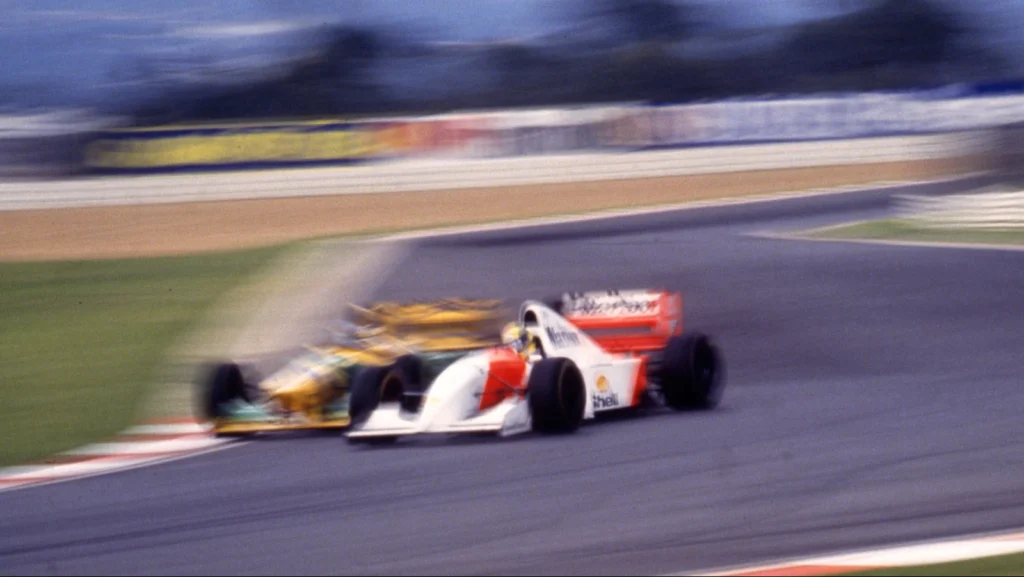
Rain began to pour heavily in the closing laps, which undid an almost-perfect return for Warwick, whose Footwork aquaplaned into the gravel on the final lap from sixth place.
Prost tiptoed round the final laps to secure a dream comeback, finishing almost one minute and 20 seconds ahead of Senna in second, with Blundell third.
Christian Fittipaldi was an impressive fourth for Minardi, with Sauber’s first-ever race yielding a points-scoring fifth, with Gerhard Berger classified sixth.
READ MORE – Landmark 10-year agreement reintroduces Africa to F1




Discussion about this post