
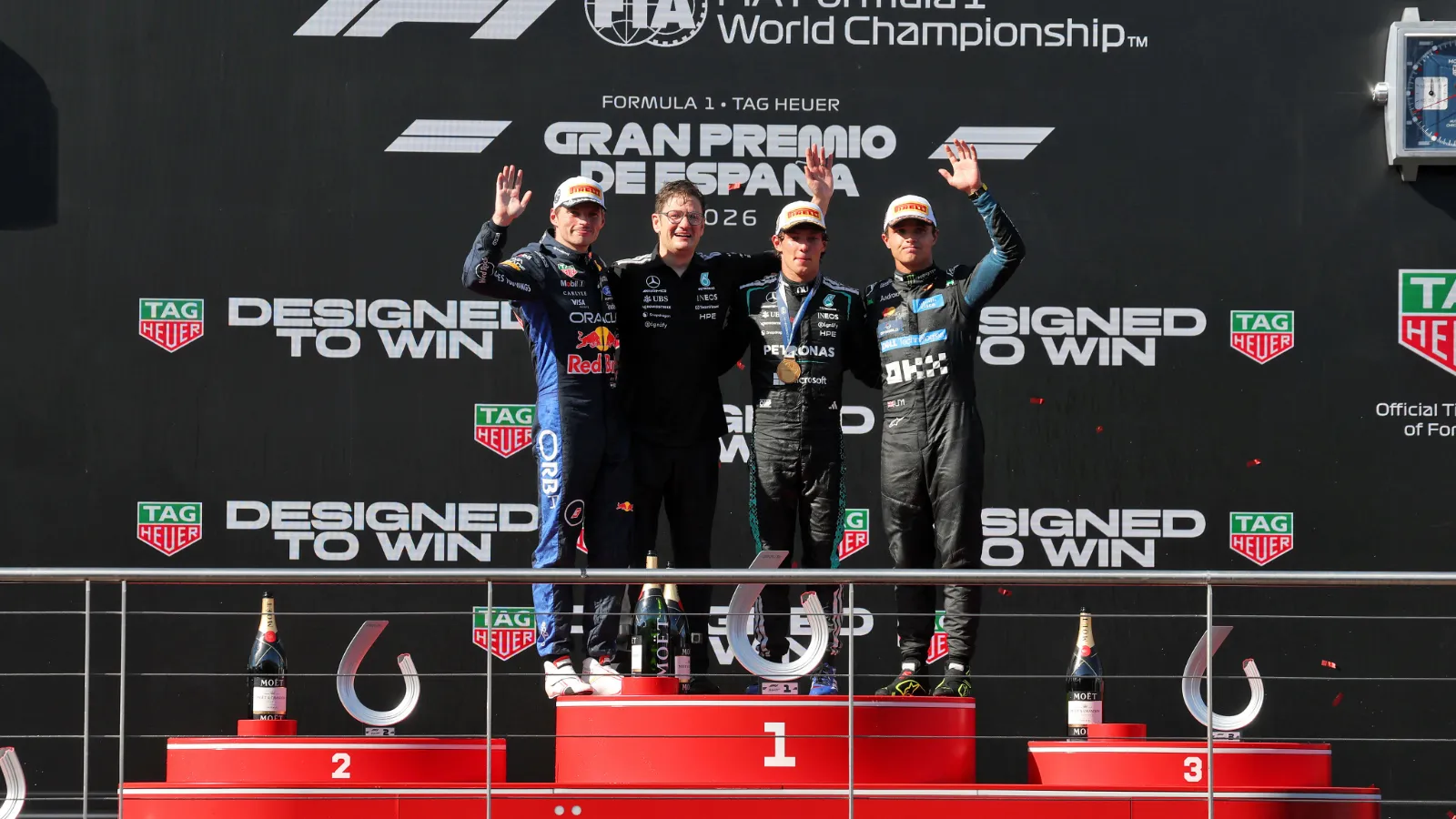
The Madring’s debut hosting of the Formula 1 Spanish Grand Prix might have been nothing more than an email. Although 57 laps were completed, the race was settled within seconds on Lap 14, and almost everything before and after that point was, as most drivers admitted, filler.
The hotly-anticipated new track, a street hybrid around the IFEMA convention centre, was met with criticism by many drivers and fans, with a collective finger pointed at the lack of overtaking.
The defense
As for what succeeded, the atmosphere was there, with strong ticket sales and fan zones that drew large crowds.
Carlos Sainz Jr., who was racing in front of his home crowd in Madrid for the first time in his career, described it as “an amazing weekend” and said the support from the fans was “second to none”.
However, since Sainz also has the title of official ambassador of Madring, some caution is appropriate. His assessment of the racing was not very positive: after a collision on the first lap which left him struggling for 16th place all afternoon, he simply stated, to media, including Motorsport Week, that this was “probably the only thing that the track needs at the moment, is one overtaking” and that he hopes this is “the last year I spend here in Madrid fighting for P16.”
As many feared, Madrid followed Monaco’s lead by making qualifying the main event of the weekend. Lando Norris secured pole position with what he called ‘the lap of your life’. The strongest point made by Madrid’s supporters was Norris’ qualifying lap: as a driving challenge, this circuit is tough — it can be seen that Norris navigated the banked corners and skimmed the walls on a single fast lap.
However, it soon became clear that the issue was in translating that challenge for a race.
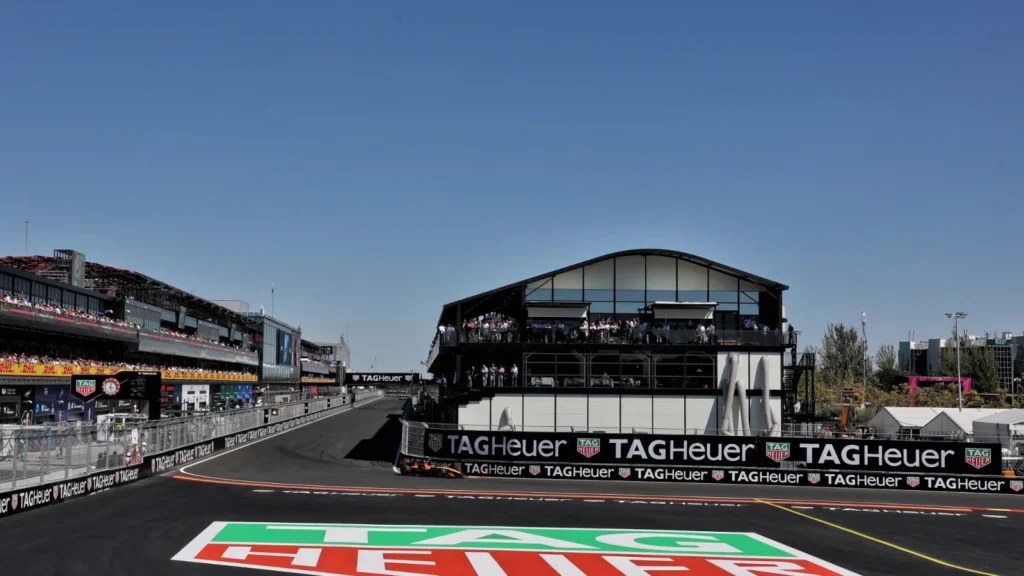
Where it fell apart for F1 and the Madring
The overtaking problem came as no surprise to anyone who had watched the practice sessions, but its extent still had a strong impact: throughout the 57-lap race, there were far and few overtakes.
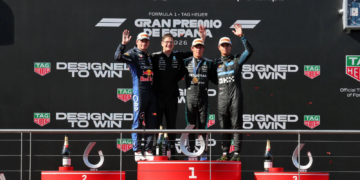
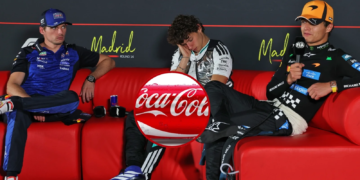
Gabriel Bortoleto’s claim that he “almost fell asleep” during the race set the tone for the post-race press conference, and the drivers on the podium didn’t exactly contradict it.
Antonelli, who won the race, said in the post-race press conference, in which Motorsport Week attended: “It definitely doesn’t create any opportunities for overtaking and it doesn’t encourage you to make a move because, you know, eight out of ten times you might end up with a contact.”
He specifically mentioned the chicane at the 5th and 6th turns, saying a move to pass Norris most likely would have resulted in a collision.
In reply to the same question, Verstappen used two words: “Exactly that.”
Esteban Ocon gave the most straightforward explanation on Sunday for why the tyres penalised any attempt to close a gap, whether against cars that had completed a lap or a competitor fighting for position. Each time he passed cars behind under blue flags, he lost about 0.5 to 0.7 seconds per lap as the tyres overheated, and the grip only returned once he reentered clean air, “which is the reason why no overtake took place.”
Norris, having lost a victory after having built up a lead from pole position, was the most critical of the three. When asked what needed to be changed, he didn’t mince his words by saying, “They should get rid of 18 and 19 – they’re useless.” He went on to compare Madring adversely to a proper hairpin such as Turn 1 or Turn 10 at Austin, and summed up the main defect of the circuit in a single sentence: “The fact that you have to turn and brake basically spoils the whole idea of racing.”
The result that got away
The complaints about overtaking could have formed a whole story. But it was the VSC that really made Sunday frustrating.
Norris started from pole position and maintained a six-second lead during the initial laps. However, on lap 14, when Lance Stroll made a recovery, a Virtual Safety Car was deployed as Norris passed through the pit entry. When asked later about missing the opportunity by five seconds, he neither confirmed nor denied it, simply saying he could not have acted any differently. All the other leaders completed their pit stops free of charge under the VSC conditions; Norris, on the other hand, had to complete lap 15 at a slower speed without stopping, and as a result he ended up behind both Antonelli and Verstappen.
Afterwards, Norris said: “There was nothing I could do… just luck not on our side.”
“It’s not as if we did anything to cause us to lose it. We were just incredibly unlucky on this occasion…I believe it might be the first time a win has been lost simply because of bad luck.”
The man who inherited second position didn’t argue about the verdict either, with Verstappen saying, “It’s very painful for Lando today to have lost the win… that’s really not nice.”
Even Antonelli, who was in first place, was unusually open about whom he believed had deserved the victory: “If I have to be realistic and honest, you know, we didn’t deserve to win today. Lando deserved to win today.”
According to Norris, this is now the subject of an ongoing discussion among the drivers. Describing the issue, he stressed that it was structural, not him being a sour grape, since he has both won and lost under the same rule in the past. At the same time, however, he made it clear that losing a victory to the rule seemed to him to be a different kind of injustice: “I don’t think”, he said, “how a race should be won.”
What happens next
The organisers are reportedly not blind to the problem. Former Aston Martin strategist Bernie Collins, speaking on Sky Sports, argued the issue should never have needed driver feedback to surface in the first place: “When you get the circuit all designed, you should go to them and ask the questions,”
“But I don’t think it necessarily needed a driver to say that at this stage, did it? We all got here, we all looked at the track and said, ‘That’s going to be very difficult for overtaking.’
“So I think that there should have been something done to do that. Now they have been very open to say they will make changes going forward. They’re happy to make changes going forward. That’s not a permanent track. So one of those changes, I would hope, is that they’re going to make some differences in overtaking if they can.”
Madring is not a poor circuit but one that is incomplete: it was designed with a single, spectacular lap in mind but has not yet been built to accommodate fifty-seven races. It will be worth watching whether the necessary improvements are in place in time for 2027, or whether Madrid ends up like Vegas, growing into its own event that lacks racing spectacle.
READ MORE – Motorsport Week’s 2026 F1 Spanish GP Driver Ratings




Discussion about this post