
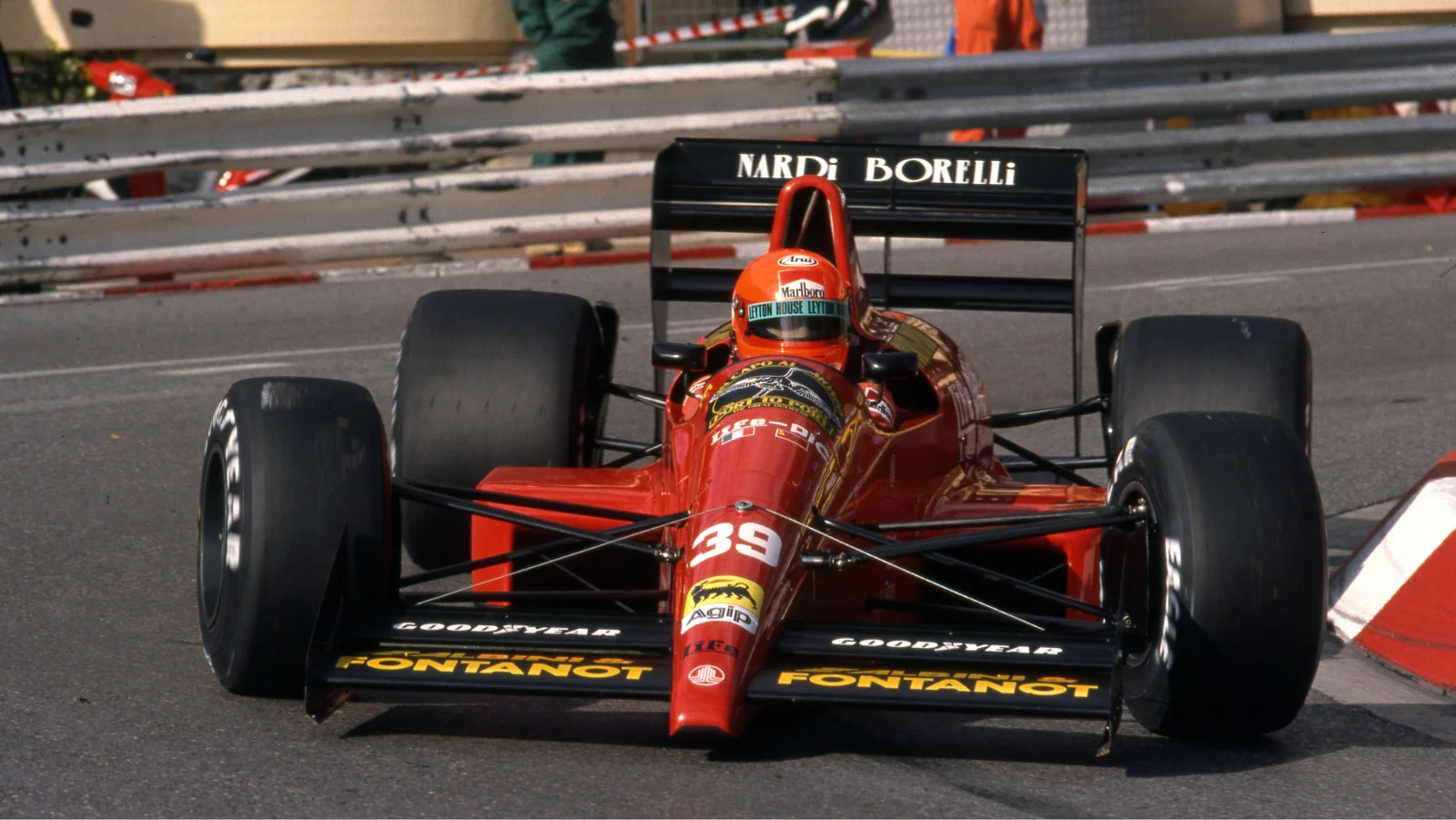
In a bit of a change from this impromptu series, this week I thought I’d examine a car that is far from well-remembered. This car, spoken of in hushed voices, is one that set a record in its own right: the slowest lap in Formula 1 history. I am, of course, speaking about the Life Racing Engines LF190. In terms of incompetence, disorganisation, and an example of being ill-prepared, few teams can rival Life’s one and only season at the pinnacle of Motorsport.
To understand just how bad this team was, you must understand the political landscape of F1 in the early 1990s. Today, teams have billion-dollar valuations, and politics stops random Joes from applying to join the grid. At the time of this story, the sport was more of a Wild West. Teams came and went with more frequency than a Doctor Who regeneration.
If you had the right amount of money and a “can-do” attitude, gaining a place on the F1 grid was surprisingly easy. For example, look no further than Andrea Moda in 1992 as one of the worst teams in F1 history. But that, frankly, is a whole other story, and will be covered in a later week.
These events took place one year prior, in 1991, and, combined, may have acted as the catalyst for the rigorous programmes potential teams must now pass. But Life Racing Engines’ story goes beyond basic incompetence. Instead, it is laced with failed ambition and a horrifically bad idea: a first rejection should have killed it long before its eventual undignified end.


Misguided and mysterious beginnings
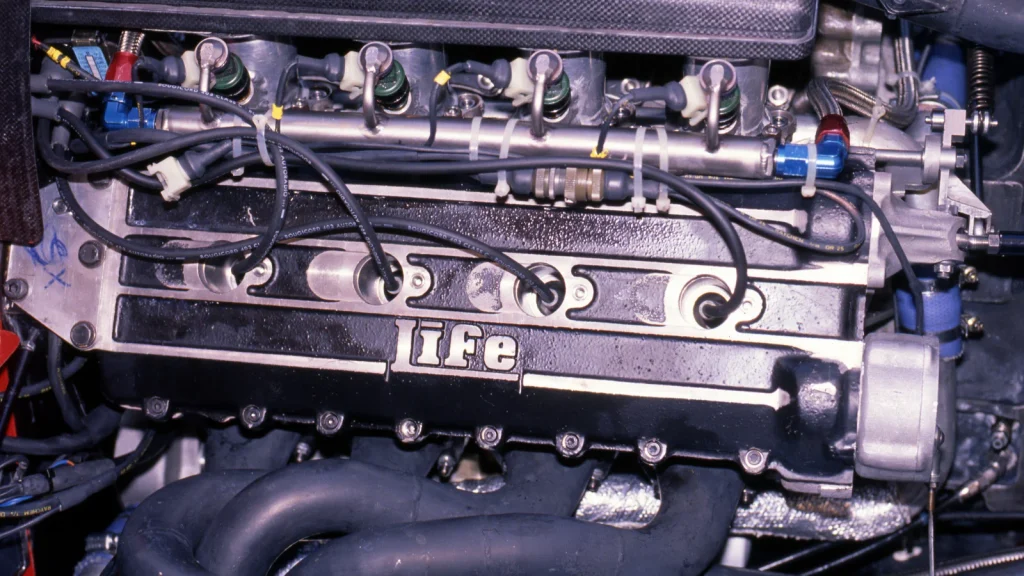
This tale of caution amid utter conviction in the face of disaster begins with a man named Franco Rocchi. A Ferrari engineer during the 1960s and 1970s, he had the idea for a mammoth W12 engine, but it never saw fruition during his days at the Scuderia.
But following his dismissal from the team in 1980, Rocchi continued to develop and push to make his idea a reality. His concept featured a three-bank engine with smaller dimensions than a standard V8, but the exact horsepower output remained shrouded in mystery.
The story picks up again in 1989, when a businessman called Ernesto Vita enters the frame. This individual is immensely difficult to elaborate on, as no real information exists on him. The facts, however, are that he convinced Rocchi to make a serious effort to develop a working, revised version of this engine, with the plan being to sell and supply existing teams.
Now, there is nothing wrong with lofty ambitions; look at what Red Bull Powertrains has accomplished in 2026 after years of building towards its maiden season. The term “years” stands out in that statement. Red Bull’s efforts were made by a team at the top of its game, with the poise and conviction of extensive achievement. The same could not be said for Life Racing Engines.
You’d imagine therefore that their target would be a minnow team like Coloni or EuroBrun. This would give the engine a chance to be run in and developed away from the limelight, with any potential reliability embarrassments masked by their association with a backmarker. But Vita did not want association with a minnow of F1. He wanted to sell a Life Racing Engine to a top team.
To call this misguided would be like saying that trying to eat a whole tub of ice cream after a full Sunday roast dinner is a bad idea. Yet, like so many ambitious, inexperienced eaters, Vita believed in his convictions and powered through with the idea. He wanted a partner that held prestige. Funnily enough, though, none of the top teams wanted to be associated with an unproven project.
A cringeworthy opening act and a record never to be broken
Undeterred by his year of rejection, Vita made a move he believed was in Life Racing Engines’ best interests: he decided to run his own team. But even in 1989, that still required the ability to design and build a car. Life, as the team was christened, did not have anything close to this. So instead, they acquired a car from First Racing, a team that never took to the grid. This made Life a one-car team.
The weighty and odd-shaped revised engine from Rocchi was fitted to the L190 in late 1989 and shaken down twice. The results were not exactly encouraging. Reports vary on the car’s horsepower, but at times it was reported as little as 300bhp. To put that into context, that is less than a 2026 Honda Civic Type R, and around 400bhp less than the Honda and Renault engines of the day.
After multiple driver approaches were rejected, Gary Brabham [son of legendary F1 champion Sir Jack Brabham] eventually secured the cockpit, with Franco Scapini signed as test driver. But with only one car available, and on a shoestring budget, the season ahead looked to be a tough one.
The scale of Life’s ineptitude became apparent almost immediately. Although F1 was a Wild West of teams, the sport took serious precautions to prevent cars from becoming mobile chicanes by introducing pre-qualifying. Suffice it to say, Life failed to qualify in its opening races. Brabham walked away from the team after his car broke down just 400 yards after leaving the pits at Round 3, going as far as to say the team lacked even basic equipment. Tellingly, Chief Designer Gianni Marelli also walked away.
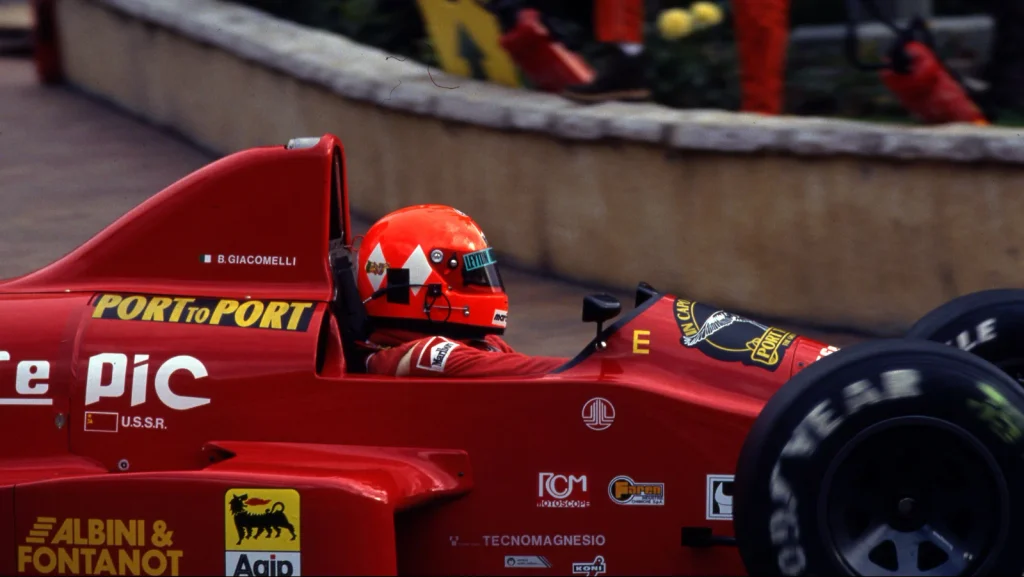
Vita continued down his current pathway, even though his options were narrowing, with Bruno Giacomelli signed as Brabham’s replacement. This is where the good news ended, however, as at San Marino, the L190 set a record that will likely never be beaten. Giacomelli broke down at the end of the pit lane in pre-qualifying, and the car’s transponder was left turned on as it was towed around the entire circuit at Imola back to the pits. This meant the lap time was classified as 7:16.212, a truly remarkable achievement in all the wrong ways. Ayrton Senna’s pole time was 1:23.220, almost six minutes faster. In F1 time, measuring a lap time in minutes is laughable to the point of pity.
Life Racing Engines endures a slow and painful death
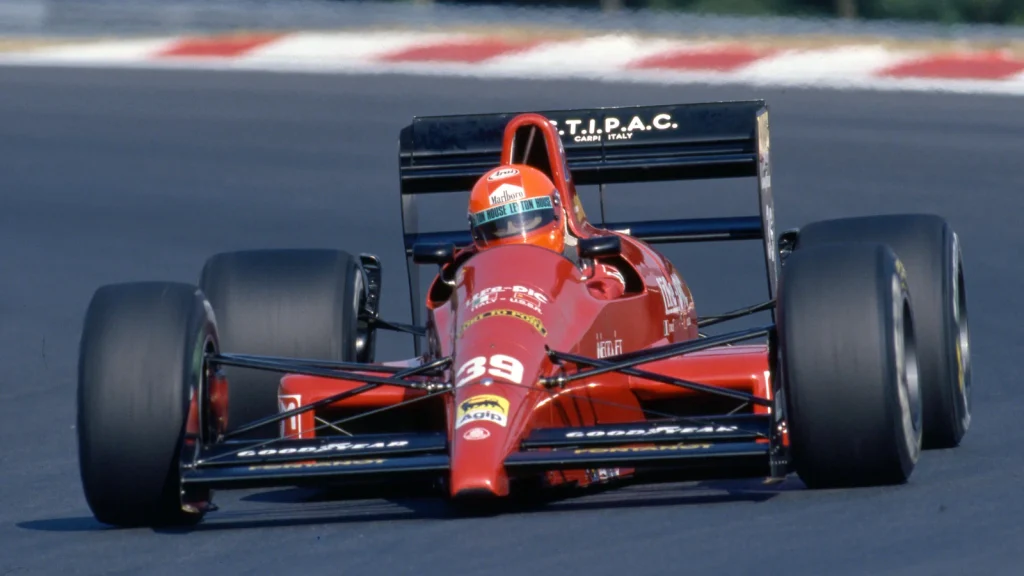
Life’s miserable season continued unabated, failing to pre-qualify at every round, its struggles exacerbated by two key factors. First, the obvious: it was a one-car operation. In pre-qualifying, all its efforts hinged on Giacomelli alone, who at times feared being rammed from behind; such was L190’s pace deficit. The second was far more dramatic: a lack of funds.
To call this team operating on a shoestring budget would be somewhat of a chronic understatement. The team never had more than nine people. I am in the midst of wedding planning, and we have around 20 people helping us navigate the trials and pitfalls of catering, flowers, music and day planning. The idea of doing this with just my fiancée alone is anxiety-inducing, so the idea of nine people running a team is nothing short of laughable, particularly when we look at the mammoth F1 teams of today, with thousands of people helping race two cars.
Vita appeared to be realising, [albeit far too late], that the thirsty, unreliable W12 engine was not going to give him the results he needed, so not for the first time, he made a dramatic decision. He binned the W12 and signed a deal with Judd for its more conventional V8 ahead of the Portuguese Grand Prix. While not a cure-all solution, it should have made life easier [forgive the pun] for the team.
Instead, despite the monumental effort to fit the L190 to the Judd, the engine cover flew off on its first lap out of the pits. One final attempt to pre-qualify in Spain led to the team folding two races before the end of the season. Vita disappeared as fast as he arrived, and a truly pitiful chapter of F12 history was consigned to the history books.
Today, the L190 appears at events like the Goodwood Festival of Speed, a relic of a bygone era. It is an example of ultimately killing your career before it has even taken off. Vita’s actions were negligent, and only when he realised he had no more room to move did he finally do the right thing.
Life Racing Engines is an example of the tragedy that falls into modern life itself: delusion in the face of facts, yet powering on like no one notices. Only when an engine cover flies off does this finally prompt reflection, and by then, it is too late to salvage reputation or standing.








Discussion about this post