
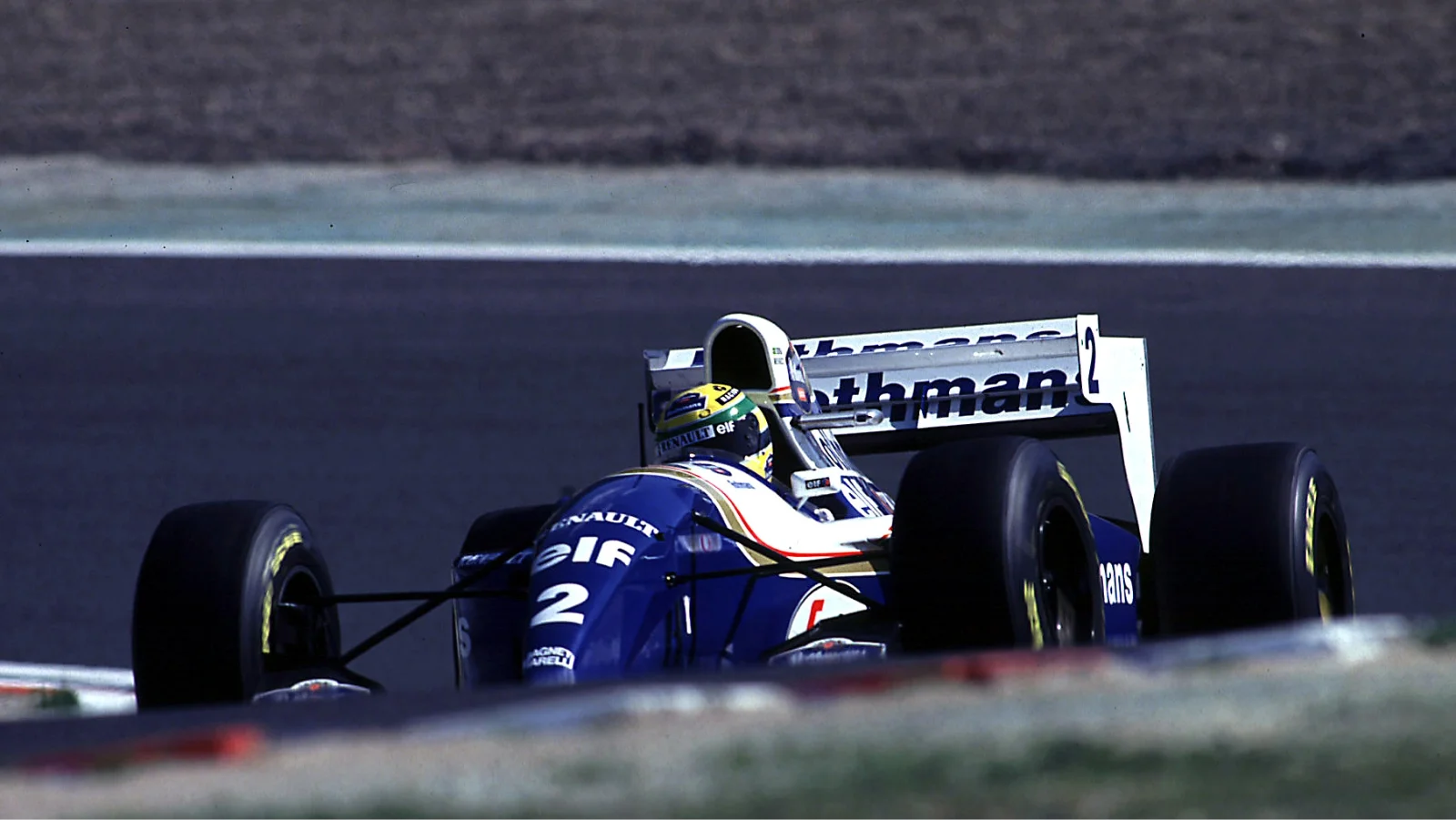
In a special feature, Motorsport Week Editor and Deputy Editor Jack Smith and James Phillips recall their memories of an iconic classic Formula 1 car, the Williams Renault FW16.
James
The 1994 Williams FW16 is a car I remember with both fondness and melancholy. While not the first car I saw (that will be next week’s edition), it is the first car I saw crash. And the least said about that crash, the better. What I will recall, however, before I get on to what I love about this car, is what happened after the incident.
I am six years old at this point, but I can remember this day like it was yesterday; such is the impression the events after that crash had on me.
Lying on the floor of my living room, I’m watching the restart, eager to see Ayrton Senna challenge Michael Schumacher. When the crash happened, I thought it was big and exciting. Eager for validation, I turned to my mother to gauge her reaction. Through her enormous brown glasses (it was the early 1990s after all), I saw no expression. Instead, she went as white as a sheet of paper. I was almost staring past her, into the pheasant-and-peacock upholstered sofa we had at the time.


Next up, she said in a low tone, “David…” (my father), and in one swift move I felt him breeze past me, pick me up, and take me out of the house into the garden. Both of them knew instantly what had happened, likely after watching Roland Ratzenberger die the previous day in the Simtek. My parents banned F1 in the house after that for quite some time, but I can recall watching a few later races that season, before it became a regular feature in the house again.
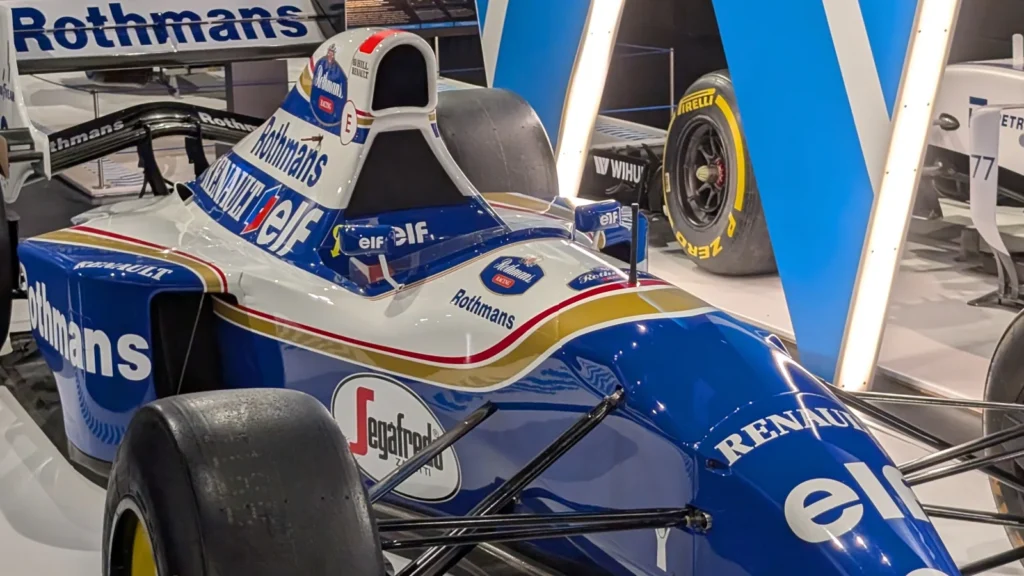
Despite the tragedy associated with it, the FW16 is a car I have always coveted, and one I’ve always wanted to see in the metaphorical flesh. There are many aspects of the car I adore, from its striking livery to its wonderful simplicity. I’ve made this comparison before, but these cars were not far off glorified go-karts with V10 engines in the back. The sound of the FW16 is frankly something else. A screaming, high-pitched wail; every gear change sounded like a hole being punched in the ground, let alone the air.
I finally got to see this car for the first time, only just under a year ago. Walking into the Haynes Museum, I passed the extensive collection until I heard the familiar sound of the hybrid V6 power units playing over the speakers. Leaning around the corner of a frankly ridiculous-sized Corvette, I instantly saw the car in the centre of the exhibition was not the equally iconic Martini-liveried FW38, but instead, the blue, and white FW16 stood proudly on display.
This car perfectly epitomises early 1990s F1. It is from a time of internal car technological advancement, while the exterior remained blissfully simple. Put this car next to today’s offering, and it would be dwarfed. But being honest, I still prefer cars like the FW16 to today’s. Why? They are simpler in just about every way, despite being aerodynamically advanced for the time.
It is a piece of history that will evoke emotion out of you, no matter what your relationship with that particular era of F1. It is memorable for being both tragic and admiring, and I will confess to spending considerable time with it before leaving.
Jack
The reputation of the FW16 has, depending on who you talk to, has a bit of a chequered history. Williams had been the dominant force of F1 for the previous two seasons, with the B-Spec of its FW14 taking Nigel Mansell to the World Championship in 1992. So slick, so fast and so far away the class of the field – primarily due to its cornerstone of the active suspension element – that Senna even offered to race for Williams for free.
He was blocked out by the return of Alain Prost from a year-long sabbatical, and he to benefitted from the car’s successor – the FW15C – to take a fourth World Championship. And with the Frenchman retiring, Senna was free to fulfill his ambition.
His tragic death aside, Senna’s mission – had he lived – would have been much harder than he would have anticipated. The seismic rule-changes for F1 ‘94 saw the banning of much of the electronic aids – including active suspension – that Williams utilised with such ingenuity. Regardless of the suspicions of Senna’s, and of many to this day, of the Benetton B194’s alleged use of outlawed aids, the FW16 was not a particularly great car.
Imola was, ironically, where a set of upgrades to improve the car were debuted, and teammate Damon Hill gave it its first win in Spain. His first true win on equal terms with Benetton and Michael Schumacher was at Silverstone, and was able to, even in defeat, bring the fight to the German, as the car continued to improve. The Schumacher-less Grands Prix of Monza and Estoril – due to a double-race ban – saw Hill dominate, and after perhaps his greatest victory in Suzuka [beating Schumacher in the wet, a rare achievement for any driver], it all infamously came down to a contentious clash in Adelaide.
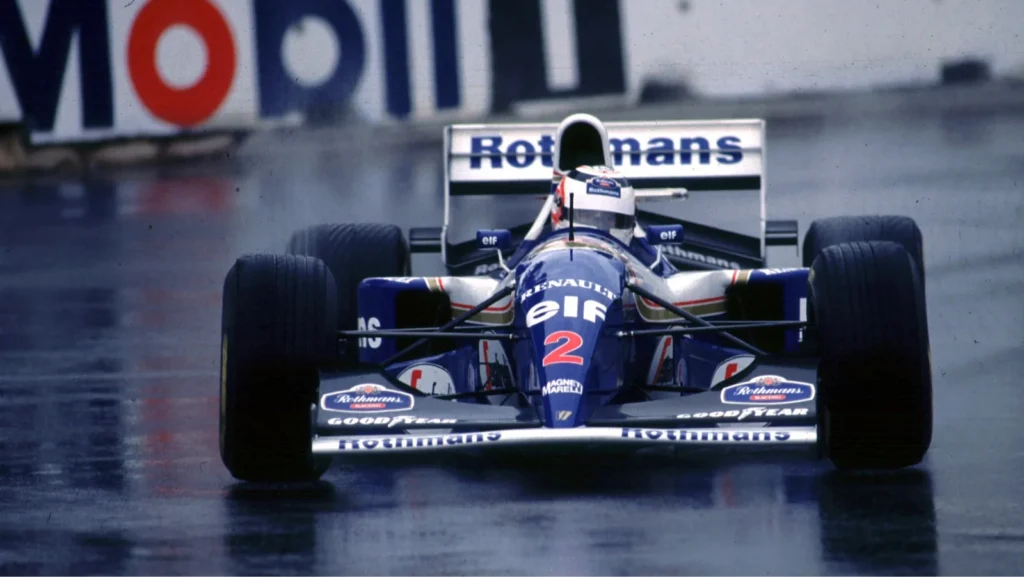
Regardless of the nature of how Schumacher won the championship, the FW16 gave Hill the chance to follow Schumacher lap after lap, keeping him in sight all the time, and forcing him into the mistake that led to the collision.
With David Coulthard and Nigel Mansell stepping into the breach left by Senna, their points – including Mansell’s win in Adelaide – ensured the car would go down as a success, winning the Constructors’ Championship, but whatever room that car will be in, an elephant will follow.
The nature of Senna’s death placed suspicion on the key players in the Williams team: founder and boss Frank Williams himself, Technical Director Patrick Head, and its designer, Adrian Newey. Accusations of alterations to the steering column contributed to the three men being placed under manslaughter charges in Italy. Though all were acquitted due to lack of evidence, many of the more hot-headed and millennial breed of Senna fans have never quite gotten over that element of the story.
I’m 34 next month, and the FW16 is therefore the car I first F1 car I have any memory of. The flowing but simple colour scheme, the unusual ‘0’ on Hill’s car and my fondness for Hill himself has, with no disrespect to Senna, placed the car firmly within the file of ones in history I am most bewitched by.
Surely, if any car can help an impressionable child develop an obsession with Formula 1, then can be placed in any ‘hall of fame’ with a firm right?




Discussion about this post