
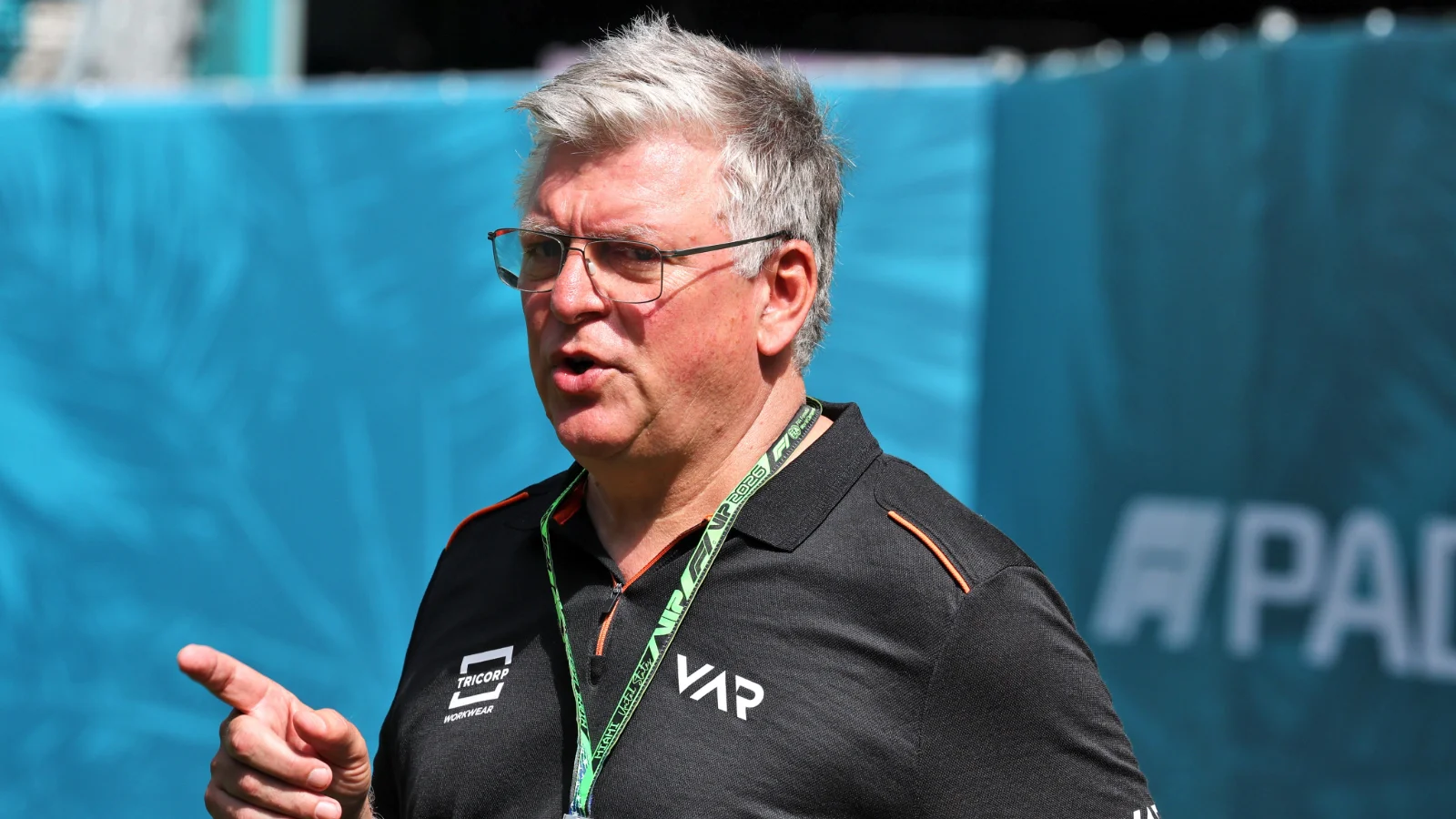
In the first part of an exclusive interview with Motorsport Week, Van Amersfoort Racing’s CEO Otmar Szafnauer reveals why he moved from the world of Formula 1 to the feeder series.
Szafnauer is no stranger to the world of four wheels. His motorsport career began in 1986 when he joined the Ford Motor Company as a programmes manager. Alongside his role, he trained in the Jim Russell Racing Driver school and competed in Formula Ford in 1991.
However, in 1991, he moved to F1 as an Operations Director at British American Racing. He worked with Honda and Force India, which became Racing Point and then Aston Martin, before leaving to join Alpine in 2022.
His stint with Alpine was short: he joined in February 2022 as Team Principal before departing in 2023, shortly after the Belgian Grand Prix.

After leaving F1, Szafnauer took three years out of the sport entirely before becoming Chief Executive Officer and Managing Partner of Van Amersfoort Racing, a team that competes in Formula 2, Formula 3, FRECA, and Formula 4.
Szafnauer revealed what was the attractive factors in taking on the role on the lower rungs of the motorsport ladder.
“What drew me to VAR is the friendship with the owner [Rafael Villagómez],” he said. “He’s a decent human being, and I’m too old to start working with human beings who aren’t decent.
“So my choice was to stop racing and go do something else or race with somebody I liked, and I really liked my partner at VAR, who’s a great guy, and I thought, ‘you know what, I don’t know why everything I’ve learned over the last four years of racing is to try to help VAR’.”
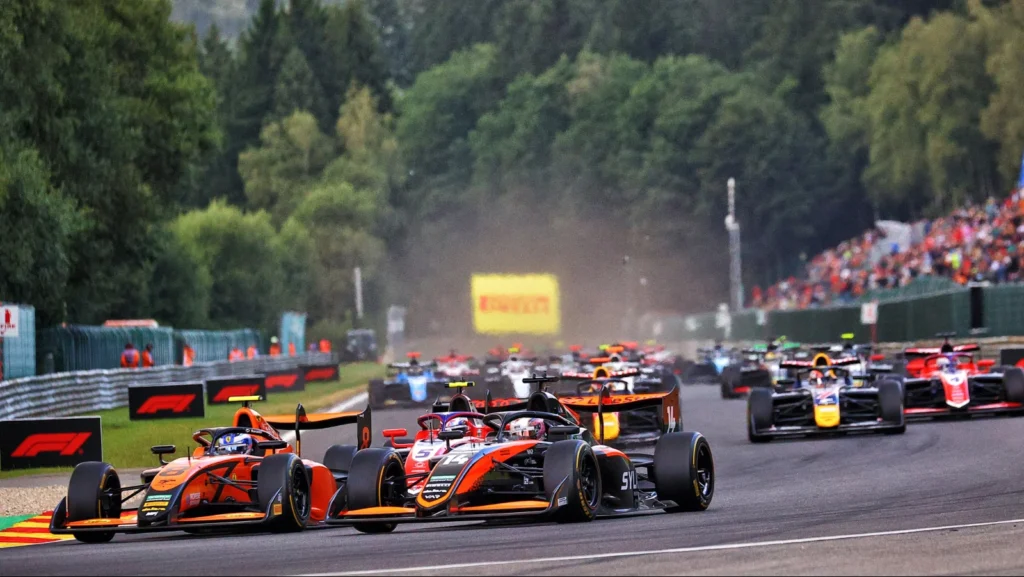
The constant in motorsport
Despite working in different roles for different teams over the years, Szafnauer recognised that much remains the same. No matter the organisation.
“Every team is filled with humans, and if you can get all of them working together to the highest level and pulling together, you’ll be successful. That’s a constant.”
However, moving from the large, development-focused organisations in F1 to the smaller, performance-focused teams in the feeder series, Szafnauer noted some key differences.
“The significant difference between F1 and F2 and F3 is that in F1, most of the humans on the team are focused on car development, 90-some per cent of them,” he said. “Whereas 90-some per cent of them in F2 and F3 are just focused on racing because you buy the cars.
“So there are differences; however, to perform at a high level, there is that constant.”
Since joining the team, Van Amersfoort Racing are on track for its best season so far in F3, and strong results are beginning to bleed through into F2.
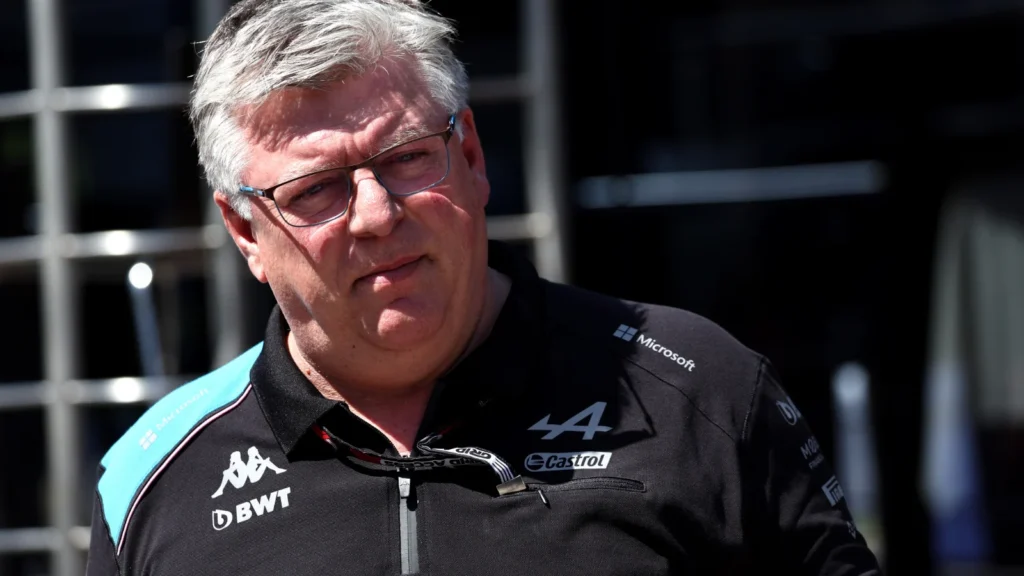
Despite holding a higher managerial role within VAR, Szafnauer remains very hands-on with the team’s operations. He explained how, for him, the philosophy is ‘strategic and directional’ rather than the usual focus on operational running.
“My leadership philosophy is less operational and more strategic and directional. So just point the team in the right direction and let them go in that direction. So a bit more strategic and less operational.
“Even less operational than when I was at a Formula 1 team, sitting on the pit wall, going to every debrief, understanding the minutiae of the race team, trying to understand how we go about car development, what’s lacking, what we need.
“I am now more, like I said, strategic in my operation.”
READ MORE – Is the Colton Herta-Cadillac F1 gamble starting to unravel?




Discussion about this post