
In the second part of a special feature for Motorsport Week, Kate Beavan continues her insightful look into the relationship between Disney and Formula 1.
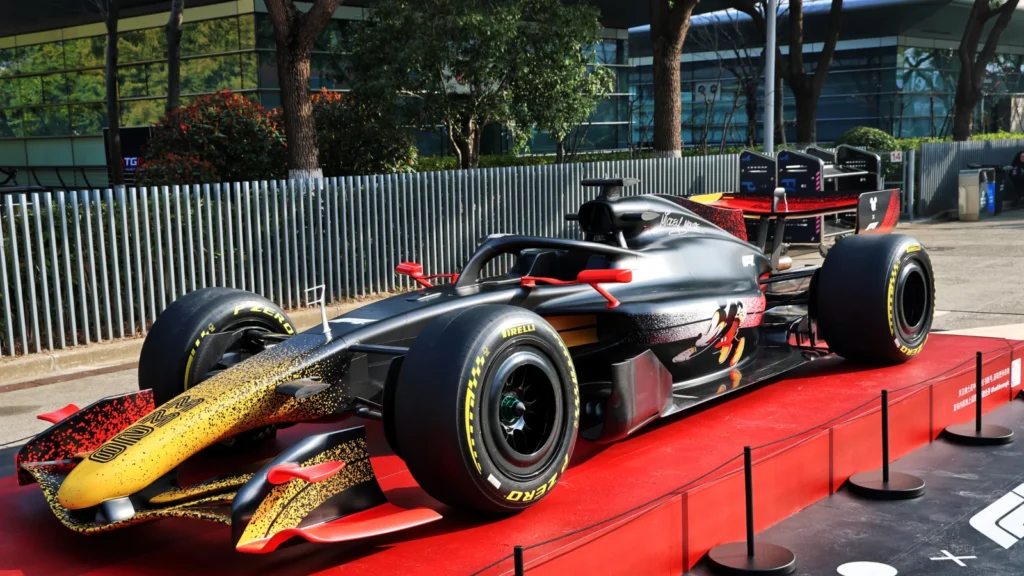
This is where it gets particularly interesting. Disney’s Cars franchise has generated over $10 billion in merchandise revenue. From an animated film about fictional talking vehicles with no connection to real motorsport.
Now think about an F1 animated series. Produced by Disney Animation or Pixar, localised into dozens of languages, built around original characters linked to real teams and real circuits. A Ferrari character. A McLaren character. Circuit-specific storylines set in Monaco, Suzuka, Silverstone. Each season mirroring the real Formula 1 calendar, so the animated world and the real sport reinforce each other continuously.
Children could choose their team the way they choose a Hogwarts house. They would stick with it. Adults get the insider and grown-up jokes and references in the way that Pixar does so brilliantly. That is not a one-film merchandise cycle. It is a generational consumer relationship that feeds directly into the live sport, which feeds back into the content, which feeds the products. The flywheel that Disney understands better than anyone.
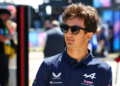

Pillar 3: Product licensing
The gap that tells the whole story
Formula 1’s “other revenue” – hospitality, licensing, merchandise – was $787 million in 2025. Growing nicely at 20% a year. But against a brand with 6.75 million live attendees and 1.8 billion television viewers, that number is strikingly small.
The NFL generates $3–4 billion annually from licensing and merchandise. The global licensed football merchandise market exceeds $11 billion. Formula 1, with a more affluent and arguably more style-conscious fanbase than either, is generating a fraction of what those comparators produce.
The most telling comparison is within the sport itself. Ferrari’s own financial results show that its sponsorship, commercial, and brand revenues – covering F1 sponsorship, lifestyle collections, merchandising, licensing, and royalty income – reached more than €800 million in 2025.
Although pulling out the licensing number from this is impossible it still represents one team, operating independently, generating more from brand monetisation than Formula 1’s entire central licensing and hospitality operation. The value clearly exists. It is simply fragmented – captured at the edges, by F1 and by individual teams, rather than compounded centrally.
This is where Disney’s capability is unique. Disney Consumer Products is the world’s largest licensing operation. It has the retail relationships, the design teams, the distribution networks, and the category expertise to take a brand and systematically monetise it across every consumer product category in every market on earth.
No other company has this infrastructure. It is also worth noting that no other potential buyer of Formula 1 – no sovereign wealth fund, no private equity firm, no consortium of money men – can offer anything remotely like it.
But, you say; Formula 1 doesn’t own the Teams or Drivers IP rights. Ferrari, McLaren, Max Verstappen, Lewis Hamilton – they all control their own brands.
Under the current structure, this is indeed a limitation, because there is no credible central licensing partner that could do anything meaningful with pooled IP. But under future Disney ownership, the pitch changes completely. Disney can offer teams and drivers access to the most powerful licensing distribution network on earth.
The value of team-branded merchandise, driver-branded products, and co-created content distributed through Disney’s global platform is orders of magnitude greater than what any team can achieve independently.
A revenue-sharing model – where teams and drivers contribute their brands to a centrally managed Disney licensing programme – becomes the obviously sensible thing to do. The barrier becomes the opportunity. Some of you may remember that this very deal was actively discussed back in the 1990s. The time wasn’t right then and the prize not quite big enough. It is now…
So where does this go?
I am not giving any insider information here and I have no idea whether anyone at Disney or Liberty Media has ever seriously discussed this. But I do know the business of Formula 1 well, very well, and I find the structural fit between these two companies hard to ignore.
The financial case is straightforward enough. Formula 1’s enterprise value is estimated at $26 billion. Disney’s market capitalisation is roughly $170 billion. The company has been actively de-leveraging – and it completed the Fox acquisition at $71 billion in 2019, so the muscle memory for large transactions is there with many fewer of the post-acquisition pains. Culturally, administratively and logistically it is an easy buy.
More interesting than the purchase price is what the asset could be worth under Disney’s stewardship. If Disney can grow Formula 1’s licensing and consumer products revenue from under $1 billion to $3–4 billion – which is simply matching what the NFL already achieves with a less global and less affluent fanbase – and add meaningful revenue from enhanced experiences, owned circuits, and content, the total revenue potential is somewhere in the region of $10–13 billion within a decade. The implied asset value at that point is well north of $50 billion.
The question is not whether F1 is a good asset. Everybody knows it is. The question is which buyer can actually unlock the value sitting inside it. When you look at the three-pillar structural fit, there is really only one answer…
But why not Private Equity or a sovereign wealth fund?
The market assumption is that a PE or Middle Eastern sovereign wealth fund will buy Formula 1. The logic is understandable: Private Equity are currently in love with sport – and Formula 1 is a big, big prize in the one upmanship PE game. Gulf states have capital, appetite, and strategic interest in global sport visibility. They are already invested at team and promoter level.
But PE and sovereign wealth funds are capital allocators, not consumer products companies. They do not have licensing infrastructure, content studios, theme park operations, or retail distribution. A PE or sovereign fund buying Formula 1 would inherit the current business model and, with a fair wind, continue to grow it at roughly the rate Liberty has already established.
There is nothing wrong with that. But it does not close the gap on Pillars 2 and 3. It does not build the animated franchise or the cruise product or the year-round circuit destinations. It does not create the consumer flywheel. It maintains the asset rather than transforming it.
Financial engineering can optimise the existing model; it cannot build a new one…
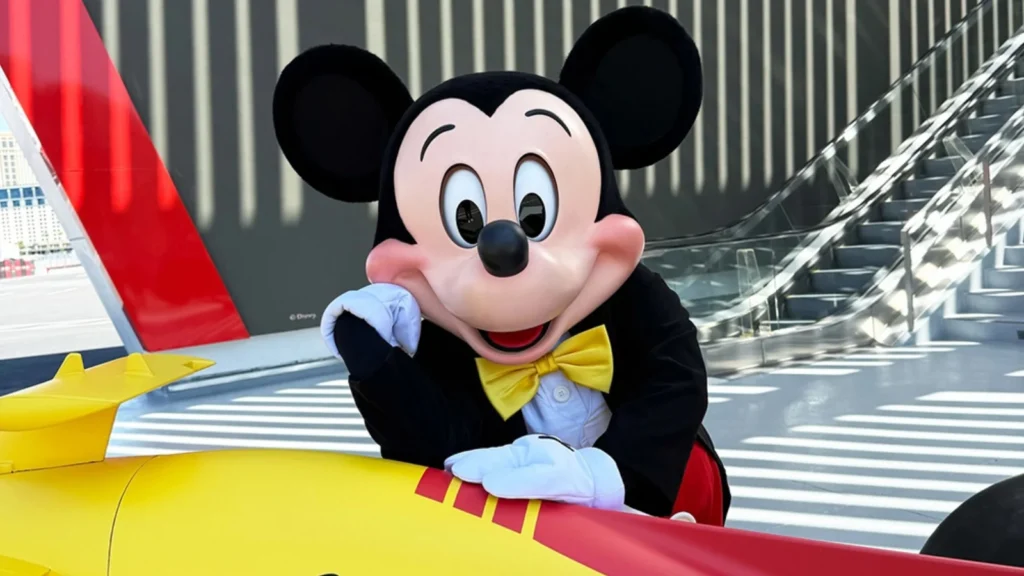
Could F1 be Disney’s biggest IP?
This is a genuinely interesting question. Marvel generates perhaps $5–6 billion annually across film, streaming, merchandise, and parks. Star Wars does $3–4 billion. The Disney Princess franchise generates around $5.5 billion in merchandise alone.
At full maturity under Disney ownership, Formula 1 could plausibly generate an additional $5–8 billion in annual revenue from content, licensing, and experiences – on top of its existing $4–5 billion in race promotion, media rights, and sponsorship. That would put Formula 1 alongside or even better than Marvel as one of Disney’s most valuable franchises.
With one interesting structural difference: Marvel requires billions of dollars of annual content investment to sustain itself. Formula 1 generates its own content as a natural byproduct of existing. Twenty-four new episodes of unscripted drama, every year, at no production cost. It is, if you think about it, the most capital-efficient content engine in entertainment.
The courtship
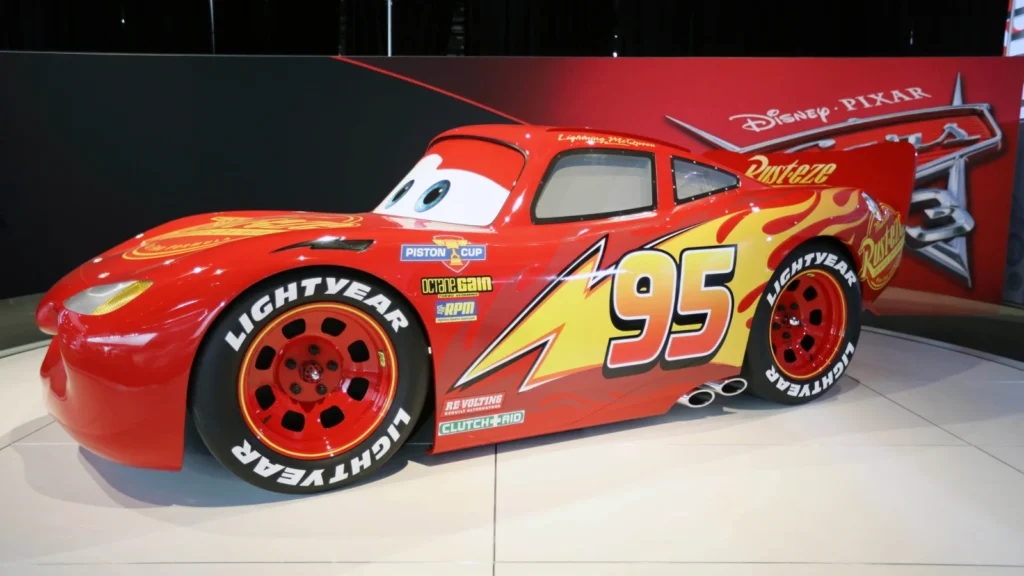
I started this piece with a story about a bottle of red wine and an idea that put Lightning McQueen in a real F1 garage. Nearly a decade later, Disney and Formula 1 are still circling each other, finding more and more reasons to work together, but never quite arriving at the obvious conclusion.
The three-pillar model is the same. The structural fit is unusually precise. The untapped commercial potential in Formula 1’s content and licensing pillars is enormous, and the infrastructure to unlock it already exists inside The Walt Disney Company.
And maybe this deal is just the shot in the arm that Disney’s flat share price needs? Everyone is busy speculating about whether a sovereign wealth fund or a private equity consortium will buy the sport. I think they are looking at the wrong suitor.
One thing that working for Bernie for nearly 20 years taught me; when everyone is looking one way you should be looking the opposite direction.
Sometimes you just need to look at two businesses side by side and ask a simple question: does one of these belong inside the other? I think this one does.
Has this courtship gone on long enough?
P.S. The 6-part Documentary series on how they made this deal happen would be award winning Oh, and then the film! Just saying…
Prepared for fun discussion purposes. Financial data sourced from public sources including Liberty Media, Disney, and Ferrari N.V. public filings, S&P Global, Sports Business Journal, and published industry reports. July 2026.




Discussion about this post