
Motorsport Week’s Deputy Editor James Phillips discusses if Spa-Francorchamps and its universal charm has been spoiled by Formula 1‘s current ruleset.
What does your mind think of when someone says, “The Belgian Grand Prix?” If you are as much of an F1 nerd as I am, it will likely be one of the following words: legendary carnage, rain, excitement, overtakes, old-school, and sadly, in more recent times, dangerous. In short, it is a circuit that is one of F1’s most iconic, full of history, and any nerd would suddenly become more teary-eyed over it than a mother watching her child graduate.
Yet, this wonderful, thrilling, and completely unique track will no longer feature as a regular occurrence from the end of 2027. Instead, it will alternate with Barcelona for four years, meaning we will only return to the legendary Spa Francorchamps circuit twice in the next five years.
Lewis Hamilton told me, when answering a question, that Spa “should not be missing” from the calendar, stating without hesitation that drivers “love this place”, and for good reason. Its sweeping undulations, gravel traps, and challenging corners make this a real test for them, far more than some of the modern circuits introduced in the last 15 years. Fans love it in equal measure, for its ability to generate spectacular racing.
The decision to alternate Spa has long since been made, but I intend to argue (strike that, it is more a case of explaining) why Spa deserves a permanent fixture on the ever-expanding F1 calendar.
A forest of memories
Set in the Ardennes forest, Spa’s trees contain a plethora of memories from across the years, both positive and those that make you reflect. When the wind blows in a certain direction, you can almost hear Murray Walker’s commentary as he reacted to iconic previous races.
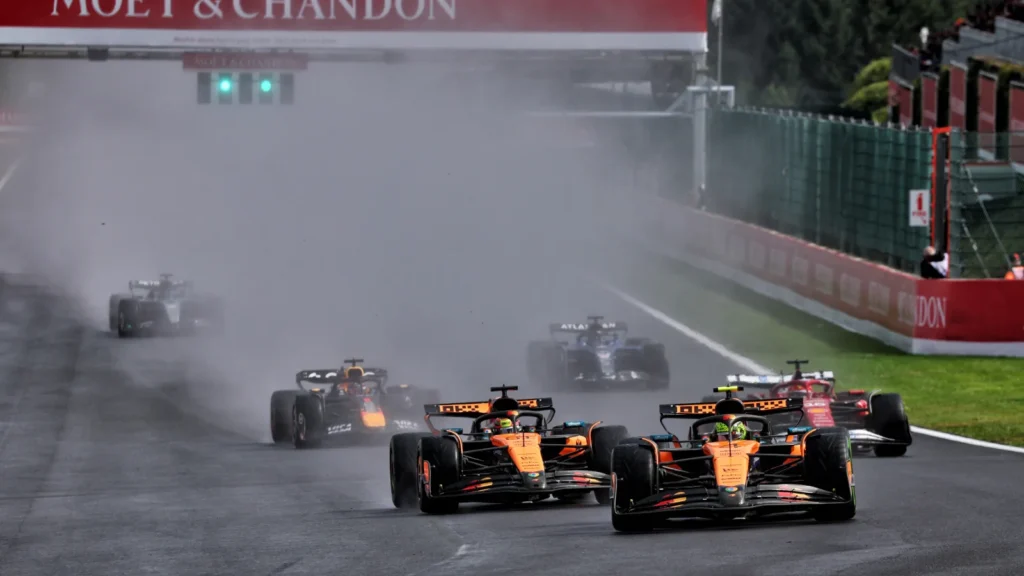
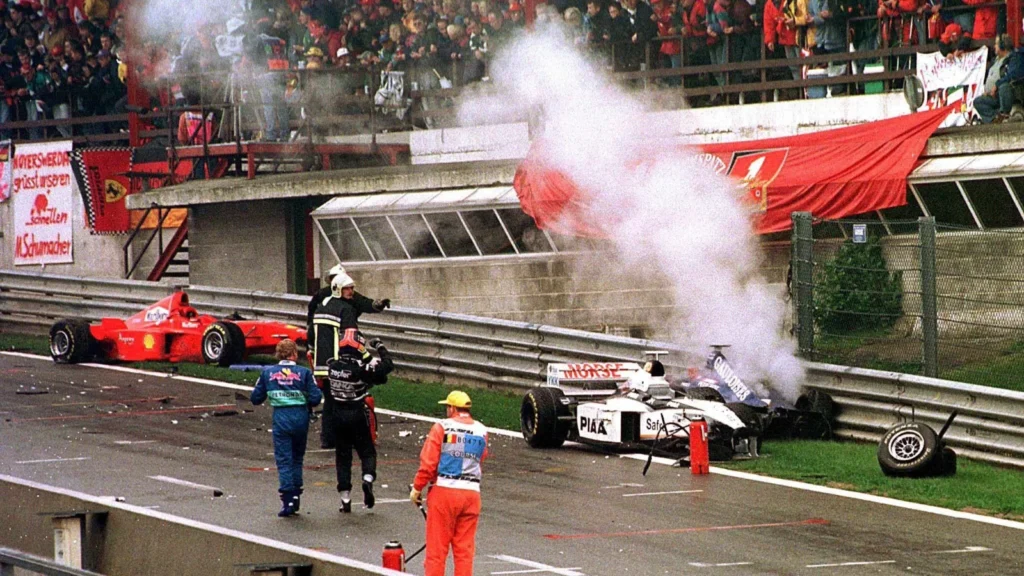
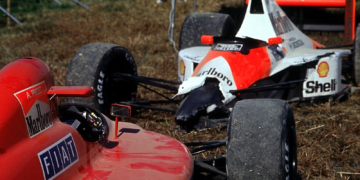
Let’s start with the most obvious race: 1998. This race had it all: first-lap drama, a shock result, and weather that was more akin to white water rafting than motor racing. The [first] start set the tone for the race, when David Coulthard veered suddenly to the right on the long run down to Eau Rouge and set off a chain reaction. The drivers had nowhere to go except into each other, with cars colliding and carbon fibre flying around in all directions.
Murray Walker called the race “the worst start to a Grand Prix that I have seen in the whole of my life”. 12 cars were involved in the monumental smash-up, with 18 out of 22 drivers taking the restart. Once underway, the weather claimed all but eight of those brave enough to race at Spa that day. But it is the manner of their retirement that makes this race iconic.
The most infamous, without question, is Michael Schumacher and David Coulthard’s crash. Coulthard, a lap down, moved over to the left of the track to let his rival through. Instead, Schumacher, unable to see through the spray, careered into the back of the McLaren, losing the entire right side of his Ferrari. Upon getting out of their cars at the end of the pit lane, Schumacher stormed down the pits to have an altercation with Coulthard, the two teams separating them. Damon Hill went on to win the race to take Jordan’s first Grand Prix win. While an extreme example, this style of racing would not be possible without Spa’s unique characteristics. But Spa cannot justify its position with a race from almost thirty years ago. Instead, we need to look towards the present day.
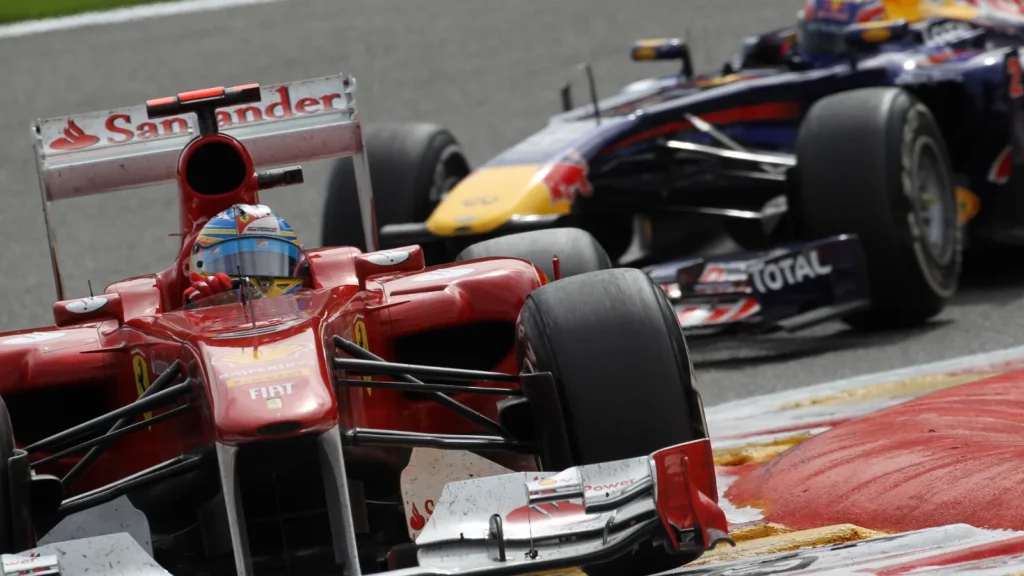
Fast-forward to 2011, and we have an example of an overtaking manoeuvre that remains spectacular. Fernando Alonso and Mark Webber, once again racing down to Eau Rouge, engaged in wheel-to-wheel combat. Neither was prepared to give an inch, as Webber attacked the Ferrari. With his foot to the floor, he passed Alonso around the outside to overtake the Spaniard in a move that is widely heralded as one of the best in history. There are, of course, so many more races to choose from; these two are just the tip of the proverbial iceberg.
Modern-day races have become the casualty of the cars raced today – they are heavy and cumbersome. These cars, whilst phenomenally quick, cannot rival those of yesteryear in terms of action, but Spa still finds a way of creating surprises, though tragedy has also crept in. A special run is dedicated to Antoine Hubert every year, a reminder of the danger of this circuit poses.
A true driver’s track
The reasons classic races and countless others over the years at Spa are so fondly remembered are down to the circuit’s characteristics and design. It is the longest on the calendar at seven kilometres, with each section and corner having its own distinctive personality.
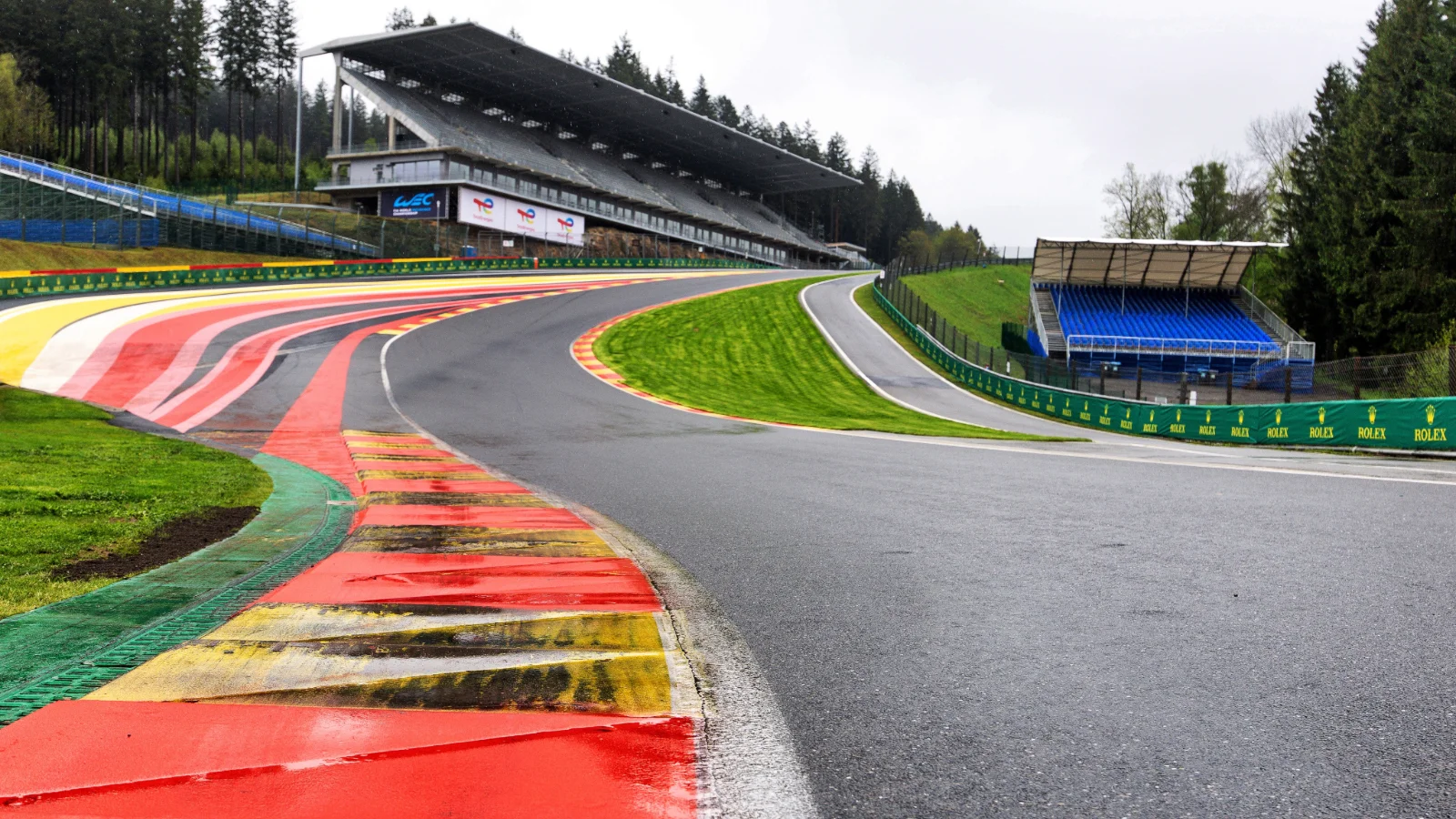
Continuing with the Eau Rouge theme to start with, this corner needs no introduction. A steep run down a hill leads to it, with an almost vertical incline upwards before the Kemmel Straight. It is one of the most well-recognised corners in F1 history, because of the balls a driver must obtain to drive it. While in the ground-effect era it was no longer a corner due to the downforce generated by the cars, the new regulations force drivers to think about how to tackle this infamous corner.
Jacques Villeneuve in 1998 and 1999 took this to a whole new level. He took Eau Rouge flat out in 1998, crashing heavily in practice. When the corner was widened a year later, he described it as “not as visually challenging as it used to be… it’s got to be flat out”. He struck a deal with then-teammate Ricardo Zonta to execute this utterly insane bet. Both crashed heavily within minutes, Zonta’s excursion being particularly dramatic, the entire front of his BAR gone, spinning multiple times, upstaging Villeneuve in terms of who could cause the biggest damage bill.
Then there is Pouhon. A huge challenge, it has caught out many drivers. Gravel has now been mostly removed sadly, but it remains a punishing corner if you get your corner entry wrong. Run too wide through, and you will become beached. Rubens Barrichello discovered this the hard way in 1994 when he ran wide and hit the barriers after traversing the gravel, denying him a podium finish.
“The Bus Stop” also deserves a mention. No explanation is needed for its name, though the layout has changed over the years. It has seen passes there that have no business being pulled off, including Juan Pablo Montoya on Michael Schumacher in 2004. Any corner called “The Bus Stop” will instantly garner interest, as opposed to a “Turn 14”, which, frankly, is about as forgettable as a one-night stand at University.
Replacing gravel with tarmac?
My point is that each corner at this brilliant circuit requires skill and guile, with barriers, grass and gravel awaiting you if a lapse of concentration seeps in, or you are subject to luck worse than England’s performances in a World Cup [sorry, I had to get that in]. Can the same be said for one of the circuits coming in as a permanent fixture – the Madring? It’s difficult to say without seeing the first race there later this year, but instinctively the answer leans towards no.
Modern race circuits lack the personality of those of old, with Singapore the clear and obvious exception. Whilst a street circuit, it has a unique atmosphere and very distinct personality that make it spectacular. The Madring, as good as it looks, cannot rise to this level of reputation. Comparing it to Spa in its current form is a bit like having a 1990s Minardi next to Mercedes’ 2026 W17; there is simply no comparison.
I’m a proud traditionalist and will always advocate for the “old school” style circuits to have a place in the sport. As F1 continues to grow, circuits must keep up with the times to survive. This includes facilities and track upgrades, both of which Spa has undertaken to try to secure its long-term future on the calendar.
Despite its best efforts, Spa will once again fall off the calendar as a regular race, a disappointment to so many. Many countries applying for races have limitless pockets, but I’ll ask you this question: Where would you rather have an F1 season finale – Spa or Abu Dhabi? I know the one I’d choose.
READ MORE – Kimi Antonelli enjoys his Spa retreat with resilient F1 Belgian GP win





Discussion about this post